

The Sloane Club Chelsea Renewal Review 2026: A Grand Dame Reimagined with a Wink and a Whisper of Paris
Chelsea is not known for dramatic reinvention, but The Sloane Club has emerged from its refurbishment looking as though it has quietly had work done, denied everything, and somehow become even more irresistible.
The Sloane Club Chelsea Renewal Review 2026
As part of our Mazda Tour, we paid a stylish detour to The Sloane Club to shop, sip, and savour Chelsea’s charms.
Chelsea has always had a way of polishing its past rather than discarding it. The result, when done well, feels less like renovation and more like time travel with better lighting. The The Sloane Club has embraced precisely this philosophy, emerging from a two-year refurbishment with the quiet confidence of a grande dame who has rediscovered her favourite jewels and, just for fun, acquired a few rather daring new ones.
Founded in 1922, the Club began life as a sanctuary for women, specifically ex-service women navigating the uncertain aftermath of the First World War. It was a bold and necessary gesture in a Britain grappling with profound social change. Princess Helena, daughter of Queen Victoria, lent her name and considerable influence to the cause, establishing Helena Residential Clubs to provide safe and dignified accommodation. One might say the Club was born not out of indulgence, but out of necessity. Today, that legacy lingers, albeit now accompanied by rather excellent champagne and soft, ambient lighting.
A Space That Breathes, Finally
The most striking aspect of the renovation is not what has been added, but what has been liberated. Previously, the Club carried a certain compartmentalised stiffness, rooms politely ignoring one another as if at a slightly awkward dinner party. Now, everything flows. Spaces open into each other with a natural elegance, encouraging members to drift, linger, and occasionally eavesdrop, as is the Chelsea way.
The aesthetic walks a fine line between Victorian plushness and contemporary flair, and manages, rather impressively, not to fall off it. Think deep textures, rich fabrics, and an almost mischievous layering of objects. Every lamp, table, and decorative flourish feels chosen rather than acquired. One has the distinct impression that somewhere a curator is quietly congratulating themselves.
The bar offers one of the more theatrical flourishes, a glass floor panel overlooking the Venus breakfast room below. It sounds like something out of a slightly decadent dream, and its installation reportedly involved lowering it through a greenhouse roof. The first attempt ended in spectacular failure, the panel shattering dramatically. One imagines champagne glasses paused mid-air. The second attempt, mercifully, succeeded. C’est la vie, and occasionally, c’est la gravité.
A TARDIS with Taste
There is something delightfully disorienting about the Club’s approach to modernisation. USB ports sit discreetly beside old-fashioned dial telephones, as if two centuries had agreed to share a room and behave civilly. The effect is rather like stepping into a version of Doctor Who where the TARDIS has developed a fondness for Chelsea interiors.
One might call it steampunk by Bentley Motors, if Bentley ever decided to abandon horsepower in favour of heritage and impeccable upholstery. It is indulgent, slightly eccentric, and entirely charming.
The Rooms: Boudoir Meets Boardroom
Our room was an exercise in controlled seduction. Dark wood cupboards with leather handles, black leather headboards, and a desk that would not look out of place in a particularly stylish law firm. It is a curious blend, part boudoir, part boardroom, entirely confident.
The bathroom, by contrast, offers a playful rebellion. Pastel tiles in shades of green and pink, large mirrors, and a brightness that feels almost conspiratorial. It is as though the room itself is whispering, “We do not take ourselves too seriously, even if the furniture does.”
Dining at Helena: History on the Plate
The restaurant, aptly named Helena, pays homage to its royal patron while delivering something rather more immediately gratifying than history. Dinner begins, as all civilised evenings should, with a glass of Devaux champagne in the bar. The bubbles set the tone, light, elegant, and quietly celebratory.
We were looked after by the delightful Valérie, a fellow bearer of a name that occasionally causes gender confusion. There is a certain camaraderie in such things. Yves and Valérie, it sounds like a slightly niche French film.
The meal itself was a parade of small triumphs. A Paloma mocktail, fresh and perfectly balanced, followed by prawn ceviche with avocado, the prawns lightly fried a second time to deepen their flavour. It is a subtle technique, but one that elevates the dish from pleasant to memorable.
The duck croquettes deserve particular mention. Small, unassuming, and utterly magnificent. One of those rare creations that makes you pause mid-conversation, if only to ensure you are not imagining things.
Smoked salmon arrived thickly cut, soft, and impossibly fresh. The kind of dish that reminds you simplicity, when executed properly, is the ultimate luxury.
Mains continued the theme of quiet excellence. Trout, perfectly pink at its heart, accompanied by broccoli that had clearly been treated with respect. Cod with chickpeas, comforting and satisfying. Ratatouille and thin-cut chips that managed to be both indulgent and virtuous, a rare diplomatic achievement.
Desserts did not disappoint. A buttermilk panna cotta that wobbled with confidence, and a chocolate olive oil cake that was rich without being overwhelming. In short, the sort of meal that encourages one to linger, to order another glass, and to contemplate life’s more pleasant questions.
Breakfast and the Ritual of Sloane Square
Breakfast at the Club is refreshingly informal. Scrambled eggs with salmon, eggs royal, pastries in generous abundance, freshly squeezed orange juice, and a hot chocolate robust enough to prepare one for the trials of the day.
Those trials, in this part of London, tend to involve shopping.
Just fifty yards away lies Sloane Square, a hub of understated elegance. From there, one can drift onto King’s Road, a street that has reinvented itself more times than most of us have changed shoes, yet retains its essential character.
And then there is Sloane Street, where luxury boutiques line up with the quiet confidence of brands that have nothing left to prove.
A pilgrimage to Peter Jones is practically mandatory. A temple of British retail, beloved by generations of Sloane Rangers. My own mother knew half the staff by name, which tells you everything you need to know about both her and the store.
Personal History, Chelsea Style
Chelsea has a way of intertwining itself with one’s personal history. I found myself wandering past old haunts, including my former home on Tite Street. The memories, naturellement, are plentiful, though not all suitable for publication.
One wonders, standing outside such places, whether the walls remember as much as we do. And whether the sauna, in this particular case, is still in working order. Some mysteries are best left unsolved.
Café 1922: A New Chapter
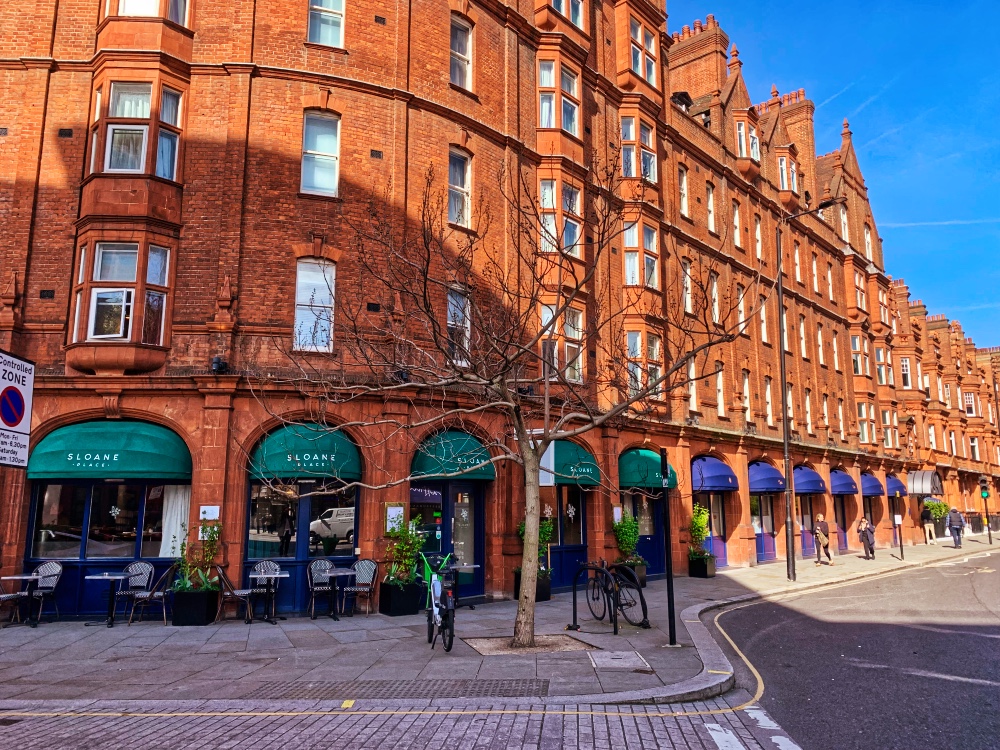
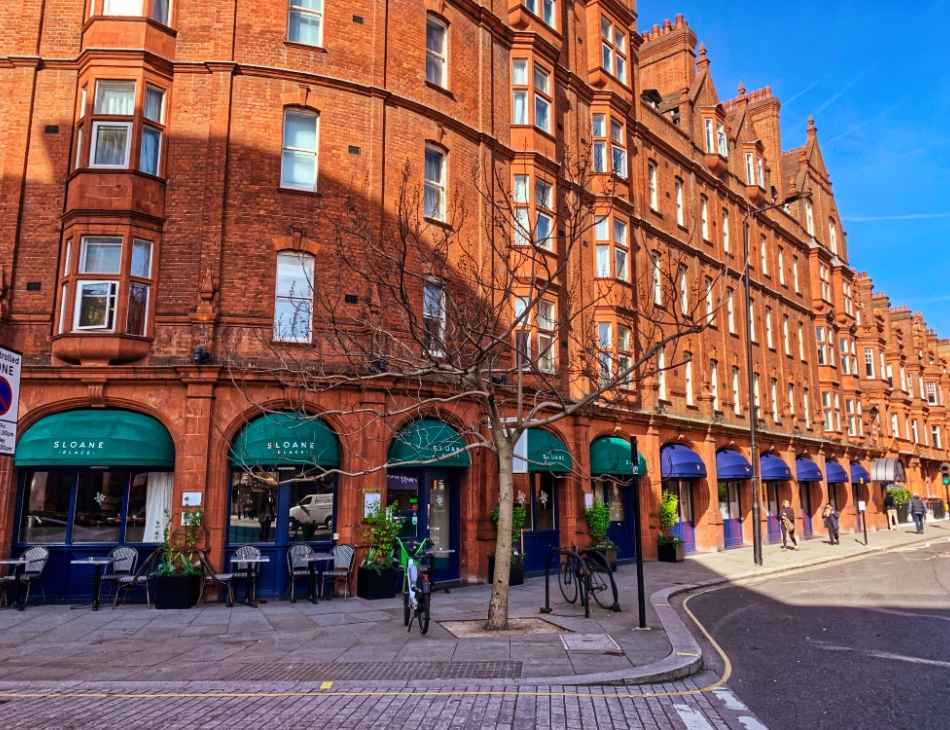
The Club’s evolution continues with the opening of Café 1922 on Lower Sloane Street. Designed in a Beaubourg-inspired Parisian style by Russell Sage Studio, it marks the first time in over a century that the Club has opened a dedicated public-facing space.
By day, it functions as a refined bakery and coffee spot. By evening, it transforms into an intimate wine bar, offering low-intervention wines and a decidedly civilised atmosphere.
The pastry programme, led by Head Baker Luke Walsh-Landles, is a highlight. The signature Sloane Pain au Suisse reimagines the Club’s legendary 1922 Croque Monsieur in savoury form. It is inventive, indulgent, and just the right side of nostalgic.
Seasonal supper clubs and a street-facing terrace complete the picture. It is, in many ways, a microcosm of the Club itself, rooted in history yet entirely attuned to contemporary life.
Living, Working, Playing
The Sloane Club now offers 132 rooms, alongside a members-only section and a separate hotel open to the public. The Apartments by The Sloane Club provide options ranging from charming studios to expansive two-bedroom residences, each designed with the same attention to detail.
Modern working habits are catered for with soundproof phone booths, allowing members to take calls without disturbing others. It is a small but thoughtful addition, reflecting an understanding of how people live and work today.
En Conclusion
The refurbishment of The Sloane Club is not an exercise in nostalgia, nor is it a reckless leap into modernity. It is, instead, a carefully considered dialogue between past and present.
The décor is kaleidoscopic, a collision of textures, colours, and ideas that somehow resolves into harmony. Imagine a museum of modern art, a rug showroom, a wallpaper exhibition, and a textiles gallery all arriving at the same party and deciding, against all odds, to get along splendidly.
It is unique, it is intriguing, and it is unmistakably Chelsea, a luxury bolt-hole off Sloane Square.
Or, to borrow a suitably French sentiment, plus ça change, plus c’est chic.
The Sloane Club
52 Lower Sloane Street
London SW1W 8BP