Hotel Endsleigh Review: Regency Rivalry & Picturesque Perfection on the Tamar
A Regency duchess wanted a cottage. She got 108 acres of the most romantic valley in England, a garden by the great Humphry Repton and a house by the man who later remade Windsor Castle. Two centuries on, Olga and Alex Polizzi have turned it into a hotel so beautiful that Yves de Contades asked if he can live in the bathroom.
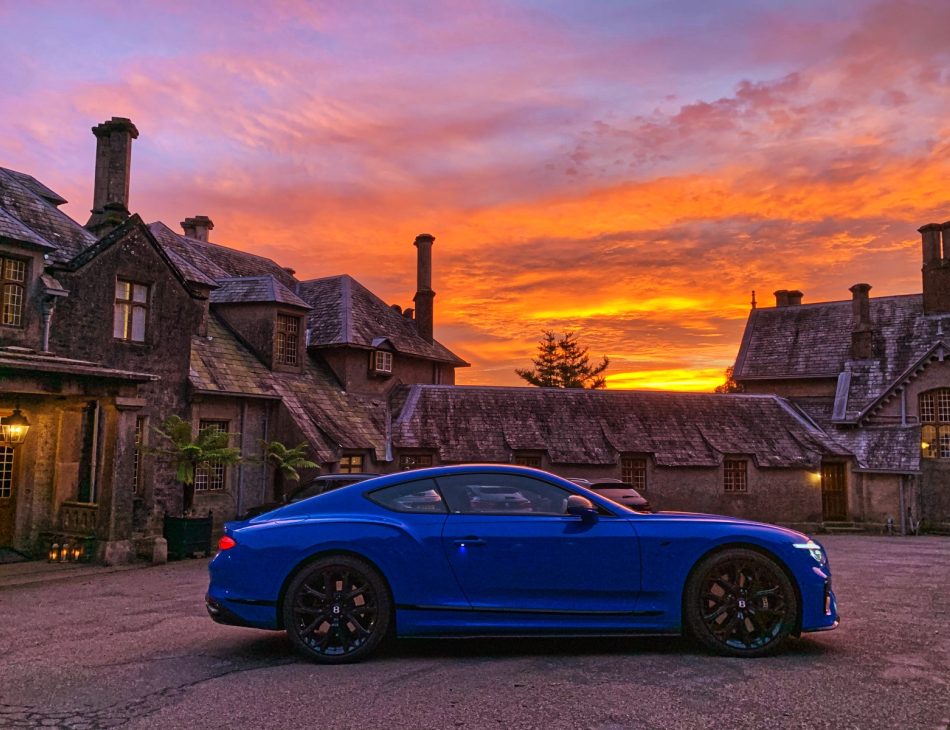
entley GT S at Endsleigh Hotel Devon
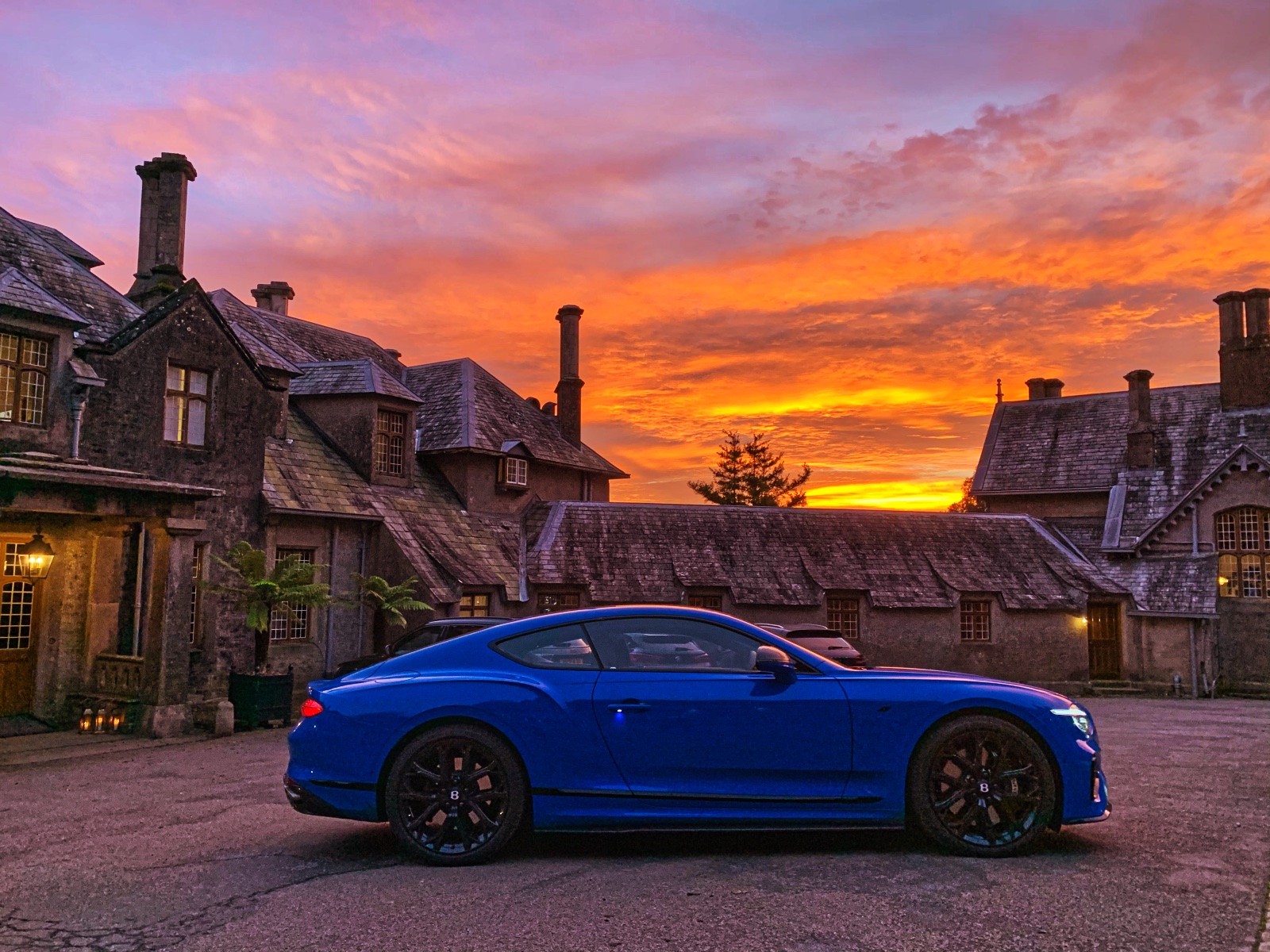
There is only one proper way to arrive at a house built for a duke, and that is in something a duke would covet. So we came to Hotel Endsleigh in the glorious Bentley GTS in Spark Blue, which felt like the only sensible choice for a weekend with the ghosts of the Bedfords.
“En voiture, Simone,” I announced to Emily as we pulled out of the drive. It’s an old French way of saying “off we go”, and she pointed out that it doesn’t apply to her, since she isn’t called Simone. The Bentley took the long road west with the unhurried calm of a butler carrying a full decanter, swallowing the A30 along the northern edge of Dartmoor in a hush of leather and walnut. Then came the Devon lanes, with hedgerows so high and roads so narrow that I spent the last few miles breathing in on the car’s behalf.
At last the woods opened, the drive dropped down towards the Tamar, and the house appeared below us like a watercolour by Repton himself. The tyres crunched on the gravel, the engine fell silent, and for a moment neither of us said anything at all.
Hotel Endsleigh Review: Can the Third Polizzi Hotel Top Tresanton?
I’ll be frank. Beneath all that leather and walnut, I arrived slightly worried. Having stayed at Hotel Tresanton in St Mawes and The Star at Alfriston, I wondered how much better, or how much different, Hotel Endsleigh in Devon, the third member of The Polizzi Collection, could possibly be. Lightning, I reasoned, rarely strikes the same family three times.
I was wrong, and gloriously so. This country house hotel in the Tamar Valley is very different, and absolutely incredible. Les doigts dans le nez, as the French say of anything done with such ease that it looks like nothing at all.
A Welcome Worthy of the Bedfords
From the very first moment, Paul, who greeted us, and Sarah on reception made it clear that this would be every bit as exceptional as its sisters. Then Paul gave us a tour, and we realised just what a fabulous two days lay ahead.
The house is staggeringly beautiful, the jaw-dropping kind of beautiful that stays with you long after the engine has cooled. It is also, in winter, wonderfully imposing. With the leaves gone and the woods stripped back to bare grey limbs, the cottage orné loses its summer prettiness. In its place stands something altogether more Gothic. The stone darkens to the colour of pewter, rain glistens on the roofs, woodsmoke drifts against a low sky, and mist rises off the Tamar below. It looks less like a pretty country retreat and more like a house with secrets, the kind of place where a Brontë heroine might arrive by night with a single trunk and a troubled past.
A Bathroom I Intend to Move Into
Our suite, number 20 on the first floor of the converted stables, was once the hay loft. The horses’ loss is entirely our gain. You climb from a private entrance below to a hall with a work desk at the top of the stairs (in case anyone feels the urge to be productive, which nobody did). Beyond is a lounge with a sofa so deep and so long that it seems designed for serious, competitive lounging.
Then there is the bathroom, which has just replaced my favourite bathroom of all time, and I don’t say that lightly. Two great oak beams cross the roof, one inscribed “Duck” and the other “Ditto”, which charmed me completely. The shower is a freestanding cylinder clad in Mediterranean blue tiles, a work of art in itself. The freestanding bath and the twin basins, sunk into pale blue wood, are, to borrow a phrase from the beams, ditto. I could live in there. I very nearly did.
A Duchess Who Wanted a Cottage
Endsleigh owes its existence to a woman with homesickness and a husband with deep pockets. John Russell, 6th Duke of Bedford, built it between 1810 and 1816 as a private family retreat, but the guiding spirit was his second wife, Georgiana, daughter of the Duke and Duchess of Gordon, who had grown up in the Scottish Highlands. After the stiff formality of Woburn Abbey she wanted something rustic, and she called her new house “a cottage”.
The cottage turned out to be a cottage orné, the grandest possible form of the thing, all asymmetric slate roofs, rustic stonework and clustered chimneys, set above a bend of the River Tamar. Pevsner wrote that the situation of Endsleigh “can hardly be matched”. Two hundred years later I’m not inclined to argue with him. The Bedfords were so fond of the place that several Bloomsbury streets off Tavistock Square bear its name.
There was intrigue too, naturellement. Regency gossip had the painter Edwin Landseer rather closer to the Duchess than any portrait sitting strictly requires. And the Duke, persuaded by everything he was shown, ran up serious debts making it all real. Il avait les yeux plus gros que le ventre: his eyes were bigger than his stomach. Looking at the result, I can’t blame him.
Two Geniuses and One Coach Too Few
Endsleigh is the work of two of the great designers of the age, who by most accounts were not the best of friends.
Humphry Repton, the man who coined the term “landscape gardener”, went first. In 1809 he and his sons drew up a plan for the house, complete with watercolours, and the Duke and Duchess turned it down in favour of a scheme by the architect Jeffry Wyatt. Wyatt began building in 1810. His first layout for the grounds, however, disappointed the Duchess, so in 1814 Repton was called back to do the garden. Each man had now had a design rejected and seen the other given the job. That is a recipe for rancour if ever there was one.
Repton by then was badly disabled after a carriage accident in 1811, and he surveyed the valley from a sedan chair carried by estate workers. His Red Book of proposals, a facsimile of which sits in the hotel hall, called Endsleigh “the most picturesque subject on which I have ever been professionally consulted”.
As for the two of them, Ben, our garden guide, tells a splendid story. Repton supposedly refused to share a coach down to Devon with Wyatt, announcing that he would not travel with “that corpulent man”. The two seem to have regarded each other en chiens de faïence, like a pair of china dogs glaring at each other from opposite ends of the mantelpiece. Whether or not the line was ever spoken, the story has an elegant postscript. In 1824 George IV hired the architect to remake Windsor Castle and allowed him to lengthen his name to Wyatville. Mocked for his girth, he simply made his name bigger.
Painting With Landscapes
Our garden tour was led by Ben Ruscombe-King, Endsleigh’s head gardener, and it was the highlight of a stay full of highlights.
The grounds are extraordinary: 108 acres of steep, sylvan, impossibly romantic Devon valley that pours down to the Tamar, every view composed like a canvas. The Duke and Duchess weren’t really gardening, Ben explained, they were painting with landscapes. To give Georgiana her lost Highlands, the woods on the far bank were replanted with conifers, with Scots pines raised by the hundred thousand. The effect today is wild, brooding and breathtaking, a corner of Scotland transplanted to the Cornish border.
Down in the Dairy Dell, Repton dammed and diverted a stream into a series of rills, pools, cascades and waterfalls, nearly all of them still working exactly as he intended. The whole system is gravity fed from a channel high on the hillside. The gardeners still adjust the flow by hand and leave branches hanging over the falls so that icicles form in winter. At the foot of the ravine stands the thatched dairy, lined with Wedgwood tiles, where the Duchess dressed as a milkmaid and played at making cheese. Marie Antoinette would have approved. Nearby is the Holy Well, Endsleigh’s oldest feature, salvaged from the abbots of Tavistock’s medieval hunting lodge.
The Grade I listed Shell House, a little round summerhouse built to display fossils, crystals, minerals and shells, perches above the river as proof of just how wonderfully mad these people were. The French have the perfect word for it: une folie, which means both a garden folly and a fit of madness. The Duke even had an uninhabited cottage built in the woods, purely so that someone could light the grate and send a picturesque plume of smoke curling up through the trees. That is landscape painting with real smoke.
Nearer the house is the fan-shaped parterre, designed with children in mind, where the ducal offspring sailed toy boats along a curving rill. Next comes a long herbaceous border, reputedly the longest unbroken one in England. On the terrace, look down: the floor is a mosaic of sheep’s knucklebones, a cheap and plentiful building material of the age. Archaeologists found a similar floor at the Curtain, the London theatre where Shakespeare’s company played before the Globe.
Trees Older Than the Gossip
The surrounding woodland was planted as an arboretum and holds around eighteen champion trees, depending on who is counting and which tree has had a growth spurt. Each is the largest of its kind in the country, a title it presumably defends with quiet dignity.
There is a Wellingtonia, the giant sequoia that can live for more than 3,000 years and will certainly outlast this review. There is a dawn redwood, a true living fossil: it was known only from fossils until it was found alive in China in the 1940s. There is a ginkgo biloba, the tree traditionally planted beside temples and shrines in the East, and a magnificent weeping beech that sweeps the ground like a ball gown. The Asian influence is everywhere, and so are the rhododendrons, camellias and bamboos, planted to look as though they arrived on their own.
Endsleigh is often called Repton’s last garden, and it is certainly among his final works. He died in 1818. If you are going to bow out, bow out with this. After the tour we took a very long walk around the entire estate and came back exhilarated and starving, which is the correct order of things.
Before Dinner by the Fire
We took a drink in one of the many lounges, beside an enormous fireplace beneath a giant gold-framed mirror. The wine and drinks list is impressively wide-ranging, with the classics plus plenty of new discoveries. The whisky list is global and comprehensive, leaving very little out. Duchess Georgiana would have approved of its loyalties, because it leans heavily north of the border. There’s Ardbeg and Port Charlotte from Islay, Cragganmore from Speyside, a 15-year-old Glenfarclas full of raisins, sherry and orange peel, Kilkerran from Campbeltown and Torabhaig from Skye. Then it roams the world, from Belmont Farm in Virginia to Mackmyra from Sweden and Nikka Coffey Grain from Japan. My favourite tasting note belongs to the Craigellachie 13, which promises ham glazed with Demerara sugar and a whiff of barbecue smoke. That sounds less like a dram than a Sunday lunch. Christophe, the sommelier, steers you through the lot with real knowledge and not a trace of snobbery.
The dining room is hung with heraldic shields bearing the great names of English nobility, the kind of company the Bedfords kept, which makes dinner feel rather like an evening with the ancestors.
Dinner With the Ancestors
The sun-dried tomato and olive bread arrived soft and juicy with a rich vinaigrette. Superbe. Between us, the starters were coronation crab on za’atar toast, brightened with confit citrus, mango pickle and coconut, and a chicken liver and foie gras parfait with fig, pickled mushroom and toasted fig bread. Both were exemplary. The crab was a clever little tour of the spice routes, and the parfait was as smooth as a Regency courtier.
For my main course I had the halibut, on lemon and caper crushed potato with tenderstem and a brown shrimp and caper beurre noisette, nutty, buttery and sharp all at once. Emily had the lemon sole with a lobster raviolo, wilted spinach, samphire and a vermouth sauce. There was a brief diplomatic incident over sharing (some people just cannot share fine food).
The desserts were exceptional. One was a dark chocolate, pistachio and cranberry brownie with white chocolate chiboust, chocolate crémeux and a sea buckthorn sorbet, made from that bright orange coastal berry with a tang that could wake the dead. The other was a lemon and passion fruit meringue tart with basil sorbet. The meringue was soft and creamy, as was the brownie, but the basil sorbet was the standout of the night, herbaceous and cool and quite unexpected.
The wines were fine and the service finer: friendly, warm, attentive and never fussy. Superb. Polizzi hotels always do this better than anyone. Dinner is £80 for three courses or £62 for two.
Afternoon Tea Without the Tea
The next day we had afternoon tea for two in the Quiet Room, by the fireplace, looking out over the parterre as the sun set over the Tamar. It was a fabulous sunset, the sort that seems to have been ordered specially from the Duchess’s landscape catalogue.
Champagne came first, then tea. “Tea” is something of a euphemism, as neither of us drinks it, or coffee. Yes, we are weird that way. The menu offers eleven loose-leaf teas, from Lapsang Souchong to Berry and Hibiscus, all of which we nobly ignored. The seasonal squash velouté was a triumph, warming and rich, and it arrived in excellent company. There was a goats’ cheese gougère with Parmesan craquelin, and an Old Cornish and apricot sausage roll, the sweet and savoury marriage every picnic deserves. Smoked salmon and cream cheese, cucumber and cream cheese, and coronation chicken make the finest finger sandwich trio known to civilisation.
The plain and fruit scones were soft and delicious. They came with Cornish clotted cream and strawberry conserve, and we ate them the Devon way, obviously: cream first, jam on top. There is a delicious irony in spreading Cornish cream the Devon way on the Devon bank of the Tamar, with Cornwall looking on from across the river. Sorry, Dawn French, a loyal Cornish-style aficionado. The carrot cake, with cinnamon whip and candied walnuts, was superb. The St Clement’s meringue tart was obscenely good, though the Black Forest chocolate choux au craquelin beat it for obscenity. Afternoon tea is £40 per person.
The Polizzi Touch
Endsleigh is exceptional because of where it is, a valley of more than a hundred acres overlooking the Tamar and steeped in high aristocratic intrigue. It is equally exceptional because of who looks after it.
Olga Polizzi CBE is hotel royalty in the most literal sense. She is the daughter of Lord Forte, whose empire was once the largest hotel and catering group in the world, and the sister of Sir Rocco Forte. After art school she learned the trade in her father’s design department, and after the family company was taken over in 1996 she and Rocco founded Rocco Forte Hotels together. She remains its Deputy Chairman and Director of Design, and the look of Brown’s in London, the Hotel de Russie in Rome and The Balmoral in Edinburgh is hers. She also once served as a Westminster councillor, and as a fellow survivor of council chambers I salute her.
Her own collection began in 1998, when she bought Hotel Tresanton in St Mawes despite being told she would never make money in Cornwall. She bought Endsleigh in 2004, a dilapidated Grade I house that had spent half a century as a fishing lodge, and has said she bought it with her heart rather than her head. Her daughter Alex moved into the lodge house to oversee the restoration, and the hotel opened in August 2005. In 2019 mother and daughter bought The Star at Alfriston together, opening it in 2021.
Alex Polizzi, known to millions as Channel 5’s The Hotel Inspector, read English at Oxford, trained at the Mandarin Oriental in Hong Kong and worked for Marco Pierre White before running Endsleigh in its early years. Her sister Charlie runs the collection’s wellness retreats. Between them the family have something you can’t buy or train for: an instinct for picking the very best people to look after guests.
That instinct is everywhere at Endsleigh. Sarah on reception and the lovely staff made us feel at once like old friends dropping by and like visiting royalty. Aesthetics matter, and the Polizzi decor is simply exquisite. Nobody does British hotels better.
Beyond the Gates of Endsleigh Hotel
Endsleigh sits near Milton Abbot, about six miles north-west of Tavistock on the Devon and Cornwall border. The great outdoors begins at the front door. Lydford Gorge, owned by the National Trust, is the deepest river gorge in the South West, with the 30-metre White Lady Waterfall at one end and the swirling Devil’s Cauldron at the other. Dartmoor lies a short drive east for proper moorland walking. For a gentler afternoon, follow the Tavistock Canal out of Sir Francis Drake’s home town.
Et Finalement
Endsleigh is the quintessential English luxury hotel, set in fascinating historical gardens and run by a family who understand that beauty and warmth have to go together. It is a duchess’s daydream preserved in honey-coloured light. I will forever miss reading a good book in that bathroom.
Need to Know
Hotel Endsleigh, Milton Abbot, Tavistock, Devon PL19 0PQ. 21 rooms and suites, part of The Polizzi Collection with Hotel Tresanton and The Star at Alfriston. We stayed in suite 20 in the former stables, the old hay loft, at £490. The Gatehouse Lodge suite also sits in the old stables, and another suite has bunk beds for families with children. The gardens are Grade I listed and an RHS Partner Garden.
Frequently Asked Questions
Where is Hotel Endsleigh?
Hotel Endsleigh is at Milton Abbot, about six miles north-west of Tavistock in Devon, in the Tamar Valley on the border with Cornwall and the western edge of Dartmoor.
Who designed the gardens at Endsleigh?
Humphry Repton designed the gardens in 1814. It was one of his last commissions and is often described as his last garden. His Red Book of proposals is reproduced in the hotel hall.
Who designed the house?
Jeffry Wyatt, later Sir Jeffry Wyatville, designed the house as a cottage orné for the 6th Duke of Bedford and Duchess Georgiana. Building began in 1810. Wyatville later remodelled Windsor Castle for George IV.
Did Repton and Wyatville get on?
By most accounts, not especially well. Repton’s 1809 designs for the house were rejected in favour of Wyatt’s, and Wyatt’s first garden layout was rejected in favour of Repton’s. The estate’s favourite story has Repton refusing to share a coach with “that corpulent man”.
Who owns Hotel Endsleigh?
Olga Polizzi bought Endsleigh in 2004 and restored it with her daughter Alex. It opened as a hotel in 2005 and is part of The Polizzi Collection.
How many rooms does Hotel Endsleigh have?
21 rooms and suites, including suites in the converted stables and a family suite with bunk beds.
Can non-residents visit the gardens?
Yes. Endsleigh is an RHS Partner Garden, and non-residents can also book lunch, dinner and afternoon tea.
What are the champion trees at Endsleigh?
Champion trees are the largest examples of their species in the country. Endsleigh’s arboretum holds around eighteen, alongside a Wellingtonia, a dawn redwood, a ginkgo and a spectacular weeping beech.
What should I see in the Endsleigh gardens?
The Dairy Dell cascades, the thatched dairy, the Shell House, the Holy Well, the parterre with its children’s rill, the long herbaceous border and the knucklebone floor on the terrace.
What is there to do near Hotel Endsleigh?
Lydford Gorge, Dartmoor National Park, walks along the Tavistock Canal, and the Tamar Valley itself.
Is Hotel Endsleigh good for families?
Yes. One suite has bunk beds for children, and the grounds are a natural adventure playground of streams, tunnels and woodland.
How much is afternoon tea at Hotel Endsleigh?
Afternoon tea at Hotel Endsleigh is £40 per person. Dinner is £80 for three courses or £62 for two.