

David's Drink Diaries - Issue 31
The Whites
One of the pleasures of tasting at this time of year is discovering how deeply place shapes a wine’s character. Winter slows everything down, giving you time to notice the things you might have missed: the origins of a grape, the temperament of a region, or the decisions of a winemaker. This collection shows just how varied those stories can be.
Roche Lacour Crémant de Limoux 2022 comes from a region that predates Champagne by more than a century. Limoux’s Blanquette was first documented in 1531 by the monks of Saint-Hilaire, and today the area still specialises in high-altitude sparkling wine. Laurent Mingaud sources fruit from cooler sites around the Pyrenean foothills, where Chardonnay and Pinot Noir develop freshness without losing ripeness. Half the blend is fermented in oak, giving the creamy, toasty lift that has made this Laithwaites staple so enduring. The lighter bottle makes a noticeable difference too, reflecting an ongoing shift across Limoux toward lower-impact packaging. (available here for £15.99)
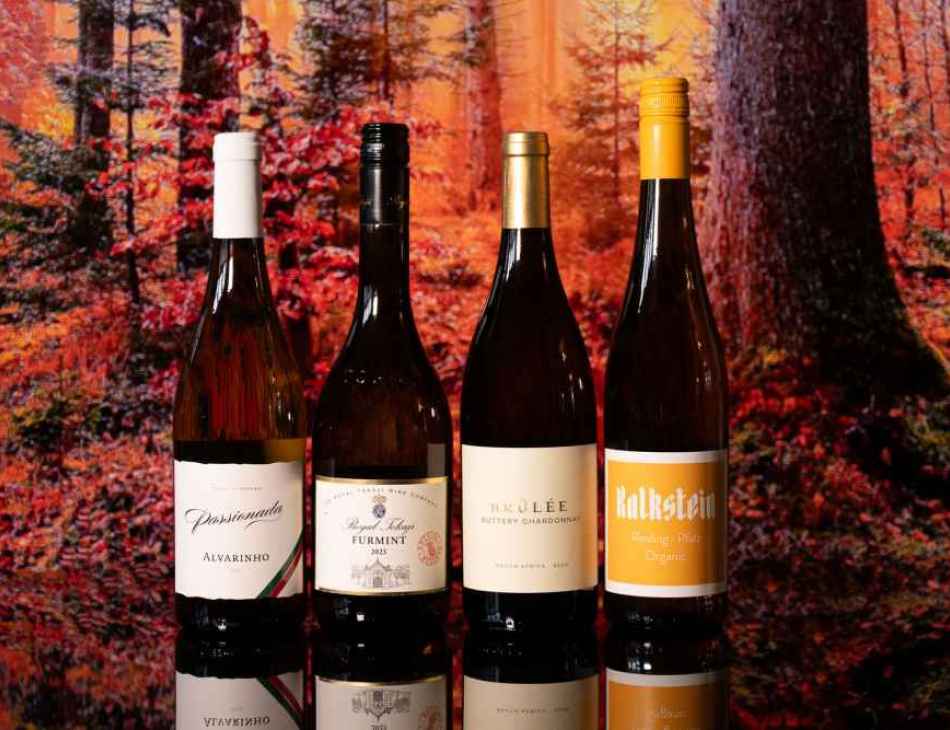
Brûlée Buttery Chardonnay 2025 is made by Journey’s End, a sustainability-focused estate in South Africa’s Stellenbosch region. Sitting on the slopes of the Schapenberg, the estate benefits from cooling False Bay winds, which allow for full-flavoured Chardonnay without losing acidity. Journey’s End was one of the first South African wineries to earn WWF Conservation Champion status, and its wines often show a balance between richness and freshness that reflects that landscape. This new cuvée leans into the fuller, more indulgent side of the grape, with oak, lees and ripe fruit working in tandem. (available here for £13.99)
Kalkstein Organic Riesling Pfalz 2024 comes from Weingut Gabel, a historic estate founded in 1655 in Herxheim am Berg, one of the northernmost, cooler corners of the Pfalz. The region is Germany’s second-largest winegrowing area, known for its sandstone and limestone soils, and the Gabel family has been farming organically for over a decade. The Kalkstein cuvée draws specifically from limestone plots that give Riesling a firmer, more linear structure. Traditional wooden casks (Stück and Halbstück) bring subtle roundness without masking that mineral edge. (available here for £15.99
Passionada Alvarinho 2024 is produced by Anselmo Mendes, widely regarded as the most authoritative voice in Vinho Verde. Based in Monção and Melgaço, the northernmost subregion and the birthplace of Alvarinho, Mendes has spent decades refining techniques such as long lees ageing and precise vineyard selection. The vineyards for this wine sit just across the river Minho from Galicia’s Rías Baixas, sharing its granite soils and Atlantic climate. Stainless steel, fine lees and batonnage keep the style zesty yet textural, capturing the variety at its most pure. (available here for £13.99)
Royal Tokaji Dry Furmint Special Reserve 2023 comes from Tokaj, one of Europe’s oldest delimited wine regions, officially classified in 1737. Royal Tokaji was founded in 1990 with Hugh Johnson as one of its guiding figures, and the estate has played a central role in reviving the region’s dry wines. Furmint, long known for its role in Tokaji Aszú, has proved equally compelling as a dry white, thanks to its high acidity and volcanic-mineral backbone. New oak adds spice and shape while allowing the grape’s orchard fruit and tension to shine. (available here for £13.99)
Les Armes des Princes 2024 is made by Cellier des Princes, the only cooperative in Châteauneuf-du-Pape, established in 1925. Based in Courthézon but sourcing from growers across the southern Rhône, the cooperative has long been known for wines that deliver both typicity and value. This cuvée, grown around Orange on stony, clay-limestone soils, brings together Grenache, Syrah, Caladoc and Carignan. The proximity to Châteauneuf is felt in the richness of the fruit and the warmth of the spice, but the wine remains approachable and gently structured. (available here for £14.99)
Baron de Barbon Oak Aged Rioja 2022 is produced by Javier Murúa of Bodegas Muriel, a family winery based in Elciego in Rioja Alavesa, the region most associated with fine-grained Tempranillo. The area’s chalky clay soils and higher elevation are ideal for producing elegant, fruit-led styles. For over two decades this has been one of Laithwaites’ most reliable reds, offering supple tannins, subtle oak and an immediately appealing profile. Classic Rioja Alavesa in an easy-drinking frame. (available here for £12.99)
Redheads Wilson Gunn Bellum Cabernet Shiraz 2023 draws from two of Australia’s most storied regions. Coonawarra’s terra rossa soils give Cabernet Sauvignon its distinctive mint-edged purity, while Barossa Shiraz contributes plush fruit and generosity. Redheads Studio, now based in Barossa after its beginnings as a “garage winery” in McLaren Vale, specialises in small-batch parcels from trusted growers. The Wilson Gunn Bellum blend has become something of a tradition within the Laithwaites family, originally made by Henry Laithwaite during his Australian harvest years. The 2023 maintains that sense of richness combined with definition. (available here for £18.99)
Britpop Elderflower Spritz by Alex James NV reflects a different kind of craft entirely. Forager-led elderflower drinks have deep roots in Wales and the West Country, and James sources blossoms at their peak before fermenting with Champagne yeast to keep the style bone-dry. At 6% ABV, it sits in the growing category of low-alcohol, botanical spritzes that have found favour for their freshness and versatility. It is unfussy, fragrant and ideal for the days between celebrations. (available here for £12.99)
Cimaio 2017, Marche IGT, is made from Verdicchio dei Castelli di Jesi grapes left to hang late into the season in the hills of the Marche, a region known for its Adriatic breezes and calcareous soils. Botrytis is not common here, but in certain vintages it appears in pockets, giving wines like this their honeyed depth. Despite the sweetness, Verdicchio’s natural acidity prevents any heaviness, making this a bright, elegant take on late-harvest winemaking. (available here for £15.99)
Baronesa de Vilar White Port NV comes from the Van Zeller family, whose winemaking history in the Douro stretches back more than 400 years. White Port, once a local curiosity, has become a modern favourite thanks to its versatility and the rise of the Port & Tonic. This bottling sits in the off-dry style, showing toffee, citrus and gentle spice when chilled. It is both a solo sipper and a base for many a winter aperitif. (available here for £12.99)
And Mar de Frades Brut Nature NV continues to stand as one of the most distinctive sparkling wines from Spain’s Atlantic coast. Founded in 1987 in the Salnès Valley, the winery has become synonymous with high-acid, saline Albariño shaped by granite soils and maritime winds. Paula Fandiño’s decision over a decade ago to produce a traditional-method Albariño was quietly revolutionary. By selecting early-harvested fruit, using only forty percent of the must, fermenting slowly at low temperatures and ageing just ten months on lees, she preserves the grape’s sea-spray freshness. The Brut Nature style, without added sugar, keeps the wine taut, mineral and unmistakably Galician. (available here for £28.99)


