

Burgh Island Hotel Review: Devon's Art Deco Time Machine - And One of the Greatest Places on Earth
If someone asks you whether you would like to spend a weekend in a 1930s Art Deco palace on its own private island in Devon, accessible only by sea tractor, the correct answer is yes. Do not even finish reading the question. PS, take a Porsche Cayenne GTS.
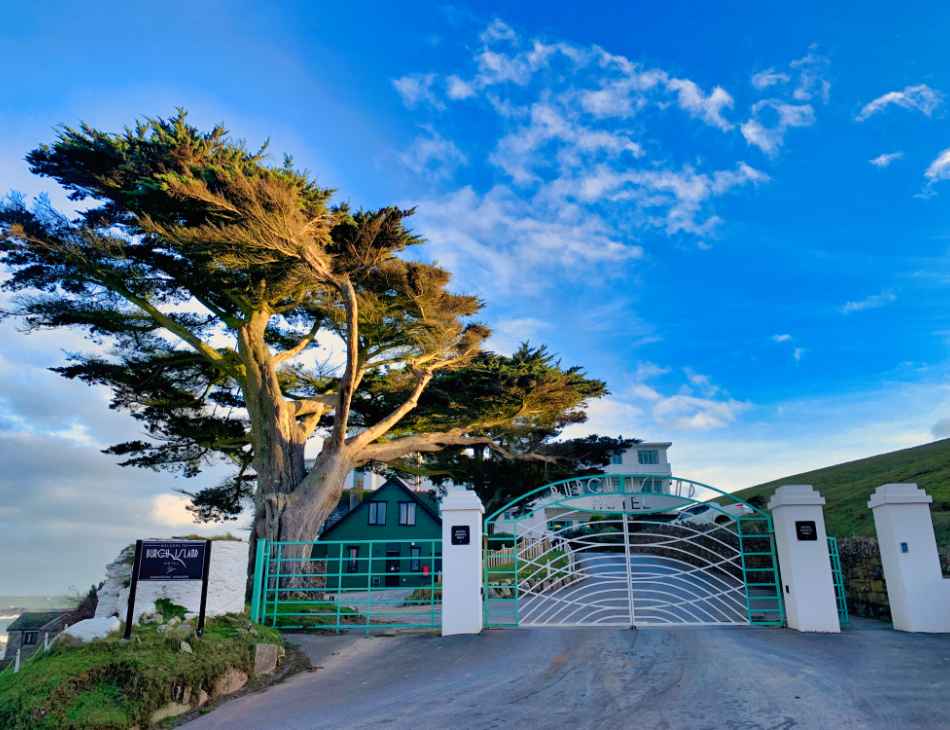
Burgh Island Hotel Review
Driving a Porsche on a Devon beach, arriving by sea tractor, and staying in a 1930s Art Deco palace on its own tidal island near Bigbury-on-Sea turns a weekend into a genuine adventure, with historic suites, exceptional dining, and Atlantic drama that lingers long after you leave.
Arrival: The Theatre Begins Before You Step on the Island
Burgh Island, a 26-acre tidal island off the South Devon coast near Bigbury-on-Sea, is unique. I had been here before, some years ago, on a fashion shoot, entirely too busy arranging collarbones and light reflectors to look up and notice that I was standing in the middle of something extraordinary.
This time, arriving in considerably more comfortable circumstances aboard a Porsche Cayenne GTS with the sun on the water and no camera crew to answer to, I was paying attention. And what I found left me, frankly, a little stunned.
We may also have taken the Porsche down onto the sandy beach for a few entirely responsible, completely necessary test manoeuvres, on the reasonable grounds that a Cayenne GTS on a Devonshire beach is simply what the engineers at Zuffenhausen had in mind all along.
Let me be direct: Burgh Island is one of the wonders of the world. I do not deploy this phrase lightly. I have seen a few things. But there are moments when hyperbole and reality converge, and this is one of them.
Getting There: The Theatre Begins Before You Arrive
The approach to Burgh Island is itself a kind of overture. You park on the mainland at Bigbury-on-Sea and call the hotel. Shortly afterwards, Liam arrives at the wheel of a Land Rover and drives you across the causeway as though this were entirely normal behaviour, narrating the island's history with the easy authority of someone who has fallen thoroughly in love with the place. Which, as it turns out, is the only reasonable response.
At low tide you can walk across on your own two feet, the hard-packed sand bearing some of the most pleasurably disorienting footsteps you will ever take. But at high tide, you board the sea tractor: an extraordinary piece of hydraulic ingenuity, the current third-generation model dating from 1969, all orange steel and diesel thunder, riding high above the waves on enormous wheels while the sea foams cheerfully underneath. It is, without question, the most eccentric hotel transfer in the United Kingdom, and probably several neighbouring countries. The original sea tractor dates to 1930, which tells you something about the island's commitment to doing things its own way.
The island itself is approximately 250 metres from the mainland. A fact that sounds modest until you are standing on it and the tide has come in and the world has, quite discreetly, disappeared.
The Island: Walk It. Immediately. Do Not Pass Go.
Before unpacking, before making any decisions about bathrooms or which bag to unpack first, I insisted on a long walk around the island. At a casual pace to take it all in. Every forty-five seconds, the eye finds something that demands admiration: jagged rocks sculpted by millennia of wind and tide, cove after cove where the sea conducts its permanent percussion, waves forming chords older than any building.
At the summit lies the ruin of an ancient huers’ hut, where fishermen once cried to alert their fellows to shoals of pilchards. Standing there, looking out to the Atlantic, the full drama of Devon unfolds: waves, cliffs, the distant rolling hills, and the way the horizon seems to shimmer with possibility. Returning down, the path reveals the twin beaches: dark sand flanking the causeway and the golden sweep of Bigbury-on-Sea opposite. The hotel perches above all of this with Art Deco poise, the sea on three sides, the mainland like a hesitant witness. Bring someone you love, or come alone and fall quietly to pieces in the nicest possible way.
The Hotel: Art Deco by Way of a Fever Dream
Burgh Island Hotel is the kind of building that refuses to be conventional. The island hosted parties in the 1890s under music hall star George H. Chirgwin, who erected a prefabricated wooden house for weekend revelry. In 1927, Archibald Nettlefold purchased the island, building the Art Deco masterpiece that stands today. Opened in 1929 and extended in 1932, the hotel attracted Noel Coward—who came for three days and stayed three weeks—Winston Churchill, Edward VIII and Mrs Simpson, Agatha Christie, and eventually the Beatles, who arrived less Art Deco but no less welcome. During WWII, the hotel became a recovery centre for wounded RAF personnel. Top floors were bomb-damaged, later repaired, then the hotel fell into flats until Tony and Beatrice Porter restored it in the 1990s, rescuing its elegance and historical integrity.
Today, the exterior is confident whitewashed Art Deco, daring against the grey Devon sky. Inside, 1935 never ended: Bakelite telephones beside the beds, pre-war cocktails at the bar, black tie expected twice a week, limited mobile signal, and a wifi password that feels almost impertinent. Every detail insists you adjust to the hotel’s own tempo, which is slightly slower than the world outside and far more elegant.
The Rooms: A Suite for Every Obsession
The 25 rooms and suites bear the names of celebrated guests, a subtle nod to the island’s history. The Tony & B Suite, our chosen refuge, is less a room than a private world. Enter through the hall to a large Art Deco living room, a bedroom of generous proportions, and two bathrooms at either end lined in pearlescent black marble. Art Deco mirrors and lamps, the sort of glamour reserved for 1930s films, illuminate the space. From the terrace, the causeway, twin beaches, and Devon hills stretch in cinematic sweep. Croquet on the terrace feels compulsory.
Agatha’s Beach House, almost impossibly seductive, sits at sea level, carved into the rock. Christie composed Evil Under the Sun and And Then There Were None here, with panoramic views, private outdoor hot tub, sun deck, and wood burner for when the Atlantic’s mood turns ferocious. One imagines her glass of something in hand, characters dispatched with cheerful efficiency, the waves providing the soundtrack.
The Artist’s Studio, above the Pilchard Inn, offers privacy, antique furnishings, and coastal views of quietly stupendous variety. Dog-friendly, it is ideal for anyone needing creative separation from fellow guests. The Amy Johnson Suite, named for the pioneering aviator, is gorgeously decorated and makes a reservation worth pursuing. Every room carries a subtle biography, adding a layer of history and intimacy to the stay.
The Palm Court: Where Churchill Had a Favourite Table
The Palm Court Bar is the social heart of the hotel and one of the finest rooms in England. The extraordinary stained glass ceiling filters the light into something warm and conspiratorial, while the 1920s Art Deco furniture and chrome bar provide the setting for cocktails that feel genuinely historical. Churchill reportedly had a favourite spot here; I did not ask which one, preferring to feel that every table was equally distinguished.
We were shown to the best seat in the house: upstairs in the upper gallery of the bar, overlooking the balcony and the fountain below, with the art deco cupola in stained glass rising above us like a very elegant greenhouse. We sat with a Laurent Perrier and a very happy grin.
The Grand Ballroom: Dinner as Time Travel
Dinner in the Grand Ballroom is a lesson in elegance. Black tie and flapper dresses are expected, a lovely chap at a white grand piano plays Gershwin live, and the menu demands attention: hors d’oeuvres accompanied by Laurent Perrier, Devon crab salad, smoked ham hock croquette, slow-carved duck with beetroot, winter squash risotto, apple charlotte, and miso caramel mousse. Seasonal, locally sourced, and respectful of the coastal larder, each course complements the setting. The candlelight and live music subtly transport diners to 1931, making the present century feel like a polite intruder.
Breakfast in the Nettlefold: The Morning After the Night Before
Breakfast in the Nettlefold is equally exceptional. Black-and-white tiled floors, pale blue and white Art Deco details, natural light streaming from two directions, and 1920s crooners create a dreamlike morning. Eggs Benedict, smoked kippers, pastries, and Devon cream go down a treat, whilst admiring the view. Our waitress Jade served us with the kind of natural warmth, helpful conversation and immense charm that would be considered a masterclass in hospitality almost anywhere else, but here seems simply to be the prevailing standard. The service throughout the stay was genuine, personal, and suffused with what I can only describe as Devonshire charm: unforced, unhurried, and quietly expert.
Things to Do: On and Off the Island
The island itself offers more than most people assume. The Mermaid Pool, a natural seawater pool carved into the rocks on the island's southern side, is available for swimming and, I am told, also holds the hotel's supply of fresh lobsters, which seems an admirably direct approach to restaurant logistics. There is croquet on the terrace (compulsory in black tie, I would argue), tennis, snooker in an original 1930s billiards room, and spa treatments available in the hotel's treatment rooms. Rowing boats can be hired for those who prefer their adventures oar-powered.
The hotel also runs periodic murder mystery weekends, which in Agatha Christie's own hotel feel less like a novelty and more like a form of literary pilgrimage. Fancy dress balls are held in the Grand Ballroom throughout the year, and the Pilchard Inn, on the island since 1336 and possibly one of the oldest pubs in England still operating, is available for something less formal when the ballroom feels like an extravagance.
Beyond the island, the surrounding South Devon coast repays exploration generously. Bantham Beach, a short drive north, is one of the finest surfing beaches in Devon and possesses the kind of unspoilt grandeur that makes you realise how much of the British coastline has been needlessly improved into mediocrity. Bigbury-on-Sea and Challaborough offer their own quieter pleasures. The South West Coast Path passes nearby, and a section of it provides clifftop walking of the stop-and-stare variety that the Devon coast does particularly well.
Salcombe, fifteen minutes or so along the coast, is among the prettiest sailing towns in England, good for a morning's browsing and a very decent lunch. Kingsbridge, the nearest market town, has maintained its medieval character with narrow streets, independent shops, and the kind of unhurried pace that makes clear it has not consulted London for some time and is perfectly content with the arrangement. Dartmoor National Park is just fifteen miles to the north: wild, ancient, and excellent for walking off the previous evening's Bordeaux.
For the nautically inclined, watersports are available along the coast, and the hotel can arrange boat trips for those who prefer to admire the island from the sea, which is, if anything, even more beautiful than admiring it from the land.
Sunrise and Why You Should Set an Alarm
The terrace of the Tony & B Suite faces east, and if you have the discipline to set an alarm before the dawn, the island will repay you richly. The sun comes up directly in front of you, the beaches below catch the first light before the mainland does, and the sea changes colour with a subtle palette. Sit in your deckchair in a hotel bathrobe of dubious grandeur, juice in hand, and watch the waves and rolling hills come slowly back into the world. This is one of those moments that makes the whole enterprise of travelling feel worthwhile. There is no better place than right here, different, but not better.
Historical Guests, Glamour, and Atmosphere
Burgh Island has hosted Churchill, Coward, Edward VIII, Agatha Christie, and later, the Beatles. WWII brought RAF recuperation. The Porters restored it in the 1990s. Every corridor, suite, and bar table retains a whisper of history: every stay is a step back into glamour, elegance, and slightly eccentric hospitality. The naming of suites after celebrated visitors lends every room an added richness, a sense that you are not merely lodging but inhabiting a piece of history.
En Somme: Time Travel in Devon
Burgh Island Hotel is an experience that alters you slightly, in the nicest possible way. The Tony & B Suite is the vessel; the Grand Ballroom, the stage; the Palm Court, the conspiratorial retreat. Atlantic waves, sunrise terraces, black tie, flapper dresses, murder mystery weekends, Porsche beach manoeuvres (bring your own), Christie retreats, and formal yet unforced service—Burgh Island delivers them all, with rare consistency and charm.
Arrivez avec le bon sens de la marée. Leave delighted, slightly comatose, and reluctant to return to the ordinary world.
Burgh Island Hotel, Bigbury-on-Sea, South Devon, TQ7 4BG


