
Porsche Cayenne GTS 2026 Review: A Tour Through Time
From a 16th-Century Priory in Wareham to the Art Deco grandeur of Burgh Island and the sun-bleached terraces of Tresanton in St Mawes, the Cayenne GTS navigates centuries, causeway sand, and a very memorable near-miss on the A303.
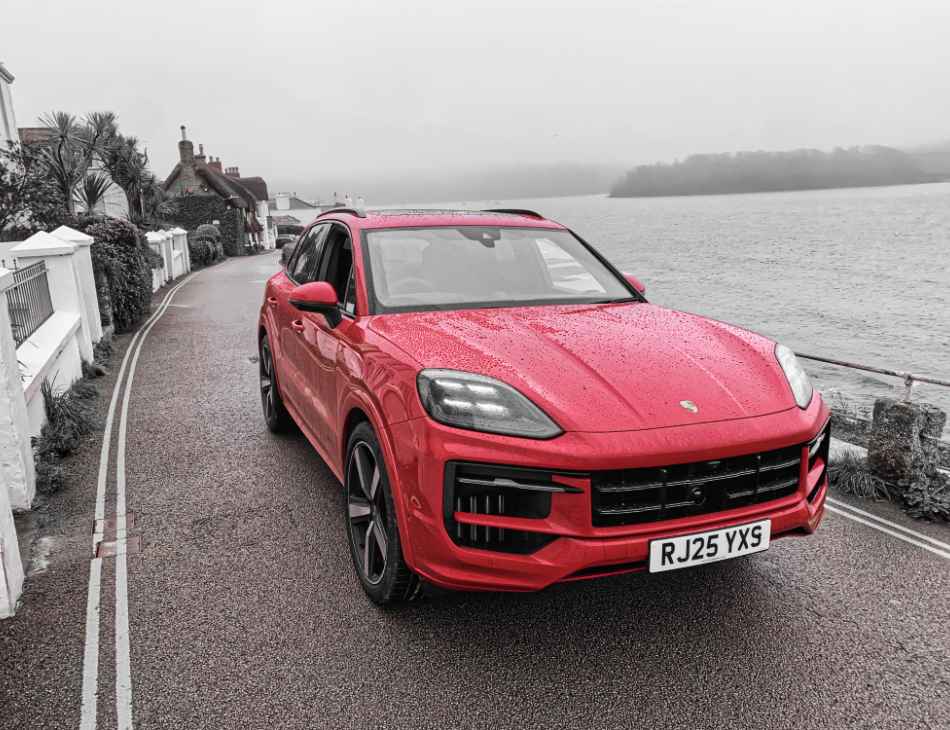
Porsche Cayenne GTS 2026 Review
The SUV That Started It All: Still the One to Beat
You can argue until the cows come home about what defined the first true SUV, but the Porsche Cayenne was undoubtedly the first high-performance SUV that genuinely merited the word sport in Sports Utility Vehicle. That was 2002. Porsche was mocked at the time, pilloried by purists who considered the whole enterprise roughly as dignified as turning up to Le Mans in a Renault Espace. The jokes have aged rather poorly. The Cayenne went on to save Porsche as a company, fund the development of everything from the 911 GT3 to the Taycan, and spawn an entire category of vehicle that every premium manufacturer on earth now builds. Not bad for a car that was once described, somewhat unkindly, as a betrayal.
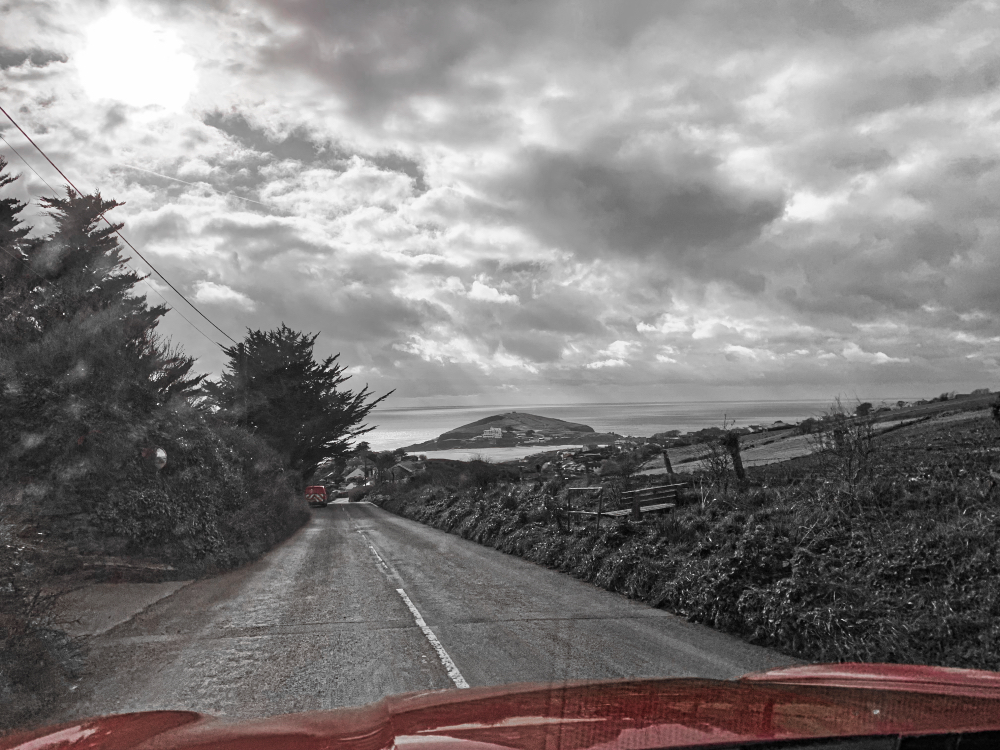
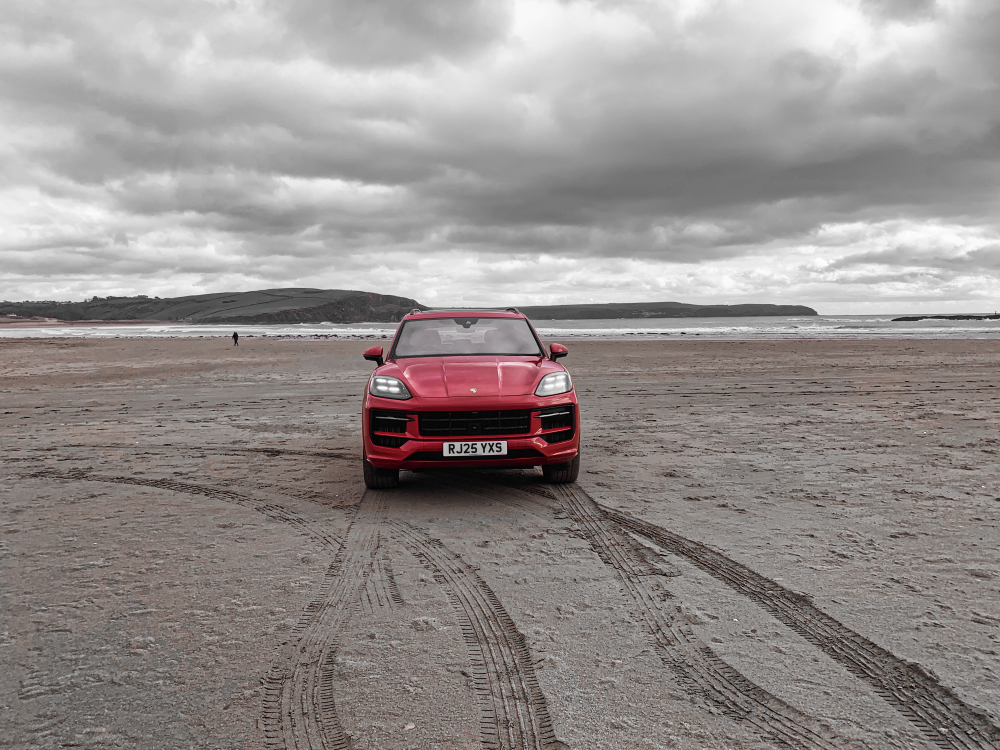
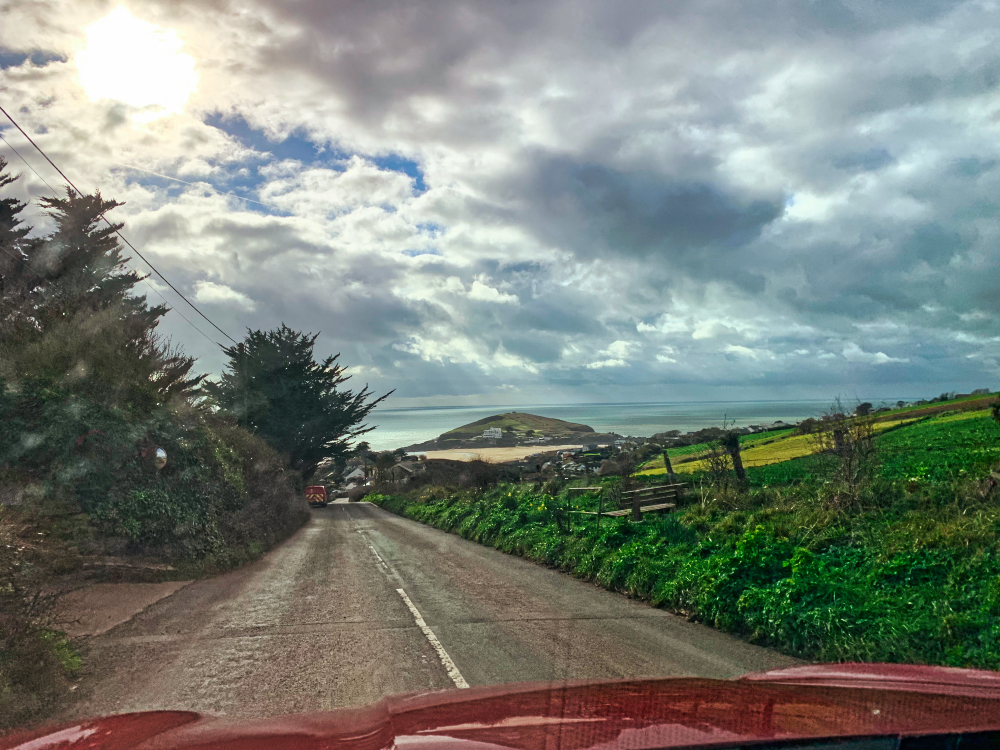
So what has Porsche done with it since? And how do you properly test the latest GTS iteration? We took it on a lust-driven tour of Cornwall and Devon in February, which is either the ideal time to properly test an all-weather performance SUV or the worst possible time for a holiday, depending entirely on your outlook. We navigated rain-sodden British A-roads riddled with potholes, went off-road around the edges of Bodmin Moor, and most memorably crossed the beach causeway at Burgh Island at high tide, with salt water spraying the sills and the engine note rising magnificently above the wind. Along the way we passed through three hotels that each represent a different era of British architectural and cultural history, and the Cayenne GTS connected them all without drama or complaint in style.
Porsche Cayenne GTS Specs: 500 PS and No Excuses
The 4.0-litre V8 biturbo produces 500 PS and 660 Nm of torque, numbers that meant considerably more to me the moment I pressed the accelerator somewhere outside Truro and felt the seat make its feelings very clear. The eight-speed Tiptronic S gearbox despatches power to all four wheels with conspiratorial smoothness, and the claimed 0-62 mph in 4.7 seconds is, je vous assure, entirely believable when you are not quite prepared for it, which on my first proper run along the A303 I most certainly was not. One hundred and seventy-one miles per hour is the theoretical ceiling, and while Cornwall's lanes and my own conscience kept things rather more modest, I understood perfectly well what this machine is capable of. The six-piston front brake calipers, clamping on 410 mm discs, with four-piston units and 365 mm discs at the rear, proved consistently equal to my occasional moments of Cornish optimism. As for the 22 to 23 mpg combined and 287 g/km of CO2, well, c'est la vie. You don’t order the GTS and then worry about the bill.
Porsche Cayenne GTS Exterior: Solidified Burgundy on 22-Inch Wheels
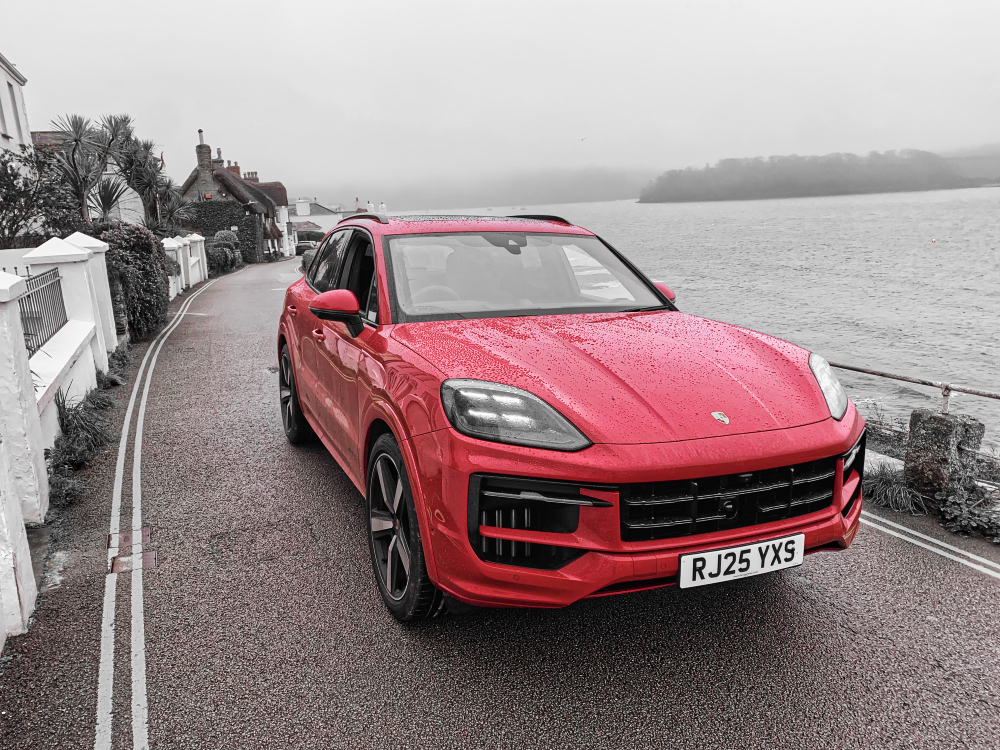
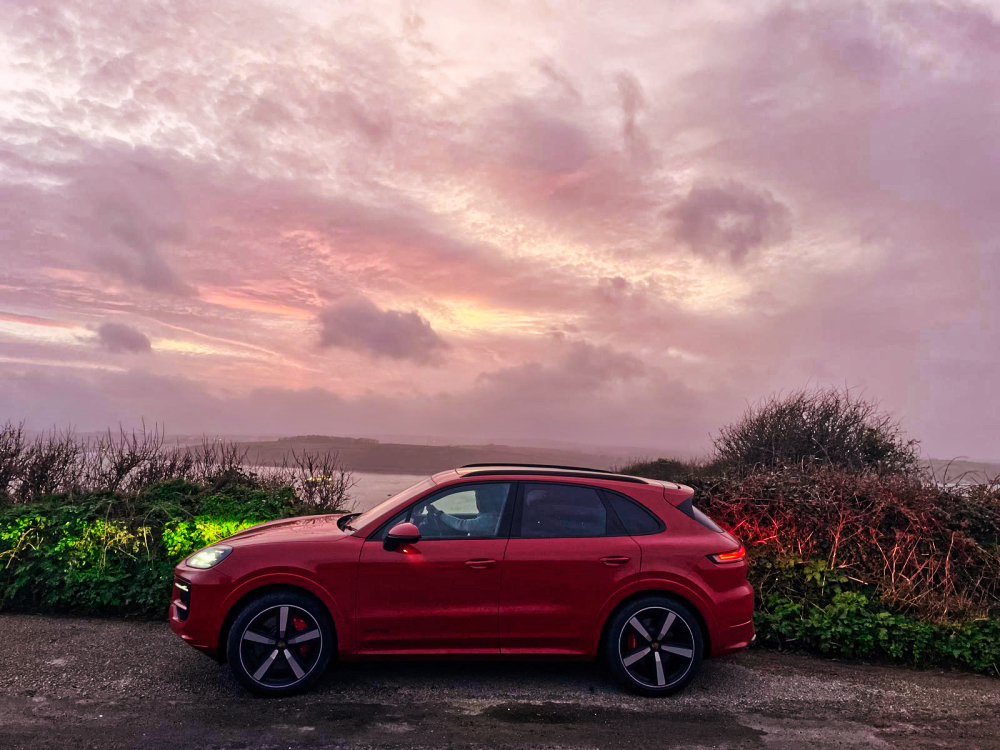
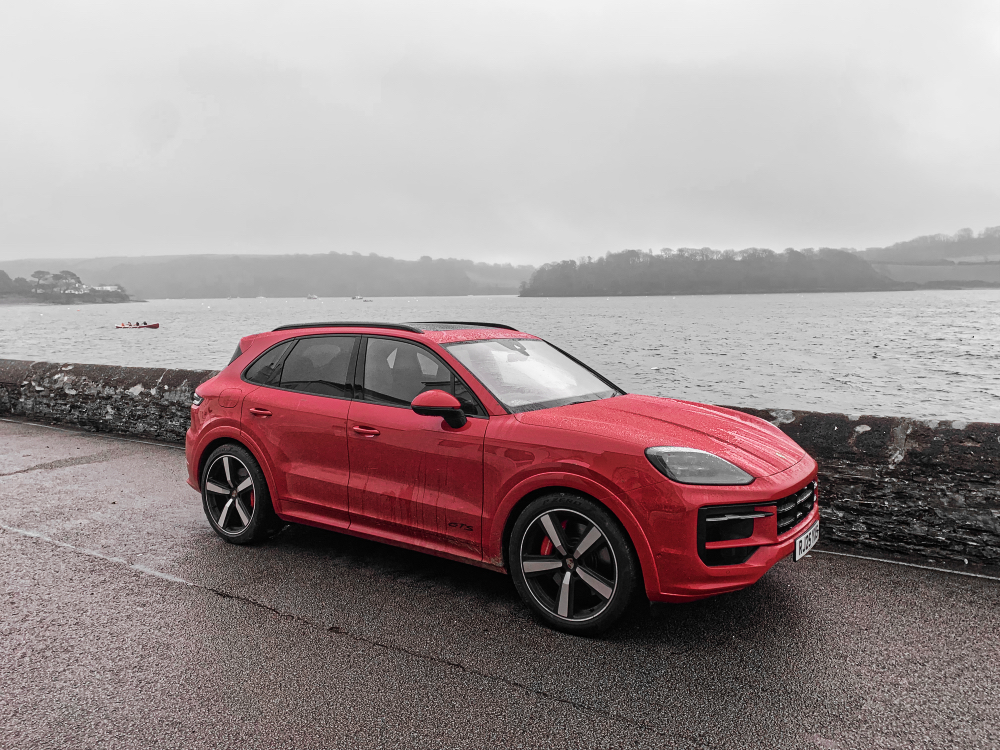
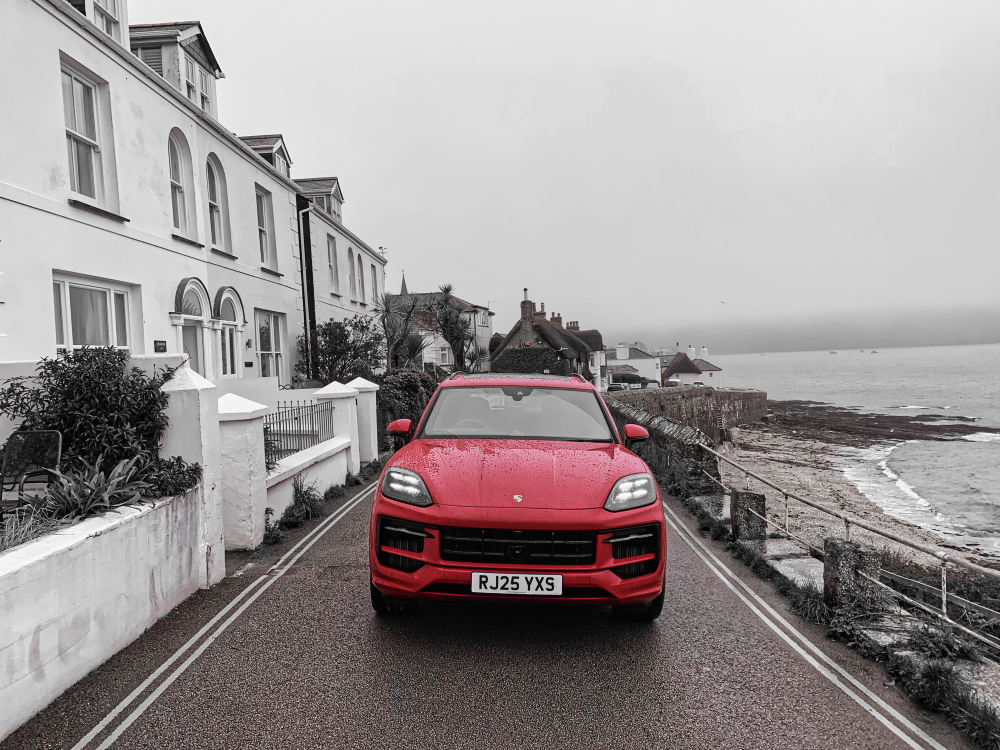
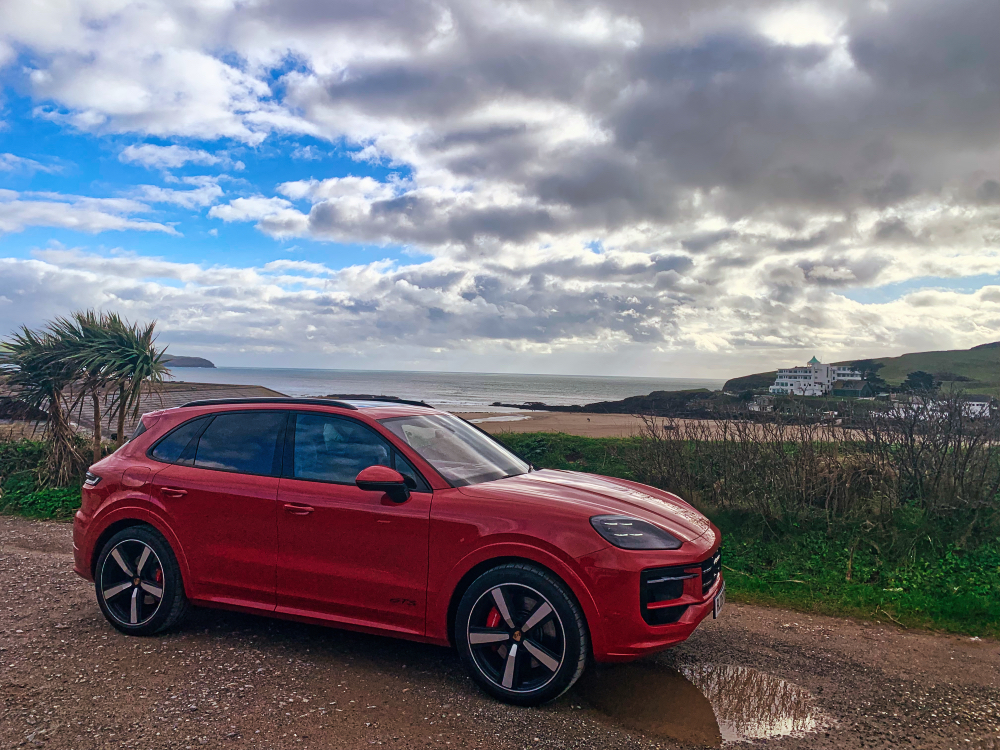
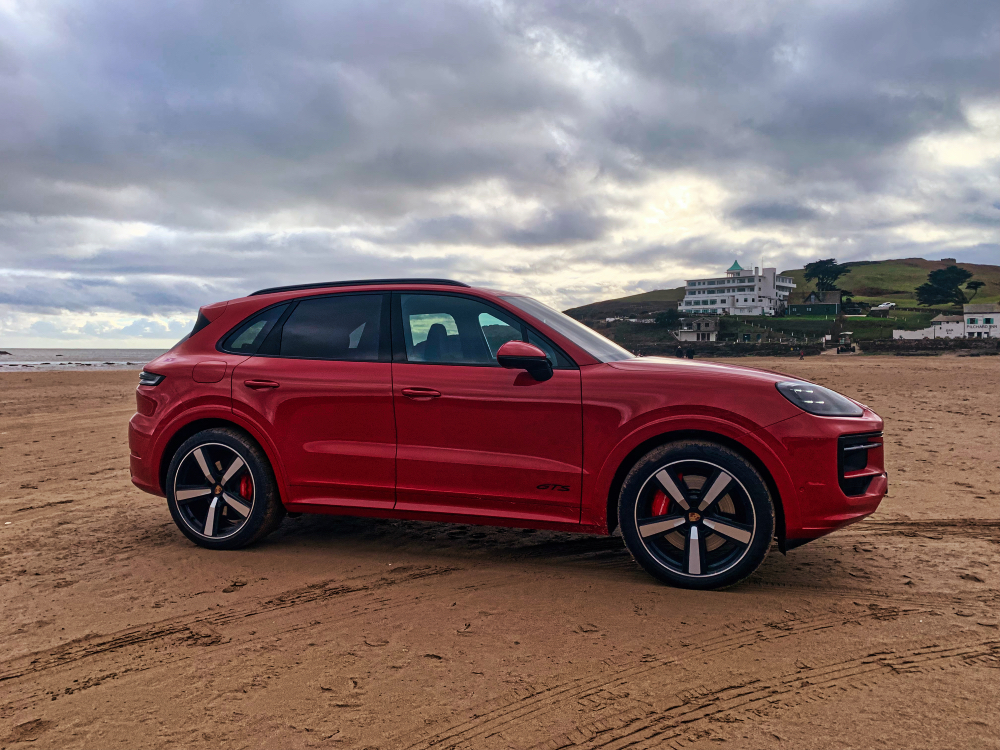
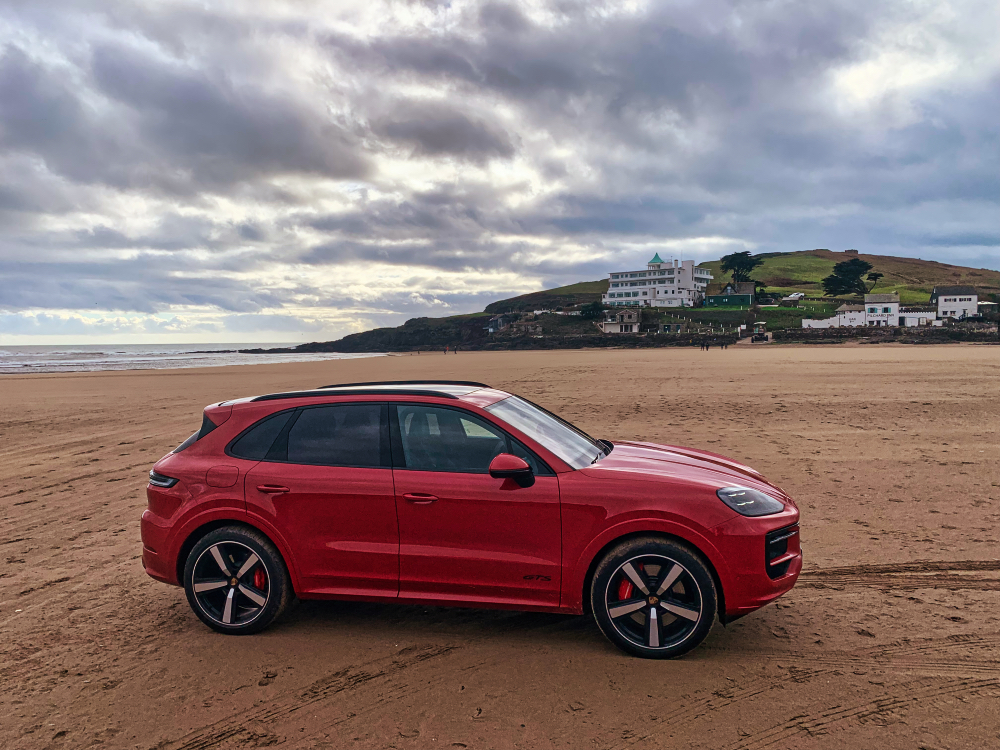
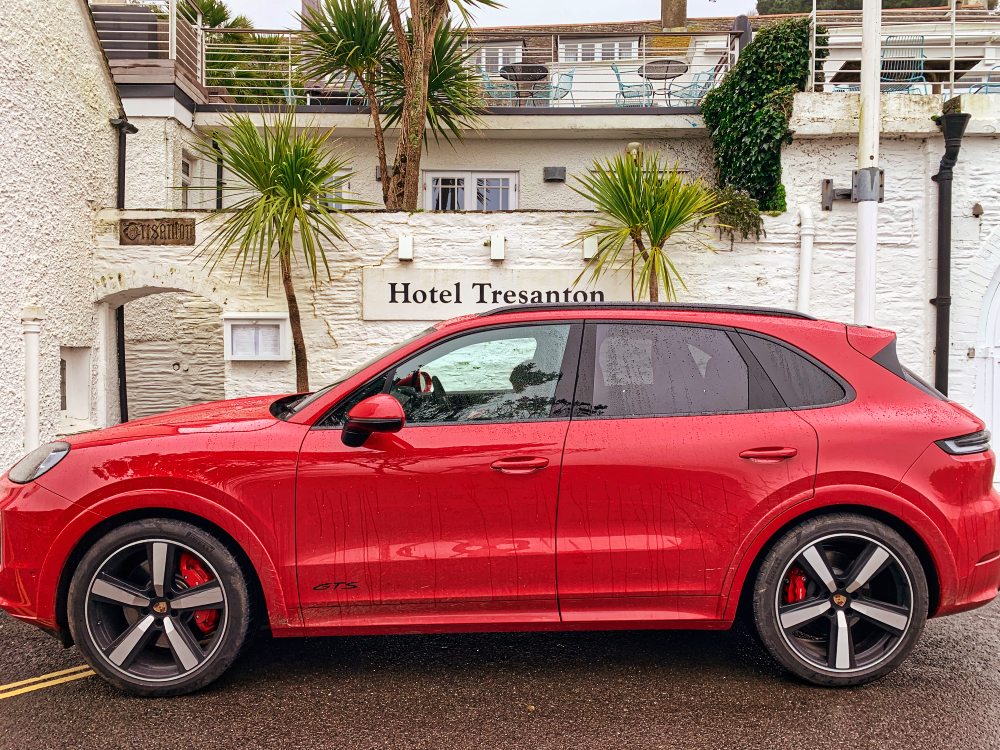
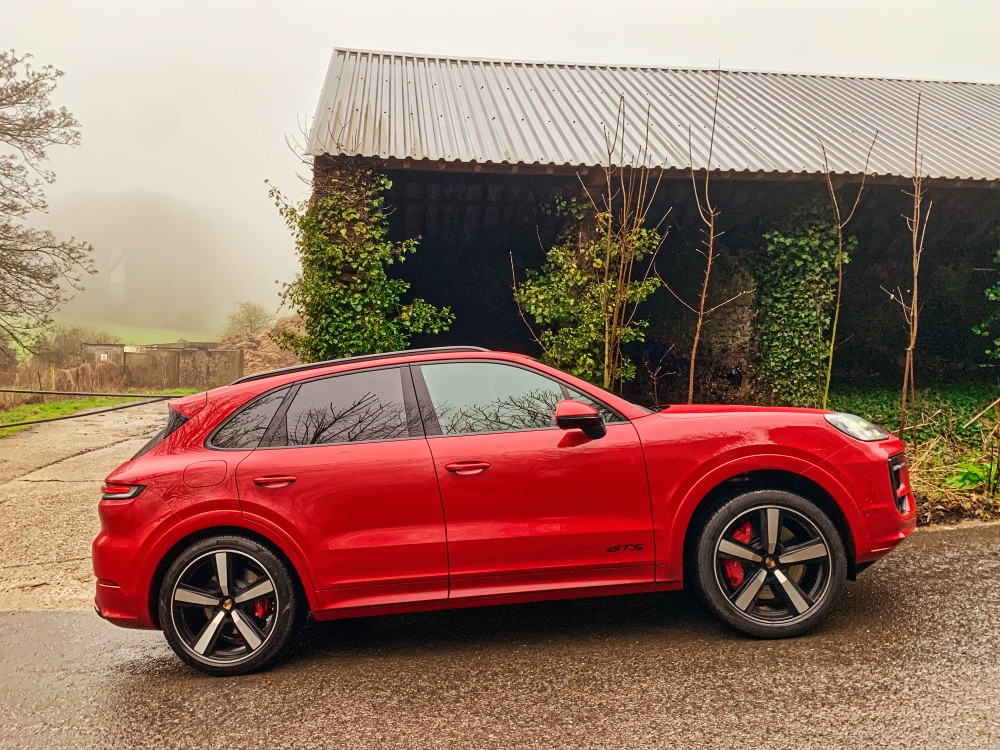
The Cayenne GTS looks considerably better in your driveway than it does in photographs, which is the opposite of most things in life. In the metal, it is sleeker, lower to the ground, and more purposeful than any online gallery quite manages to convey. Side-on, the profile is snub-nosed like a bullet with a passenger cabin set low and slightly forward, giving it a coiled, forward-leaning posture even at rest. The lines are clean and unadorned, not fancy in the least, but quietly, confidently luxurious in that particularly Teutonic way that requires no decoration because the proportions simply work.
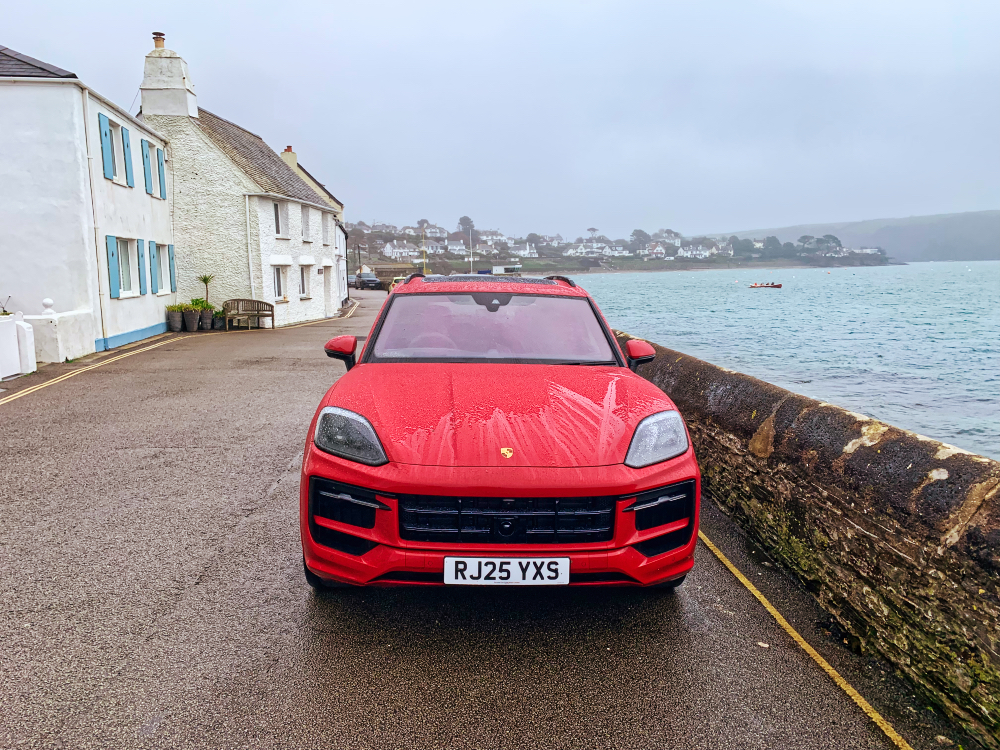
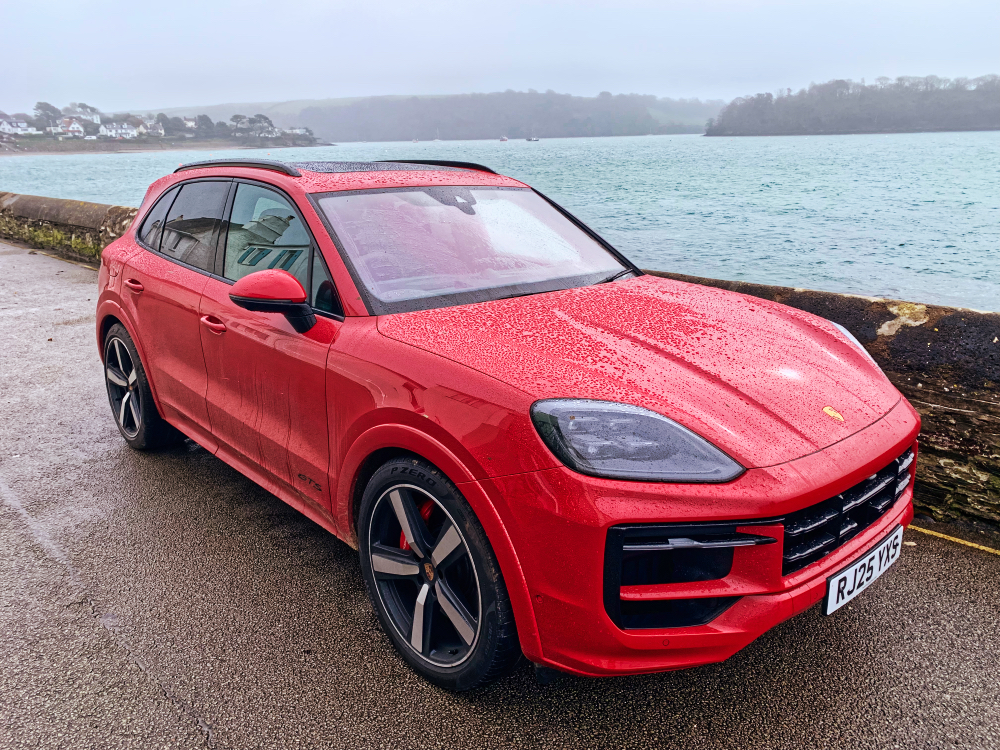
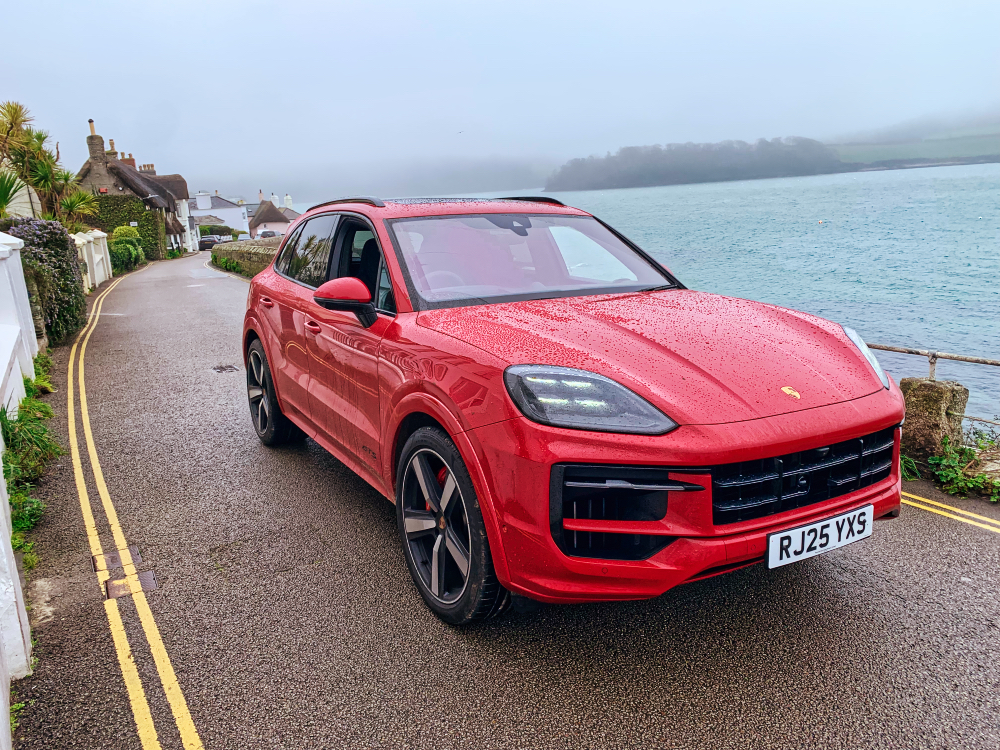
From the front, it is incontrovertibly Porsche, with the four-point daytime running lights and droplet-shaped HD Matrix LED headlamps that have become the family signature, framed by a plain black crossed grille that makes no attempt at embellishment whatsoever. This is not a car that needs to shout. Our test car arrived in Carmine Red, which in certain lights looks less like paint and more like someone has cast the entire body from a single solidified glass of very good Burgundy. Riding on 22-inch wheels in a dark finish, the effect is frankly rather magnificent, and if you have never experienced the mild social pressure of parking a Carmine Red Cayenne GTS outside a 16th-century Dorset priory and walking away from it with studied nonchalance, I recommend the experience.
Porsche Cayenne GTS Interior: Built Like Granite, Finished Like a Vault
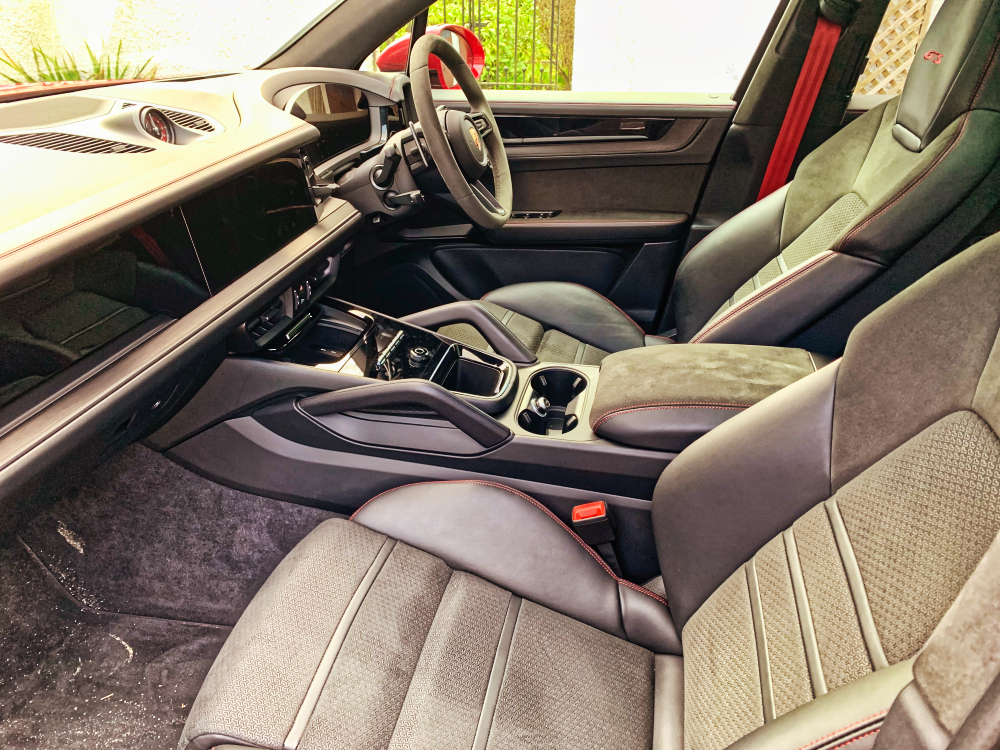
Step inside the GTS and the first thing you notice is the weight of everything. Not literal weight, though the doors close with that satisfying, vault-like thunk that German engineers spend considerable time and money perfecting, but a sense of structural permanence. Touch any surface and it feels as though there is granite immediately beneath it. The centre console and door panels carry a recurring motif of angled, solid grab handles, ostensibly for passengers to brace themselves against during vigorous cornering, and in the GTS context this is less of a design conceit than a practical consideration.
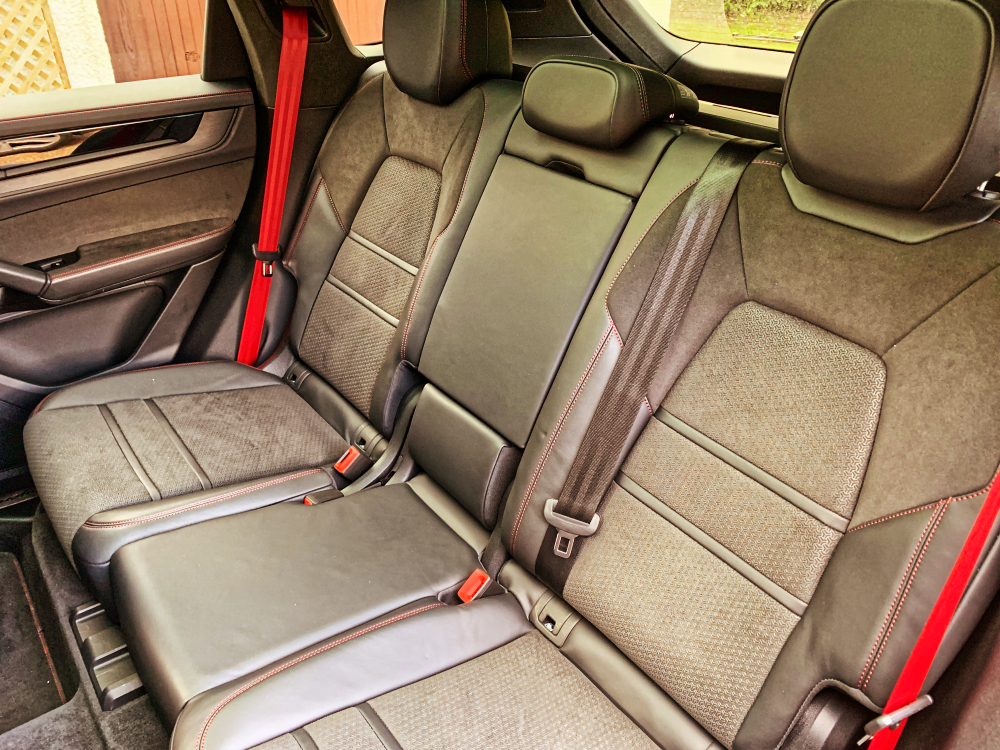
Everything is either Alcantara, leather, or brushed steel. There is no plastic in sight, or at least none that reveals itself as such. The colour palette runs through a considered buffet of greys, blacks, and every shade in between, broken only by the Race-Tex seat centres and the occasional glint of metal. The 18-way electrically adjustable sports seats in front are exceptional, offering the kind of support that suggests Porsche consulted both an orthopaedic surgeon and a racing driver during development, which they quite possibly did. Seat heating extends to the rear, and the steering wheel heats up with a speed that suggests it was embarrassed to be cold in the first place.
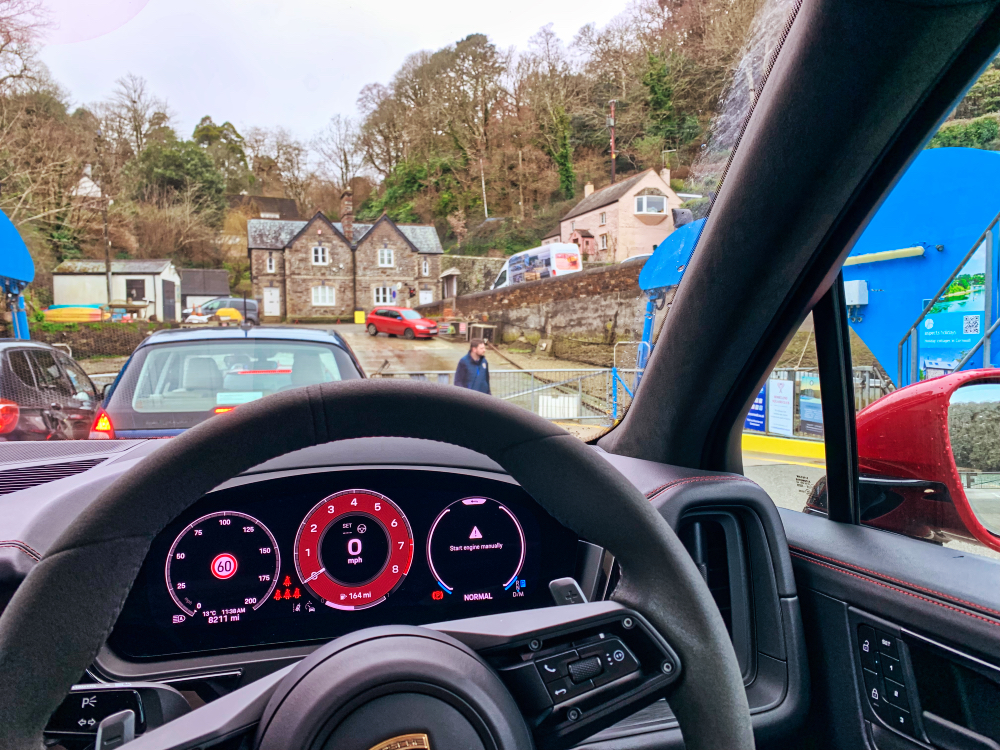
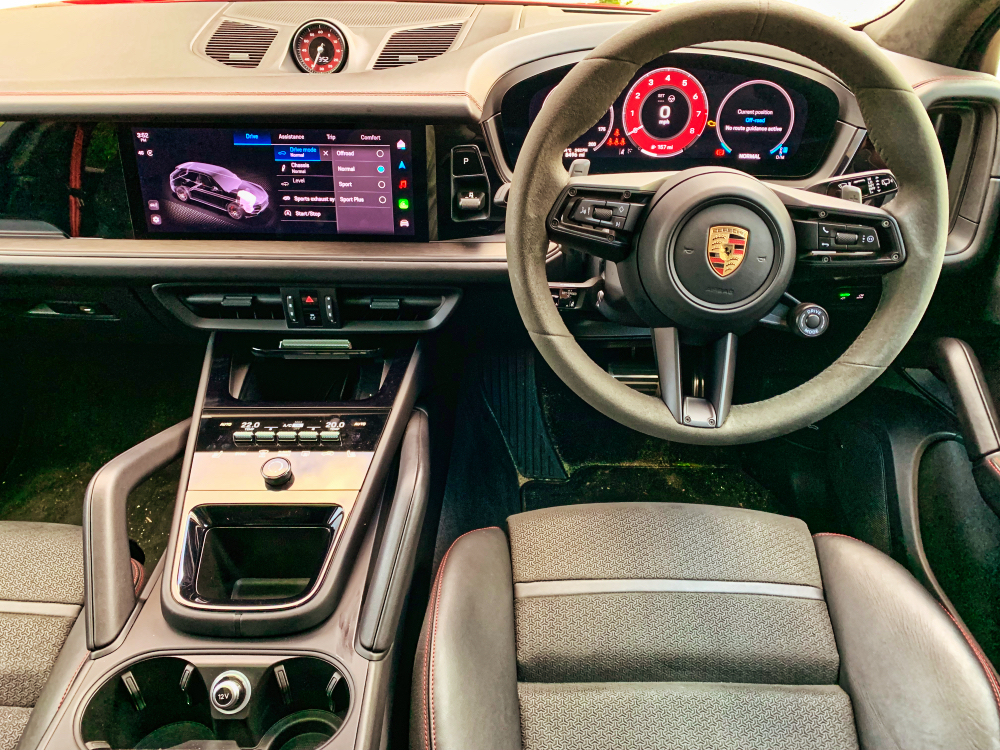
The driver's instrument cluster is fully digital, offering multiple display configurations ranging from the classically Porsche tachometer-centric view to a more information-dense navigation layout. The 12.3-inch central touchscreen is among the more intuitive systems in this class, and I appreciated, with a relief bordering on the emotional, that Porsche has retained physical buttons for the climate controls and demisters. Whoever decided that every function of a moving vehicle should be buried three menus deep in a touchscreen has presumably never tried to adjust the heated rear screen while overtaking on a wet A-road in February. The heads-up display deserves particular mention for the accuracy of its speed limit information, which consistently outperformed every navigation system I tested it against. A panoramic roof system floods the cabin with what light February Devon was prepared to offer, which on most days was not a great deal, but the thought was appreciated.
Porsche Cayenne GTS Technology: The Details That Make the Difference
The Surround View system with Active Parking Support makes manoeuvring the GTS's nearly five-metre length considerably less fraught than it has any right to be, presenting a synthesised bird's-eye view of the car's immediate surroundings with sufficient clarity that I felt comfortable in spaces I would previously have avoided entirely. Soft-close doors operate with the quiet authority of someone who never needs to raise their voice. Comfort Access keyless entry means you simply approach the car and it opens, which sounds trivial until you are carrying luggage in both hands in horizontal Cornish rain and you realise exactly how thoughtful this is.
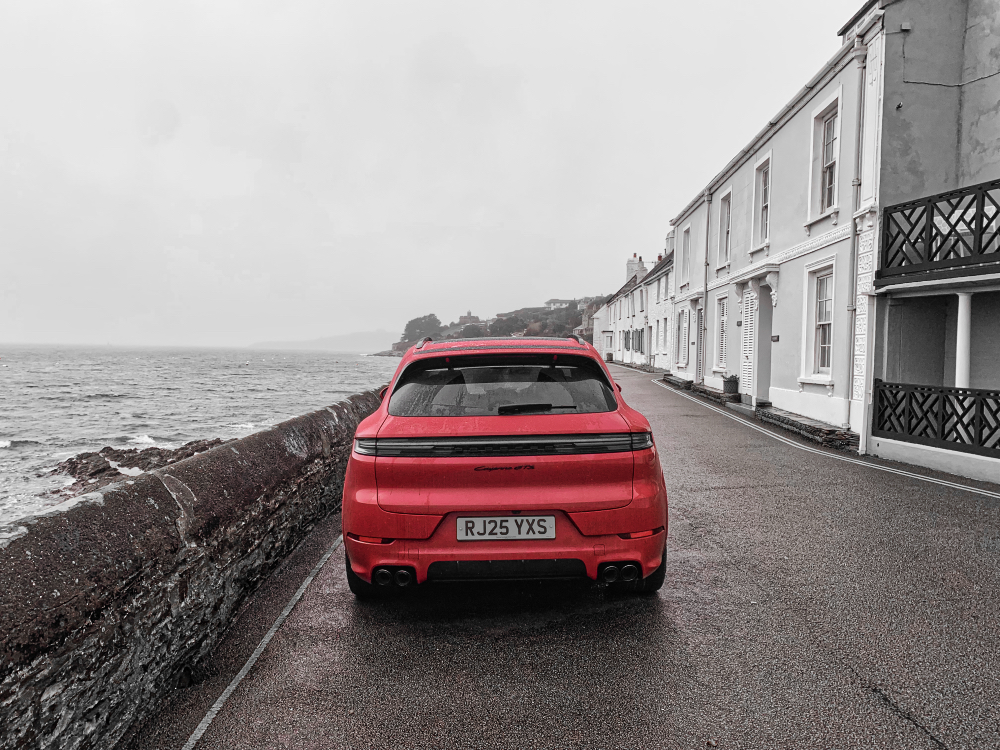
The wireless charging compartment delivers 15W, which is fast enough to be useful rather than merely aspirational. Porsche Torque Vectoring Plus, which applies braking forces to individual rear wheels while also locking the rear differential when required, works invisibly in the background to keep the GTS pointing in precisely the direction intended. The sports exhaust system, with its dark-finished tailpipes, produces a sound in the upper rev ranges that is, in a word, sublime: a deep, layered V8 growl that rises in volume and intensity through the drive modes without ever becoming theatrical. You can turn off the audible speed warning via a dedicated diamond-shaped button on the steering wheel, a small mercy for which I am genuinely grateful, and lane-keep assist can be disabled by pressing and holding the button at the base of the cruise control stalk, for those moments when Cornwall's hedgerow-lined lanes make the system's suggestions more hindrance than help.
Porsche Cayenne GTS Performance: Granite on Wheels, Mountain Goat in the Soul
The performance matches the interior. Granite on wheels is the phrase that keeps presenting itself, and having driven the GTS across a range of conditions that would have reduced lesser vehicles to expensive road ornaments, I cannot improve upon it. The steering is direct and communicative in a way that remains genuinely rare in this class, connecting you to the front wheels with a precision that feels almost personal, as though the car is reporting back to you in real time rather than merely following instructions. There is no play, no vagueness, no sense that the wheels and the steering wheel are engaged in an approximate conversation. They are, instead, in direct correspondence.
Body roll is effectively absent. On reverse-camber muddy mountain roads in Dorset that were consuming other vehicles entirely, the Porsche Dynamic Chassis Control system kept the body level and composed without ever feeling artificially suppressed. The rear-axle steering, which turns the rear wheels in the same direction as the fronts at higher speeds to increase stability, and in the opposite direction at low speeds to tighten the turning circle, means that corners which would require significant speed reduction in other SUVs simply do not in the GTS. You carry speed into bends with a confidence that initially seems implausible given the vehicle's dimensions, and then rapidly becomes expected. Instinctif, you might say.
Normal drive mode carries a deliberately measured throttle response, civilised and unhurried in the manner of someone who has nothing to prove. Sport mode sharpens the response by approximately 400 rpm, and Sport Plus by a further 400, giving linear, immediate access to all 500 PS with no delay and no drama. The transitions between modes are executed via a satisfyingly solid chunky button on the steering wheel, the kind of control that feels appropriately purposeful for what it initiates. The active cruise control accelerates and brakes with smooth, natural authority; the lane-keep assist, by contrast, is not yet among the class leaders, though on motorways it performs well enough.
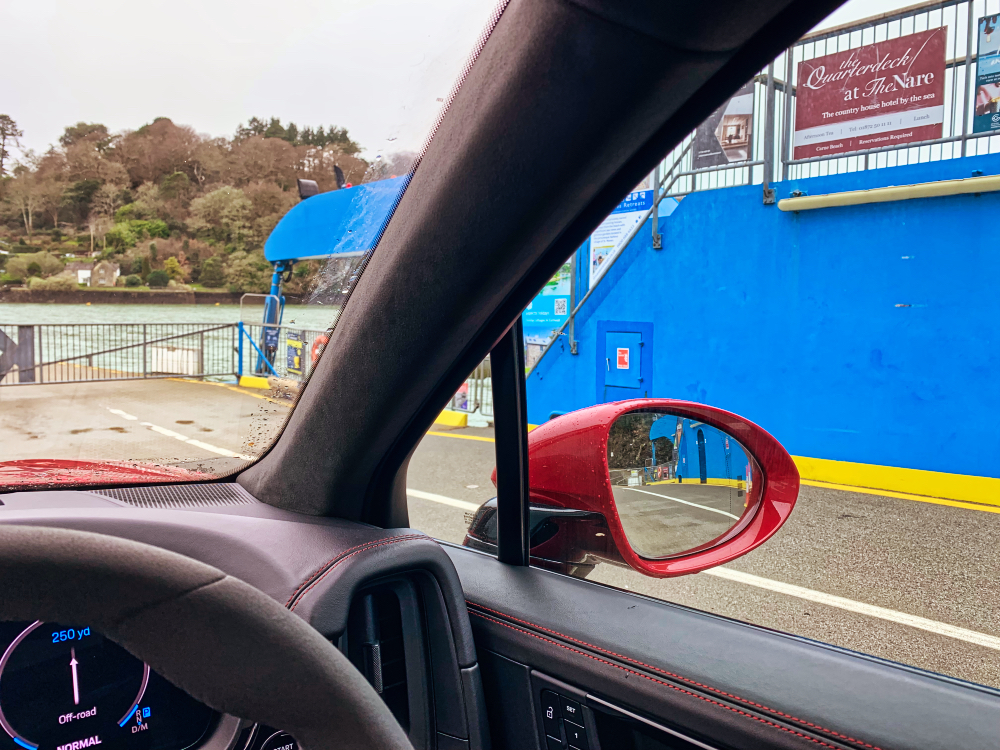
Off-road, the GTS is as assured as it is on tarmac. On the beach causeway at Burgh Island, where the incoming tide was making its presence felt across the sand, we crossed without hesitation, the suspension rising 10mm in off-road mode to provide additional clearance while maintaining a sensory connection to the surface beneath that is genuinely unusual. You do not feel the individual bumps, but you understand the texture and character of what you are crossing in a way that few SUVs achieve. On a collapsing mountain road in Dorset that had reduced other vehicles to waiting for roadside assistance, the Cayenne GTS simply passed through, unhurried and unmoved. I did not stop to gloat. Much.
The Moment the Brakes Earned Their Keep
Our most significant test came not in any planned scenario but on a three-lane A-road in Cornwall, where a learner driver beside us veered without warning into our lane, forcing us simultaneously toward the central metal barrier. What followed was one of those compressed, crystalline moments in which time behaves strangely and you become acutely aware of exactly how good the car's brakes actually are. I braked and steered simultaneously, navigating a path between the learner's car and the central barrier with, I am reliably informed by physics, less than a centimetre to spare on either side. The six-piston calipers on 410 mm discs did their work with absolute conviction, the car neither lurching nor losing composure, the Torque Vectoring Plus keeping everything precisely placed. No one was hurt. No panels were exchanged. The learner drove on, apparently unaware of the geometry that had just been negotiated on their behalf. C'est comme ca. The Cayenne GTS was, in that moment, precisely the car I would choose to be in.
The Hotels: Three Centuries, One Very Capable Companion
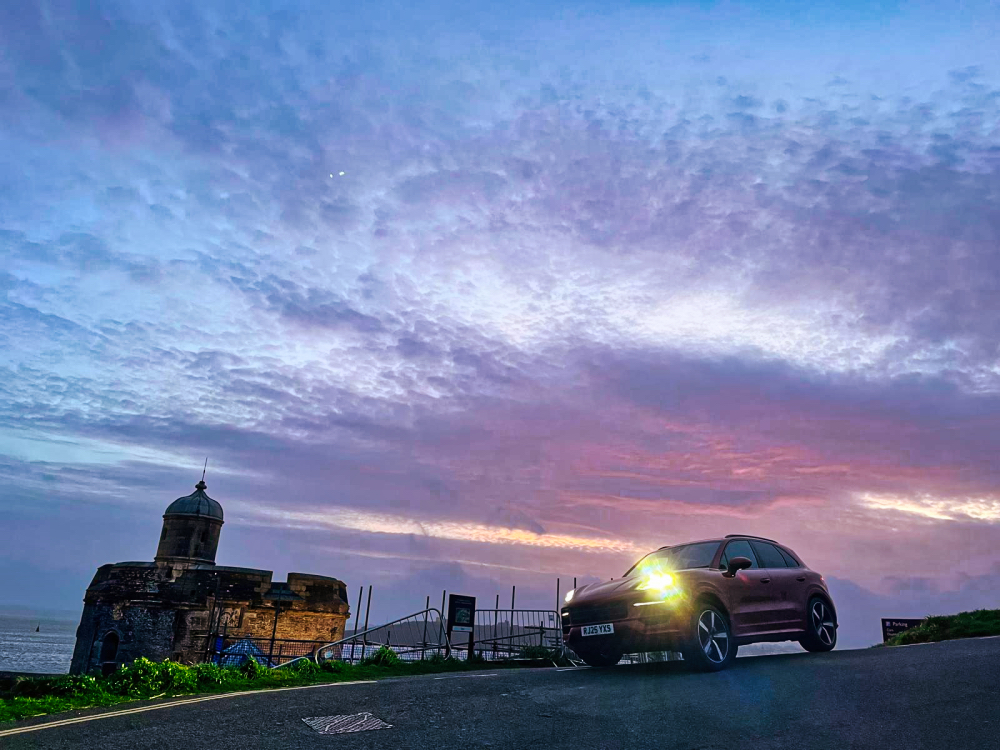
The Priory Hotel in Wareham is most representative of the 16th-century Tudor and Elizabethan periods, though its foundations reach back to 12th-century monastic origins. You can still see the original stone walls and vaulted ceilings in the Abbot's Cellar, which dates to the early 1200s. Parking a Carmine Red Cayenne GTS on its gravel does create a certain productive dissonance, the ecclesiastical and the thoroughly contemporary regarding one another across eight centuries with what I imagine is mutual incomprehension and a degree of grudging respect.
Burgh Island is the quintessential monument to 1930s Art Deco, referred to not without justification as the Ritz of the West. The island's global reputation is defined by the sophisticated glamour of the interwar decades, and arriving via the beach causeway at the wheel of the GTS, with the tide advancing and the engine note carrying across the water, is an experience that rather exceeds the sum of its parts. The Pilchard Inn on the island dates to the 1300s, which puts even the Cayenne's engineering heritage into perspective.
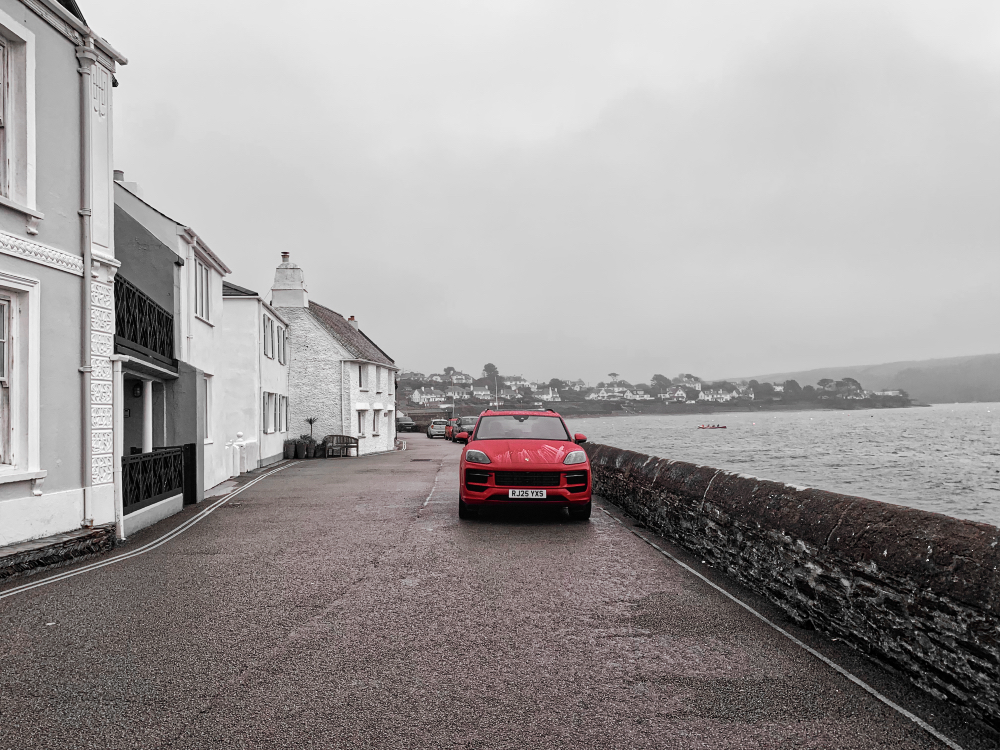
The Tresanton Hotel in St Mawes represents the mid-century golden age of British seaside glamour, its current identity defined by Olga Polizzi's landmark 1998 redesign, credited with sparking a Cornish tourism revival and producing what was arguably the county's first genuine designer hotel. The tiny steep roads of St Mawes and nearby Penryn presented no difficulty whatsoever to the GTS, despite their dimensions suggesting otherwise. The rear-axle steering and the car's surprising spatial composure made the kind of roads that have been quietly terrifying visitors since the 1950s feel entirely manageable.
Porsche Cayenne GTS Verdict: The Car You Get When You Absolutely Have to Get Through
The Porsche Cayenne GTS is a refined, luxurious SUV with plenty of gravitas and no ostentation whatsoever. It does not need to perform. It simply performs. The engineering sits a perceptible level above any competitor I have driven in this class, which means that handling and performance do not need to be faster or more dramatic, merely better at every speed, in every condition, at every moment. On our February tour of the south-west, we saw cars trapped by road conditions that the Cayenne navigated without a second thought, watched vehicles waiting for recovery on roads we simply passed through, and arrived at each destination dry, composed, and precisely on time.
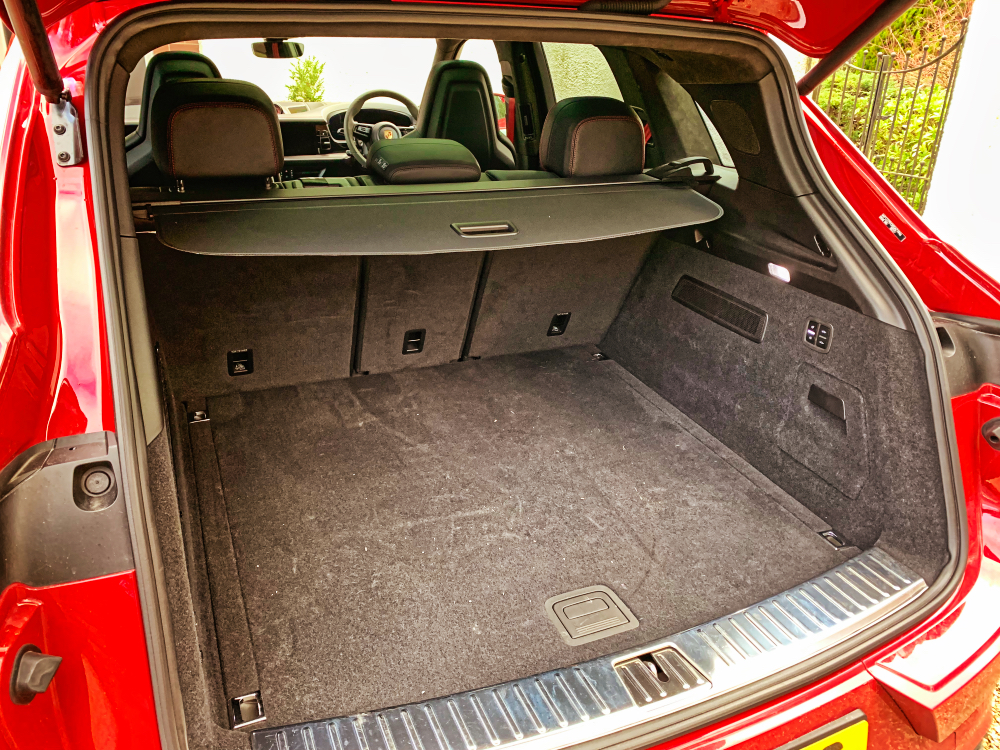
That, in the end, is the Cayenne GTS proposition in its purest form. Not the fastest SUV, not the most technologically elaborate, not the most extravagant. Simply the most complete. The Cayenne is the SUV that started it all, and after three days of rain, potholes, sand causeways, collapsing mountain roads, and a genuinely memorable near-miss, it remains, without qualification, the one against which all others are measured. Love Porsche or find them insufferably competent, as certain of my colleagues do, they continue to deliver the most extreme quality and driving expertise for the money. And on the question of value, note that the 656 litres of boot space, rising to 1,708 litres with the rear seats folded, comfortably accommodated the luggage requirements of a three-hotel tour. Voila. Affaire classee.
Porsche Cayenne GTS from £ 107,600
Our model price with extras: £ 129,132
https://www.porsche.com/uk/models/cayenne/cayenne-models/cayenne-gts/
Porsche Cayenne GTS: Key Specifications
Engine: 4.0-litre V8 biturbo petrol, 3,996 cc
Power: 500 PS (368 kW)
Torque: 660 Nm
Transmission: 8-speed Tiptronic S automatic, active all-wheel drive
0-62 mph: 4.7 seconds
Top speed: 171 mph
Suspension: Multi-link front and rear
Brakes: Six-piston / 410 mm front; four-piston / 365 mm rear
Wheels: 285/40 R22 front, 315/35 R22 rear
Length: 4,930 mm | Width: 1,983 mm | Height: 1,674 mm
Boot volume: 656 litres (1,708 litres, seats folded)
Fuel consumption (WLTP combined): 22.3-23.3 mpg
CO2 emissions: 287 g/km