

The House That Chardonnay Built
A conversation with Cédric Jacopin, Cellar Master of Champagne De Saint-Gall — and two wines that explain everything
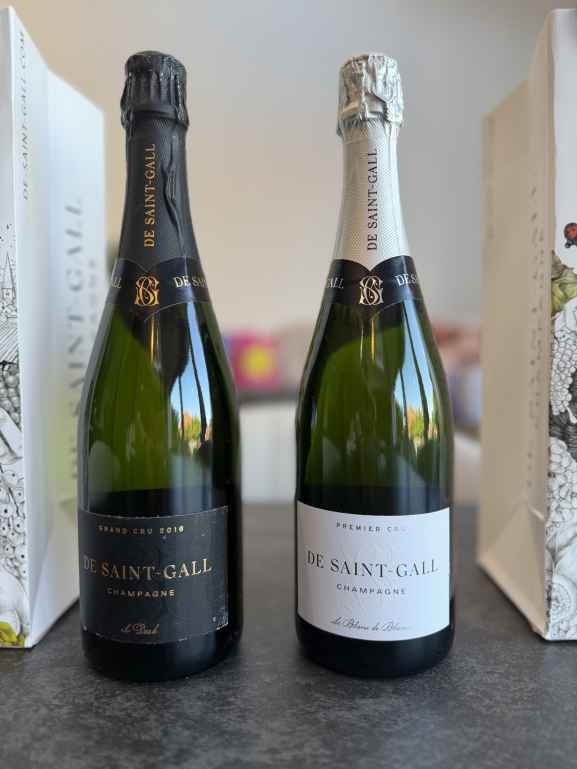
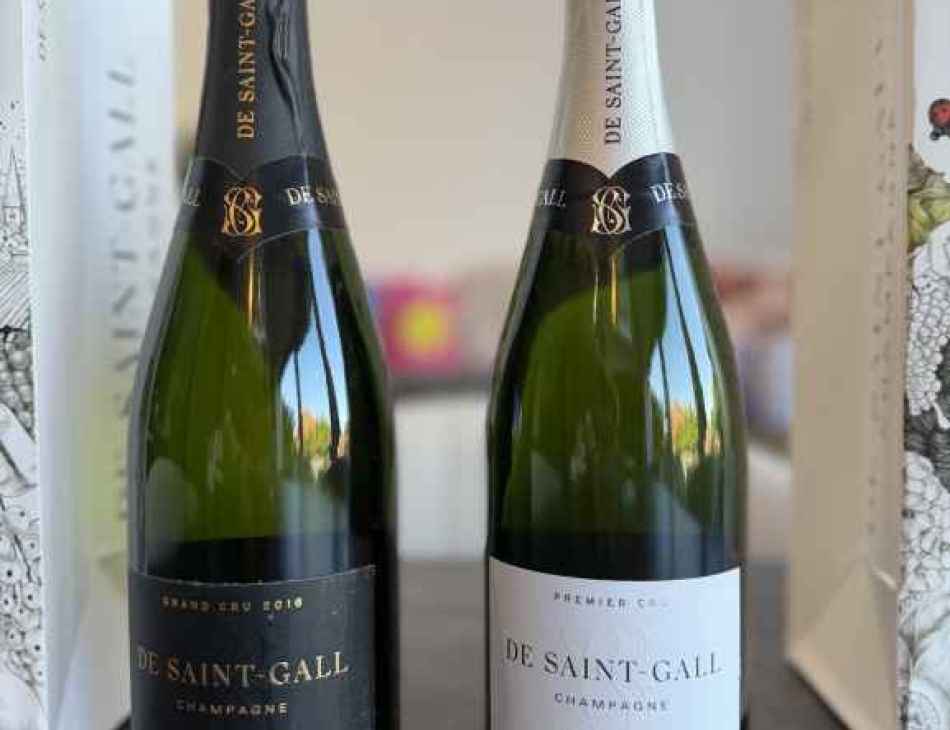
DE SAINT-GALL
There is a version of Champagne that exists purely for the party. The pop, the pour, the Instagram moment. And then there is the version Cédric Jacopin makes. It asks you to slow down.
Jacopin is the Cellar Master at Champagne De Saint-Gall, a house with an unusual story. Founded in 1966, Union Champagne — the cooperative behind the De Saint-Gall label — brings together 15 member cooperatives whose growers farm some of the most prestigious vineyard land in the entire region. Across more than 1,400 hectares of Premier and Grand Cru classified sites, over 2,300 growers tend vines on the chalky slopes of the Côte des Blancs and the Montagne de Reims. In the wine world, cooperatives often get dismissed. Here, they shouldn't be.
For decades, much of this extraordinary fruit was quietly sold to the famous names you already know, going into bottles that cost considerably more than De Saint-Gall's own. That arrangement is, quietly, being reconsidered.
I had the chance to sit with Jacopin recently and taste through his wines, beginning with the vins clairs — the still, unfinished base wines that will eventually become Champagne. Consumers rarely encounter them, and there is a reason producers don't rush to share them: they can be austere, angular, difficult to read. But Jacopin sees them differently. "Vins clairs are like the bricks of a house," he told me. "It is the assembly of these bricks that will build the cuvée's identity. Depending on the origin of the cru, each brick will bring its own character."
He is careful not to over-promise what the exercise reveals. "There is no possible comparison between vins clairs and the finished Champagne after its aging," he says. What tasting them allows him to do is something more precise: classify each cru, understand its potential, and guide it toward the right destination. Some will go into the non-vintage blend. Some will wait. The Grand Cru fruit, he says, has the aging potential that makes patience worthwhile.
That potential comes with responsibility, and Jacopin is clear-eyed about it. "It is above all a privilege," he said of working with Grand Cru terroir. "The tremendous aging potential of the Grand Crus is the key." He is also alert to the pressures reshaping Champagne's future. Climate change is not a distant concern in the region — it is a present reality. His response is practical: varietal selection work in the vineyard, and in the cellar, a careful strategy of blending wines with and without malolactic fermentation to preserve freshness and tension. "We must be innovative, both in the vineyard and in the cellar," he said simply.
When I asked him what Champagne is really about — before the bubbles, before the occasion — his answer was quietly emphatic. "Champagne is a complex wine with a magnificent capacity for aging. In the world, there are three great white wines with this capability: White Burgundies, Riesling, and Champagne. It is the only sparkling wine in the world with these qualities and this diversity, with a terroir dimension more pronounced than a technological one."
That philosophy shows in the bottle. Here are the two wines he sent me.
CDSG Premier Cru Le Blanc de Blancs NV
100% Chardonnay | Premier Cru | Côte des Blancs
This is De Saint-Gall's entry point into its world, and it sets the tone beautifully. The base wines are fermented in stainless steel to preserve purity, then aged for a full 36 months on the lees before disgorgement — significantly longer than the legal minimum, and you can taste why.
In the glass, the colour is pale straw with the faintest green tint, and the mousse is fine and persistent — the mark of quality lees ageing. The nose is immediately expressive and precise: fresh lemon curd, green apple, a drift of white blossom and underneath it all, that characteristic bready, doughy quality that extended lees contact delivers so well. Classic Blanc de Blancs territory, and beautifully executed.
On the palate, the wine is taut and driven by mineral tension — that chalk-and-flint character that the Côte des Blancs does better than almost anywhere else on earth. There is real weight here without any heaviness; the mid-palate is generous, but the acidity keeps everything in check and the finish is long, clean and lemony. It is a wine of genuine finesse, and it over-delivers significantly for its price.
Food Pairing
Oysters or dressed crab are the obvious call, and they work perfectly — the mineral salinity in the wine meets the brine of the sea in a way that feels almost inevitable. But don't overlook this alongside a simple plate of smoked salmon, brown bread and butter with a squeeze of lemon. The toasty lees notes in the wine mirror the smokiness; the citrus cuts through the richness. Summer lunch, sorted.
CDSG So Dark Grand Cru 2016
75% Pinot Noir, 25% Chardonnay | Grand Cru | Vintage
The name tells you something. This is De Saint-Gall stepping away from its Chardonnay heartland to celebrate the other grape — and the result is a revelation.
The So Dark cuvée draws its Pinot Noir from Grand Cru terroirs in the Montagne de Reims, principally Ambonnay and Bouzy, with Chardonnay from the great Côte des Blancs villages including Le Mesnil-sur-Oger and Avize. It is a vintage wine, produced only in outstanding years. 2016 qualifies: a late spring was followed by a dry, hot summer and a sunny, generous harvest — conditions that were particularly kind to Pinot Noir. That character comes through unmistakably in the bottle.
The colour is pale gold with a faint coppery blush — beautiful, and a visual hint of the Pinot weight beneath. The nose is complex and inviting: ripe red cherry, dried strawberry, a whisper of spice and warm brioche, underpinned by a smoky, almost gunsmoke mineral note. It is rich but not heavy, generous but not overblown.
On the palate, the Pinot Noir delivers real structure and vinosity — a frank, full attack that fills the mouth — while the Chardonnay keeps the line taut and the finish fresh. There is length here, real length, and with it a complexity that keeps you coming back to the glass. This is a serious wine. It has too much going on to waste on small talk.
Food Pairing
Roast duck breast with a cherry reduction would be a dream match — the Pinot-led red fruit echoes through the sauce while the wine's structure handles the richness of the meat. Alternatively, an aged comté or a well-developed hard cheddar will bring out the toasty, nutty depth. For a more indulgent moment: duck liver parfait, toasted brioche, a glass of So Dark. You are welcome.
Champagne De Saint-Gall deserves to be better known in Britain. These are serious wines made with serious intent, from some of the best-classified land in the entire region. Cédric Jacopin is a cellar master who talks about terroir not as a marketing word but as the actual point — the reason any of this matters. And at the prices these bottles carry, they represent some of the most compelling value the region currently has to offer.
The party can wait. Pour carefully, and pay attention.