
Inside London Golf Club: The Heritage Course and Its Ryder Cup Ambitions
A day on The Heritage Course, a glimpse into The London Project and a reminder that golf is at its best when the service is as considered as the course.
The London Golf Club
This was not simply a visit to play golf. It was a chance to understand what the London Golf Club is trying to become, where it has come from and why, three decades after opening, it still feels like a venue with plenty of ambition left in the bag.
London Golf Club is already a serious golfing address. Located in Ash, Kent, it is a 36-hole facility designed by Nicklaus Design and officially opened in July 1994. Its opening was marked by a Charity Challenge Skins Match on The Heritage, with Jack Nicklaus taking on Seve Ballesteros and Tony Jacklin. Seve, because he was Seve, took the honours.
That little bit of history matters because The Heritage, the course we played, is not merely a members’ course by administrative definition. It really feels like one. It has the mood, the polish and the slight edge of exclusivity you would expect from somewhere that takes the experience seriously. It is a par-72, measuring 7,208 yards from the back tees, although mercifully there are four tee options available.
The day began properly in the company of Matt Ryan from the club’s marketing team, Josh Moses, the recently appointed Director of Golf, Stephen Follett, the chief executive and two gentlemen from Stratstone Maidstone BMW, who had brought along a shiny new BMW iX3 for us to take a look at.
This, in golfing terms, is an excellent way to start a day. Most club visits involve a coffee and a scorecard. This one had senior management, course insight and Munich’s latest electric SUV sitting outside the clubhouse, looking rather pleased with itself.
The BMW presence worked rather well. Golf and premium cars have always had an easy relationship. Both attract people who enjoy detail, precision, technology, performance and the quiet belief that the correct equipment might solve every problem. This belief, in my case, lasted until roughly until 10 minutes before my tee time.
The iX3 also suited the setting. It looked clean, modern and entirely at ease outside the clubhouse. Golf clubs are increasingly about more than just golf these days; they are lifestyle venues, business spaces, social environments and in London Golf Club’s case, increasingly part of a wider regional hospitality proposition.
Before heading out, Josh Moses spent time talking through the club and the course. Moses has joined London Golf Club after more than a decade working across some of the UK’s most respected golf clubs, including Walton Heath, Rye and Sunningdale Heath, as well as experience in the United States. His appointment says a great deal about the club’s direction. This is a venue that wants to put its members, stakeholders and partners first.
That came across throughout the day. The club’s identity is clearly built around these people being treated with care. Not performative care. Not the sort where someone says “nothing is too much trouble” while quietly hoping you ask for nothing. Actual care. The kind where things appear before you have realised you needed them.
This was useful, because the weather had decided to behave like a committee. It could not make up its mind. It was wet, bright, moody, breezy and usually within the same ten-minute period. Yet the staff kept the round moving and crucially, Kevin from the Golf Operations Team appeared at sensible intervals with coffee.
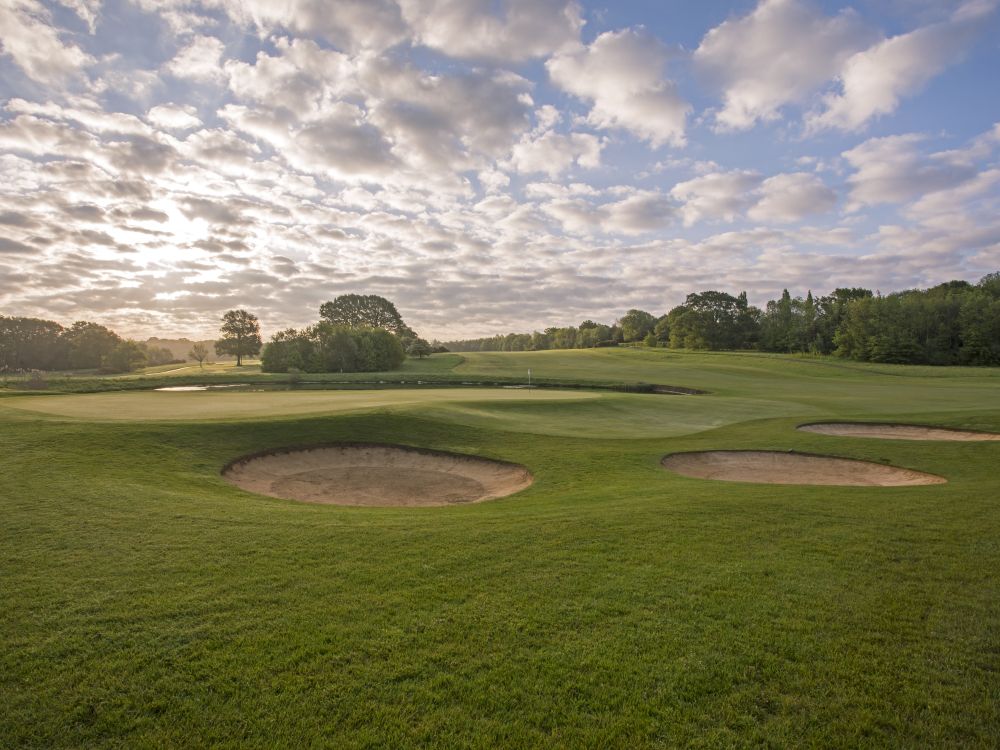
The Heritage opens with the sort of confidence you would expect from a championship layout. It has space but not enough for laziness and it has width but not enough for forgiveness.
My front nine was not, by any reasonable definition, a controlled exhibition of ball striking. I could not hit a straight drive to save my life. There are many things one can tell oneself in these circumstances. Perhaps it is the wind. Perhaps the grip is damp. Perhaps the golf ball has become emotionally unavailable. In truth, I was simply not driving the ball very well.
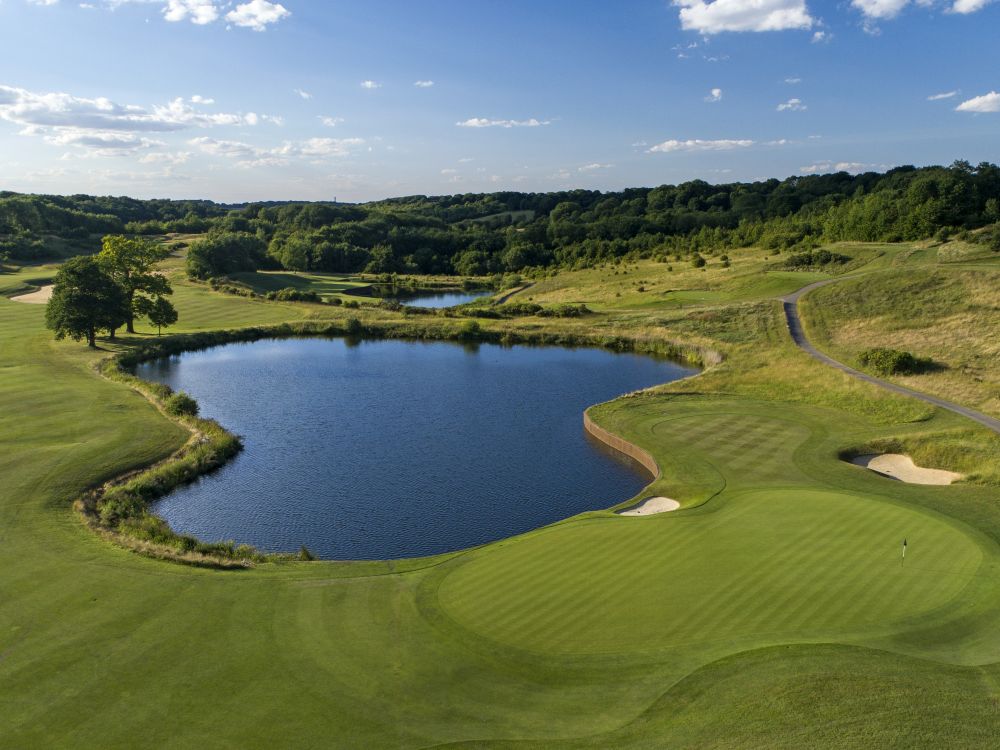
Still, it is difficult to sulk for long on a course like this. The third is a lovely par three of 194 yards and I was told, one of Jack’s favourites. You can see why. It has the right mixture of beauty and threat. It looks perfectly playable from the tee, which is precisely how it begins its little act of deception.
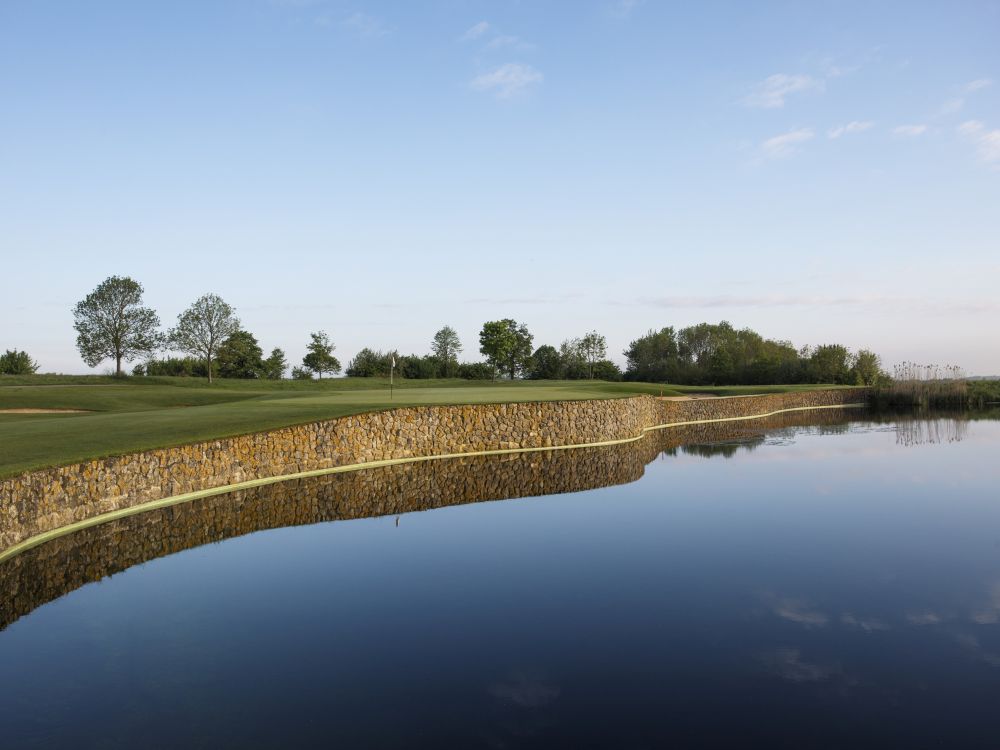
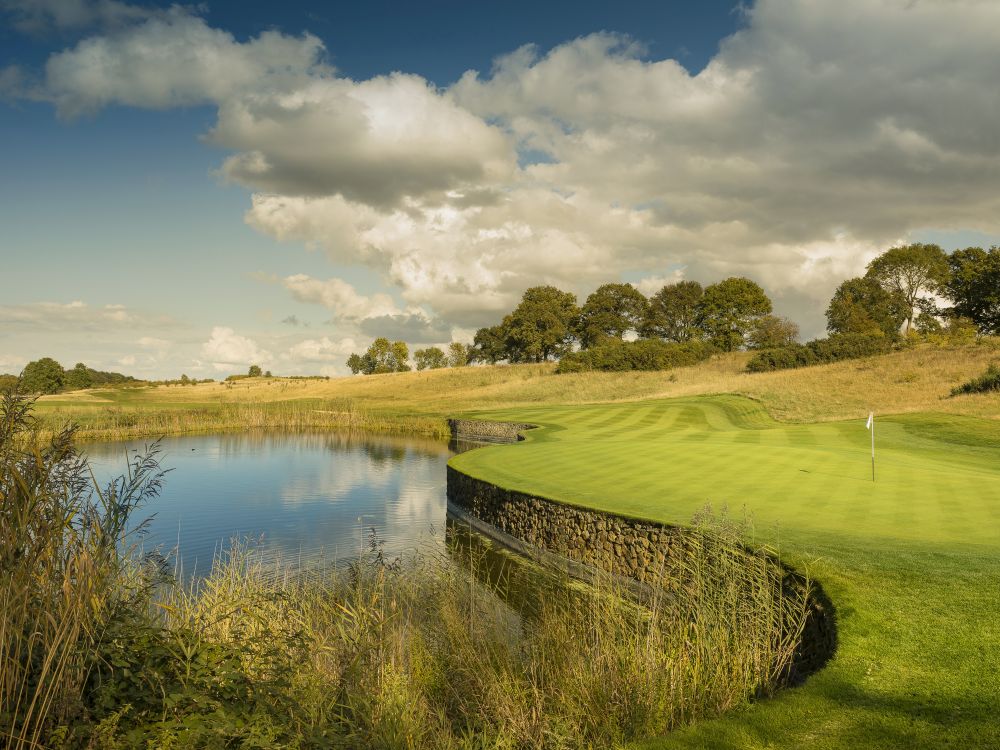
The fifth, meanwhile, is a gruelling par five of 541 yards, concluding with the need for a proper shot over water. I get the impression that golf course designers enjoy water because it is attractive, strategic and psychologically cruel. It does absolutely nothing and yet it somehow gets into your head.
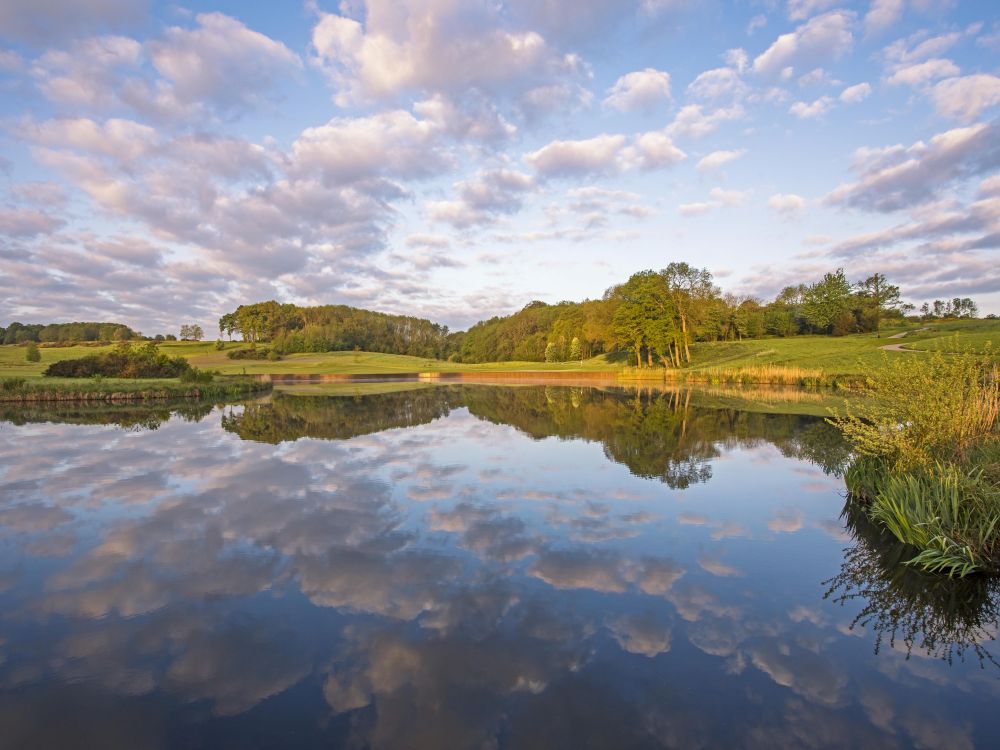
By the seventh, the lake arrangement of the course was showing itself properly. This is one of the great visual strengths of The Heritage. The water is not decoration. It is part of the identity. It frames holes, shapes decisions and gives the course a cinematic quality. Naturally, I landed in it. There are days when one simply contributes to the ecosystem.
Then came the eighth and with it, the coffee. This may not be how course architects describe routing strategy but for the mid-handicap golfer in challenging weather, the arrival of hot coffee can be as significant as a well-placed bunker. Possibly more so.
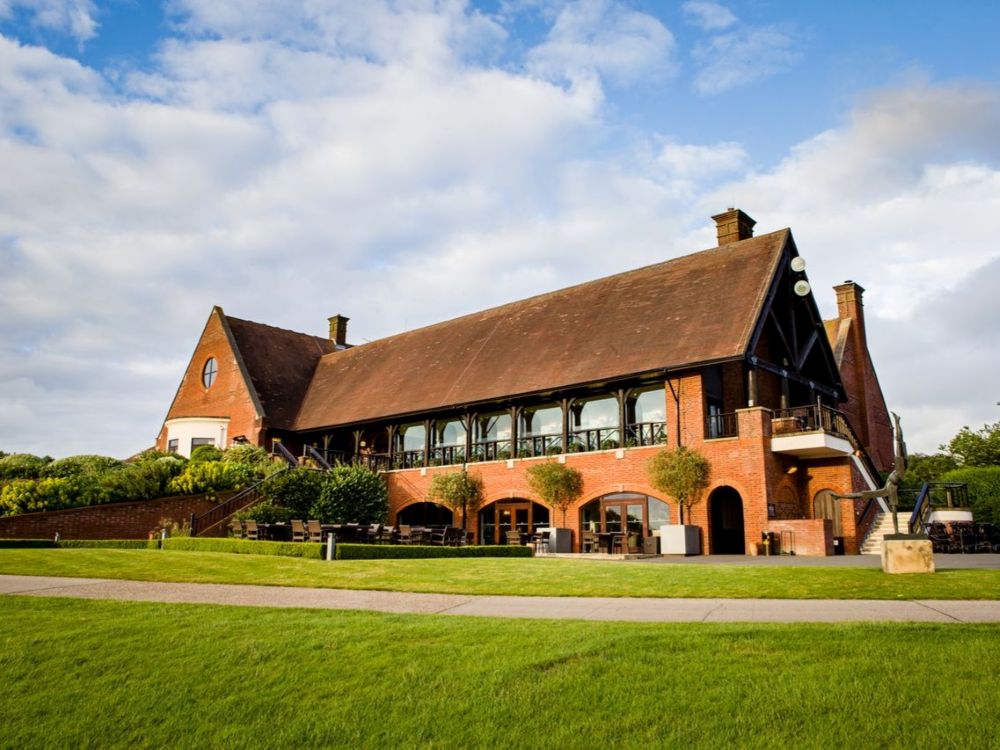
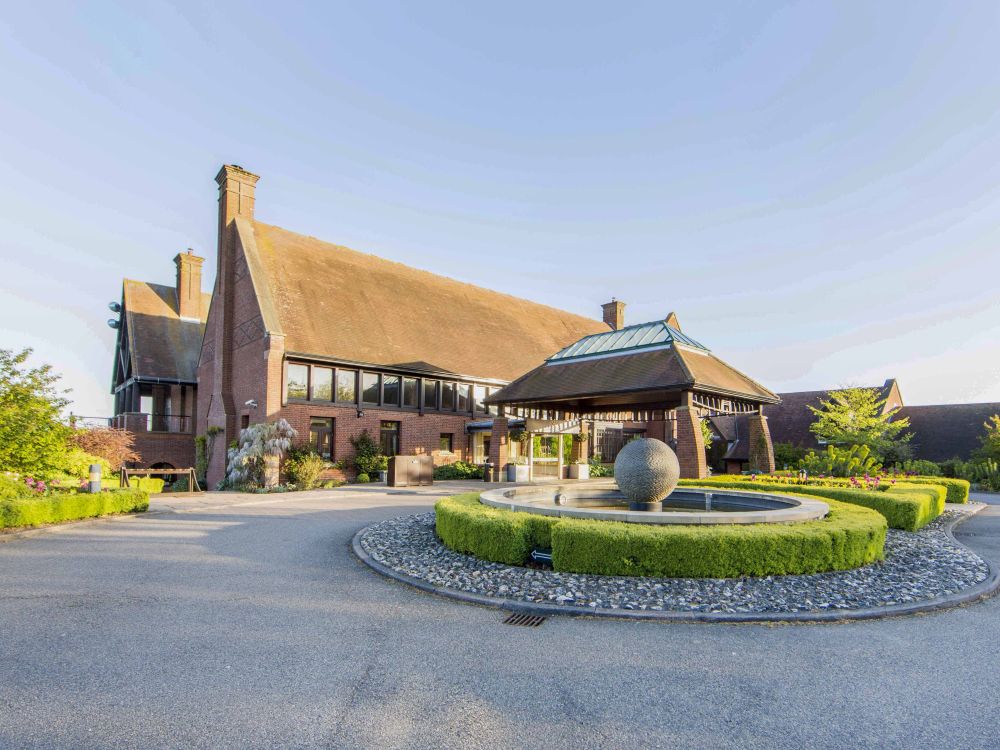
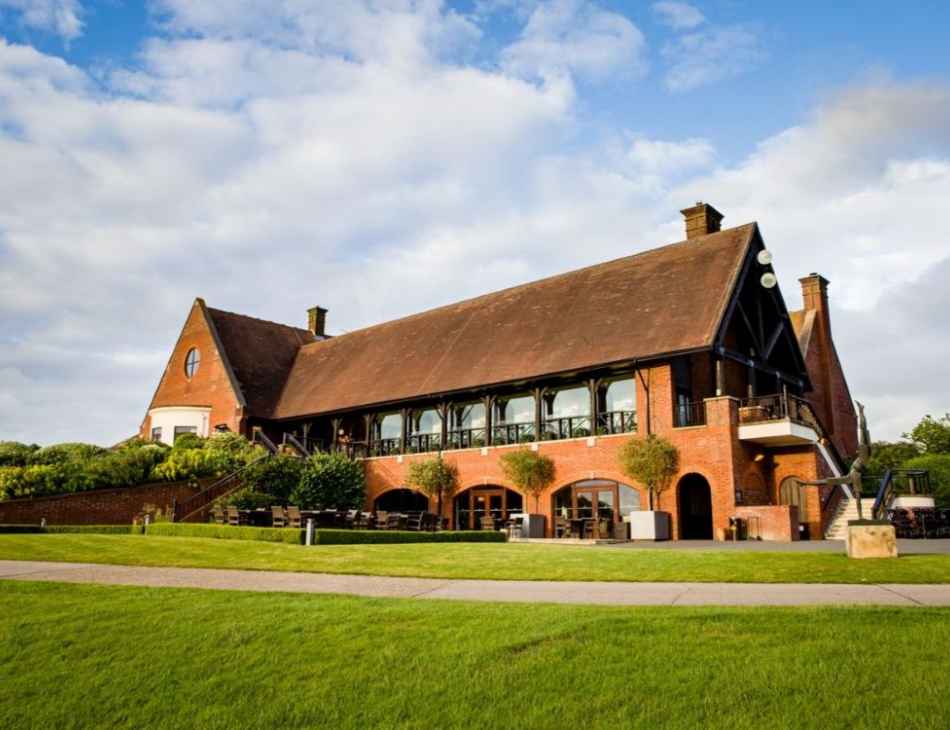
The ninth brings you back up towards the clubhouse, which is one of those pleasing golfing moments where architecture and routing do something useful together. You are reminded that London Golf Club is not merely a course with a building attached. It is a complete estate, with the clubhouse sitting as the natural centrepiece.
The back nine is where my game began to show signs of negotiation. Having spent much of the front nine driving the ball with all the aplome of a shopping trolley with a dodgy wheel, I made the wise decision to switch to a wood from the tee. This did not instantly turn me into a tour professional but it did at least stop the ball exploring Kent.
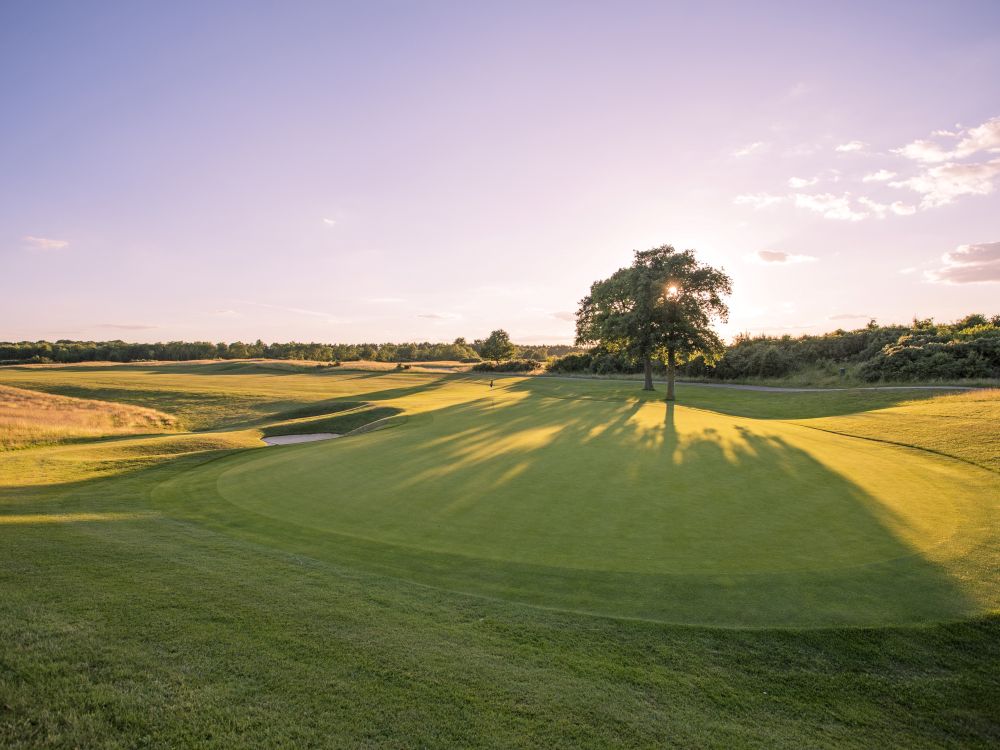
The tenth shows off the lie of the land beautifully, while the eleventh is all about movement and fluctuation. The course rolls and rises in a way that keeps you thinking. It is not tricked up but nor is it passive. It asks you to play golf rather than simply hit golf shots.
By the twelfth I was beginning to find something resembling rhythm. This is one of golf’s crueller jokes. It lets you suffer for two hours, offers one pleasing strike and suddenly you believe you are close to mastering it. You are not. You are merely being baited.
The thirteenth gave me one of those moments every club golfer stores away for later exaggeration, however. On the green in two, over yet more water. It was the kind of sequence that makes you wonder whether the first half of the round had been played by someone else entirely.
Then came the sixteenth. My best drive of the day, around 280 yards, properly struck and safely onto the fairway. This was followed by an iron onto the green. A genuinely good passage of golf. A moment of composure. A tiny glimpse of competence. Naturally, I then three-putted.
The eighteenth is a fitting conclusion, offering glorious views back towards the clubhouse and the promise of welcome refreshments. It is an elegant finishing hole because it understands the emotional state of the player. By that point, you have had moments of pride, regret, irritation, hope, despair and delusion. You have lost balls, found rhythm, lost it again and convinced yourself that a different putter would probably sort everything out. The clubhouse, sitting ahead, feels less like a building and more like warm sanctuary.
What stands out most about London Golf Club is not simply the condition of the course, impressive though it is. Nor is it just the scale of the place, or the history, or the Jack Nicklaus connection. It is the sense of intent. This is a club that knows its past but is not revelling in it.
That point is made most clearly by The London Project, the club’s major proposed hotel and leisure expansion. Subject to final planning permission, the plans aim to transform the venue into Kent’s first health and wellbeing-focused leisure destination. The proposals include a new hotel capable of hosting up to 240 guests, 80 lodges, a restaurant and bar, function and conference spaces, tennis and padel courts, equestrian facilities, a wild swimming lake, a turf academy and a new tour-standard driving range.
That is not a small nudge forward. That is a significant statement of intent.
Importantly, the club has stated that no changes are planned to either golf course. That matters. Too often, venues pursuing expansion risk diluting the thing that made them attractive in the first place. London Golf Club appears to understand that the golf must remain central. The wider facilities can enhance the venue, but they must not swallow it.
There is also a broader sporting ambition attached to the project too, with the plans expected to strengthen the club’s bid to host the Ryder Cup in 2031 or 2035. Whether that happens remains to be seen but the ambition feels consistent with the venue. London Golf Club already has scale, access, championship credentials and a sense of occasion. The London Project would simply give it more tools to work with.
The club is also investing in the everyday golfer experience, which is where venues often reveal what they really care about. London Golf Club has unveiled what is described as the largest fleet of PowaKaddy electric trolleys in the UK, with 90 new GPS-powered CT6 trolleys available to hire. That follows the addition of 50 Club Car Tempo golf buggies. These details matter because they show a venue thinking about comfort, accessibility and choice, rather than assuming all golfers want to tackle 36 holes like sherpas.
Then there is the EDGA Tour event, which London Golf Club has welcomed for a second year. The London Golf Club G4D Shield brings together leading golfers with a disability, competing across multiple categories and impairment groups. It is easy for clubs to talk about accessibility and inclusion. It is harder, and far more meaningful, to host events that actively demonstrate it. This is one of the more impressive parts of London Golf Club’s wider story.
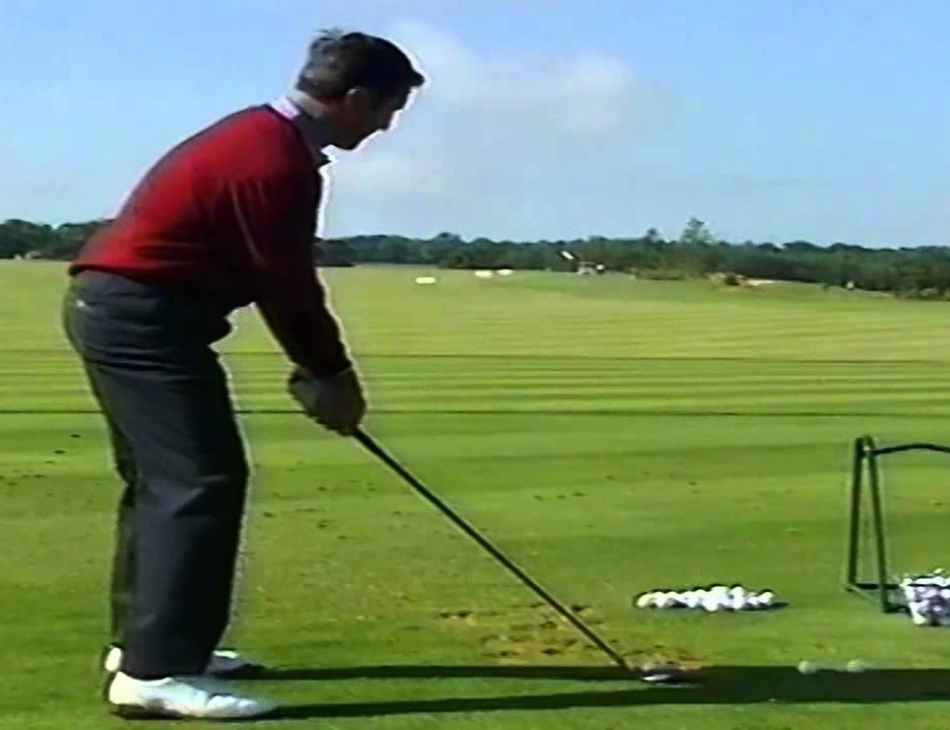
There are smaller touches too. The practice facilities are extensive, including a 330-yard driving range, bunkers and short-game areas. Titleist had a pop-up club fitting station at the range, which is the sort of thing golfers pretend to approach casually while secretly hoping a small adjustment will unlock greatness. Golfers are particularly vulnerable to this sort of optimism. Give us a new shaft, a different loft setting or a launch monitor number we like and we will happily believe the next round is where it all comes together.
London Golf Club understands that world. It understands players from the serious golfer to the aspiring improver and the person who mainly wants to have a great lunch. That is its strength. It sits in that more interesting space between championship golf club, private members’ environment, hospitality venue and future leisure destination.
And that, ultimately, is why the golf was memorable, the course was demanding, the service was excellent and the wider vision felt credible. The Heritage is not an easy stroll, especially when your driver has apparently taken legal advice and refuses to cooperate. But it is engaging, beautiful and properly staged. It gives you shots to remember and enough trouble to keep you honest.
By the end, I had found water, found coffee, found a fairway or two and found just enough form to leave believing I might be better next time. This is, of course, one of golf’s most dangerous lies. But it is also why we return.