Gordon Murray S1: The Super Grand Tourer?
With a 680bhp Cosworth V12, a six-speed manual gearbox and three-seat cabin, the new Gordon Murray S1 turns the ferocious S1 LM into an elegant long-distance supercar. Just 64 will be made.

Gordon Murray S1
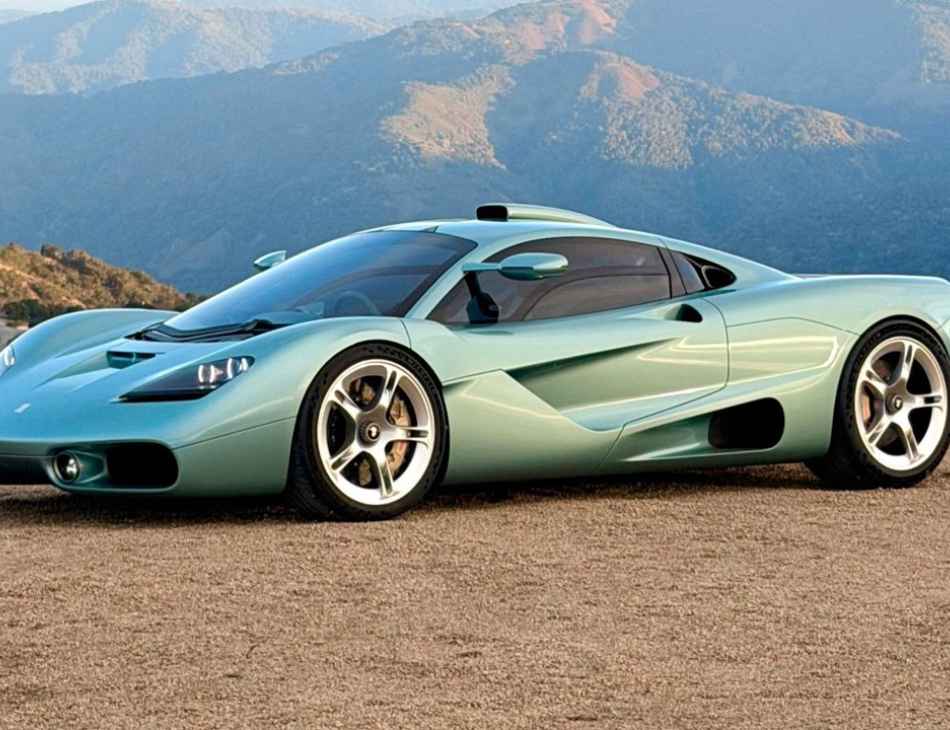
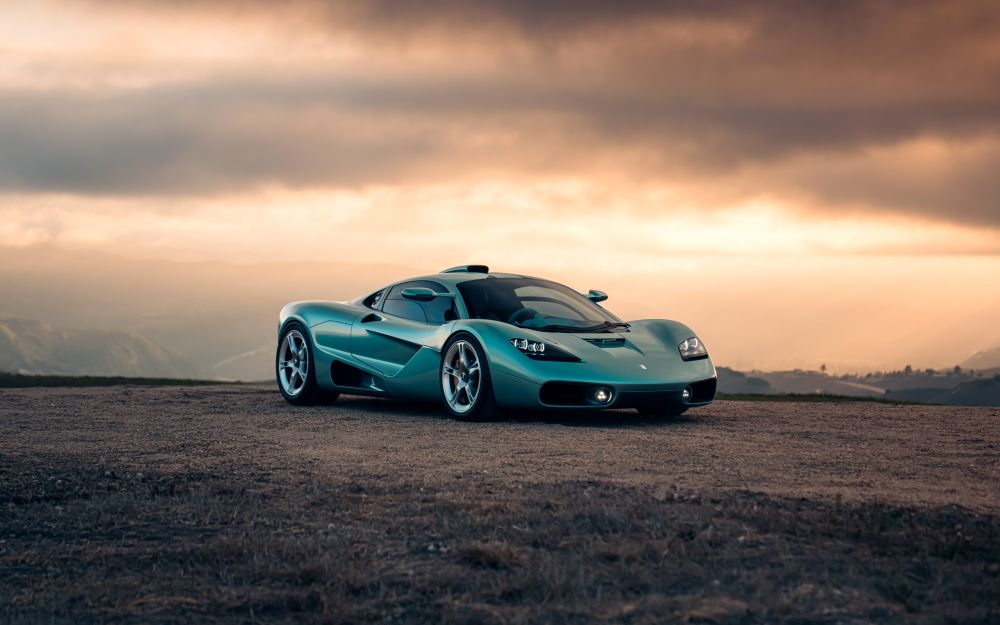
There is sensible and then there is Gordon Murray sensible. The new S1 has no enormous fixed rear wing, its suspension has been softened and it even comes with additional sound insulation. Yet it also has a naturally aspirated V12 capable of reaching 12,100rpm, a proper manual gearbox and a central driving position. In almost any other context it would be considered completely unhinged. Alongside the S1 LM however, it is practically a grand tourer.
Revealed at The Quail during Monterey Car Week, the S1 is the latest creation from Gordon Murray Special Vehicles and a more road-focused evolution of the formidable S1 LM. It retains the same underlying platform and essential engineering philosophy but exchanges the LM’s race-inspired aggression for something cleaner, calmer and considerably more usable over distance.
Only 64 examples will be produced worldwide. Pricing has not been disclosed (an S1 LM recently sold for $20m), although it seems reasonable to assume that affordability was not especially high on the design brief.
The S1 LM was created as an uncompromising, road-legal celebration of Gordon Murray’s victory at the 1995 24 Hours of Le Mans. The new S1 comes from the same bloodline but its purpose is quite different.
Gone are the LM’s towering rear wing, elongated front splitter and deep side skirts. In their place is a beautifully clean silhouette which feels more like a lost 1990s supercar than something developed in an era of colossal touchscreens and two-and-a-half-tonne electric SUVs.
Despite the obvious family resemblance to the McLaren F1, every exterior body panel is unique to the S1. It is not merely an S1 LM with the more alarming pieces removed.
Aerodynamic stability is now managed by an active rear system integrated discreetly into the bodywork. It deploys according to the car’s requirements under high-speed driving and braking, allowing the S1 to retain serious aerodynamic capability without permanently wearing an ironing board across its tail.
The emphasis has also shifted away from generating maximum downforce. Instead, the S1 has been engineered around mechanical grip, balance and predictable road behaviour - qualities that are rather more useful when the destination is a hotel on the Côte d’Azur rather than the first corner at Le Mans.
The centrepiece is a bespoke 4.2-litre naturally aspirated V12 developed by Cosworth.
It produces up to 680bhp and approximately 500Nm of torque (at 7,000rpm) but the headline figure is arguably its 12,100rpm maximum engine speed. In a world rapidly filling with turbochargers, hybrid systems and synthetic soundtracks, the mere existence of an engine like this feels rebellious.
This is no temperamental racing engine masquerading as a road-car powerplant either. More than 80 per cent of its torque is available from just 2,500rpm, giving the S1 the flexibility required for fast, effortless touring.
The specification includes lightweight silicon carbide-coated pistons, titanium valves, titanium connecting rods and dry-sump lubrication. A polished Inconel exhaust and 24-carat gold-plated heat shield ensure the engine bay looks suitably spectacular even when the car is standing still. More importantly, the V12 is connected to a six-speed manual gearbox.
The transmission features straighter cable routing to create the precise, mechanical shift action Gordon Murray describes as a “rifle-bolt” feel. A longer touring sixth gear is fitted as standard, allowing the S1 to settle into long motorway journeys without turning every trip into an endurance race for the eardrums.
No paddles. No dual-clutch launch programme. No need to select the correct one of 17 different drive modes before leaving the driveway. Just an engine, a clutch pedal and a metal lever that requires the driver to participate.
The S1 retains the width, track, lightweight suspension architecture and wider tyres of the S1 LM, but its ride height has been increased by 10mm. The dampers have also been recalibrated to deliver greater compliance over real roads while maintaining the steering precision, agility and feedback for which Murray’s cars are known.
That additional 10mm may not sound transformative, but it could make the difference between enjoying an Alpine pass and removing several thousand pounds’ worth of carbon fibre on the first enthusiastic encounter with a hotel ramp.
Lightweight construction remains fundamental. The S1 combines a carbon-fibre monocoque with ultra-light body panels and carefully optimised suspension components. Remarkably, Gordon Murray Special Vehicles is targeting a finished weight below that of the T.50 despite the S1 carrying more luxurious trim, better sound insulation and an upgraded audio system.
That is a very Gordon Murray approach to luxury. Comfort has been added, but apparently every extra gram has still been required to submit a written justification.
The S1 retains the central driving position that has become one of Gordon Murray’s defining design signatures. The driver sits directly on the car’s centreline with space for two passengers positioned slightly behind on either side.
It is an arrangement that remains wonderfully unconventional. Three seats, one steering wheel in the middle and no danger of accidentally purchasing the left-hand-drive version.
The cabin has been reworked to suit the S1’s touring role. Premium leather, bespoke fabrics, individually tailored trim and more comfortable seats are joined by enhanced acoustic insulation, revised infotainment displays and a specially developed lightweight audio system.
Selectable power steering allows the level of assistance to be altered according to the journey. More assistance can be chosen for relaxed cruising, while a more direct setting promises greater connection on interesting roads.
Access should also be less of an athletic event. New dihedral doors incorporate conventional drop-down glass and provide a wider opening than those of the S1 LM, dispensing with the LM’s delightfully impractical Lexan ticket window.
Professor Gordon Murray describes the S1 as retaining the intensity and engineering integrity of the S1 LM while being tuned for an entirely different purpose. His vision is of a car capable of travelling from Los Angeles to Monterey in genuine comfort while allowing its driver to enjoy every gearshift, corner and burst of V12 noise along the way.
It remains exotic, impractical and spectacularly exclusive, of course. Production is limited to 64 individually commissioned cars, with each owner invited to create a unique specification. The price remains private, perhaps because anyone fortunate enough to be offered an allocation is unlikely to begin the conversation by asking about the monthly payments.
The S1 is not an attempt to make a Gordon Murray supercar ordinary. It is an attempt to make one usable without diluting the qualities that made it extraordinary in the first place. A naturally aspirated V12. A manual gearbox. A car weighing less than the already featherweight T.50. Three seats and a steering wheel positioned dead centre.
Sensible, then – but only by Gordon Murray standards.