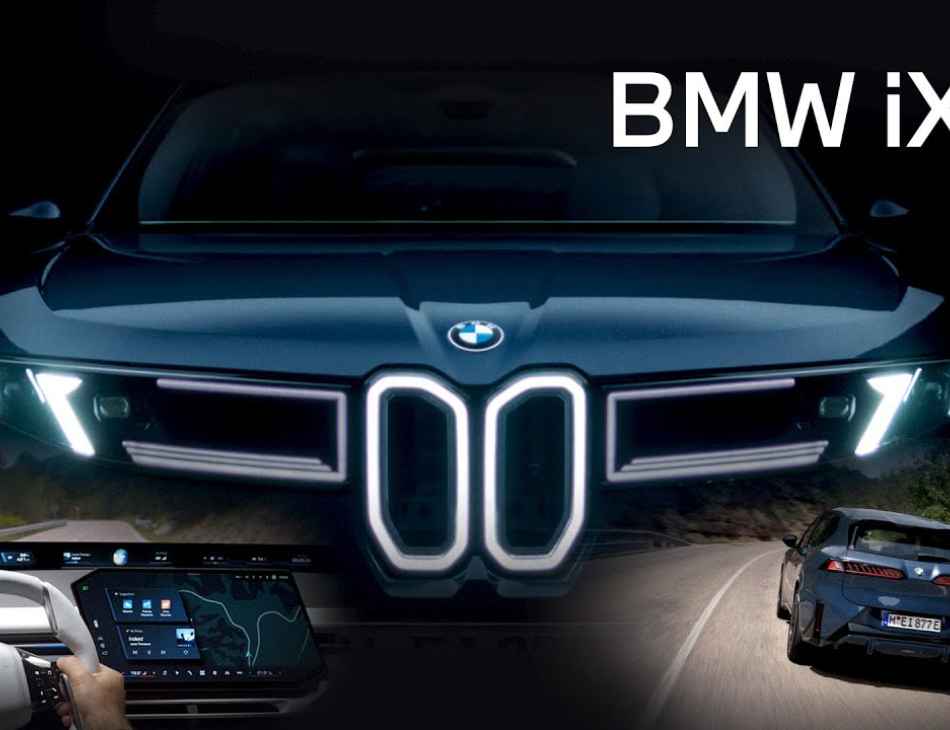
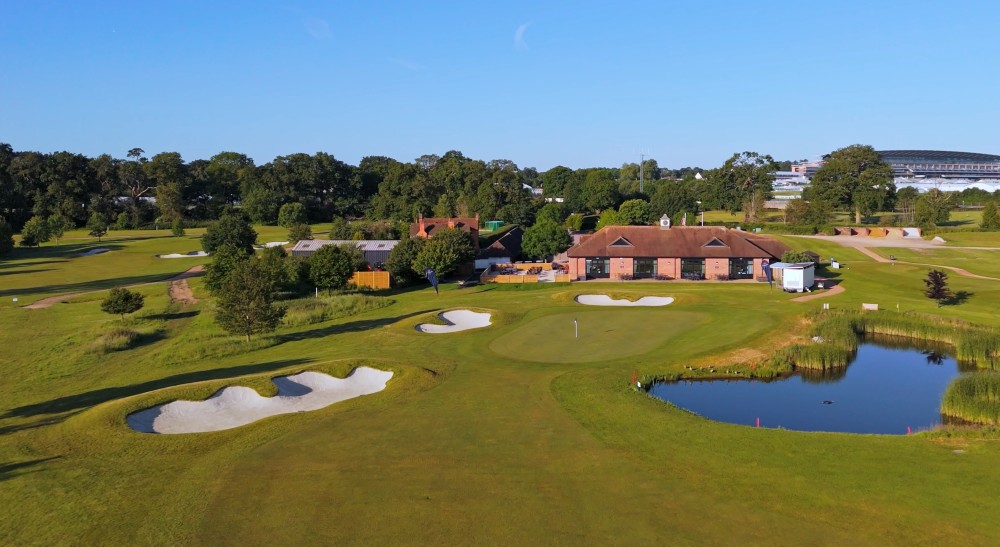
BMW iX3 at Royal Ascot Golf Club: Playing The Long Game
Royal Ascot Golf Club has royal history, a modern course and a determinedly open door. BMW's first Neue Klasse SUV approaches progress in much the same way, although with 463bhp, 457 miles of range and no requirement to repair its pitch marks.
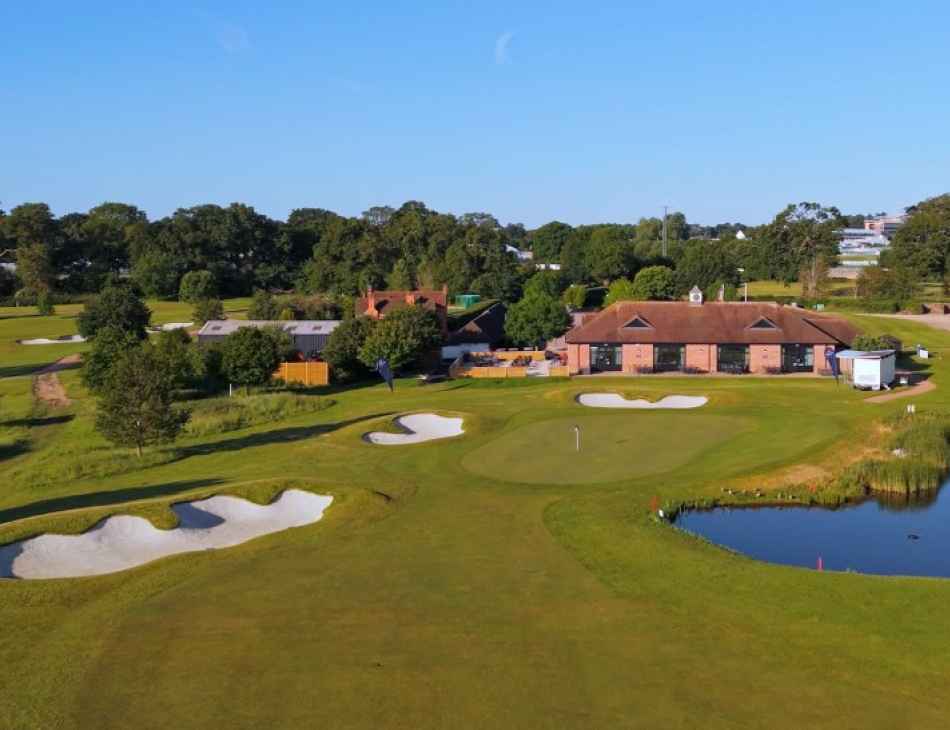
BMW iX3 at Royal Ascot Golf Club
Golf and electric cars share a fondness for numbers. Golf has par, handicap, slope rating and the curious mathematical afterlife of Stableford. Electric cars have kilowatts, kilowatt-hours, charging curves and WLTP figures precise enough to suggest the weather has signed a contractual agreement.
They also share a minor image problem. Both can appear expensive, complicated and governed by people who assume you already understand the rules. Royal Ascot Golf Club and the new BMW iX3 are, in their very different ways, trying to do something about that.
The iX3 looked entirely at home on the edge of the course in Ocean Wave Blue, although placing a 2,360kg electric SUV on grass produces a particular kind of anxiety. Royal Ascot's greenkeepers spend their lives removing evidence that heavy things have been where they should not. I arrived with one wearing 22-inch wheels.
Happily, no putting surface was harmed. The BMW sat against the broad, dry gold of a long Berkshire summer, its cleaner Neue Klasse lines looking even sharper beside the clipped greens and white bunkers. Large SUVs often appear slightly overdressed in town and perfectly reasonable at a golf club. They imply four people, several bags and an urgent need to know whether the halfway house serves bacon.
Royal Ascot is older than its course. The club was established in 1887 and granted Royal status by command of Queen Victoria later that year. Its original home was on Ascot Heath, inside the racecourse, where golf and horse racing coexisted in a manner that must occasionally have made club selection unusually consequential. The original course was designed by five-time Open champion J H Taylor and hosted the inaugural Boys Amateur Championship in 1921.
In 2005, the club moved across the road to a purpose-built course on Ascot Farm in the south-west corner of Windsor Great Park. The result is a pleasing contradiction: one of the area's oldest clubs playing on one of Berkshire's newer courses. That makes it an excellent setting for the iX3, a car carrying an established badge while quietly replacing most of the thinking behind it.
This is the first production model of BMW's Neue Klasse generation. The name reaches back to the saloons that helped rescue and redefine BMW in the 1960s, which is a considerable historical burden to place on a family SUV with a towbar. Yet the point is similar. Neue Klasse is not merely another battery model; it introduces new electrical architecture, software, displays, batteries and control systems that will spread across the company.
Viscount Yves has already tested the iX3's long-distance credentials on these pages, covering 1,400 miles across France in four days and finding remarkably little range anxiety along the way. My interest at Royal Ascot was slightly different: less whether the car could cross a country between plugs and more whether all this new technology felt welcoming once you climbed aboard.
Visually, BMW has rediscovered restraint. The iX3's kidney grilles are upright and recognisable without occupying the entire front elevation. Slim lights, flush handles and cleaner surfaces disguise its 4,782mm length rather well. It is modern without resembling a household appliance designed by a mildly angry architect. The illuminated grille fitted to this car remains optional proof that restraint has its limits.
Royal Ascot's modernity is less obvious, because most people do not look at a golf course and wonder about its substructure. The 18-hole, par-70 layout was designed by Jonathan Tucker of the Sports Turf Research Institute and built by J & E Ely, the contractor involved in alterations to Royal Troon for the 2004 Open. Its greens meet USGA construction standards and the drainage allows competitive play through most of the year. A golfer sees grass. Underneath is engineering, planning and a determined campaign against standing water.
The course occupies 150 acres of wooded Crown land and measures 6,288 yards from the white tees. It does not waste time flattering the visitor: the opening hole is a 225-yard par three, a beginning roughly equivalent to a driving examiner asking you to reverse around a corner while leaving the test centre.
Mature oak, ash, beech, birch and larch frame the fairways, while ponds, brooks and protected ecological areas provide homes for buzzards, roe deer and muntjac. They also provide golfers with picturesque places in which to lose expensive balls.
The most revealing part of my conversation with General Manager Stephen Nicholson was the first five minutes, where Stephen spoke about the junior academy and the work being done to give younger players a proper route into the game. Some clubs lead with trophies or dining-room etiquette. Royal Ascot led with the kids.
That priority is visible throughout the club. Its junior camps welcome different age groups and abilities, combining practice-ground coaching, short-game work, putting and time on the course with PGA professionals. The current noticeboard separates summer sessions for under-12s and those aged 12 and above, alongside more focused performance classes. This is not a token junior hour placed inconveniently between adult competitions. It is a pathway intended to turn initial curiosity into skill, confidence and, eventually, belonging.
Belonging is the word that kept returning as Stephen and I talked. Royal Ascot is a members' club with no external shareholders to satisfy, so the money it generates is returned to its facilities, course and services. Newcomers can use academy membership and a buddy scheme to learn both the game and the odd little customs surrounding it. Designated members make introductions, explain competitions, help with handicaps and accompany people onto the course. This matters. A welcome sign is pleasant; a person who notices you have no idea where to stand is useful.
"Golf can still be viewed as an elitist sport by many,” Stephen has said. “We’re here to prove that’s not the case.” The club’s Get into Golf Academy plays an important part in that effort, particularly by encouraging more women to take up the sport. Royal Ascot’s decision to join the R&A Women in Golf Charter reinforces that commitment.
The evidence continues throughout the clubhouse, which advertises ladies’ group coaching, a weekly nine-hole Supper Club open to everyone, a Greenkeepers Challenge and the Ascot Community Sports Challenge. The latter brings together the golf club, racecourse, cricket and football clubs, Guards Polo Club, Windsor Great Park Bowls Club and local organisations for a summer of friendly competition.
There are charity days, quiz nights, social golf and events at which the clubhouse is simply a useful local place to meet. The club has now staged three summer fetes, attracting around 1,500 people on average and turning the grounds into something rather more substantial than a polite gathering around a tombola. One of Royal Ascot’s cleverer achievements is making a club with a crown in its crest feel less like a private enclosure and more like part of the local machinery.
The iX3 attempts the same trick with technology. Open the door and this particular car is almost startlingly bright inside, thanks to its Digital White bicolour interior and panoramic glass roof. BMW Panoramic Vision places driving information in a slim band across the base of the windscreen, where it can be read without looking down, while the 17.9-inch central display handles navigation, media and the more elaborate functions.
There is a lot going on, but it becomes intelligible remarkably quickly. The important information is high, the steering wheel retains physical controls and the small central selector makes choosing forward or reverse less ceremonial than it has become in some electric cars. The dashboard is not entirely free of screen-based rummaging but it feels designed around a driver rather than presented as a technology company's end-of-term project.
The same philosophy appears in motion. Two motors produce 345kW, or 463bhp and 645Nm through xDrive all-wheel drive. It reaches 62mph in 4.9 seconds, which is unnecessarily brisk for a vehicle carrying golf clubs but extremely useful when leaving a round in which the scorecard has become legally sensitive. More impressive is the way it manages the forces involved. Steering, propulsion, regenerative braking and the conventional brakes work together cleanly, so the car feels natural rather than digitally supervised.
Its mass has not vanished. A 2.36-tonne SUV on 22-inch wheels cannot negotiate a sharp imperfection without occasionally reporting it to the cabin. Yet body control is excellent, the steering has sensible weight and the iX3 settles into a quick, quiet rhythm on the roads around Ascot. It does not pretend to be an M3 with a conservatory attached. It simply drives with more accuracy and composure than its size gives you reason to expect.
Golfers are unusually well placed to appreciate the practical side. The rear compartment offers up to 1,750 litres, so carrying clubs does not require the usual negotiation in which somebody's luggage, dignity or passenger seat must be sacrificed.
There is another 58 litres beneath the bonnet and the test car's £1,025 towbar makes use of a two-tonne towing capacity. This is enough for a trailer, horsebox or mobile collection of golfing equipment accumulated by someone still convinced the next purchase will fix the swing.
Range is the number that changes the character of the car. The 108.7kWh usable battery provides up to 457 miles on the WLTP cycle. Even allowing for temperature, speed and the usual gap between a laboratory and Hampshire, that moves charging from constant preoccupation to occasional administration. An 800-volt system can accept up to 400kW, taking the battery from 10 to 80 per cent in 21 minutes or adding as much as 231 miles in ten, provided a sufficiently muscular charger can be found.
Royal Ascot has its own interest in electricity. The club has installed 124 solar panels, which supply around a third of its electricity and are said to avoid 17,500kg of carbon emissions each year. The power supports the refurbished clubhouse, electric buggies and maintenance equipment, while the project saves about £2,000 a month. Around the course, 2,500 trees have been planted and the Queen Elizabeth II Memorial Wood was unveiled by the Duke and Duchess of Edinburgh.
This is the point at which pairing an electric BMW with a golf club stop being a convenient photographic exercise. Golf depends visibly on climate, water, soil and long-term land management. Electric cars depend on cleaner energy becoming normal rather than exceptional. Neither solar panels nor a large battery settles every environmental argument, but both organisations are investing in infrastructure rather than merely applying green language to the brochure.
The figures do eventually return to money. This iX3 began at £60,250, but Ocean Wave Blue paint, 22-inch Individual wheels, the panoramic roof, towbar, Parking Assistant Pro and Technology Plus Pack helped lift it to £71,462.50 including delivery. That is premium-SUV territory in the fullest sense. Accessibility of operation should not be confused with accessibility of purchase.
Royal Ascot faces a related but broader challenge. Golf will never be completely free of cost, time or terminology. What a club can do is remove the unnecessary barriers: coaching that assumes no prior knowledge, social formats that do not demand a handicap, people who make introductions and community events with no expectation that every visitor will become a member. It can explain the rules without making ignorance feel like a character defect.
That may be the real connection between Royal Ascot Golf Club and the iX3. Both carry historic names. Both have replaced an old home with a modern structure. Both understand that reinvention works best when the result feels easier to use, not merely more impressive to describe.
One does it with batteries and software. The other does it with coaching, community and a great deal of drainage. In Ascot, both approaches make a surprising amount of sense.
https://www.bmw.co.uk/en/index.html
https://www.royalascotgolfclub.co.uk/
Model: BMW iX3 50 xDrive M Sport
Price (as tested): £60,250 (£71,462.50).
Transmission: Automatic
Drivetrain: BMW x-Drive
Power: 463hp
Torque: 645 Nm
0-62mph: 4.9 seconds
Top Speed: 130 mph
Electrical Consumption: 16.7 kWh/62 miles
Electrical Range: 456 Miles
Unladen Weight: 2,360 kg