A Golfing Homecoming In Northern Ireland
Championship-level golf, dramatic coastlines, exceptional hospitality and a cultural identity quite unlike anywhere else in the United Kingdom. For Chris Walsh, a four-day journey through Northern Ireland was also a chance to reconnect with his family roots and discover why this small corner of the island of Ireland deserves a much bigger place on the international golfing map.
Golf Northern Ireland
My family comes from Northern Ireland, so returning here has always carried a certain familiarity for me. Even when visiting somewhere I have never been before, the names, accents, landscapes and of course, the craic, somehow feel totally recognisable. However, this time, there was another purpose to be here. Golf.
Four days, four courses and a route stretching from Belfast through County Antrim to the Causeway Coast provided an opportunity for me to see Northern Ireland from a golfer's perspective.
But I must stress that selling Northern Ireland purely as a golf destination rather undersells it. The golf may provide your excuse to come but the incredible culture, rich history and the general quality of the Guinness provide plenty of other reasons.
For somewhere geographically compact, Northern Ireland has had an extraordinary influence on international golf. Rory McIlroy, Graeme McDowell and Darren Clarke are three of its most famous golfing exports, while Royal Portrush has now hosted The Open three times, in 1951, 2019 and most recently 2025, when world number one Scottie Scheffler lifted the Claret Jug.
The 153rd Open attracted more than 278,000 spectators, making it the biggest sporting event ever held in Northern Ireland.
And the wider Irish golfing story is gathering still more momentum. In September 2027, the Ryder Cup will return to Ireland for only the second time in its history, with Adare Manor in County Limerick hosting Europe and the United States in the centenary year of the competition. It follows the famous 2006 contest at The K Club and puts the island of Ireland firmly back at the centre of world golf.
As you can tell, golf has become serious business. Tourism Northern Ireland calculated the value of golf tourism at a record £86.2 million in 2024, with 29,400 overseas golfers visiting primarily to play the game. The figure has risen by almost two-thirds since 2019 and more than doubled over the past decade and it is not difficult to understand why.
Perhaps most interestingly, the golf story here is still developing.
Plans are progressing for Balmoral Golf Club to relocate from its historic Belfast home to a new course at Drumbo, designed by former Ryder Cup captain Paul McGinley.
Farther north, the Galgorm Collection is pursuing an ambitious development at Bellarena overlooking Lough Foyle. Proposals include a new 18-hole championship links, clubhouse, practice facilities and golf lodges, with more than £30 million of investment proposed. If delivered as planned, it would be Northern Ireland's first new championship links course in more than a century.
That level of investment suggests a destination confident about where its golf tourism is heading.
Our particular journey combined two parkland courses with two very different coastal experiences: Malone Golf Club in Belfast, Galgorm Castle near Ballymena, Portstewart on the Causeway Coast and Cairndhu overlooking the Antrim coastline. And, as a fairly average handicap golfer myself, I can confirm that the four courses we played certainly did not hand out great scorecards simply because we had made the effort to visit. Quite the opposite, in fact.
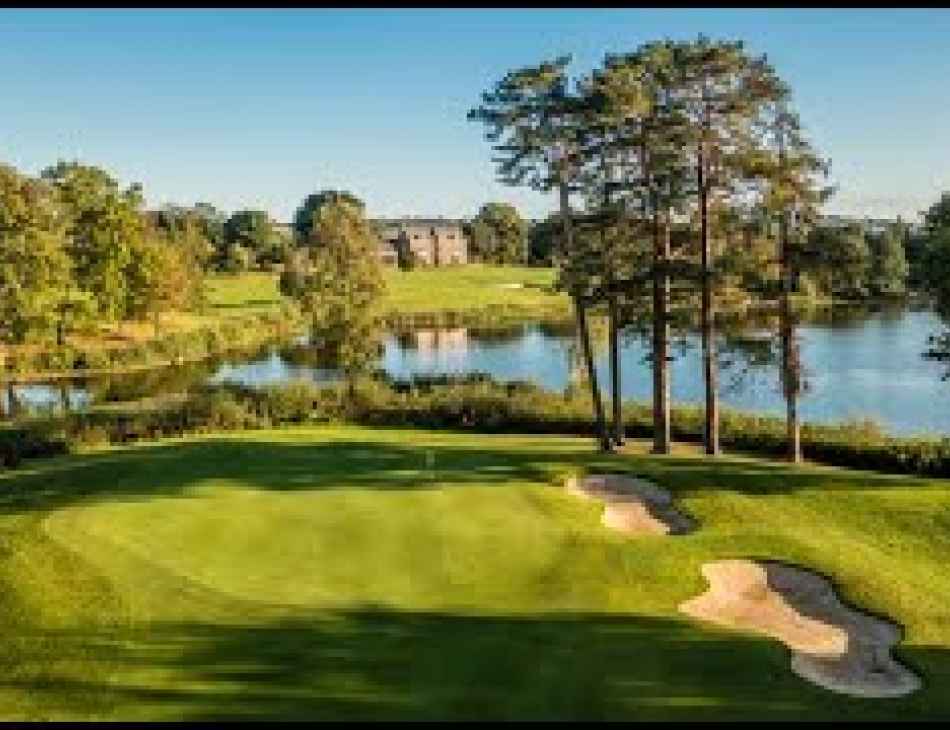
Day one started in the city. Belfast is an unusually convenient starting point for a golfing break because you can go from aircraft to first tee remarkably quickly. Our opening round was at Malone Golf Club, around five miles south of Belfast city centre in the lower Lagan Valley. Founded in 1895, Malone is one of those established clubs where history is apparent without the place feeling remotely stuffy.
The course was immaculate, as indeed were all four courses we played. Malone offers proper parkland golf rather than simply a gentle introduction to what lies ahead. Accuracy matters and there is more than enough difficulty to remind you that these courses expect you to know roughly what you are doing.
As opening rounds go, Malone was a very good indication of what was to come. It is considerably more demanding than its tranquil surroundings might initially suggest. Accuracy from the tee is important and there are plenty of occasions where simply hitting the ball a long way is of considerably less use than putting it in the right place.
Our base for the night was the five-star Grand Central Hotel on Bedford Street, right in the centre of the city. For something rather more elevated than the 18th tee, its Observatory occupies the 23rd floor with stunning panoramic views across Belfast.
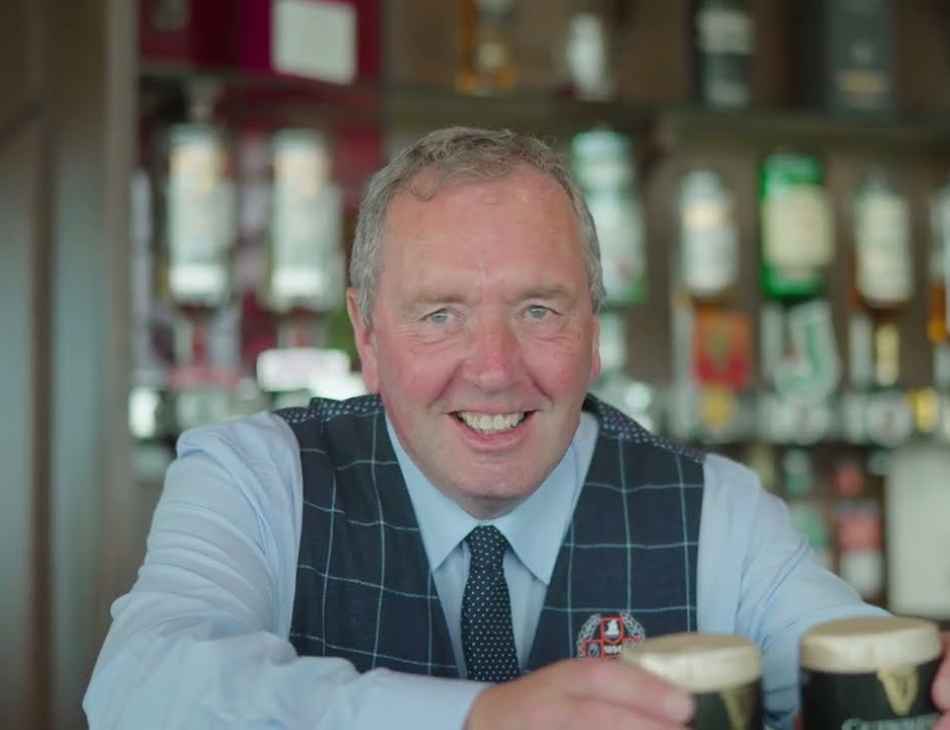
Dinner at Deanes Meat Locker provides the more polished side of Belfast dining, centred on locally sourced beef, lamb and pork cooked over an Asador grill. But afterwards came one of my favourite experiences of the entire trip. A Guinness (or two) at Madden's Bar. It is not polished. Nor should it be.
Hidden away on Berry Street, it is one of those places that immediately feels genuine. Traditional Irish music is played there seven nights a week and the compact interior is filled with instruments, memorabilia, conversation and the sort of atmosphere that no interior designer could convincingly recreate.
Add a properly poured pint of the black stuff and it becomes very easy to understand why Belfast's nightlife should be part of a golf trip rather than merely somewhere to sleep between rounds.
It is also entirely appropriate as Belfast has held UNESCO City of Music status since 2021, recognition of a musical culture which ranges far beyond traditional Irish music.
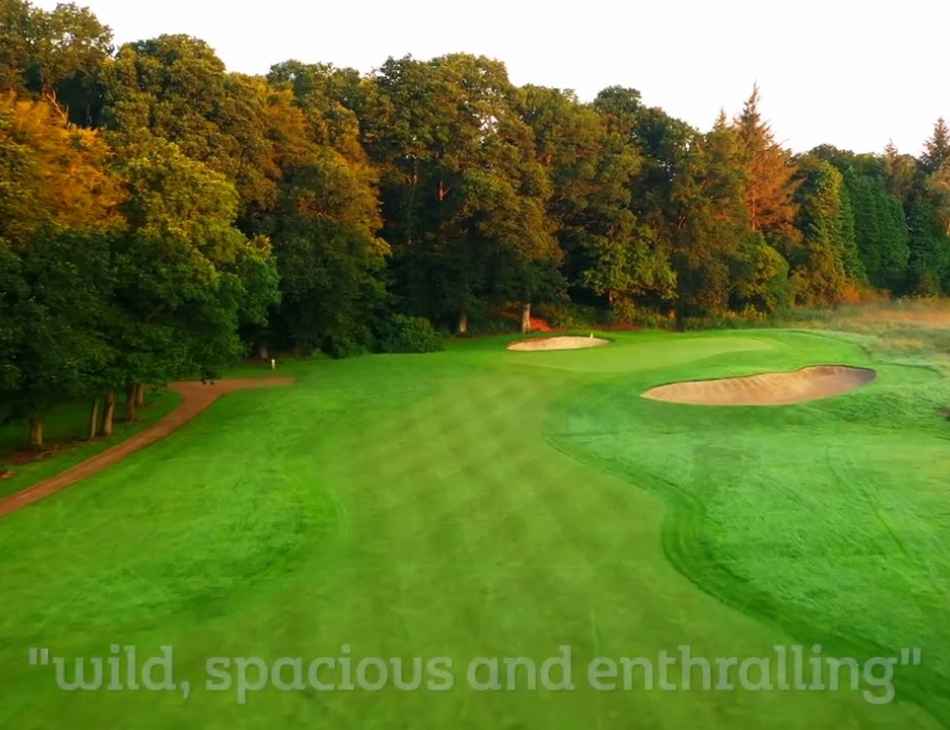
Day two started off with a journey of around thirty miles north-west to a quite different proposition. Galgorm Castle's par-72 Championship Castle Course is a Simon Gidman-designed parkland layout with considerable tournament pedigree. It hosted the 2020 Irish Open, four editions of the World Invitational and numerous Northern Ireland Opens, giving visiting golfers the opportunity to test themselves on a course on which professionals have done exactly the same.
Again, presentation was exceptional and again, it is no pushover.
Yet Galgorm illustrates another reason Northern Ireland works particularly well for the luxury traveller: increasingly, the golf is only one component of a much broader experience.
Nearby Galgorm Resort sits in some 450 acres of parkland around the River Maine and its Thermal Spa Village combines heated indoor and outdoor pools, saunas, steam rooms and riverside hot tubs.
After several hours attempting to persuade a golf ball to travel in the intended direction, sitting in warm, bubbling water beside a fast-flowing river suddenly seems like a remarkably sensible sporting recovery strategy.
For couples or groups where not everyone regards 18 holes as the natural way to spend an afternoon, places such as Galgorm also make Northern Ireland considerably easier to recommend. One person can play golf while another disappears into a spa. Domestic harmony has been founded on less.
Day three took us further northwards, where things become increasingly spectacular.
Before reaching Portstewart, the Giant's Causeway is an obvious stop. Northern Ireland's first UNESCO World Heritage Site, the extraordinary landscape of predominantly hexagonal basalt columns was formed by volcanic activity around 60 million years ago. 2026 marks 40 years since its inscription as a World Heritage Site.
It is one of those places where photographs have perhaps made the scene too familiar but when you are standing there, that feels rather different.
Then came Portstewart Golf Club. Of the four courses we played, this was comfortably my favourite.
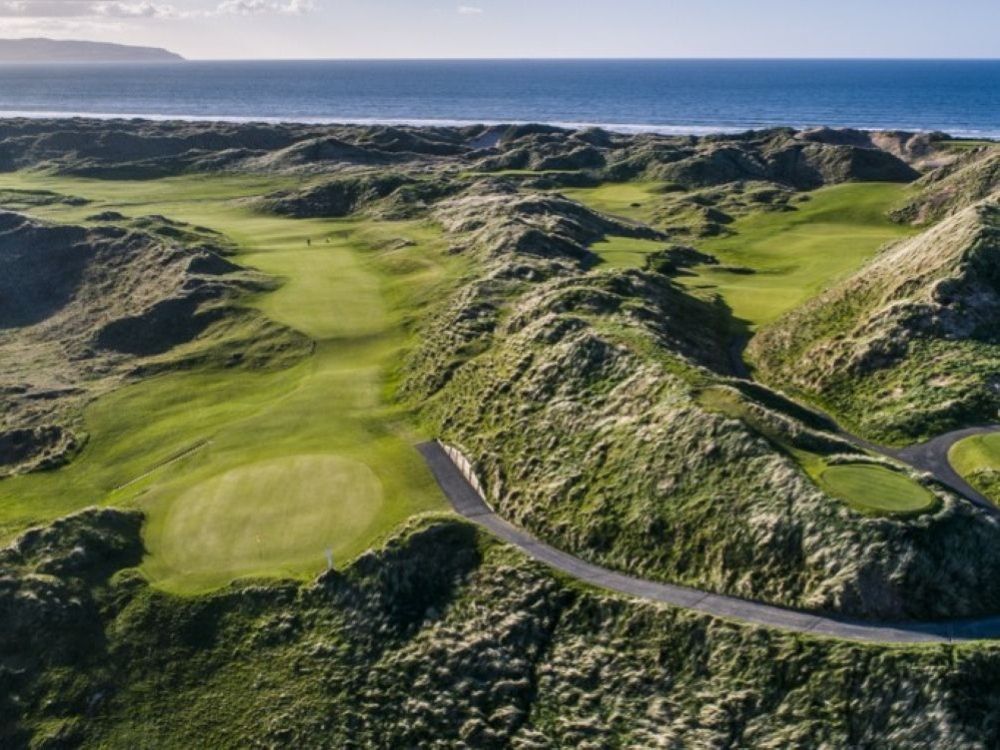
The Strand Course sits among immense dunes overlooking the Atlantic, River Bann and distant Donegal hills. Its opening hole begins from an elevated tee and sweeps through the dunes, immediately establishing both the scale of the landscape and the challenge ahead.
‘Staggering’ is not a particularly technical piece of golf-course analysis, but it is the word I kept returning to hole after hole.
The scenery is huge. The course appears to have been carved through rather than imposed upon the landscape and having a caddie alongside us transformed the experience. On links golf in particular, what appears obvious from the tee rarely tells the whole story. Local knowledge about lines, slopes and wind becomes invaluable.
For someone of my golfing ability, that did not make Portstewart easy. It merely meant I had a better understanding of precisely why I was being beaten up. And strangely, that is part of the appeal. This is a course worth travelling for. You expect it to test you.
The Causeway Coast also demonstrates just how easily serious golf can be combined with a genuinely good break.
The Marcus Portrush, part of Hilton's Tapestry Collection, opened in 2025 in a restored Victorian building and provides a stylish 80-room base in the town. Nearby, Shanty occupies Portrush’s historic Old Lifeboat Shelter, a site associated with the town’s lifeboat service since 1860 and provides another characterful option for dinner overlooking this part of the coast.
But my recommendation after dinner is considerably simpler. Go to the Harbour Bar.
One of the oldest pubs on the North Coast, its traditional front bar is the sort of place increasingly difficult to manufacture because almost everything that makes it special has accumulated over generations rather than been designed.
The walls are covered with golf memorabilia. There is history everywhere you look but this is certainly not some themed tourist attraction. It still feels like a local bar inhabited by generations of local people. And again, the Guinness was superb.
Madden's in Belfast and the Harbour Bar in Portrush were arguably as important to my homecoming to Northern Ireland as anything else on the itinerary. They provided something luxury travel sometimes forgets, namely authenticity. You can stay somewhere exceptional and eat extremely well but occasionally the thing you remember most is simply standing at a bar, drinking a pint and talking blarney with somebody you have never met before.
Day four brought us to the final course of the trip, which was perhaps the least internationally famous of the four and, scenically, one of the most memorable.
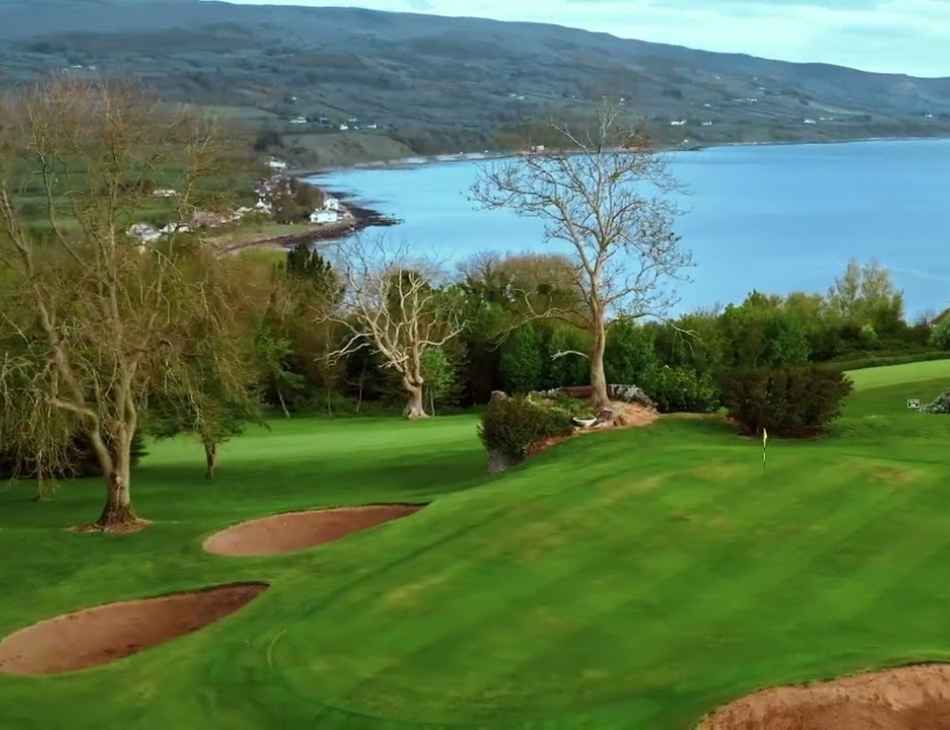
Cairndhu Golf Club occupies around 100 acres of mature parkland at Ballygally near Larne, sitting high above the Antrim Coast Road. From the early holes the views stretch across the sea towards the Mull of Kintyre and when conditions allow, Jura and Islay beyond. The 160-yard par-three second hole, known as ‘The Head’, sits directly on the exposed coastal headland.
If Portstewart is the great theatrical links experience, Cairndhu feels more intimate. One minute you are concentrating on club selection, the next you can see Scotland is just on the horizon. Again, it is beautiful. Again, it is not especially forgiving. There may be a theme developing here.
To get to Northern Ireland, flying is extremely straightforward. Belfast City Airport puts you virtually into the city itself, while Belfast International offers another wide range of connections. Add a hire car and the distances involved make an itinerary such as this remarkably manageable. There is, however, another option that particularly suits golfers.
Irish Ferries operates up to four sailings a day between Holyhead and Dublin and crucially, you can take your own car aboard. Dublin Port connects readily with the M1 north towards Belfast, making it possible to turn the whole journey into a proper road trip.
For golfers travelling with clubs, shoes, waterproofs and everything else we inexplicably convince ourselves is essential, having your own car has obvious advantages. It also allows the Causeway Coastal Route to become part of the holiday rather than merely the road between two tee times.
Northern Ireland has the headline courses and the championship history, but its strength lies in how easily everything fits together. Parkland golf in Belfast can become a luxury spa stay at Galgorm, followed by the Giant's Causeway, world-class links golf, an evening in Portrush and another spectacular coastal course before heading home.
Nothing feels particularly far away here.
For me, a hop over the water to somewhere my family calls home was never going to feel like an entirely foreign destination. But there is a difference between knowing where you come from and spending enough time there to understand what keeps drawing people back.
Northern Ireland is such a place.