Always Look For The Crown: A Prosciutto Pilgrimage To Parma
Yves de Contades heads to Parma, the little capital of Italy’s Food Valley, to learn why its legendary ham needs only Italian pork, sea salt, a sea breeze and fourteen months of patience. Along the way he finds a city so serene that stress appears to have been cured along with the prosciutto.
T’intorto With Chef Alessandra Pellegrino
I have long suspected that the Italians keep the very best of everything for themselves and export the rest with a charming smile. Parma confirms it. You can buy Prosciutto di Parma in any decent British supermarket, and very nice it is too. Eating it here is something else. Here it is sliced in front of you by a man who regards a leg of ham the way a Genevan watchmaker regards a tourbillon. Plus ça change, plus c’est la même ham, as nobody in France has ever said.
Where Is Parma? The Little Capital Between Milan And Bologna
Parma sits in Emilia-Romagna on the broad flat plain of the Po Valley. It is roughly halfway between Milan, about 125 km to the north west, and Bologna, about 100 km to the south east, with the Apennines rising green and serious to the south. It is a city of around 199,000 people and, for its size, an absurd amount of history.
The Romans founded it in 183 BC. The Farnese dukes later filled it with palaces, and the Bourbons followed. Then came a woman the French will always feel a little proprietorial about: Marie-Louise of Austria, Napoleon’s second wife. After Waterloo she was given the Duchy of Parma as a consolation prize. She ruled from 1816 until her death in 1847, and the city still calls her Maria Luigia with real affection. She gave Parma the Teatro Regio opera house, a passion for violets that survives in the local perfume, and the nickname “la petite capitale”. Stendhal set La Chartreuse de Parme here. Toscanini was born here, and Verdi was born just up the road in Le Roncole. Correggio painted the swirling dome of the Duomo, and Antelami built the pink marble Baptistery beside it.
The modern city has done rather well too. In 2015 Parma became Italy’s first UNESCO Creative City of Gastronomy. It was named Italian Capital of Culture for 2020, a title extended into 2021 after the pandemic cancelled most of the celebrations. It is also home to the European Food Safety Authority, which feels like housing the Académie française in Montmartre. This is the heart of the so-called Food Valley, home of Parmigiano Reggiano, Culatello di Zibello and Barilla pasta. And, bien sûr, the ham.
Checking In To A Pasta Factory At Grand Hotel de la Ville
From Milan Linate it is an hour and a bit by road, Italian motorway etiquette permitting. Bologna airport is closer still, and Parma has its own modest airport. Our base was the five-star Grand Hotel de la Ville, inside the Barilla Center. This is Renzo Piano’s handsome conversion of the old Barilla pasta factory. The hotel opened in 2003 and sits a gentle stroll from the historic centre. Sleeping in a former pasta factory in Parma felt entirely appropriate. I half expected an al dente alarm call.
The Salumeria Crawl: Inside Parma’s Prosciutto Delis
Bags dropped, we went straight to the delis. In Parma these are the salumerie. The master who presides over each one is the salumiere, part butcher, part sommelier, part confessor. Curing pork here goes back a very long way. Prosciutto first appears in a Parma butchers’ statute of 1309 under the delightfully odd name of “baffa”. In the fifteenth century the Lardaroli, the specialist pork curers, split away from the butchers’ guild to form their own. Snobbery about ham, it seems, is a Parmesan birthright.
The first lesson was age. A 24 month ham and a 40 month ham are different creatures. The older the ham, the lighter and more translucent the colour, and the richer and more complex the flavour. Rather like the best of us, one hopes.
The second lesson was three letters, DOP, which the locals pronounce “dee-oh-pee”. It stands for Denominazione di Origine Protetta, or Protected Designation of Origin, granted by the EU in 1996. It means Prosciutto di Parma can only be made here. The rules are strict. The legs must come from pigs born and raised in a defined area of north and central Italy. The curing must take place in the hills of the province of Parma, at least 5 km south of the old Roman Via Emilia and no higher than 900 metres. The recipe has precisely two ingredients: Italian pork and sea salt. No nitrites, no nitrates, no preservatives, no colourings. The third ingredient, as every producer will tell you, is the air: breezes drifting in from the Versilia coast, rolling over the Apennines and drying the hams naturally. Terroir, it turns out, is not just for wine.
Know Your Leg From Culatta To Gambetto
A good salumiere will ask which part of the leg you would like, and our man explained the geography. The culatta, the broad end of the leg, carries more fat and tastes sweeter. The fiocco, closer to the bone, is more savoury. The gambetto, where the leg narrows towards the shank, is softer and more delicate. Whichever you choose, check for the five-pointed Ducal Crown branded on the rind. If it is not there, it is not Prosciutto di Parma, however eloquent the shopkeeper.
How To Taste Parma Ham Like A Salumiere
There is a whole ceremony to tasting Parma ham. Frankly, I have attended shorter weddings.
First, lay the slice out flat and look at it. The colour should be even, from pink to deep red, marbled with pure white fat. Any yellowing of the fat is a sign of oxidation, and a sign to move along. Those tiny white specks that look like salt are not salt at all. They are crystals of tyrosine, an amino acid that forms naturally during long ageing, and they are a mark of a well-matured ham.
Next, touch it. The slice should feel faintly oily, but never greasy.
Then the aroma, which should suggest malt, a cool cellar and a whisper of raw meat. Finally, taste. Listen as you chew. The texture should be soft and fine, almost melting. Do not, under any circumstances, trim off the fat. It carries much of the sweetness and a subtle buttery note, and removing it is considered a crime against civilisation. I am told that one Parma ham producer who saw a tourist do this in 1987 has not spoken since.
Revì Bubbles And Torta Fritta At Salumeria Garibaldi
We wandered past the main square, Piazza Garibaldi, to another deli for a glass of Revì. This is a Trentodoc metodo classico from Aldeno in Trentino, made by a small family house founded in 1982. Long ageing on the lees gives it wonderfully fine, small bubbles that cut through the fat of the ham like a well-mannered épée.
Then on to Salumeria Garibaldi on Strada Garibaldi, near the station, a Parma institution. It sells the most extraordinary range of salumi, cheeses and prepared dishes in every colour and texture imaginable. I wanted to try everything and very nearly did. Here the ham came with torta fritta, the region’s pillows of fried dough, served warm so the fat on the prosciutto begins to melt into them. First a 24 month ham, then a 42 month. Je ne regrette rien.
Parma Ham By Numbers
Some figures to digest between slices. Around seven million Prosciutto di Parma hams are branded each year, and only the hind leg of the pig qualifies. A whole leg costs around 350 euros, and shop prices in Italy average around 33 euros a kilo. When you consider the fourteen months minimum and the weight lost along the way, that begins to look like a bargain.
Dinner For Sixteen At Soj Vino e Cucina
Dinner was at Soj Vino e Cucina, on Borgo del Parmigianino in the historic centre. It has a grand total of 16 covers around an open kitchen, and our party filled half of them, so we had the place and the chefs more or less to ourselves. Soj is run by two chefs, Federico Capocasa and Eugenio Restivo, who cook and serve everything themselves. It is a sort of Italian izakaya: modern cooking built on local produce, with a sharp list of wines from small Italian and French growers.
We started with a tortello filled with potato, cheese and Prosciutto di Parma. Next came a horse tartare taco, a playful nod to one of Parma’s most beloved and least exported specialities. Raw hand-chopped horse, known locally as pesto di cavallo or “caval pist”, has been part of city life since the first equine butcher opened in the Oltretorrente district in 1881. In 2021 it was officially listed as a traditional dish of Emilia-Romagna. British readers may need a moment. I recommend the moment be spent eating it.
Inside A Prosciutto Factory In Langhirano
The next morning we drove south into the hills around Langhirano, the capital of prosciutto country. Our destination was a family business making Prosciutto di Parma since 1959 and now run by the third generation. Needless to say, the factory sits beside an old tower amid rolling hills. Even the industrial estates here look as though they were designed by a Renaissance landscape painter.
The rules begin long before the salt. A fresh leg must weigh between 11.8 kg and 18 kg and carry a proper covering of fat. By the end it must weigh between 8.2 kg and 12.5 kg. Every producer makes its own Prosciutto di Parma, with its own character, but always within the Consorzio’s parameters, and everything is done by hand.
The incoming legs are checked, and any that fall short are rejected. They are trimmed, then salted by the maestro salatore: damp salt on the rind, dry salt on the meat. They spend about a week in a cold room, are salted again and left for another couple of weeks. Then comes a long rest in cool rooms for two to three months while the salt works its way slowly to the bone. All told, the hams spend around 90 to 110 days in the cold.
Then the hams are washed and dried. They are hung to pre-cure in rooms kept at 16 to 20 degrees, with the windows thrown open to let in that famous breeze. After five or six months, the exposed meat is sealed with sugna, a paste of lard, salt, pepper and a little flour. It adds nothing to the flavour. It simply keeps the surface supple and controls the drying. The hams then move down to the cellars, onto wooden racks, to finish curing. The minimum is fourteen months from start to finish. Most stay sixteen months or more, and some clients request even longer.
None of this is cheap. Months of refrigeration cost a fortune in energy. The hams are bought and sold by the kilo, yet they lose around 30 per cent of their weight along the way. A nitrate-cured supermarket ham, by comparison, is a weekend fling. Parma ham is a marriage.
The Horse Bone Test And The Ducal Crown
My favourite moment was the quality check. An expert takes a needle carved from horse bone and pierces each ham at five specific points. After each one, he sniffs the needle. Horse bone absorbs aroma and releases it almost instantly, so a single sniff tells the tester whether the ham has matured perfectly. I have met wine critics with less refined noses.
Finally comes the independent inspector from CSQA, the external certification body. Only if the ham passes is it fire-branded with the five-pointed Ducal Crown, which carries the producer’s code. The brand also appears on the 92 million or so packs of pre-sliced Parma ham sold each year.
“Always look for the crown,” said Filippo, the third-generation owner. I have since become insufferable about this in Waitrose.
The Consorzio del Prosciutto di Parma was founded in 1963, when 23 producers decided they were stronger together. Today it represents 126 producers, all committed to the traditional method, and protects the name all over the world. Its slogan calls the ham “A Cut Above”. On the evidence, they are not exaggerating.
Is Parma Ham Healthy? A Little Science With Your Slices
Here the wellness traveller may rejoice, within reason. According to the Consorzio, 64.9 per cent of the fat in Parma ham is unsaturated, much of it oleic acid, the same fat that makes olive oil so virtuous. Its long curing breaks the protein down into free amino acids, which makes it highly digestible. The branched-chain amino acids valine, leucine and isoleucine make up more than a fifth of the protein, and athletes prize them for muscle repair after exercise. It also contains natural antioxidants such as vitamin E and selenium. It is, of course, a cured ham and therefore salty, so I would not recommend replacing your morning run with it. But as indulgences go, it is a remarkably well-behaved one.
How To Serve Prosciutto di Parma At Home
The Consorzio’s advice is simple, and the salumieri agree. Serve it in paper-thin slices at room temperature, never straight from the fridge, and leave the band of fat around each slice where it belongs. Pair it with fresh figs, melon, ripe pears, papaya, pineapple or kiwi. For an elegant salad, scatter slivers of ham over mixed leaves. For an Italian panino, layer slices on a crusty roll with fresh or smoked mozzarella, tomato and a drizzle of olive oil. Or wrap it around fish or chicken before roasting, where it crisps beautifully and seasons everything it touches.
Lunch In The Hills At Osteria La Maestà
Lunch was at the lovely Osteria La Maestà, high on the hills of Lesignano de’ Bagni, with sweeping views over the Langhirano valley. It is a warm, rustic place in a converted farmhouse, with a red slicer standing guard over the salumi. The menu is proper Parmesan home cooking with a creative twist. Expect torta fritta, ribbons of pasta with porcini, and the house speciality of meat with fruit, such as roast porchetta fillet with plums or pork cheeks braised in moscato. Look out too for the torta rossa di Langhirano. Lunch with a view like this is a form of medicine the NHS has yet to discover.
A Private Tour Of The Prosciutto di Parma Museum
After lunch came a private tour of the Museo del Prosciutto di Parma in Langhirano. It occupies the town’s old cattle market, built in 1928 between the historic centre and the Parma river. The exhibition is laid out in eight sections, covering everything from the history of salt and the native pig breeds to the craft of the Lardaroli and the ham’s place in the kitchen. It ends, as all good museums should, in a tasting room. If you visit in early September, Langhirano holds its Festival del Prosciutto di Parma. During the “Finestre Aperte” open windows event, many of the prosciuttifici open their doors to visitors.
Dinner At Brisla Trattoria: A Crumb Worth Crossing Town For
Dinner was at the excellent Brisla Trattoria on Strada Farini. “Brisla” means “crumb” in the Parma dialect, which is modest to the point of false modesty. Young chef Elia Otgianu reinterprets the city’s classics with a light, precise touch. It was a new entry in the Gambero Rosso guide for 2024, and the Michelin Guide has since awarded it a Bib Gourmand for excellent cooking at fair prices. The anolini in brodo, little stuffed pasta in a deep, clear broth, are the dish to order. The bomba di riso with pigeon ragù is a close second. Chapeau.
Tortellini Lessons At T’intorto With Chef Alessandra Pellegrino
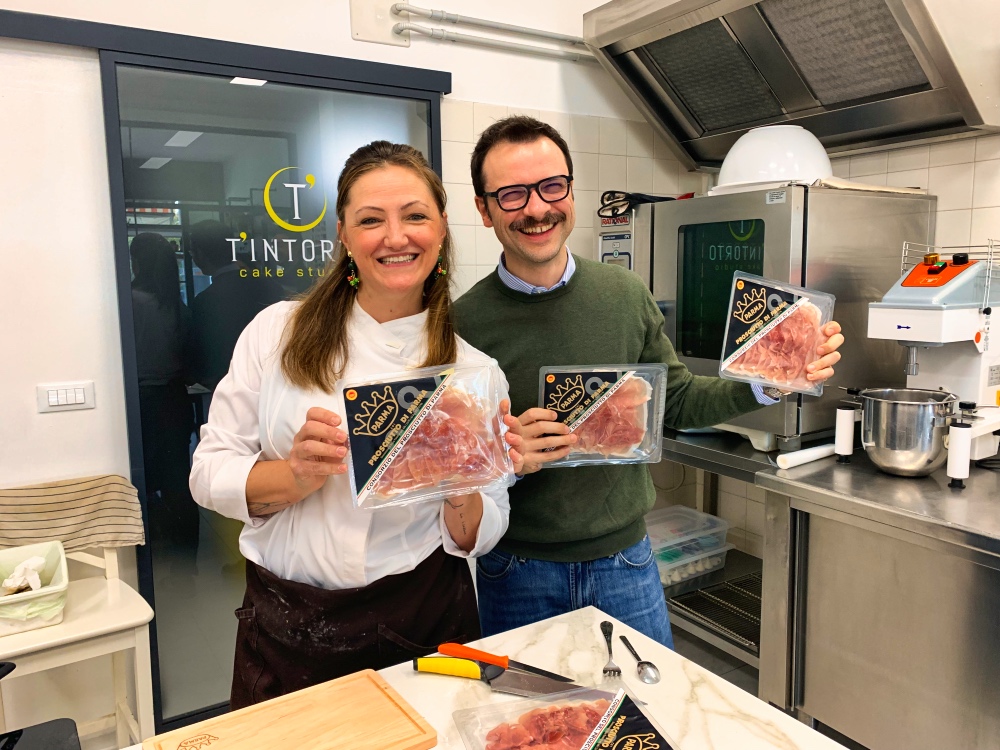
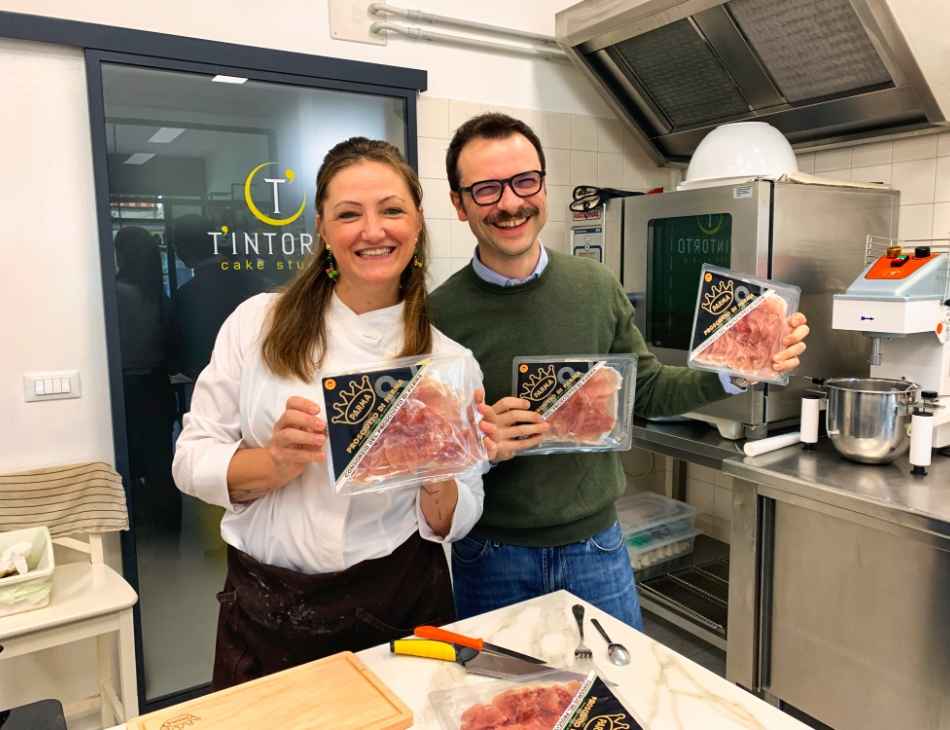
The next day brought a pasta cooking class at T’intorto, the cookery and cake studio on Via Pablo Picasso, run by the wonderful Alessandra Pellegrino. This was highly amusing, because my colleagues were all trained chefs and I am a notoriously bad cook. My kitchen at home is mostly decorative. Nevertheless, I received a high five from Alessandra for my tortellini. I intend to have it framed.
We ate our tortellini, and they were delicious, whatever that says about the teacher’s patience. Then we made a panna cotta with fig jam, crumbled amaretti biscuits and, naturellement, Parma ham. It sounds eccentric and tastes sublime, particularly with a glass of Malvasia, the light, gently sparkling white of the Parma hills.
The City With No Word For Stress
I spent the afternoon with a friend, wandering the streets and marvelling at how infinitely relaxed everyone was. No one hurried, ever, at any moment. We asked what felt like a hundred people for the local word for “stress” and “anxiety”. Most looked at us with polite bafflement. The dictionary does contain “ansia”, in fairness, but the Parmigiani appear to have mislaid it some time around the Farnese.
Sitting in a café on Piazza Garibaldi, watching the passeggiata drift by, we realised that such words would be useless here. Parma is an amazing city. The delis are glorious, the prosciutto succulent, the people sans souci and the architecture gorgeous. Above all, Parma seems to have achieved a kind of Zen-like inner peace, a whole city living l’art de vivre without ever having read the manual.
My Take On Parma
Come for the ham and stay for the calm. Between the food, the hills and the sheer unhurried ambience, Parma turns out to be the most delicious wellness trip in Europe, with culture thrown in for free. Fourteen months is the minimum the ham must wait. I would recommend you wait rather less.
FAQ
What is Prosciutto di Parma?
Prosciutto di Parma, or Parma ham, is an Italian dry-cured ham made from the hind leg of the pig, using only Italian pork and sea salt. It is a Protected Designation of Origin (PDO, or DOP in Italian) product. It can only be produced in the hills of the province of Parma in Emilia-Romagna, under rules set by the Consorzio del Prosciutto di Parma.
Where is Parma in Italy?
Parma is in the Emilia-Romagna region of northern Italy, roughly halfway between Milan and Bologna. It lies about 125 km from Milan Linate airport, roughly 1 hour 20 minutes to 1 hour 30 minutes by car, and about 100 km from Bologna. Parma also has its own small airport.
How long is Prosciutto di Parma aged?
Prosciutto di Parma must be cured for at least 14 months, a minimum raised from 12 months under the 2023 production rules. Most hams are aged for 16 months or more, and premium hams are often aged for 24, 30, 36 or even 40 months or longer.
What is the difference between 24 month and 40 month Parma ham?
Longer-aged Parma ham generally has a lighter, more translucent colour, a firmer texture and a richer, more complex and savoury flavour. A 24 month ham is typically sweeter and more delicate.
How can I tell if Parma ham is genuine?
Look for the five-pointed Ducal Crown with the word “Parma”. On a whole leg it is fire-branded onto the rind, along with the producer’s code. On pre-sliced packs it is printed on the packaging. If there is no crown, it is not Prosciutto di Parma.
Does Prosciutto di Parma contain nitrates or preservatives?
No. Prosciutto di Parma is made with only two ingredients, Italian pork and sea salt, with no nitrites, nitrates, preservatives or colourings.
What are the white crystals on Parma ham?
The small white specks are tyrosine crystals, an amino acid that forms naturally during long curing. They are harmless, safe to eat, and generally considered a sign of a well-aged ham.
Should you remove the fat from Parma ham?
No. The white fat around each slice carries much of the ham’s sweetness and buttery flavour, and the producers recommend leaving it on. According to the Consorzio, around 65 per cent of the fat is unsaturated.
Is Parma ham healthy?
In moderation, Parma ham can be part of a balanced diet. It is high in easily digestible protein, and branched-chain amino acids make up more than 20 per cent of that protein. It also contains antioxidants such as vitamin E and selenium. It is naturally salty, so portion size matters.
How should Prosciutto di Parma be served?
Serve it sliced paper-thin at room temperature with the fat left on. It pairs well with figs, melon, pears, Parmigiano Reggiano, torta fritta and crusty bread, and with sparkling wines such as Malvasia, Lambrusco or a metodo classico.
How much does a whole leg of Parma ham cost?
A whole bone-in leg of Prosciutto di Parma costs around 350 euros in Italy, depending on weight and age. Average retail prices in Italy are around 33 euros per kilo.
Can you visit a Parma ham factory?
Yes. Many prosciuttifici around Langhirano offer tours, and many open to the public during the Festival del Prosciutto di Parma in early September. The Museo del Prosciutto di Parma in Langhirano is open to visitors and includes a tasting room.
What is pesto di cavallo?
Pesto di cavallo, or “caval pist” in dialect, is a Parma speciality of raw, finely chopped horse meat dressed with oil, salt and lemon. It was recognised as a traditional dish of Emilia-Romagna in 2021.
What food is Parma famous for?
Parma is famous for Prosciutto di Parma, Parmigiano Reggiano, Culatello di Zibello, anolini in brodo, tortelli, torta fritta and pesto di cavallo. It was Italy’s first UNESCO Creative City of Gastronomy.
Find more information here at the Parma Tourist Board