

Polestar 3: A Premium Electric SUV Tested Over 750 Miles
A week in the Polestar 3, 750 miles, no home charger and one very real test of whether Sweden’s premium electric SUV can make public charging feel genuinely liveable.
Polestar 3
The problem with reviewing electric cars without a home charger is that you very quickly become an unpaid infrastructure correspondent. You stop thinking like a motoring content creator and start thinking like a logistics manager.
Which is why the Polestar 3 arrived into my life with a fairly stern assignment. Not just to be handsome, clever, fast and Swedishly tasteful but to survive a full week in normal use, covering around 750 miles, using only the public charging network. No driveway wallbox. No smug overnight top-ups. No plugging it in beside the bins and waking up to 100 per cent. Just apps, chargers, cables, car parks, a new form of queueing etiquette and the occasional deeply British moment of standing in drizzle beside a giant electrical hose wondering whether this is the future or a punishment.
This matters because my previous experience with the Polestar 4 left me both impressed and slightly irritated. The car itself was good - very good in places - but there were niggles. The software, particularly around the assistance systems and speed recognition, felt like it had graduated from the School of Good Intentions but skipped several modules on Common Sense.
The Polestar 3 feels very different. Better resolved. Calmer. More mature. As though someone at Polestar has gone back through the car, turned off the daftness, tightened the logic and produced something that behaves less like a clever prototype and more like a finished premium SUV.
And it looks terrific.
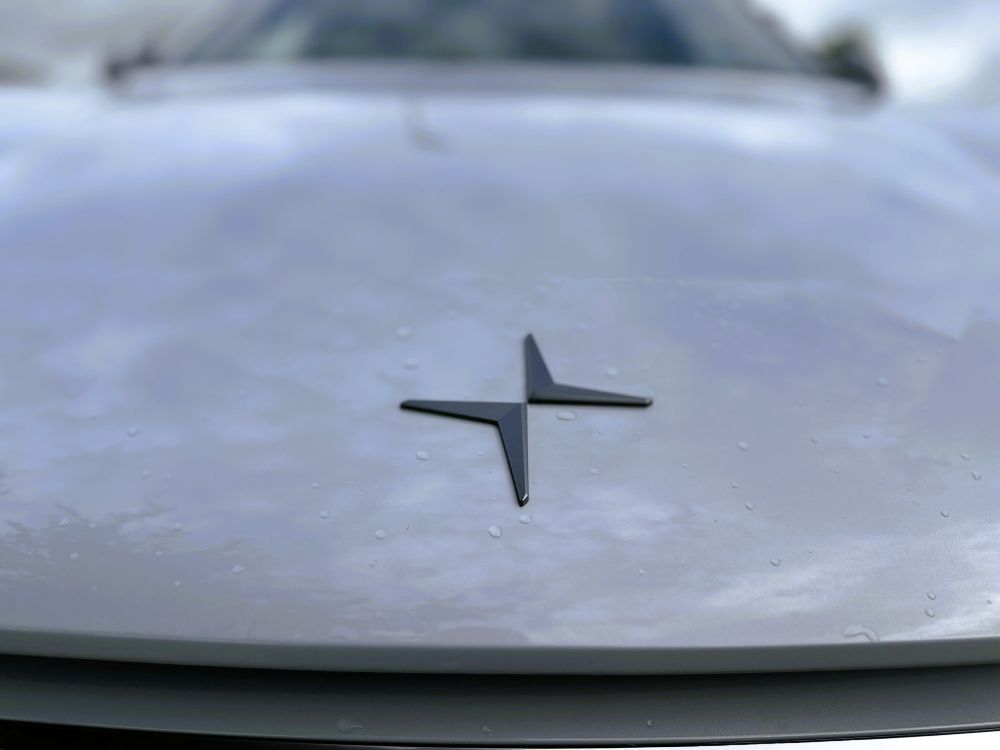
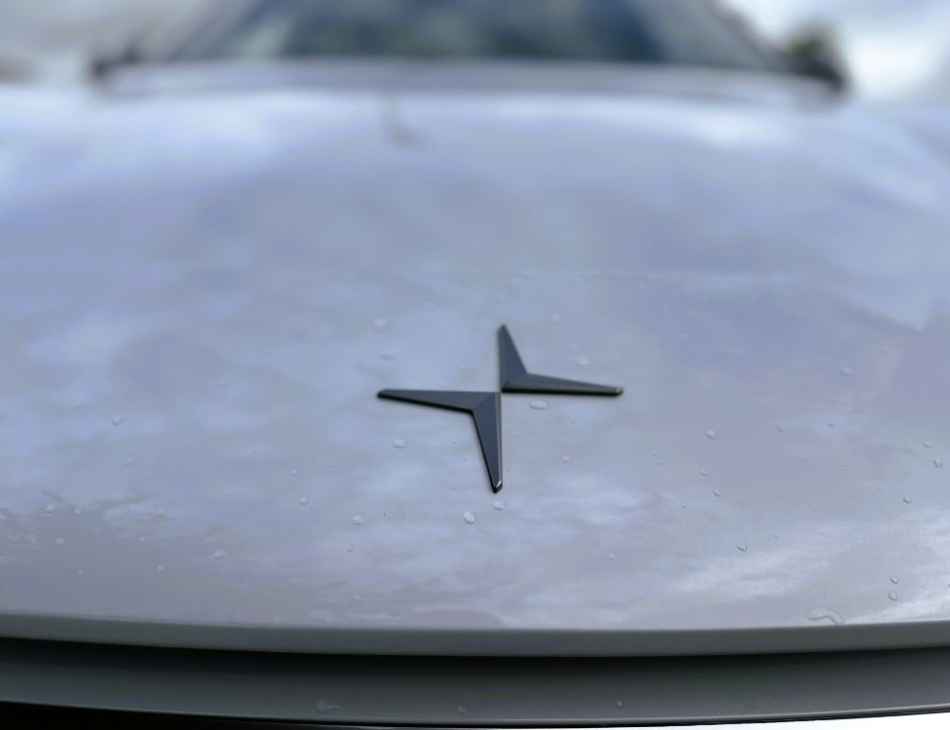
This particular car, in Magnesium, had that clean, glacial Polestar thing going on. No enormous chrome mouth, no fake exhaust theatrics, no front end designed to terrify cyclists. Instead, it has a smooth, technical, quietly expensive shape. The Polestar badge on the bonnet sits there like a minimalist Scandinavian throwing star, while the front aero treatment gives the nose a little visual cleverness without making it look like it was styled by a committee of wind tunnels.
The front air blade arrangement looks especially cool. I realise that sounds like faint praise but in a world where many electric SUVs look like they have simply had their grilles deleted in Microsoft Paint, the Polestar 3 has actual design thought. You can park it outside a nice hotel without looking like you have arrived from a TED Talk.
It is a big car, though. At 4.9 metres long and just over 2.1 metres wide including mirrors, it has presence. You are aware of it on narrower roads and in supermarket car parks designed around the Nissan Micra. Yet it doesn’t feel that cumbersome. That is partly because the driving position is excellent and partly because visibility, cameras and sensors all do their bit without making the act of parking feel like docking the QE2.
Inside, the Polestar 3 is, frankly, lovely. Not chintzy but in a restrained and properly modern way. The cabin feels expensive because it is calm. The materials are very well considered, the layout is clean and the whole thing has the pleasing atmosphere of an upmarket airport lounge.
The seats deserve special mention. After several long stints during the week, I stepped out without feeling as though my spine had been concreted over. The rear seats are also spacious, the panoramic roof adds light and the whole cabin feels airy.
There is also a lot of kit. The tested car came with the Pilot Pack, the Plus Pack and the Prime pack which all included HD LED headlights, 22-inch V-spoke forged wheels, privacy glass, the Climate Pack and Bowers & Wilkins premium audio. In other words, not much felt missing. The Bowers & Wilkins system is particularly strong and in an electric car, where there isn’t a combustion engine grumbling away in the background, a good sound system becomes more than a nice extra.
The infotainment was a doddle too, which I do not say lightly. Many modern cars now appear to have been designed by people who think adjusting the air vents should involve a software update and a short prayer. The Polestar’s Android Automotive-based system is still heavily screen-led but it works. It is clean, logical and quick enough that you don’t find yourself jabbing at the display like a man trying to wake up a dead iPad.
Google Maps integration remains one of Polestar’s strongest cards. In an EV, proper route planning and charger awareness are not gimmicks. They are the difference between arriving with dignity and arriving at a retail park at 11.40pm muttering darkly at a broken charger. Over my time, the car made public charging feel entirely workable. Not always glamorous, but workable.
The sternest test came on one particularly unromantic day that took me from North Hampshire to West Sussex, to South Hampshire, to West Berkshire to East Berkshire and finally back home. It was exactly the sort of day that makes an EV earn its keep: lots of motorway, lots of planning, lots of looking at the remaining percentage with a raised inflection in my eyebrow. It was a total slog and it pushed the range-anxiety needle about as far as I would want it to go. But importantly, the Polestar 3 got through it. It didn’t make the day effortless, because no public-charging-only EV would, but it did make it manageable.
And that brings us to range.
Officially, the Polestar 3 Dual Motor is targeting up to 394 miles WLTP, which is the sort of number that looks splendid in a brochure and slightly optimistic in Britain, where the weather, traffic and your use of heated seats all conspire against laboratory figures. In reality, I would not describe the range as outstanding. It was fine, usable and never disastrous, but not the great headline act.
That said, the charging performance helps. With DC charging capability up to 250kW and a quoted 10-80 per cent time of around 22 to 32 minutes, the Polestar 3 can take on energy quickly when the charger plays ball. And during my week, using only the public network, that mattered far more than a theoretical maximum range figure. I would rather have a car that charges quickly and predictably than one with a massive claimed range that sulks at a rapid charger.
There is something faintly absurd about plugging a nearly £90,000 Swedish electric SUV into a public charger outside the sort of retail park where the cultural highlights include Halfords and Home Bargains but that is modern EV life. One minute you are wafting about in a beautifully trimmed, 544hp luxury SUV, the next you are standing beside a cable thicker than a ship’s mooring rope wondering if there is time to buy a sausage roll and some washer fluid.
Performance is strong, as you would expect. The dual-motor setup produces 400kW or 544hp, with enormous torque and all-wheel drive traction. The result is a car that can move with the sort of silent urgency that feels faintly unnatural in something this large. Officially, 0-60mph takes 4.5 seconds, which is quick enough to rearrange loose items in the cabin and make passengers go briefly quiet.
But the Polestar 3 is not really about drag-strip nonsense. It is at its best when driven quickly but smoothly. It gathers speed with that effortless EV surge, then settles back into a calm, refined cruise. On the motorway it is excellent: quiet, planted and comfortable, with enough shove in reserve to make overtaking feel completely unremarkable.
The ride quality is a major strength. This is a heavy car (around two and a half tonnes depending on specification) but it does a good job of disguising that weight. The dual-chamber active air suspension gives it a supple, controlled feel and it deals with rough British roads with impressive composure.
That said, the difference between normal and sport mode felt negligible. I am sure somewhere deep in the software there are graphs and parameters and earnest engineers who can explain exactly what changes but from the driver’s seat the transformation is not that dramatic. Sport mode makes the car feel slightly more alert, perhaps but it doesn’t suddenly turn the Polestar 3 into a sports car.
What impressed me more was how engaging it felt despite its size and weight. There is a reassuring solidity to the steering and chassis that makes the car satisfying to place on the road. Not playful exactly but confident. It has that pleasing sense of engineering polish where everything feels like it is working together rather than arguing through software.
And this is where the Polestar 3 really moves the game on from my experience with the Polestar 4. The previous irritations felt reduced, softened or sorted. The software felt much better. The systems were less intrusive, the infotainment easier to live with and the whole car felt less inclined to interrupt the driver with unnecessary cleverness.
That is important, because no matter how impressive an electric car is on paper, if it spends the journey nagging, bonging or making odd decisions, you stop admiring the technology and start resenting it. The Polestar 3 felt like a car I could live with. More than that, it felt like one I would absolutely consider.
At £88,140 as tested, it sits firmly in premium territory, where it has to face rivals from BMW, Audi, Mercedes and Tesla. But it also feels properly premium. The design has confidence, the cabin has taste, the comfort is excellent and the performance is more than sufficient. It does not feel like an EV trying to win you over purely with acceleration figures or screen size. It feels like a well-developed luxury SUV that happens to be electric.
Is it perfect? No. The real-world range is not quite as impressive as the headline figure suggests, and the driving modes could do with greater separation. Some people will still prefer the more traditional luxury of a German badge and others will be drawn to Tesla’s charging ecosystem and tech familiarity.
But the Polestar 3 has something very appealing: balance. After a week and 750 odd-miles, charged entirely in the wild, it did not feel like an experiment. It felt like a proper car.
Base Price (As Driven): £84,540 (£88,140)
Propulsion: Synchronous Permanent Magnet Motors (2) and 800v Lithium-Ion Battery
Transmission: Single Speed.
Drivetrain: All-Wheel Drive
Output: 544bhp
Torque: 740Nm
0-69 mph: 4.5 Seconds
Top Speed: 140 mph
Kerb Weight: From 2,490kg
Consumption: From 30.7 kWh/100 mi
C02 Emissions (from): 0g/km