
Catalonia Through a Glass: The People, Places and Patience Shaping a New Generation of Cava
Catalonia doesn't need to convince visitors that its sparkling wines deserve a place alongside the world's finest. It simply invites you to spend time with the people who make them. Do that, and the wines begin to speak for themselves. And somewhere between the vineyards, the conversations and the quiet patience that defines this remarkable region, you'll probably find yourself doing exactly what I did. Looking beyond the bubbles. And discovering that balance, in wine as in travel, is often where the real magic lies.
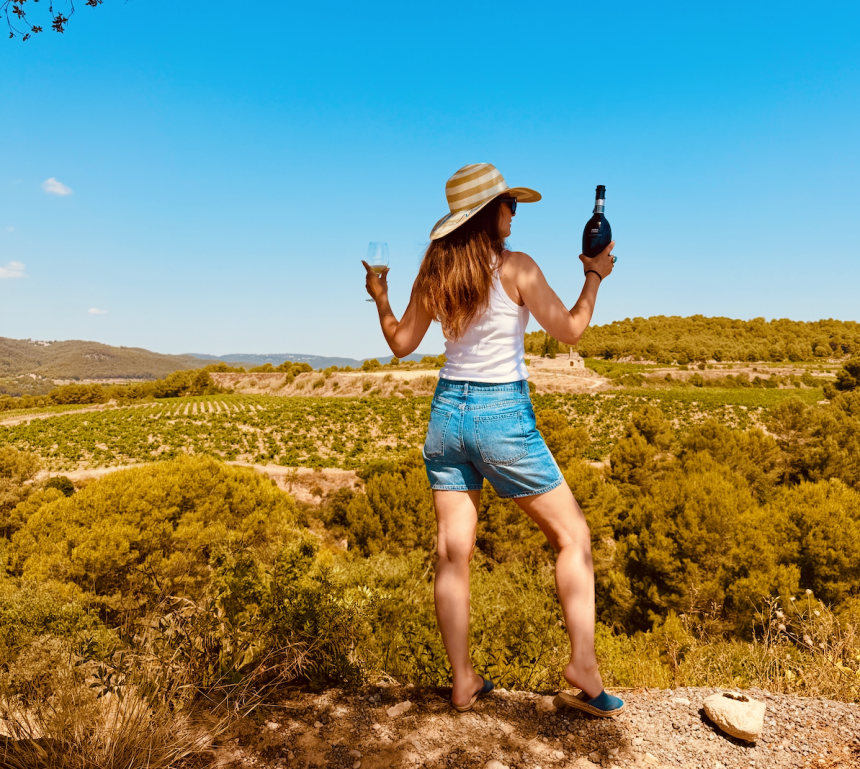
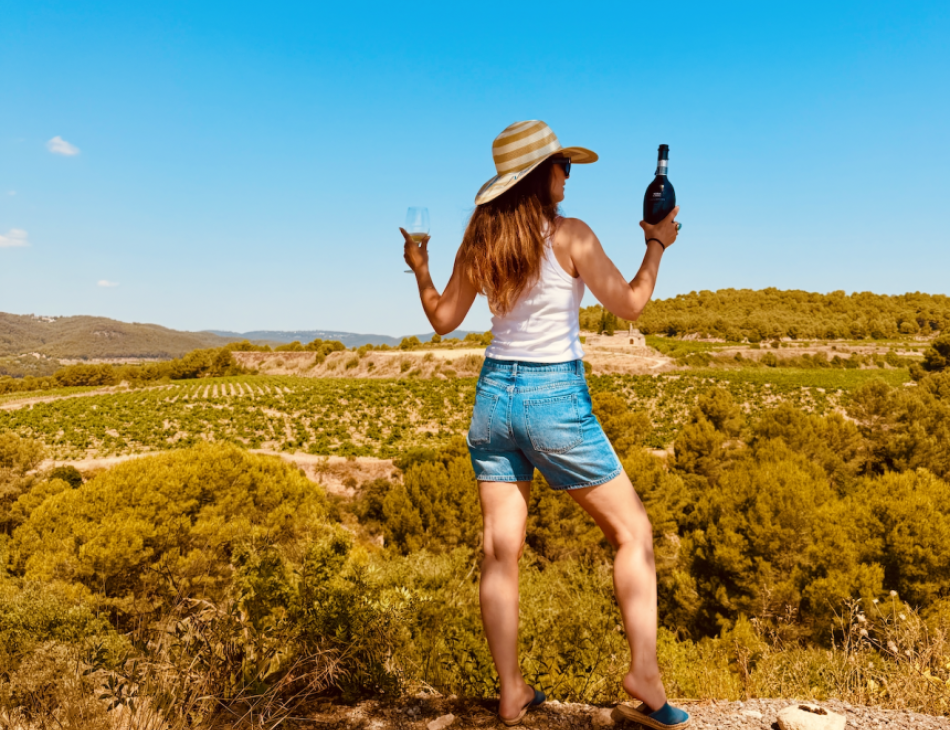
Catalonia Through a Glass: The People, Places and Patience Shaping a New Generation of Cava:
The Penedès isn't a place that tries to announce itself to the world. It is a rather unassuming pocket of Spain that takes immense pride in its vineyards, Cavas and people. Heritage is a very important word here. It lies just an hour outside of Barcelona, so an easy day trip, or you can make the most of it and stay where we did. The beautiful and rustic Font De La Canya https://www.hotelfontdelacanya.com/en is a stone’s throw from many wineries. Although note - you must take a driver with you to drink responsibly! The hotel is only 6 bedrooms, with wondrous views to the mountains and beyond and is very peaceful and quaint.
It was from here that we based ourselves to explore thanks to D.O. Cava. I spent three nights here and visited 6 wineries, all of whom had their own unique character, but displayed a unifying commitment to quality and taste. There was an overarching theme of pride, heritage, sustainability, and a strive towards excellence. I'd discovered a region finding its own voice in the sea of a rather saturated marketplace that does not give Cava the positioning it deserves. Like many people, I came with a preconceived notion that Cava was just a cheaper version of Champagne. I was proved wrong. While the price-point may be lower, the quality and taste-profile are not. I learned that Cava is made in exactly the same way as Champagne - ie. it takes an awfully long time and very specialised labour. Where Prosecco is simply a carbonated wine and quick to make, Cava relies on patience and precision. But I digress…
Cava is not just a drink but a way of life for this region and it does not need to be mentioned instead of Champagne, but alongside it as there was no sense of competition or comparison. Instead, every producer spoke confidently about their own vineyards, their own philosophy and their own identity. It wasn't about proving Cava could compete with anyone else. It was about demonstrating why it deserved to be appreciated on its own terms. That quiet confidence became one of the defining characteristics of the trip. It was also what made the Penedès feel so refreshingly authentic. Perhaps together we can grant Cava the positioning that it so deserves. Even if the price point is cheaper, it’s not some kind of cheap alternate, but a delicious drink in its own right.
Now we take a look at where the tour took us to.
Bodegues Sumarroca Winery - Sumarroca - Land of dreamers
A lesson in first impressions
First impressions matter, and Sumarroca proved to be the perfect introduction to the Penedès. Set among rolling vineyards, the estate immediately conveyed a sense of calm. We got straight into the car to do the tasting amongst the vineyards in a variety of places whilst driving through them. This really added to the appreciation of the grapes and the difference in tastes.
The tasting was thoughtfully structured, revealing how small changes in dosage, grape composition and ageing can dramatically influence the character of a Cava. As the wines progressed, so did my understanding of the category. A Brut Nature expression, with no dosage, offered a noticeably drier, more mineral style, while another cuvée surprised me with a profile that felt closer to a fine white wine than a traditional sparkling wine. Fresh, clean and beautifully balanced, it challenged my expectations of what a Cava could be.
The tasting peaked for me with Letargia 2014. If there was one bottle that encapsulated Sumarroca's philosophy, this was it. Patiently aged and beautifully composed, it unfolded slowly, revealing layers of toasted brioche, roasted nuts and orchard fruit, all held together by remarkable freshness. The finish lingered gracefully, inviting another sip rather than demanding attention.
Looking back, Sumarroca did something quietly important. It reset my expectations. I had arrived thinking of Cava as a familiar sparkling wine; I left understanding that, in the right hands, it can offer the same complexity, elegance and sense of place as any of the world's great sparkling wines, whilst remaining unmistakably Catalan.
This is a great first stop on a tour- but do take a hat and sensible shoes and perhaps don’t go in 35 degree heat to enjoy it fully!
Vins El Cep Premium Cava. Organic and biodynamic wines and cavas from El Penedes (Barcelona). | Vins el Cep
Four families, one philosophy:
If Sumarroca looked confidently towards the future of wine tourism, Vins El Cep felt deeply rooted in the past, in the very best sense of the word. Founded by four farming families who continue to work together today, the estate carries a different rhythm. There are no grand statements or theatrical presentations. Instead, everything begins with the vineyards and the belief that great wine is made long before the grapes reach the winery.
One sentence, repeated during our visit, captured the philosophy perfectly. "Every wine is for every moment." It's a simple idea, but one that stayed with me throughout the rest of the trip. There is something refreshing about a winery that refuses to place its finest bottles on a pedestal. Instead, Vins El Cep encourages people to see wine as part of everyday life, to open good bottles because the company is good, not because the calendar says the occasion is important.
That approach felt entirely genuine.The tasting reflected the same quiet confidence. Rather than trying to impress with bold flavours or dramatic winemaking, the wines favoured balance and restraint. They invited conversation. If there was one bottle that captured the estate's personality, and was my favourite, it was the MiM Natura Pinot Noir Brut Reserva. Fresh, elegant and beautifully poised, it carried itself with effortless confidence. Delicate red fruit, subtle autolytic notes and fine bubbles combined to create a wine that was both refined and incredibly easy to drink. It never demanded attention. Instead, it rewarded it.
I found myself imagining it, not at a formal celebration, but around a long lunch with friends, where bottles are opened because nobody wants the conversation to end. That, perhaps, was the greatest strength of Vins El Cep. It reminded me that the finest wines don't always announce themselves immediately. Sometimes they simply make you feel completely at ease.
Eudald Massana Noya Eudald Massana | Home
Where wine becomes a way of life:
By the time we arrived at Eudald Massana Noya, a pattern was beginning to emerge. Every winery shared a commitment to exceptional Cava, but each expressed it in its own way. Here, that identity was rooted firmly in the estate itself.
Every bottle begins with grapes grown in the family's own vineyards. Nothing is bought in from elsewhere. From vine to bottle, every stage remains under the estate's control, allowing each wine to reflect the character of the land with remarkable honesty. Organic farming isn't presented as a marketing message or passing trend; it's simply the way the family believes great wine should be made.That connection to the land extends far beyond the vineyard.
While the wines remain at the heart of the estate, Eudald Massana Noya is also looking towards the future of wine tourism. They have a villa on site, allowing guests to stay on the estate and build an entirely bespoke itinerary. Their vision is to create experiences that can include private chefs, concierge services, wellness treatments, personal trainers and tailored activities, encouraging visitors to slow down and immerse themselves in the landscape. Which is indeed as pretty as the villa!
It's an approach that feels entirely in keeping with the estate's philosophy. If great wine is shaped by time, perhaps great travel experiences should be too.
The tasting reflected that same sense of balance. The first few wines were wonderfully fresh, with crisp acidity, white orchard fruits and a clean finish that made them immediately approachable. One sulphite-free expression was particularly intriguing, offering a bright, almost white wine-like profile with tart green apple notes and remarkable purity. Another Chardonnay-led cuvée displayed exceptional finesse, its delicate bubbles allowing the texture and freshness to take centre stage.
The wine that stayed with me, however, was the Mil·lenni Brut Nature Reserva. It was one of the most complete wines of the trip. Freshness and complexity existed in perfect harmony, with layers of orchard fruit, gentle citrus and delicate brioche unfolding gradually across the palate. Nothing dominated. Every flavour had its place, creating a wine that felt elegant rather than showy and sophisticated without ever becoming difficult to understand.
Almost instinctively, I imagined it alongside a generous wedge of aged Parmesan. The salty, nutty richness of the cheese would echo the wine's subtle savoury character, while its freshness would cleanse the palate after every bite. It was one of several moments during the trip when I stopped thinking about Cava as something reserved for celebrations and started seeing it as one of the most versatile wines to enjoy around a dining table.
Leaving Eudald Massana Noya, I realised the estate represents something increasingly important in modern wine tourism. Visitors today are looking for more than a tasting and a tour. They want to understand where the wine comes from, meet the people behind it and spend enough time in a place to feel part of its story.
That is exactly what Eudald Massana Noya is building and I am here for it!
Jaume Giró i Giró Discover Our Winery In Penedès: Jaume Giró I Giró
The man who changed the way I think about Cava!
If every trip has one person who quietly becomes its heartbeat, for me it was Frank. We had already met passionate winemakers and generous hosts, but Frank possessed a rare ability to make even the most technical aspects of winemaking feel accessible. Every answer led to another conversation. Every bottle became an opportunity to explain not simply what we were tasting, but why it tasted that way. Before long, I realised I was asking different questions. Not about grape varieties, not about alcohol percentages, but about time, about temperature, about patience.
Frank explained how the winery prefers cold fermentation wherever possible. It takes almost twice as long, requiring more investment and considerably more patience, but the result is immediately apparent in the glass. The bubbles become finer and more integrated, allowing the wine's texture and flavour to take centre stage rather than the sparkle itself. It sounds like a small detail. It isn't. Once you notice the difference, it's difficult to ignore.
Throughout the tasting, the wines reflected that philosophy beautifully. Rather than relying on power or intensity, they revealed themselves gradually. Fresh fruit gave way to toasted nuts, buttery notes and delicate brioche as each wine slowly opened in the glass. They weren't trying to impress through obvious flavour. They were built around harmony.
One of the wines recognised by respected wine critic Tim Atkin illustrated this perfectly. With a small amount of dosage and careful lees ageing, it balanced freshness with generosity in a way that made it incredibly easy to drink while still offering real complexity. Then Frank suggested something that genuinely surprised all of us. He reached for a decanter. For many wine drinkers, decanting sparkling wine feels almost unthinkable. Surely the bubbles disappear? Surely the wine loses the very thing that defines it? Frank smiled. He'd heard those questions before. Using a Riedel decanter, he slowly poured the Reserva Familiar Barón Merten 2012 explaining that mature sparkling wines behave differently. Given a little oxygen, they don't lose their character. They reveal it. Watching the transformation happen in real time was one of the most memorable moments of the trip. The wine became creamier, softer and even more expressive. Toasted hazelnuts, butter and warm brioche emerged almost immediately, yet the bubbles remained remarkably intact. Instead of diminishing the wine, decanting gave it another dimension. It was fascinating. More importantly, it completely changed the way I think about sparkling wine.
Frank often spoke about patience, but by the end of the tasting I realised he was really talking about trust. Trusting the vineyard. Trusting the process.Trusting that great wine doesn't need to be rushed. For Frank creating Cava is a labour of love. His genuine enthusiasm and pride beam out of him like the sunshine he works in. He’s in it for the wine, not for upcharging a customer.
Only as we were leaving did someone quietly mention that Frank also holds the titles of Baron and Count. It somehow felt beside the point. The person I'd met wasn't defined by aristocratic titles. He was defined by curiosity, by generosity and by a genuine desire to help people understand why great Cava tastes the way it does.
Looking back, I realised that was probably the greatest gift of the entire journey. I arrived thinking sparkling wine was about bubbles. Frank taught me it was about balance. Oh and a quick note - if you have the option between a Magnum or two smaller bottles ALWAYS opt for the Magnum. The size allows for a premium taste experience!
Pinord Pinord
Where every great bottle deserves a place at the table
By this stage of the journey, I had stopped thinking about cava as something reserved for celebrations. Every winery had reinforced the same idea in different ways: the finest sparkling wines belong around a table, shared with food and good conversation. Pinord brought that philosophy into sharp focus.
Rather than another technical tasting, the experience centred on gastronomy. The wines weren't presented in isolation but as part of a meal, reminding us that Catalan wine culture has always been about bringing people together. It was a fitting pause in the journey. After days spent learning about vineyards, lees ageing and fermentation, it was refreshing to simply enjoy the wines as they were intended, with beautifully prepared food, shared plates and conversations that drifted effortlessly between the people around the table.
One thing had become increasingly clear throughout the trip. The best pairings weren't the most complicated. Again and again, producers spoke about allowing quality ingredients to shine. Fresh seafood, simple grilled fish, roast chicken, aged cheeses and chargrilled meats appeared repeatedly because they complemented the wines rather than competing with them.
There was a confidence in that simplicity. Catalan cuisine doesn't need elaborate sauces when the produce is exceptional, just as these wines don't need to prove themselves through excessive complexity. Both rely on balance. By the end of the evening, I realised that was becoming the defining word of the trip. Balance in the vineyard. Balance in the glass. Balance at the table.
Roger Goulart Cava cellar: Meet us| Roger Goulart
Where time becomes an ingredient
If one visit revealed the extraordinary history behind Catalonia's sparkling wines, it was Roger Goulart. Descending beneath the town into the vast underground cellars felt like entering another world. The temperature dropped immediately. The noise disappeared. Around us, thousands upon thousands of bottles rested in complete darkness, many patiently ageing for years before they would ever be opened. Standing fifteen metres underground is impressive. Standing thirty metres underground, surrounded by kilometres of tunnels carved beneath Sant Esteve Sesrovires, is unforgettable.
Our guide, David, brought those tunnels to life. Rather than reciting dates or production figures, he told stories about the history of the winery, the decisions behind each wine and the extraordinary patience required to create great Cava.
One of the highlights came before a cork had even been removed. We tasted raw Cava, straight from the bottle before disgorgement, experiencing the wine at one of the earliest stages of its journey. It was unlike anything I had tasted before and offered a fascinating glimpse into how dramatically a wine continues to evolve before it finally reaches the glass.
The tasting that followed showcased the breadth of the estate. A true rosé surprised me with its freshness and purity, while another wine offered a gentle sweetness on the nose that reminded me almost of fresh confectionery before revealing a far drier, more elegant palate. Throughout the range there was a recurring freshness, a subtle mineral character and a restraint that echoed so many of the best wines we'd encountered during the trip.
One bottle, however, brought everything together. The Roger Mark II Gran Reserva 2017 was exquisite. Made from Chardonnay and Pinot Noir and aged for more than eight years on its lees before disgorgement, it possessed extraordinary finesse. The bubbles were exceptionally fine, creating a silky texture that allowed the wine's complexity to unfold naturally. Despite being a Brut Nature, there was a remarkable softness to it with layers of delicate nuts, orchard fruit and gentle autolytic notes appearing one after another without any single flavour taking control.
It reminded me of something Frank had said on our first day together. “The bubbles are the least interesting part.” Standing thirty metres beneath the streets of Sant Sadurní, surrounded by wines that had spent years waiting for their moment, I finally understood exactly what he meant: time had become an ingredient.
Pere Ventura Pere Ventura Family Wine Estates – Exclusive Estates, exclusive Wines, exclusive Cavas
Where the future of Cava comes into focus
There is an immediate sense of calm when you arrive at the private house of the family ‘Can Bas’ as you drive down the tall pointy tree-lined drive which leads you up to the most beautiful house imaginable. I was transported back to the Golden Era of the Great Gatsby and half expected to find Daisy, Tom, Nick and of course Gatsby running around the grounds. It was 35 degrees and we bumped into the son of the owners who was of course in suit, dashing and debonair, telling us stories of the exquisite gala upcoming and partnerships with the likes of Dolce and Gabanna and Tiffany. This is a winery and a family that understands they have to go outside of Spain to put Spain on the map. Entertaining space is something built into the winery and not simply an add on. The difference shows. Perhaps the vineyard does not go back ten generations, but it’s clear is that they will go on for the next ten and more!
People don't visit wineries simply to taste wine anymore, they go for the experience, they go for the emotional hook and Pere Ventura delivers on all counts. The staff are excellent, and the safari drive through the vineyards; the small stop at the chappel in Can Bas; the downstairs cellars with insane lighting, sound; and of course a stage, makes you feel like you are standing in luxury.And then there’s the Cava:
The Signature 2018 was extraordinary. Its bubbles were so fine they seemed to melt into the wine. Fresh pastry, delicate brioche and orchard fruit unfolded slowly with every sip, while a vibrant acidity carried everything effortlessly through to a beautifully composed finish. It was elegant without being austere, complex without becoming complicated. It was also one of the few wines that made me stop writing. Instead, I simply sat back and enjoyed it. Almost instinctively, I began thinking about where I would want to drink it. Not at a formal tasting, but over lunch overlooking the vineyards. Alongside sashimi, beautifully roasted fish or simply cooked meat where the quality of the ingredients could speak for themselves. That thought summed up the entire trip. The finest wines weren't asking to be admired. They were asking to be shared.
As I looked across the estate one last time, I realised that Pere Ventura represented something much bigger than a successful winery. It represented a region growing quietly more confident every year. Not trying to imitate anyone else.Not chasing trends. Simply producing exceptional wines, welcoming visitors with generosity and allowing quality to speak for itself. Cava should be on the map: it may be the younger, quieter sister to Champagne, but it is equal in its flavour and beauty.
TO CONCLUDE:
As I unpacked my suitcase back in London, I realised something unexpected. I could remember surprisingly few technical tasting notes. I remembered which wines I loved, of course. The remarkable elegance of Pere Ventura's Signature 2018, the quiet confidence of Vins El Cep's MiM Natura Pinot Noir Brut Reserva, the beautifully composed Letargia 2014 at Sumarroca and the unforgettable moment Reserva Baró Mertin 2012 was poured into a decanter, defying everything I thought I knew about sparkling wine.
But more than anything else, I remembered the people. Frank standing in front of a room full of journalists, making fermentation temperatures feel fascinating. Davide leading us deep beneath the streets of Sant Sadurní d'Anoia, bringing decades of history to life among thousands of quietly ageing bottles.The families who spoke about their vineyards with the affection most people reserve for old friends. The conversations over long lunches where food and wine were never treated as separate experiences, but simply two parts of the same story.
Looking back, I realised the trip had never really been about discovering the best cava. It was about understanding the people who dedicate their lives to making it. Every winery had its own personality. Sumarroca showed how thoughtful hospitality can deepen a visitor's connection with the land. Vins El Cep reminded me that authenticity often speaks louder than extravagance. Eudald Massana Noya demonstrated the quiet confidence that comes from complete stewardship of your vineyards. Jaume Giró i Giró proved that knowledge shared with generosity can transform the way you experience wine. Roger Goulart revealed that time itself can become an ingredient.And Pere Ventura offered a glimpse of where the region is heading - confident, outward-looking and welcoming, without ever losing sight of its roots.
There was no single formula for success.That, perhaps, is the Penedès' greatest strength. Every producer has found their own voice. Some express it through architecture. Others through sustainability. Some through scientific precision. Others through family tradition stretching back generations. Yet all of them share an extraordinary belief in patience. Patience to leave wines ageing for years rather than months. Patience to farm vineyards with care rather than convenience. Patience to welcome visitors not simply as customers, but as guests. It made me think differently about travel, too.
The journeys that stay with us are rarely the ones where we simply tick places off a list. They're the ones where someone changes the way we see something familiar. For me, that person was Frank. His opening remark echoed in my mind throughout the journey. "The bubbles are actually the least interesting part." At first, it sounded almost provocative. By the end of the trip, it simply felt true. Before arriving in Catalonia, I probably judged Cava the way many people do. I noticed the bubbles first. I compared it with Champagne. I wondered whether it represented good value.
By the time I left, I was asking entirely different questions. Who grew these grapes? How much patience went into this bottle? What story does this wine tell about the people who made it? Those questions have stayed with me far longer than any tasting note ever could.
Catalonia doesn't need to convince visitors that its sparkling wines deserve a place alongside the world's finest. It simply invites you to spend time with the people who make them. Do that, and the wines begin to speak for themselves. And somewhere between the vineyards, the conversations and the quiet patience that defines this remarkable region, you'll probably find yourself doing exactly what I did. Looking beyond the bubbles. And discovering that balance, in wine as in travel, is often where the real magic lies.