
The Manor House Golf Club And The Lotus Emira: A Proper Round In A Proper Place
Two Rounds At The Manor House Golf Club In Castle Combe, With A Purple Lotus Emira, A Few Heroic Shots, Several Less Heroic Ones And One Of The Most Beautiful Courses In The Cotswolds.

The Manor House Golf Club And The Lotus Emira
I had been invited to play two rounds with a friend, as part of a wider stay at The Manor House Hotel with the Lotus Emira. The hotel and car had already done their bit: one providing Cotswold charm and deeply civilised hospitality, the other providing mid-engined theatre and a colour scheme that could be seen from Chippenham. Now it was the turn of the golf course.
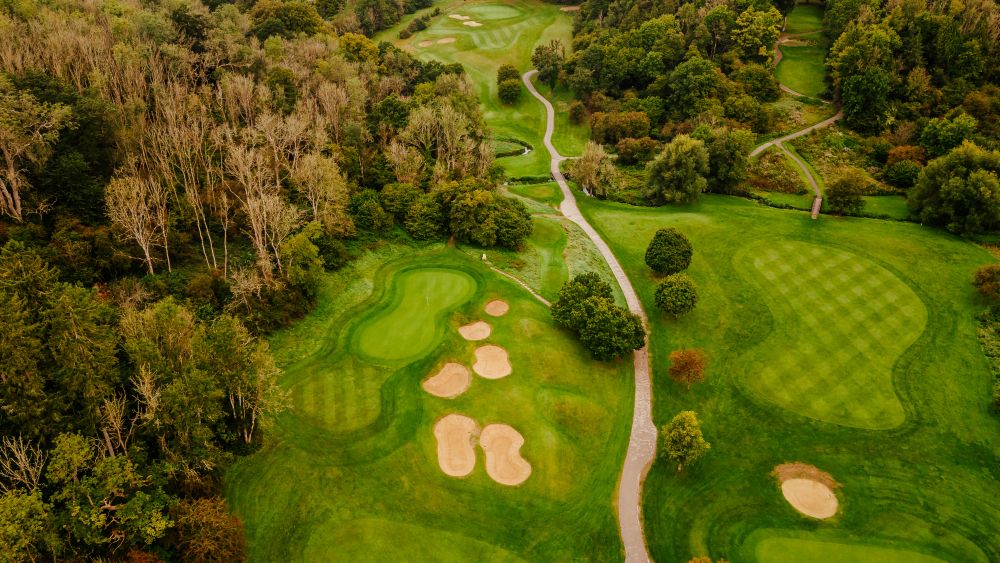
And quite quickly, it became clear that The Manor House Golf Club is not merely just a hotel course. That would be doing it a considerable disservice. This is an amazing golf course. A demanding, beautiful, occasionally cruel but deeply enjoyable course that uses the landscape as though the land itself was in the initial design meeting.
The 18-hole, par-72 parkland course was designed by Peter Alliss and Clive Clark and opened in 1992. Measuring around 6,500 yards, it sits within 365 acres of countryside on the southern edge of the Cotswolds, which sounds relaxing until you remember that golf courses of this quality are rarely content to let you wander around having a nice time without asking a few searching questions of your swing.
The first hole, Bailey, was my introduction. And as usual, I approached it with the calm, composed confidence of a man trying to defuse a bomb while being watched by people who know what they are doing. First tees do that to me. The practice swing looked majestic. The actual shot looked as though someone has shouted “duck” halfway through it.
Still, I would say that Bailey does not bully you from the start. It welcomes you in, then the rest of the course reminds you that accuracy and skill are still a useful quality. The fairways are inviting but not generous in the lazy sense. The greens are there to be found but they would rather you did so with a plan. There is water, there are trees, there are changes in elevation and there is always the feeling that the course has another question ready before you have fully answered the previous one.
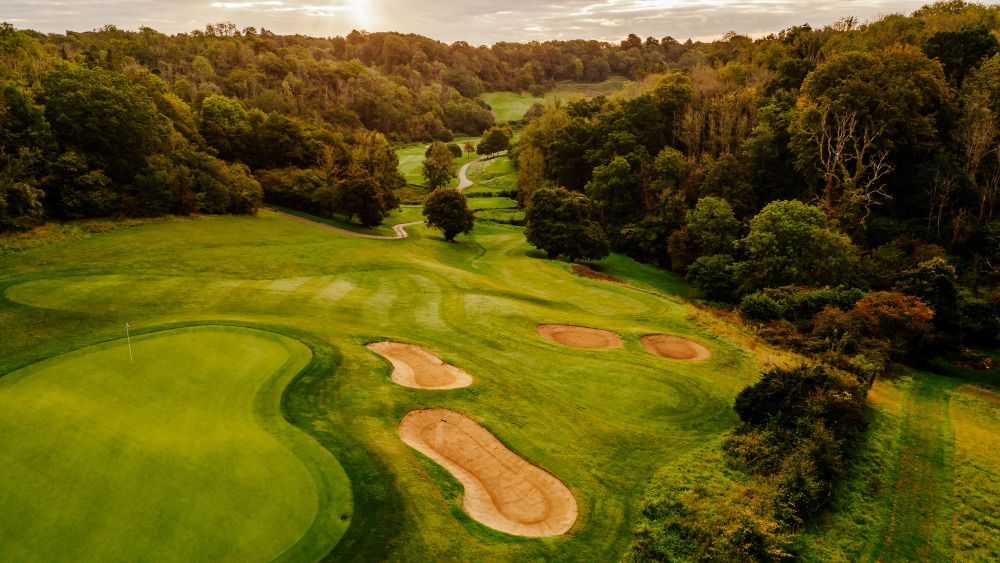
The second hole, Dipper Bridge, gives you an early taste of the undulations to come. I believe this to be one of the great pleasures of this course. It is not a flat, featureless parkland with bunkers scattered about like afterthoughts. It moves. It climbs. It drops. It sweeps through the valley and around the natural geology of the place. Some courses feel imposed on their surroundings. The Manor House Golf Club feels as though it has grown from them.
That point really matters, because landscape is what gives a golf course memory. You may forget your exact score, particularly if it was assembled using penalty drops and optimistic mathematics but you remember the shape of a hole. You remember standing on a tee and wondering whether the sensible shot is actually the one you are capable of playing. You remember the hole where the drive finally came off and the one where a ball you had no emotional attachment to disappeared into the countryside.
By the seventh, Mackenzie, The Manor House Golf Club begins to apply a little pressure. Here, the task is simple enough in theory: get the ball between the trees. They are apparently 18 yards apart, which sounds fairly generous until you are standing there with a driver in your hand and a brain suddenly full of swing thoughts. In golfing terms, 18 yards can feel like a bit like threading a double-decker bus through a cat flap.
I would love to say I split the gap with serene confidence. I certainly intended to. Whether the ball and I were in full agreement on the matter is another thing entirely. But that is part of the joy here. The course asks you to commit. You cannot drift around with a vague hope that everything will sort itself out. You need to pick a line, trust it and then accept that golf is fundamentally an exercise in managing disappointment.
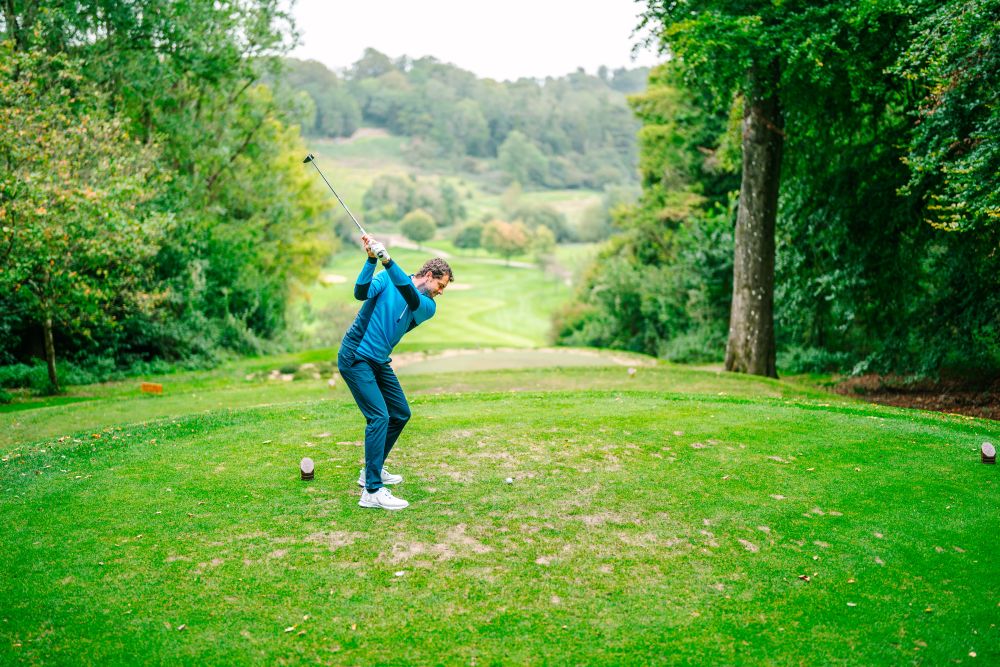
The eighth, Stepping Stones, was also one of the standouts. This is a beautiful hole, using the full drama of the valley to reward a clean drive. Thankfully, and I record this for historical accuracy, I managed one on both days. This is important. In golf, you must preserve these moments carefully, because they are rare and liable to be contradicted by the very next shot.
There is a lovely rhythm this hole. From the tee, the landscape opens out and invites you to be brave. It is scenic but not decorative. The view is part of the challenge. The valley draws the eye, the fairway asks for shape and the whole thing has that wonderful quality where you want to stand for a moment before hitting the ball, partly to admire it and partly because you are not entirely sure where your limbs have gone.
Over two rounds, I lost a few balls, shanked a few irons, muttered some words that would not sit well in a luxury travel article and also played some of my best golf on day one. Day two was rather different. By then, my swing had taken on the haunted quality of a man who could not remember a thing.
But that is a compliment to the course. The Manor House Golf Club is not a one-dimensional test. It tasks different things of you at different times. Some holes reward patience. Others invite ambition. A few tempt you into trying something heroic, which is dangerous territory for golfers of my standard. Heroic golf, in my experience, usually ends with a provisional.
The 11th, School, gave us one of those bizarre moments only golf can produce. Both my playing partner and I sent shots very wide right, the sort of shots that normally end with a polite search in long grass and the phrase, “I’ll just drop one.” Instead, through some combination of slope, luck, tree roots, rough and divine comedy, both balls trickled their way down towards the green. It was not exactly course management.
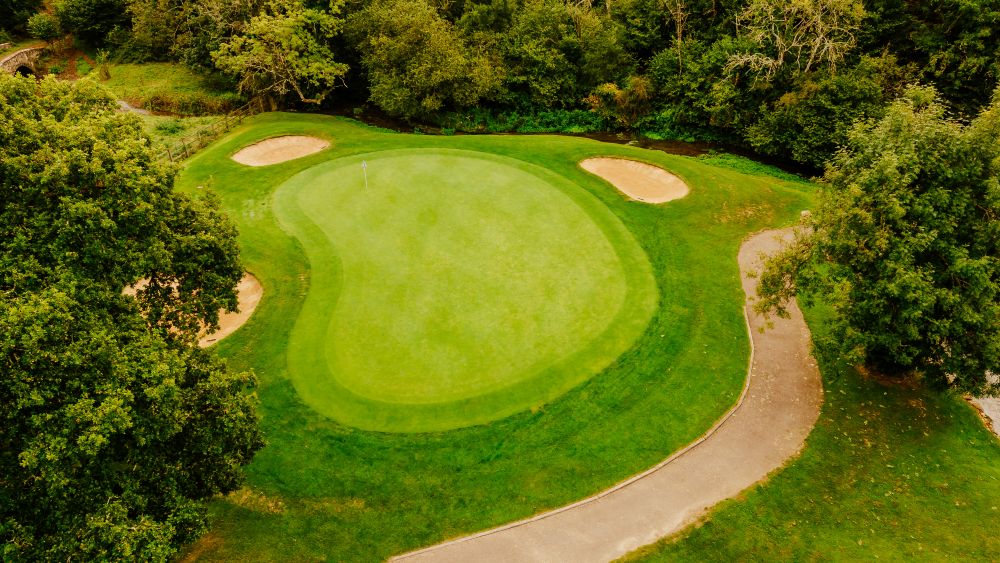
Then comes the 12th, Dolittle, which may be one of the most memorable holes I have played for quite some time. A par five of 498 yards, it is both staggeringly beautiful and mildly terrifying. It appears to contain almost every hazard available to the modern golfer: trees in the middle of the fairway, public paths, bridges, lakes, stone houses and an approach shot that does not reward indecision.
It is the kind of hole where you stand on the tee and feel the course looking back at you. Not maliciously but knowingly. It knows you are considering the brave line. It knows you have no real evidence to support that decision. And yet, there you are, doing more practice swings as if you are about to execute a carefully rehearsed strategy rather than embark on a three-shot negotiation with gravity.
Dolittle is also where the geology of The Manor House is at its most stretched. The valley is not just scenery; it is the stage. The land rises and falls around you, the hazards sit naturally within it and the hole unfolds rather than simply extending in a straight line. It feels mature, settled and theatrical, which is not an easy balance to achieve.
This is where the Golf Club feels particularly special. It is not trying to be fashionable. It is not relying on gimmicks. Its strength lies in the landscape, the routing and the way each hole seems to have its own personality. Some are quietly strategic, some are visually spectacular and some appear designed specifically to expose whatever technical flaw you had been hoping to keep private.
The 17th, Burton Brook, was perhaps the most breath-taking hole of the lot. It makes magnificent use of the terrain, again but it is also very hard to judge. I watched several people more or less chip a ball 120 feet down towards the green, which is the sort of shot that looks ridiculous until you realise it might be the intelligent play. Golf does not often reward humility but it might here.
Standing there, looking down across the hole, you get the full Manor House Golf Club effect. The trees, the water, the slopes, the sense of movement in the land. It is a hole that makes you pause, which is useful, because pausing delays the inevitable moment when you have to hit the ball.
Away from the scorecard, the club itself has the atmosphere you hope for at a place like this. We spoke to several members during our visit and they could not have been nicer. That matters. A course can be beautiful and a clubhouse can be immaculate but if the mood is frosty, the whole thing falls flat. The Manor House Golf Club has warmth. It feels proud but not pompous. Established but not closed off.
There is also a clear sense of a club thinking seriously about its future. The Manor House Golf Club has achieved GEO Certification for sustainable golf operations to help the wider Estate to improve its B Corp Certification score to 94.4. That may sound like the sort of thing that belongs in a corporate report but on the ground, it translates into practical decisions. Habitat work, biodiversity projects, better water management, upgraded sprinklers and a wider sense that the course is being cared for in a way that respects its setting.
Working with Wiltshire Wildlife Trust, the team has introduced 18 habitat parcels across the estate. Otters have been spotted, hazel coppicing is encouraging dormice and calcareous grassland is being managed to encourage rare orchids and wildflowers. In other words, this is not sustainability as a badge on a website. It is happening in the rough, around the woodland, beside the water and across the entire course.
There is innovation too. The Golf Course has been trialling and rolling out Kress robotic mowers, using them across rough and fairways. The idea is not simply to replace people with machines but to use quieter, electric, “little and often” mowing to improve consistency while freeing the greenkeeping team to focus on the details that golfers actually notice.
It also fits the character of the place. The Manor House does not feel like it is chasing novelty for its own sake. The technology is there to support the course, not dominate it. The result is a venue that feels traditional in the right ways and forward-thinking where it counts.
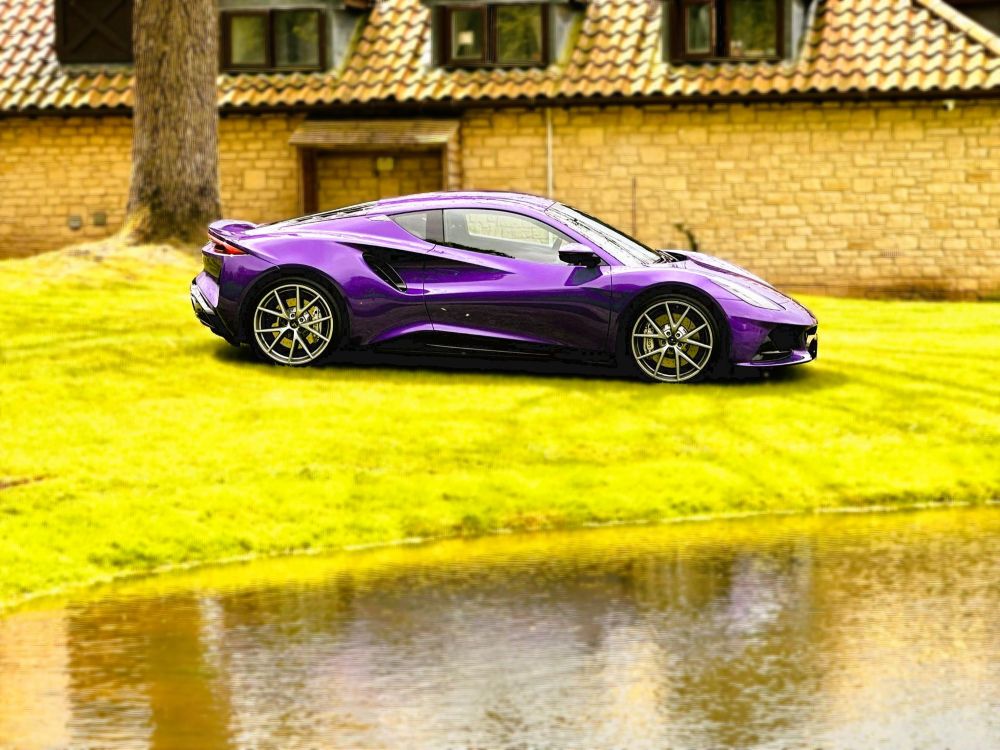
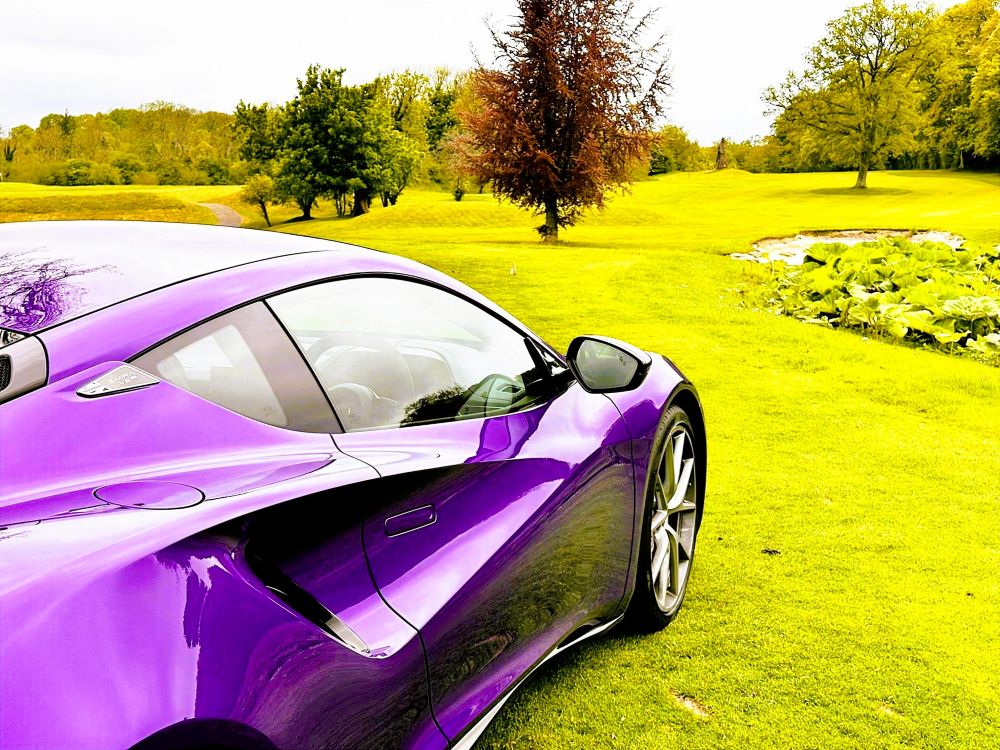
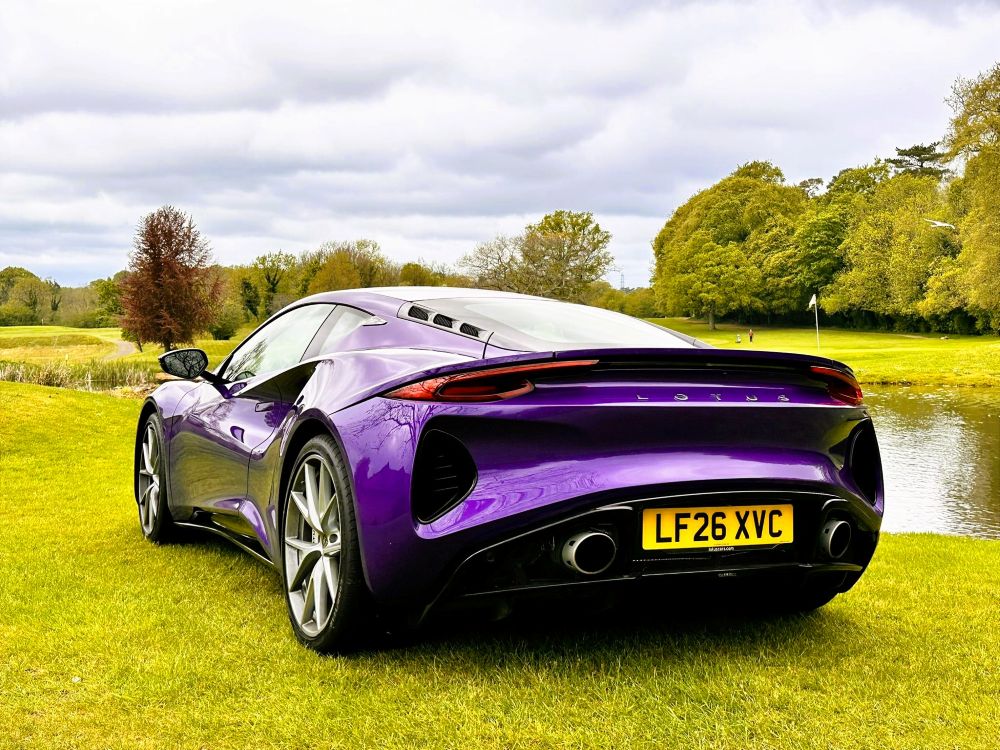
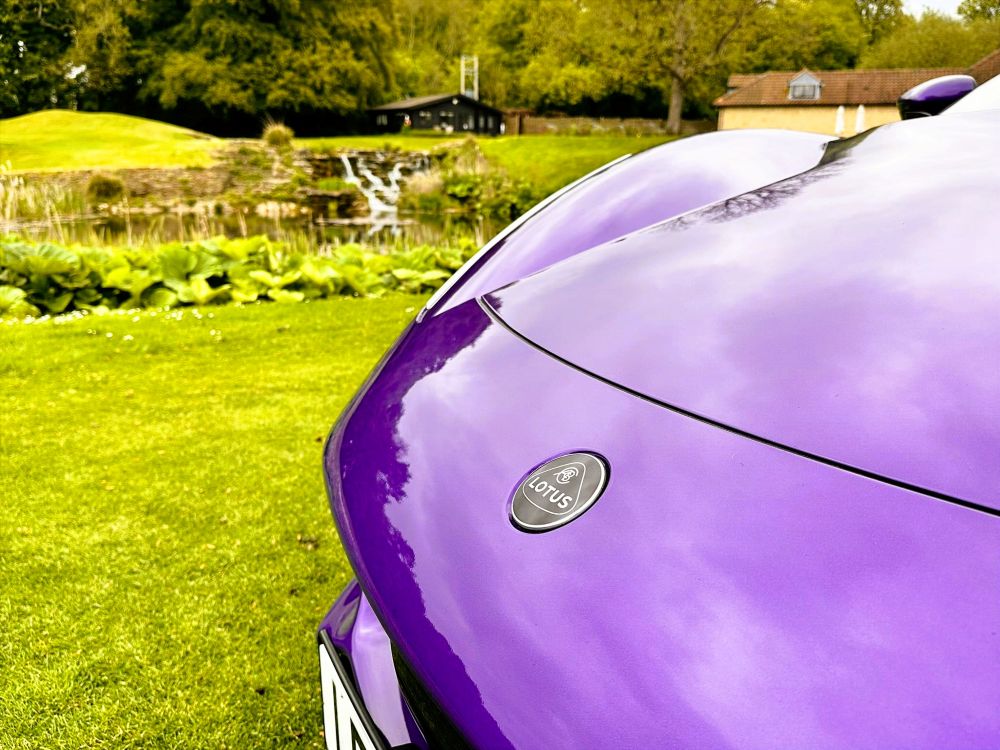
And then, of course, there was the Lotus. The Emira was never the main event here but it made a fine companion to the day. Parked against the Cotswold backdrop, its purple paintwork looked outrageous but rather wonderfully so. Golf clubs are often filled with demur SUVs, saloons and estate cars. The Emira brought something else entirely: theatre, colour and a reminder that days like this can have a little sense of occasion.
In some ways, the car and the course made an oddly fitting pair. Both are about feel. Both ask for precision. Both punish clumsiness. Both reward smoothness. And in both, I discovered that enthusiasm is not the same thing as talent.
But that hardly mattered. The Manor House Golf Club is one of those courses that gives you enough beauty to soften the bad shots and enough challenge to make the good ones feel properly earned. Across two rounds, it delivered drama, frustration, laughter, one or two shots I shall be dining out on for months and several that I shall deny under oath.
As a golf experience, it is superb. My golf over the two days was inconsistent, to put it charitably. Day one had flashes of competence. Day two suggested the previous day’s golfer had left the premises. The course, however, was faultless company. And unlike my short game, I would trust it completely.