

Maserati GranCabrio Trofeo 2026 Review & Road Trip Across Southern England
The 2026 Maserati GranCabrio Trofeo is a 542bhp Italian luxury convertible so outrageously beautiful, fast and charismatic that even a gentle cruise through Cornwall begins to feel like a scene cut from a forgotten Riviera film starring you, expensive sunglasses and several very poor financial decisions.
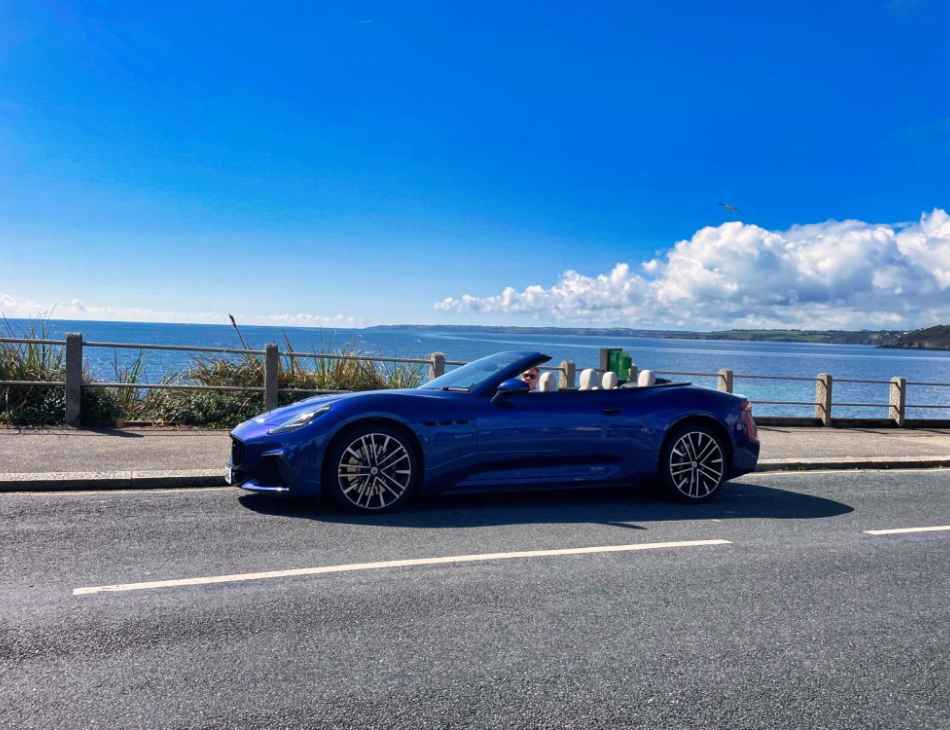
Maserati GranCabrio Trofeo 2026 Review
The first thing you notice about the Maserati GranCabrio Trofeo is not the speed, although with 542 horsepower and a 196mph top speed it has quite enough of that to rearrange your hairstyle permanently. Nor is it the noise, though the Nettuno V6 produces a soundtrack so gloriously operatic that nearby pheasants briefly consider filing noise complaints. No, the first thing you notice is how astonishingly beautiful it is.
So naturally we took it touring through Wiltshire valleys and along Dorset’s coastal roads, to show it off.
If one is fortunate enough to have the keys to a Maserati convertible in the middle of an English summer, hiding it in a garage would feel morally irresponsible. Surrey became Hampshire, Hampshire drifted lazily into Berkshire, then Wiltshire, Dorset, Somerset, Devon and finally Cornwall. The sort of journey where one loses track of mileage because the experience itself is the aim.
We stayed at The Falmouth Hotel, a gloriously faded grande dame overlooking the sea. Its grandest years probably arrived somewhere between the Charleston and the outbreak of mild taxation, but that only improves the atmosphere. The carpets creak charmingly, the sea views remain magnificent, and the entire place feels wonderfully unconcerned with modern trends.
And Cornwall suits this car perfectly.
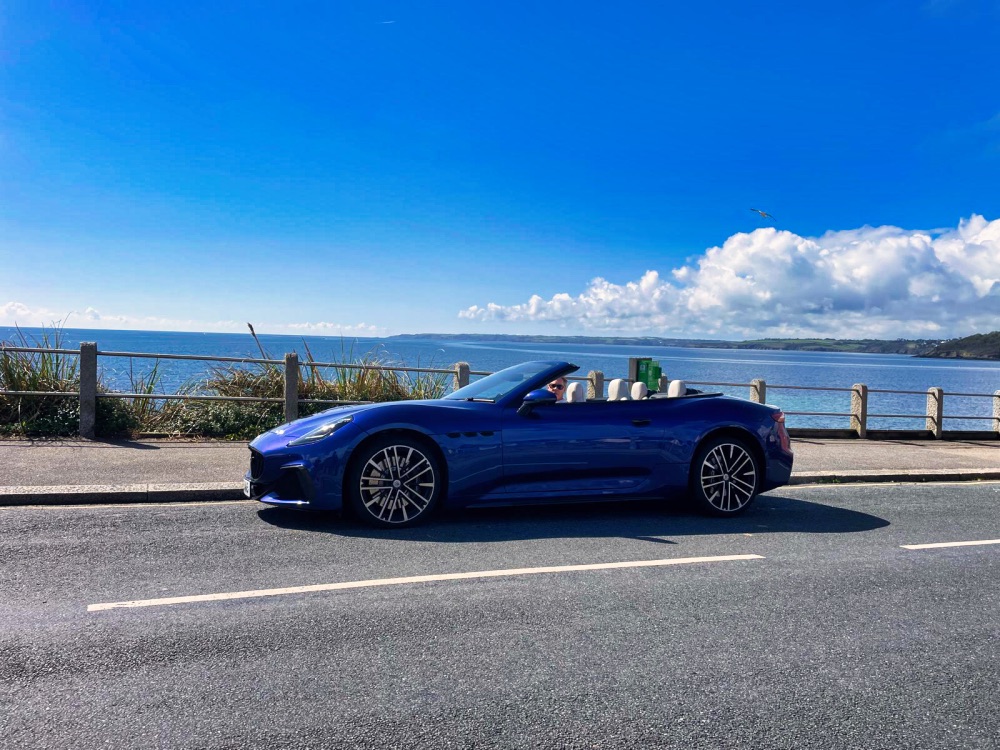
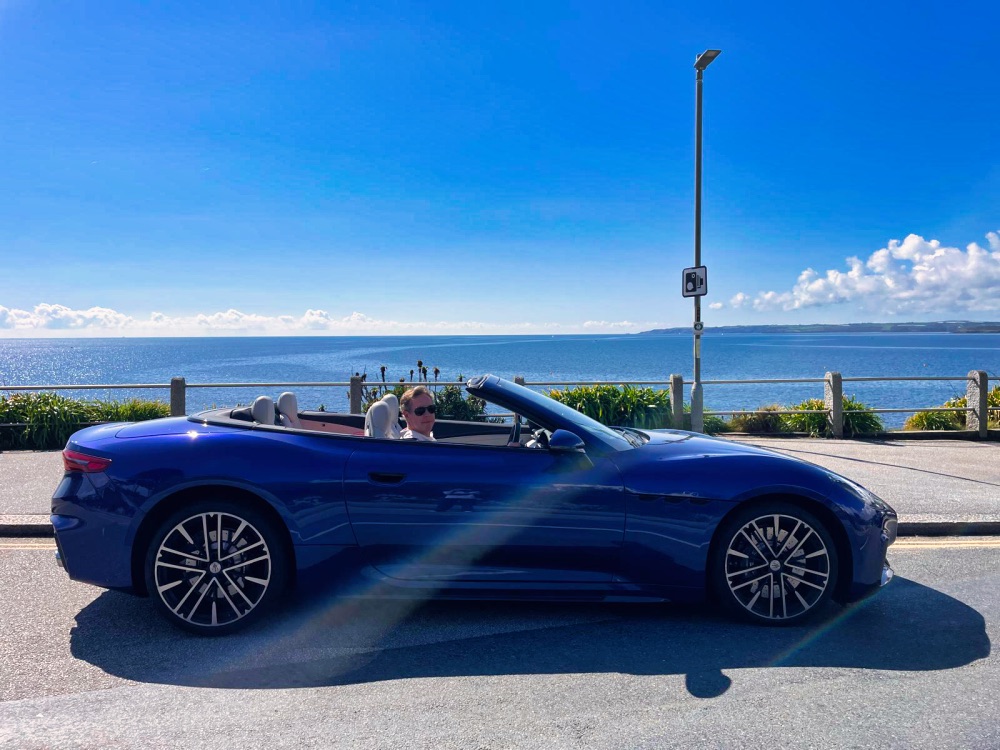
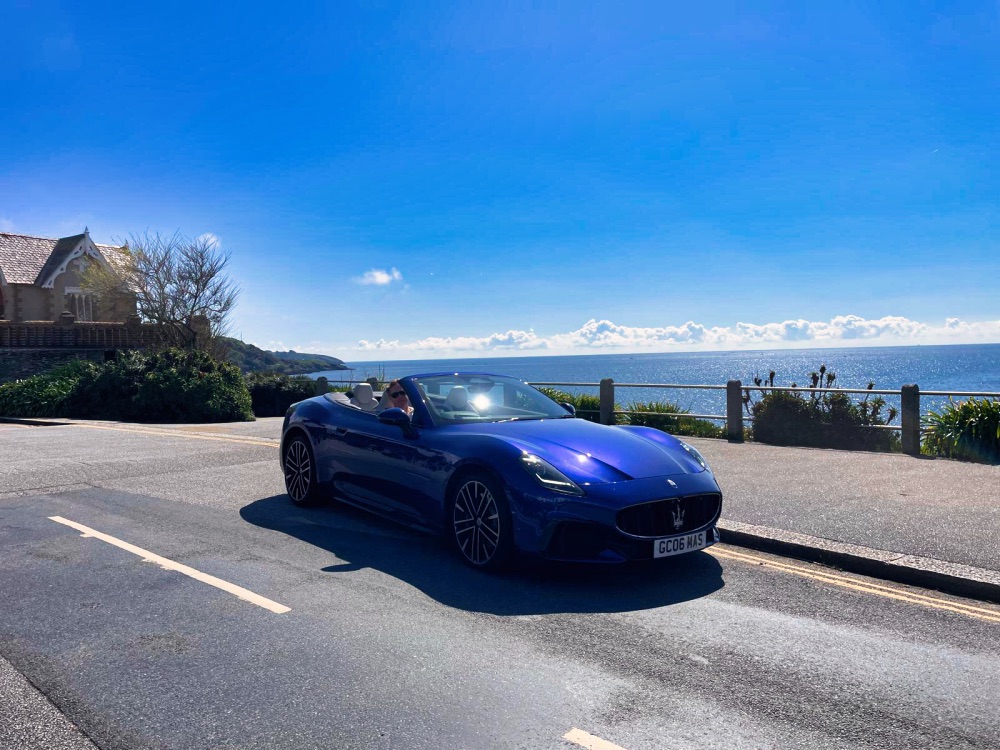
Driving along the coastal roads with the roof folded neatly away in fourteen seconds, the GranCabrio somehow transforms Britain into something vaguely Mediterranean. The sea glitters differently from behind that vast bonnet. Villages appear more cinematic. Even traffic feels less irritating when accompanied by six Italian cylinders singing behind you.
This is not a subtle car exactly, but nor is it vulgar. That distinction matters enormously.
A Ferrari often arrives like a banker announcing bonuses at a funeral. Lamborghinis can resemble nightclub owners in fluorescent trainers. The Maserati is different. It attracts admiration rather than resentment. People smile at it. They wave. Elderly gentlemen approach at petrol stations and tell you about the Ghibli they once nearly bought in 1974 before their wife insisted upon “something sensible”. One can practically see the regret still haunting them.
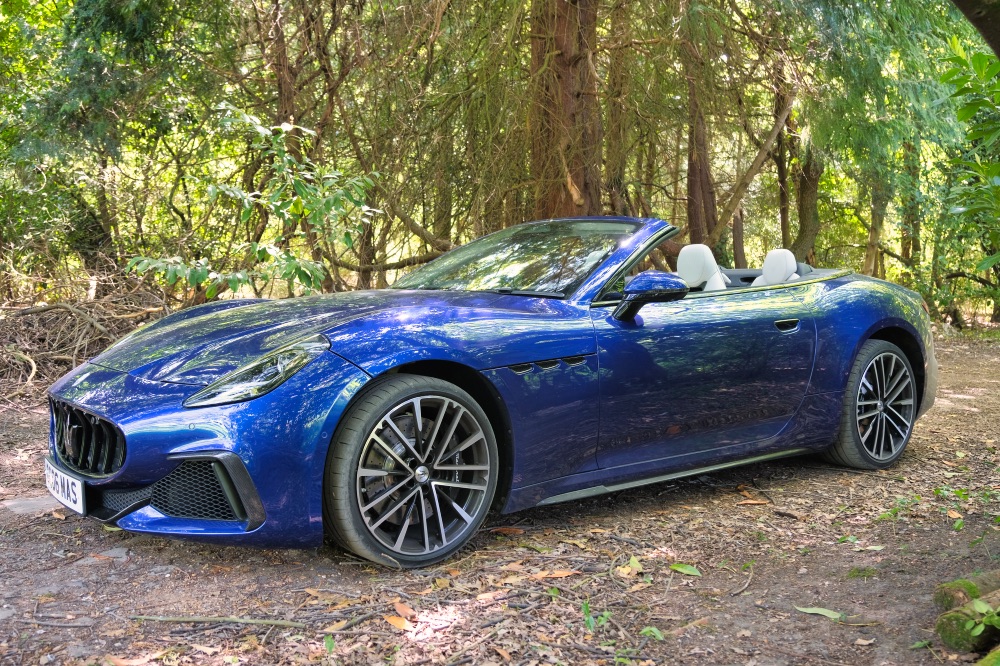
With the roof raised, the GranCabrio Trofeo is elegant and discreetly handsome. Beautiful in the sort of understated way Italians manage so irritatingly well. Roof lowered, however, it transforms entirely. Every line suddenly sharpens. The proportions become dramatic. The broad haunches over the rear wheels emerge fully into view and the whole thing begins to look less like a luxury GT and more like a supercar that has wandered accidentally into polite society.
The long bonnet is magnificent. Completely unnecessary in modern packaging terms perhaps, but emotionally essential. You sit behind it feeling faintly heroic, like a 1960s film star heading towards the Riviera with questionable intentions and very good luggage.
Maserati’s designers refer to part of the front structure as the “cofango”, combining the Italian words for bonnet and fender. Naturally the Italians cannot simply call something “a panel”. Everything must sound either romantic or mildly dangerous. “Darling, I think I’ve injured my cofango.”
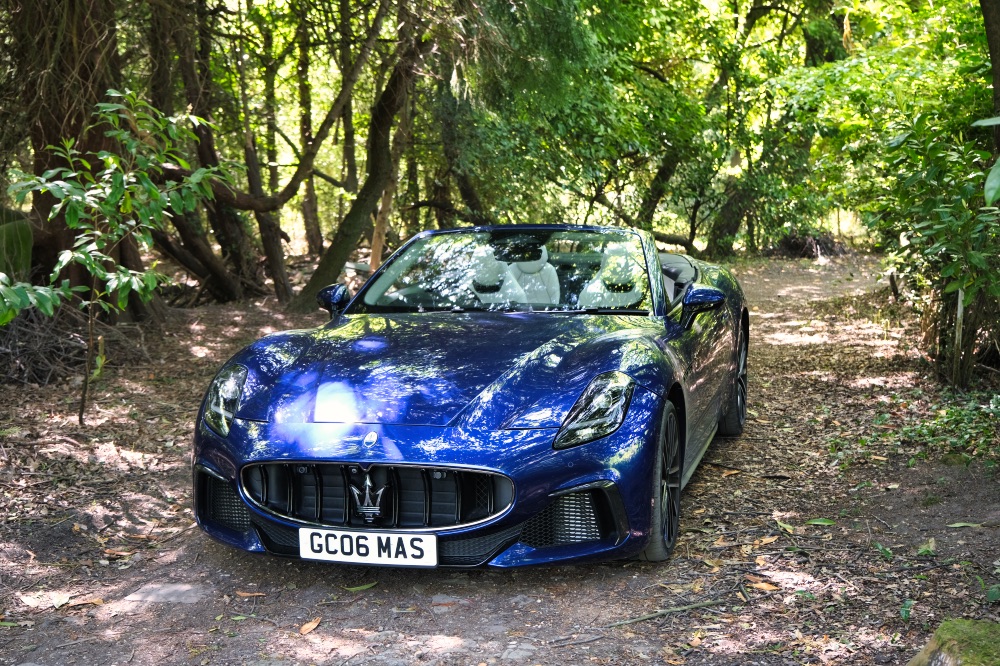
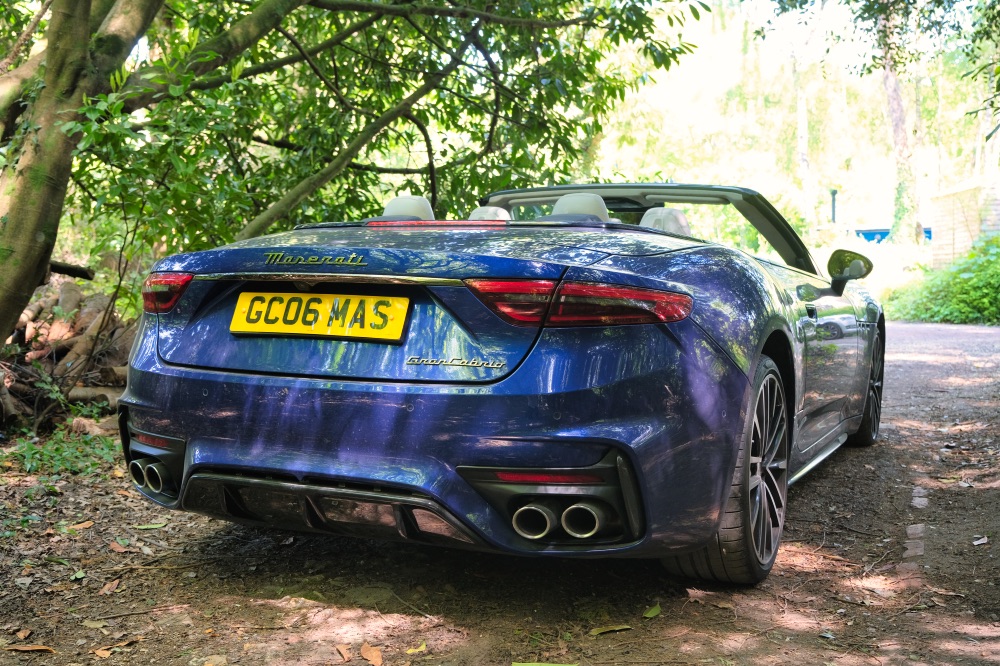
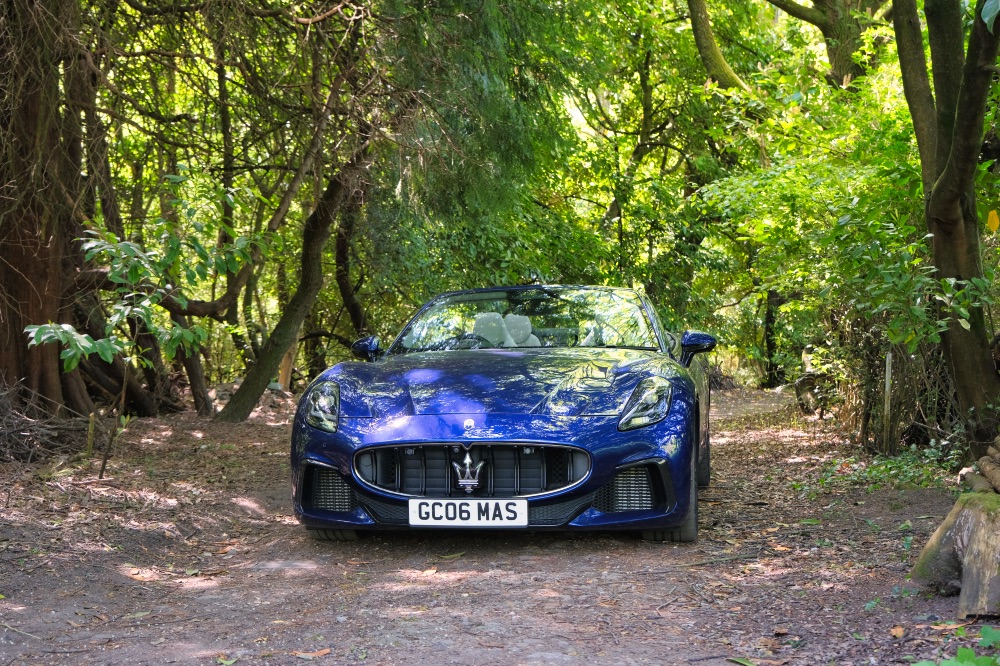
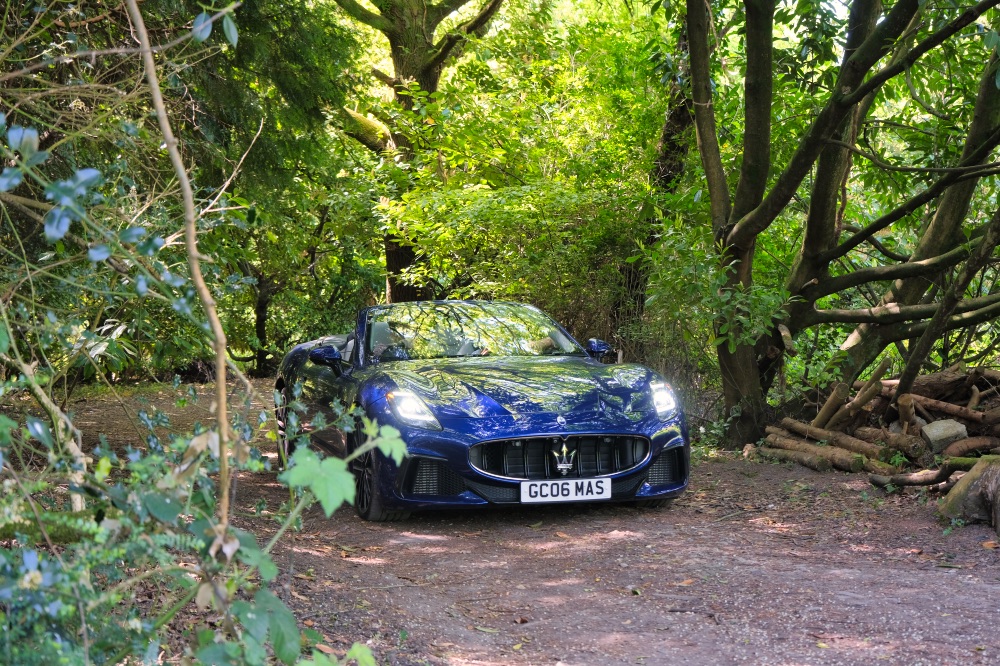
Still, whatever one calls it, the design works beautifully. The vertical lighting signature at the front gives the car presence without aggression, while the boomerang rear lights add a touch of drama that remains unmistakably Maserati. There are echoes of the glorious Maseratis of the 1930s, particularly the 4CS and 8CM, but thankfully without descending into nostalgic parody.
The canvas roof improves the proportions further. Convertibles often look compromised with the roof raised, like expensive tents attempting optimism. The GranCabrio avoids this entirely. In profile it remains sleek and beautifully balanced whether open or closed.
Our test car arrived in Blu Emozione, which is elegant and subtle, although personally I would choose Verde Giada. If you are already buying a 542-horsepower Italian convertible, restraint feels slightly dishonest. One might as well lean into the occasion with suitable enthusiasm. Comme il faut.
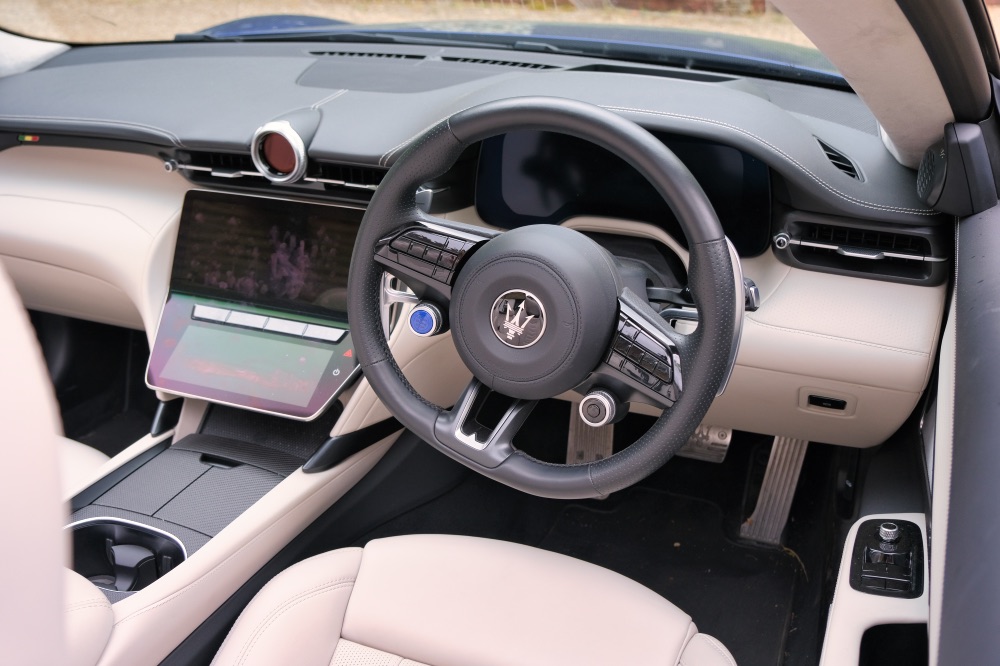
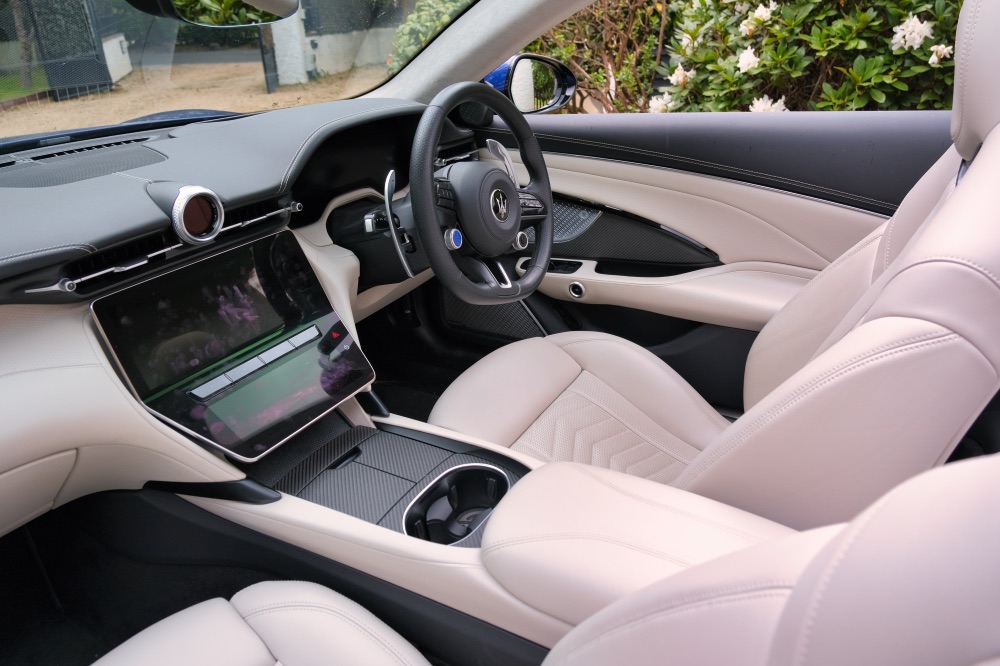
Inside, the Maserati manages that difficult balance between sportiness and genuine luxury. Many modern performance cars mistake aggression for sophistication, filling cabins with enough black plastic and ambient lighting to resemble gaming laptops. The GranCabrio instead feels warm, expensive and deeply Italian.
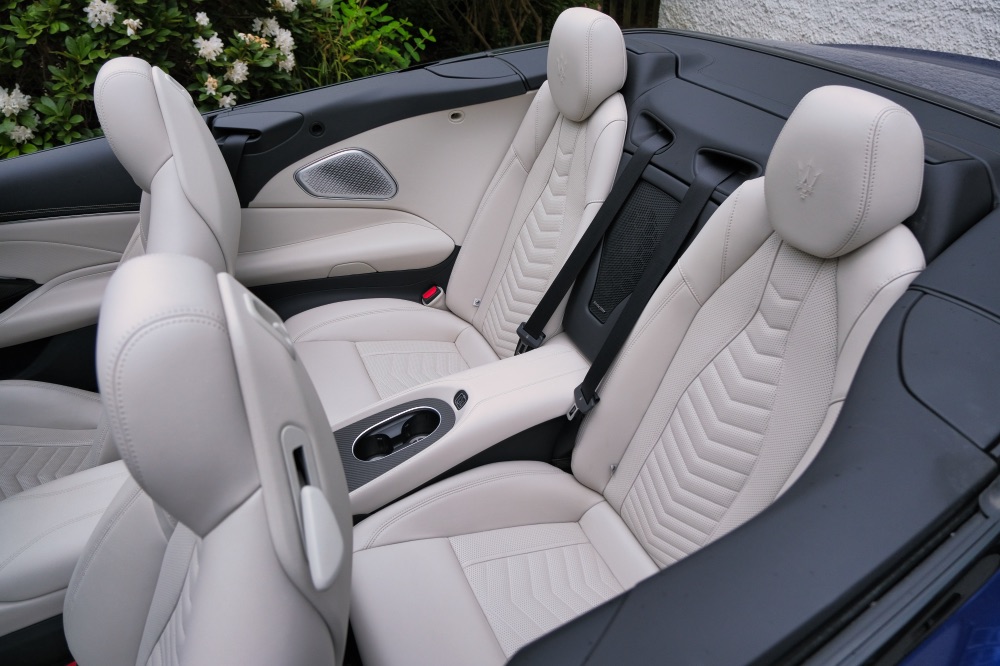
Cream Ice leather sweeps elegantly across the dashboard and seats, contrasted beautifully with gloss black trim, carbon fibre and tasteful chrome details. The flowing lines continue into the doors where polished Sonus Faber speaker grilles gleam subtly within the leatherwork. There is craftsmanship here. Texture. Atmosphere.
The seats deserve particular praise. Soft enough for long-distance touring yet supportive enough when pressing on, they are endlessly electrically adjustable and deeply comfortable over hundreds of miles. Heated too, naturally, because Britain remains committed to meteorological unpredictability.
The little details matter. The elegant dashboard clock. The chrome highlights. The solidity of the switchgear. The way the cabin smells faintly of leather, ambition and expensive weekends away.
Then there is the technology.
Modern car designers remain engaged in a relentless campaign against physical buttons. Climate controls, seat functions and various cabin settings now live almost entirely inside the touchscreen, which means adjusting airflow occasionally requires concentration levels previously reserved for lunar landings.
The Bring Back Buttons Society, of which I have recently appointed myself chairman, has already drafted several furious letters.
Still, once familiarised, the system works well enough. The central display is beautifully integrated into the dashboard rather than stuck on awkwardly like an afterthought. Visibility is excellent, menus largely intuitive and the wireless charging compartment beneath neatly designed.
Gear selection occurs via buttons across the centre console, which frees up open space between the driver and passenger. The result feels airy, uncluttered and refreshingly modern.
Most surprising of all are the rear seats.
Manufacturers frequently describe cars as “four seaters” when they actually mean “technically capable of transporting additional limbs”. Not here. Adults fit comfortably in the back. Even my son, who stands six foot two and increasingly resembles a Scandinavian siege weapon, travelled perfectly happily.
Yet from behind the wheel the Maserati still feels intimate, cocooning and sporty. It somehow combines grand touring practicality with genuine sports car atmosphere, which is remarkably difficult to achieve.
The neck warmer system works brilliantly too, blowing warm air from vents within the headrests, allowing comfortable roof-down motoring long after common sense suggests otherwise.
There is one amusing caveat. Rear passengers must duck politely while the roof operates or risk receiving an educational demonstration in Italian mechanical engineering.
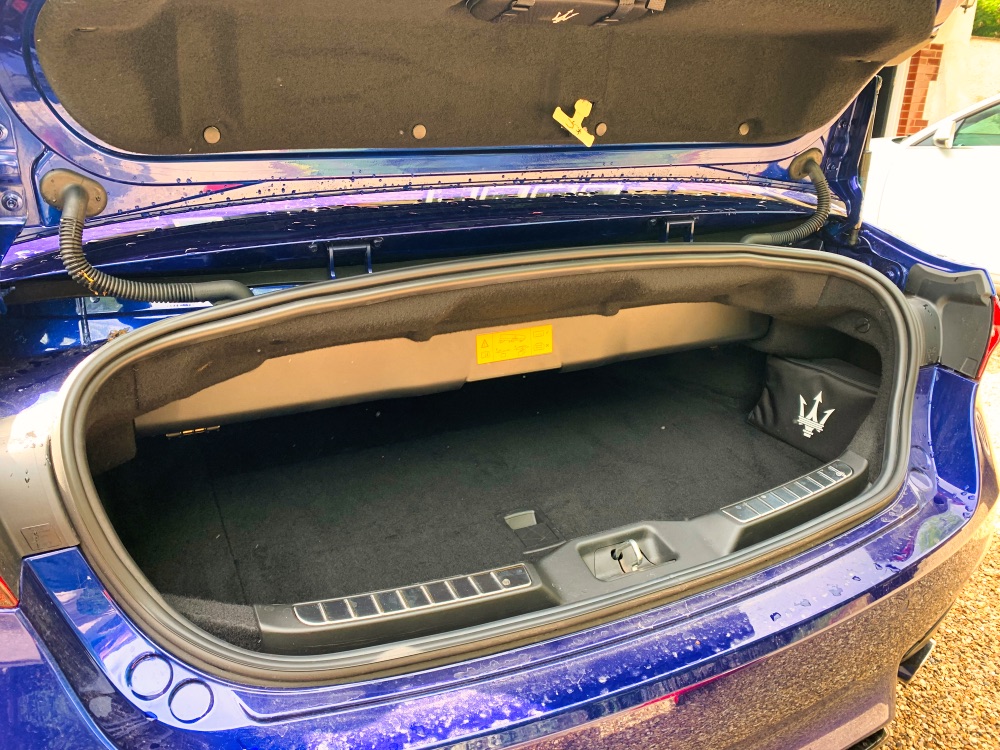
The boot, sadly, represents the car’s one truly frustrating compromise.
It is too shallow.
I dislike criticising this car because I became rather fond of it over the course of our journey, but honesty demands sacrifice. Luggage space is limited for such a large GT. Two cabin bags fit comfortably, perhaps three if packed carefully, but genuine grand touring luggage capacity remains absent.
In practice we used the rear seats for overflow bags and travelled without issue, though one cannot help wondering whether Maserati’s engineers simply assumed owners would transport only linen shirts and emotional complexity.
On the move, however, all criticisms evaporate instantly.
The 3.0-litre twin-turbocharged Nettuno V6 is extraordinary. Quite possibly the finest V6 currently being built anywhere in the world.
At idle it genuinely purrs. Not metaphorically. There is a smooth, feline richness to the engine note that feels entirely unlike the synthetic noise of many modern turbocharged units. It sounds alive.
Comfort mode turns the Maserati into an effortless long-distance cruiser. Quiet, composed and refined, it devours motorway miles with tremendous ease. GT mode is perhaps the sweet spot, balancing comfort with sharper responses and a richer exhaust note.
Then comes Sport.
Suddenly the exhaust begins crackling and popping like a Parisian café stove overloaded with chestnuts. Throttle response sharpens dramatically, the suspension firms and the car acquires a mischievous sense of humour.
And then there is Corsa mode.
Ah, mon Dieu.
Corsa lowers the car fully, relaxes the safety systems and unleashes absolute operatic mayhem. The exhaust erupts into glorious violence. Pops, bangs, snarls and detonations ricochet across hedgerows like artillery fire from an unusually glamorous war.
This is not synthetic theatre piped through speakers. It is mechanical passion. Proper combustion-engine lunacy.
The acceleration feels savage. All 542 horsepower arriving with immediacy and genuine excitement. Yet somehow the car never feels intimidating. Fast certainly, astonishingly so, but approachable.
The eight-speed ZF automatic gearbox deserves praise too. Smooth in normal driving, rapid when extended and generally far more intelligent than most humans attempting manual paddle shifts. Though naturally you should still use the paddles occasionally because they are enormous, metallic and deeply satisfying.
At nearly five metres long, the GranCabrio should feel cumbersome on British roads. It does not.
The chassis balance is superb. From behind the wheel the car shrinks around you remarkably well. Steering is accurate, body control excellent and cornering ability genuinely surprising for such a luxurious convertible.
On smooth roads the Maserati feels beautifully planted. Grip levels are immense, helped by the intelligent four-wheel-drive system and electronically controlled rear differential which progressively allows more rear-driven character in the sportier modes.
The suspension is firm, however, and on rough British B-roads that stiffness occasionally reveals itself. Mid-corner bumps can unsettle the car slightly under hard braking or aggressive inputs.
Frankly though, this feels less like a flaw and more like a cultural misunderstanding. Italian engineers design cars for roads bordered by vineyards and optimism. They cannot possibly have anticipated Britain’s potholes, several of which now possess ecosystems.
Still, the payoff is worthwhile because the GranCabrio drives far more like a sports car than many luxury GT rivals. There is tension beneath the refinement. Precision beneath the comfort. It feels connected and engaging rather than isolated.
And that matters enormously.
Modern luxury cars increasingly isolate drivers from experience entirely. They become drawing rooms on wheels, impressive but emotionally inert. The Maserati remains gloriously alive. You feel the road, the engine and the car’s character constantly communicating beneath you.
Technology levels are impressive too. The adaptive cruise control and lane assistance systems are among the best currently available, reducing fatigue dramatically during long journeys without becoming intrusive.
The head-up display works beautifully, while the Sonus Faber 16-speaker sound system is genuinely exceptional. Rich, detailed and wonderfully musical.
Although honestly, most of the time we turned it off and listened instead to the Nettuno V6 echoing through Cornish villages.
Fuel economy officially sits around 27mpg. In reality, if you drive the Maserati properly, you will get 30mpg, but drive like me and you can halve that immediately.
And that, perhaps, is the point of this car.
Nobody buys a Maserati GranCabrio Trofeo because it is rational. Rational people purchase diesel estates and discuss interest rates over soup.
The Maserati exists for emotion.
It exists for that moment when the roof folds away beneath a Cornish sunset. For the sound of the engine bouncing off stone walls in Dorset. For the admiring smiles from strangers and the absurd pleasure of seeing that long bonnet stretching ahead through the Surrey countryside.
It is not about showing off wealth. In fact, the GranCabrio possesses a warmth and charm many vastly more expensive cars entirely lack. People respond to it positively because it feels romantic rather than aggressive.
There is also something wonderfully old-fashioned about it. Not technologically old-fashioned, quite the opposite, but emotionally so. The Maserati still believes driving should be sensual, dramatic and slightly ridiculous.
Our office remains divided broadly into two categories of motoring journalist. Those who worship figures and those who worship feelings.
Curiously, both groups adored the GranCabrio Trofeo.
The statistics are certainly impressive enough. A 3.6 second sprint to 62mph, 196mph maximum speed, sophisticated all-wheel drive and advanced electronic systems throughout.
But the emotional experience matters far more.
This is a car you fall in love with. Its flaws only make it more charming. The small boot. The touchscreen frustrations. The occasional firmness over rough roads. They simply become part of the personality.
Perfect cars are often forgettable.
The Maserati GranCabrio Trofeo is unforgettable.
And somewhere between Surrey and Cornwall, with sea air drifting through the cabin and the V6 singing magnificently ahead of another empty coastline road, I realised something rather dangerous.
I did not want to give it back.
FAQ
Is the Maserati GranCabrio Trofeo a real four-seater?
Yes. Unlike many luxury convertibles, the GranCabrio comfortably accommodates four adults, including taller rear passengers.
How fast is the Maserati GranCabrio Trofeo?
The GranCabrio Trofeo reaches 62mph in 3.6 seconds and has a top speed of 196mph.
What engine is in the Maserati GranCabrio Trofeo?
It uses Maserati’s twin-turbocharged 3.0-litre Nettuno V6 producing 542 horsepower.
Is the Maserati GranCabrio Trofeo comfortable for touring?
Exceptionally so. It combines genuine long-distance comfort with sports car handling and refinement.
What are the weaknesses of the Maserati GranCabrio Trofeo?
The boot space is limited, and some drivers may dislike the reliance on touchscreen controls.
Is the Maserati GranCabrio Trofeo better than a Bentley Continental GTC?
The Bentley focuses more on luxury isolation, while the Maserati feels lighter, more emotional and considerably sportier.
Does the Maserati GranCabrio Trofeo sound good?
Magnificently so. The Nettuno V6 produces one of the best exhaust notes currently available from a modern performance car.