
Washington State Wine: The New Frontier of American Viticulture
Washington State Wines
When Heather Bradshaw talks about Washington State, her eyes light up with the conviction of someone who has watched a region rise from quiet potential to global significance. A former broadcast journalist, she began her career in the small agricultural town of Yakima — “the heart of wine country,” she recalls — where viticulture was not yet an international talking point but an emerging dream. Fifteen years in the wine industry later, and nearly a decade with the Washington State Wine Commission, Bradshaw is now one of the most articulate ambassadors for America’s most dynamic and quietly revolutionary wine region.
A Young Region with Old-Soul Ambitions
Washington is the second-largest wine-producing region in the United States, far behind California in volume, but increasingly equal in energy, ambition, and quality. With a thousand wineries and 50,000 acres of vineyards, it is still a young wine region by global standards — many of its oldest vines are only 50 years old — but what it lacks in centuries of history, it more than makes up for in innovation and terroir-driven precision.
In an age dominated by anxieties around climate change, Washington’s geography seems almost too perfectly engineered for viticulture. The Cascade Mountain Range creates a dramatic rain shadow, splitting the state in two. While Seattle and the western coast absorb up to 40 inches of rain, the vineyards on the eastern side receive as little as six inches of precipitation annually. “It’s incredibly dry,” Bradshaw explains. “That gives us control over irrigation and allows us to grow beautifully balanced fruit.”
Summer temperatures can top 100°F (38°C), but nights drop by 40 degrees or more — the coveted diurnal shift that locks in acidity while allowing optimal ripeness. Add elevations that vary widely across the Columbia Valley and you have one of the most flexible and exciting viticultural landscapes in North America.
A Culture of Experimentation — and No Rules
Unlike Europe’s centuries-old framework of wine laws, Washington operates with very few restrictions. “There’s a huge culture of experimentation,” Bradshaw says. “We like to say there are no rules.” The result? Over 80 grape varieties planted — though Cabernet Sauvignon, Merlot, Syrah, Chardonnay, and Riesling dominate production.
Cabernet Sauvignon leads the pack, especially in export markets such as the UK, where retailers increasingly look to Washington for bold but balanced American reds.
But Bradshaw is quick to emphasise that Washington refuses to be defined by a single variety. Riesling put the region on the map decades ago; Syrah has produced some of its most critically acclaimed wines; and boutique producers are constantly exploring new frontiers — from Lemberger to high-elevation Grenache.
Where Many Wines, One Vineyard
One of Washington’s unique strengths lies in its collaborative grower–winery relationships. Estate wineries certainly exist, but the state is defined largely by growers who sell fruit to dozens of different producers. A single vineyard might supply 20–25 wineries, each crafting its own interpretation.
“You’ll see the vineyard name proudly displayed on labels,” Bradshaw notes. “The winemaker may be in Walla Walla, the grower in Yakima, another buyer in Red Mountain — but they’re all tied together.” This interdependence has created one of the most supportive, open, and innovative wine communities in the world.
Even across state borders collaboration thrives. When promoting abroad, Washington and Oregon often present themselves jointly as the Pacific Northwest — a region with a shared ethos of sustainability, creativity, and craftsmanship.
Washington in Your Local Wine Shop
Export remains small — only around 5% of Washington wine leaves the US — but the UK is one of its most strategic markets. More Washington labels are now appearing in Majestic, Tesco, Virgin Wines, and independent merchants.
Two names stand out:
Chateau Ste. Michelle
The founding winery of Washington State, Chateau Ste. Michelle is a driving force behind the region’s global reputation. Established in the 1960s and responsible for some of the earliest international acclaim, it also pioneered the collaborative ethos that continues today. Their estate in Woodinville — complete with a grand chateau and summer concert series — is one of America’s great wine tourism destinations.
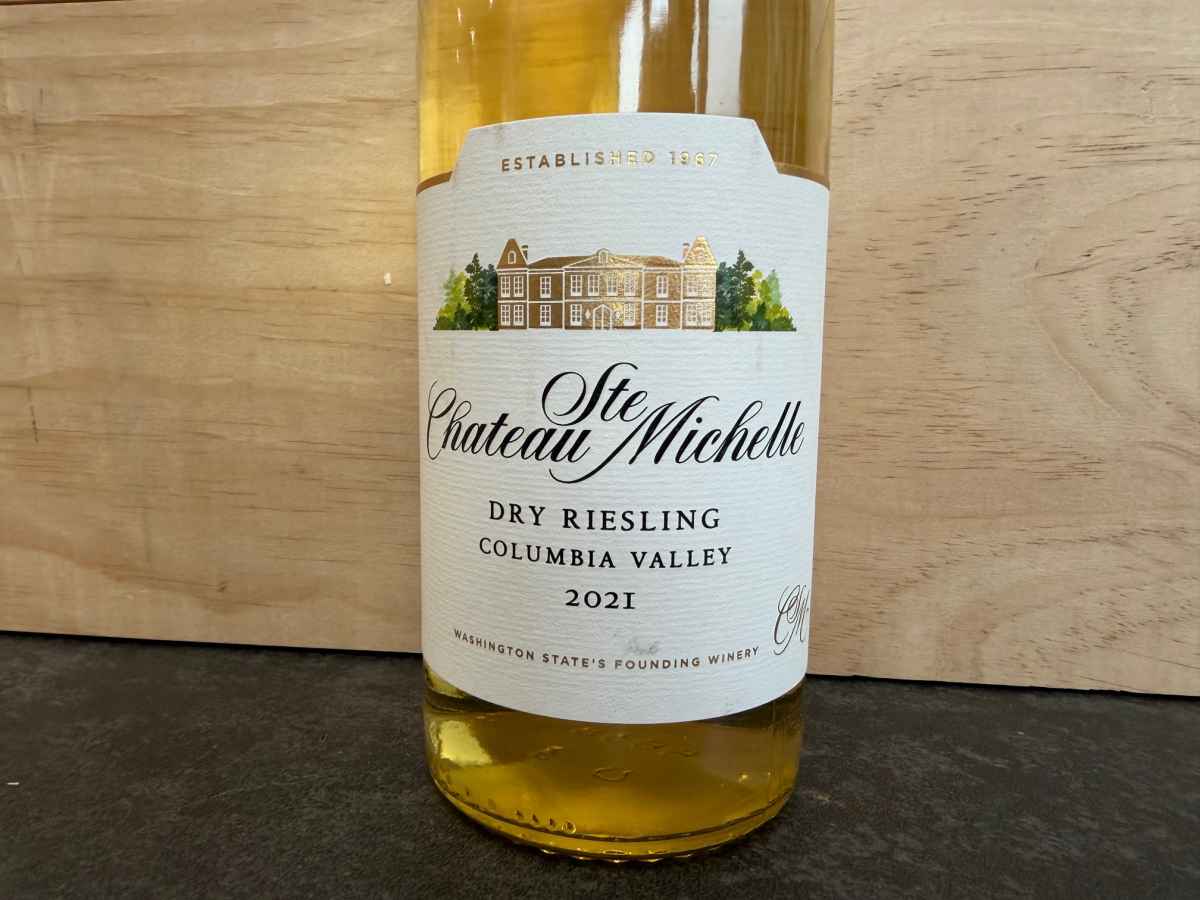
Try Chateau Ste. Michelle – Dry Riesling 2021 (Columbia Valley AVA)
Crisp, zesty and beautifully pure. Expect lime zest, crunchy green apple, white peach and a subtle mineral lift. Dry, refreshing and effortlessly food-friendly, it’s a versatile white that shines with Asian dishes, seafood or festive grazing boards.
Kiona Vineyards & Winery (Highly Recommended)
For readers seeking a profound expression of Washington terroir, Bradshaw highlights Kiona as a must-try. Based on Red Mountain, Kiona is a third-generation, family-run estate whose founders planted the first vines in the 1970s, in what was then barren desert. Their Cabernet Sauvignon from Red Mountain is consistently exceptional, powerful yet structured, and beautifully age worthy. They also champion heritage varieties like Lemberger, keeping alive parcels that reflect the region’s early experimental spirit.
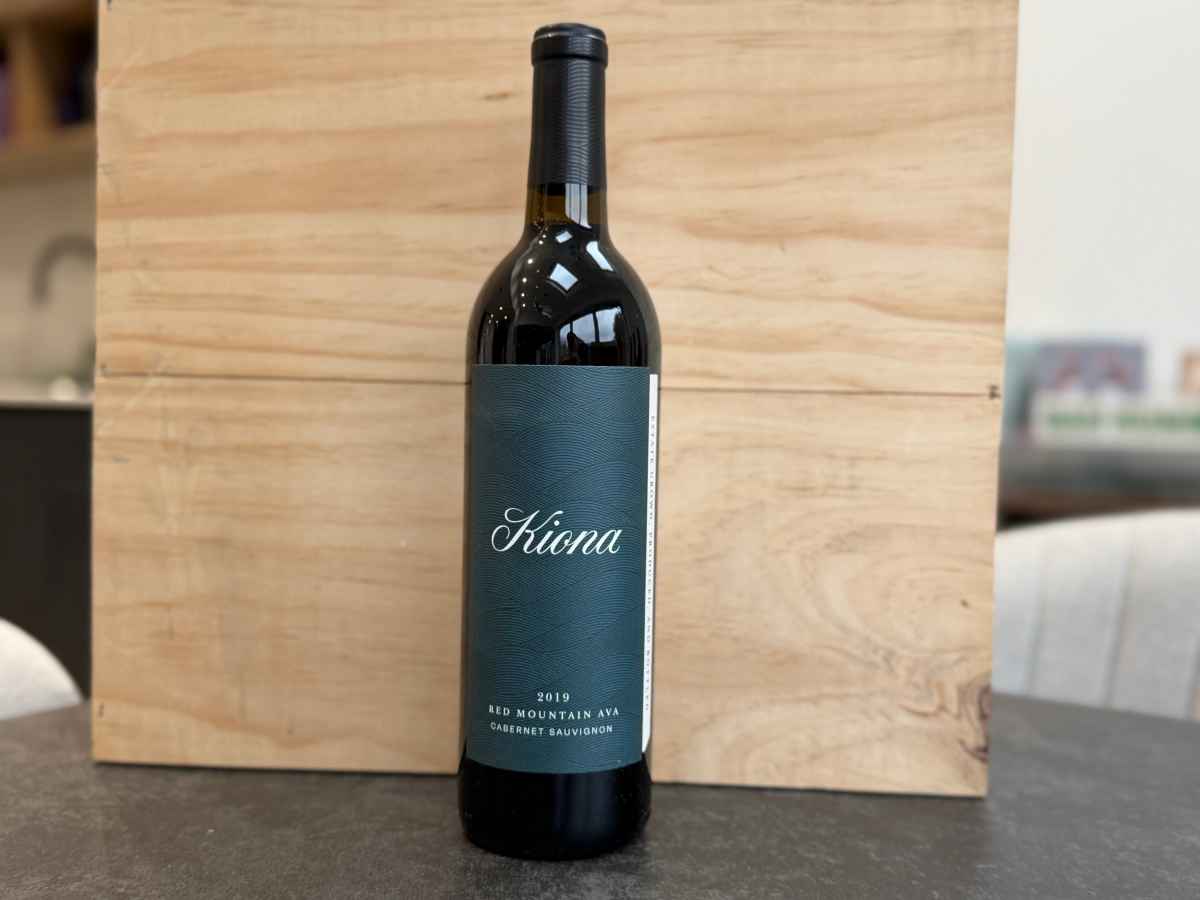
Try Kiona Vineyards – Cabernet Sauvignon 2019 (Red Mountain AVA)
A classic Red Mountain Cabernet: concentrated yet balanced, with black cherry, cassis and dried sage layered over firm, savoury tannins. There’s a warm, sun-soaked intensity here, lifted by freshness and a long, quietly powerful finish. A brilliant choice for hearty winter dishes or slow-cooked meats.
Wine Tourism: America’s Best-Kept Secret
For UK travellers, Washington offers a wine tourism experience unlike anywhere else in the US. Direct flights to Seattle mean you can explore:
- Seattle & Puget Sound — vibrant coastal culture, markets, ferries, and whale watching
- Walla Walla — a wine lover’s mecca with 130-plus boutique wineries
- Yakima Valley — Washington’s oldest AVA and the agricultural heart of the state
- The Columbia Gorge — a breathtaking cross-border AVA with cool-climate finesse
Beyond wine, the Pacific Northwest is a paradise of national parks, forests, mountains, islands, and year-round outdoor adventure.
“It’s incredibly welcoming,” Bradshaw says. “You often meet the winemaker or the owner. It’s unpretentious, warm, collaborative — a great place to explore.
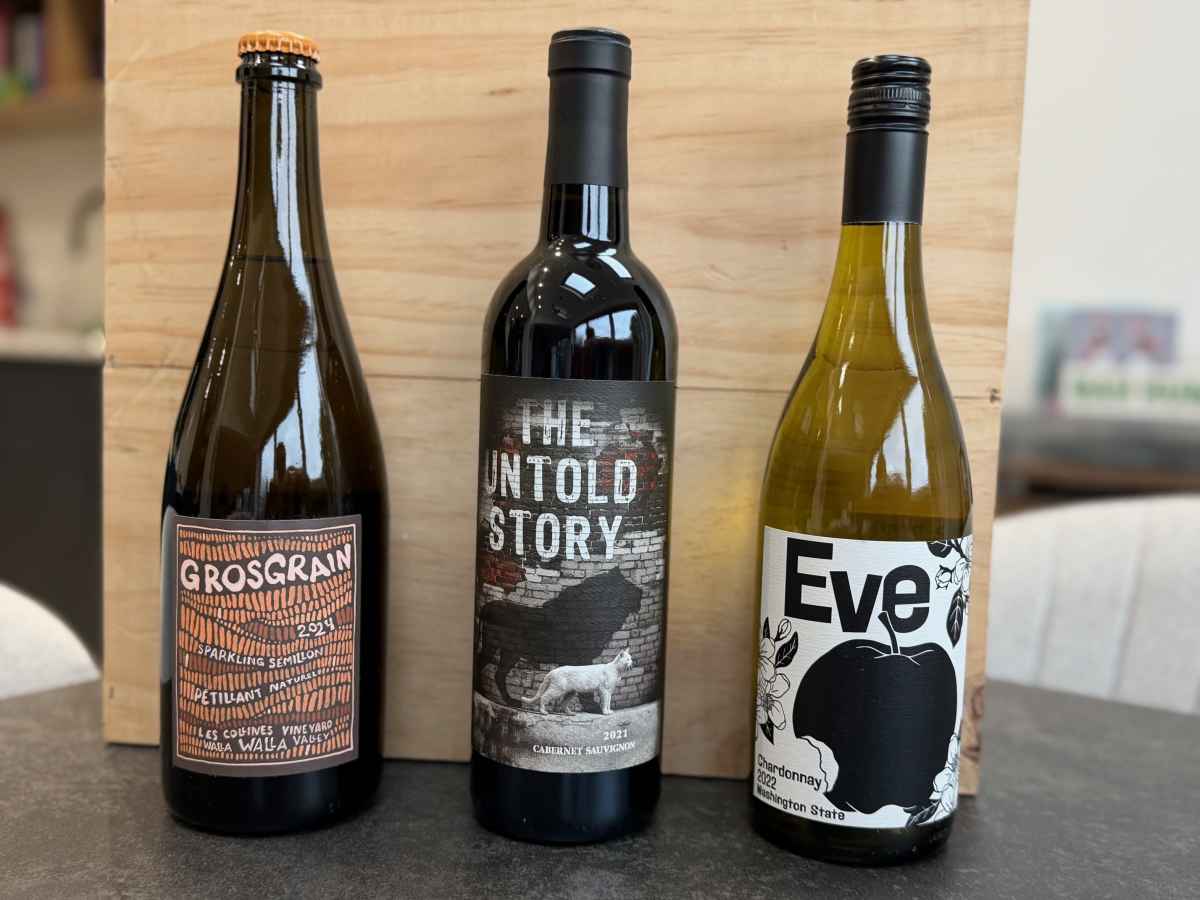
And if you are over in Washington, check these wines I've had imported and been drinking at home this week:
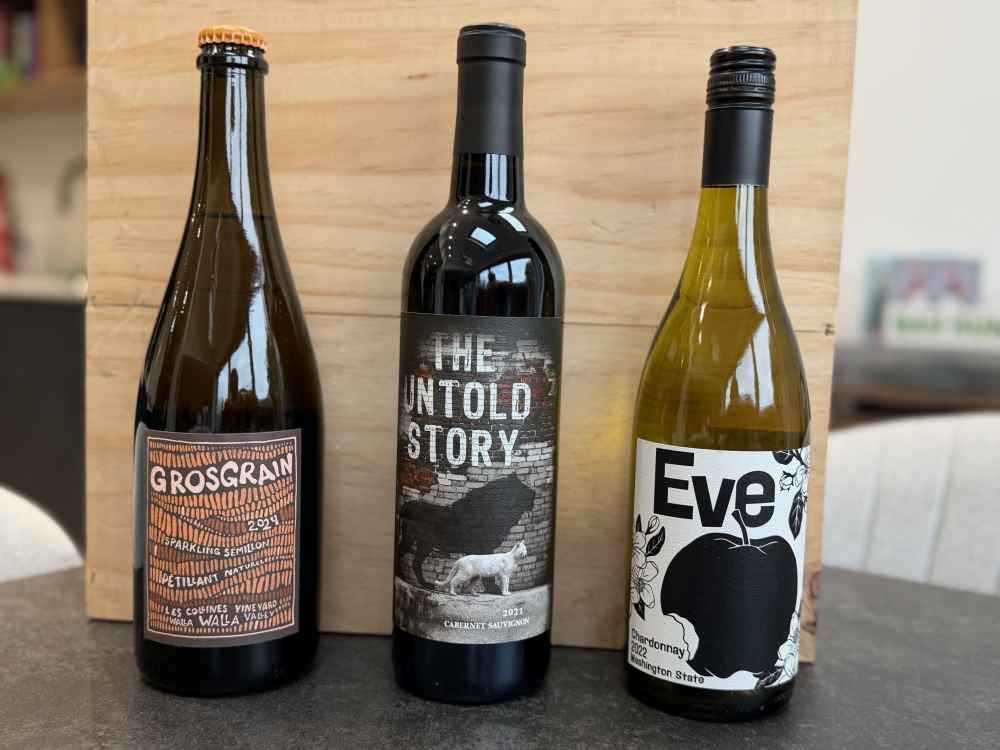
Grosgrain Vineyards – Sémillon Pétillant Naturel 2024 (Walla Walla Valley AVA)
Who makes it:
Grosgrain Vineyards is the project of Matt and Kelly Austin, part of Washington State’s new generation of design-led, organically focused winemakers. They specialise in lighter-touch, low-intervention styles with a strong aesthetic sensibility.
What it tastes like:
A lightly hazy pét-nat with soft, natural fizz. Dry, savoury and gently expressive, showing subtle citrus, orchard fruit, and a clean mineral edge. Effortlessly elegant — ideal for an unconventional, modern celebration.
Charles Smith Wines – Eve Chardonnay 2022 (Ancient Lakes AVA)
Who makes it:
Created by Charles Smith — the self-taught, rock-band-manager-turned-winemaker who helped push Washington onto the global stage. His wines are known for bold flavour, purity and accessibility, sourced from carefully chosen cool-climate sites.
What it tastes like:
Vibrant and fresh, with bright green apple, citrus blossom and white peach. Silky texture with a cool-climate snap of acidity. A refined yet easy-drinking festive white that pairs beautifully with seafood, turkey or winter veg.
Betz Family Winery – The Untold Story 2021 (Columbia Valley AVA)
Who makes it:
Betz Family Winery was founded by Master of Wine Bob Betz and is now led by winemaker Louis Skinner. The estate is renowned for precision, balance and a European-influenced interpretation of Washington fruit.
What it tastes like:
A Cabernet-driven blend offering depth and polish. Expect layered blackberry, cassis and graphite wrapped in fine, sculpted tannins. Rich, structured and perfect for winter roasts or fireside evenings.
The Next Decade: Research, Resilience & Rising Stars
Looking ahead, Washington is investing heavily in research, partnering with Washington State University’s world-class Wine Science Center. From wildfire smoke studies to vineyard climate resilience, the future of the region is being built through science as much as tradition.
“We’re still growing, still learning,” Bradshaw reflects. “But that’s the exciting part. Washington wine is something you build alongside us.”
A Final Word
Washington State represents something rare in the wine world: a region with the freedom to experiment, the climate to excel, and the humility to collaborate. For the UK consumer — increasingly seeking authenticity, craft, and discovery — Washington offers extraordinary value and character at every price point.
Whether you pick up a bottle of Chateau Ste. Michelle at Tesco, seek out Kiona’s Red Mountain Cabernet, or plan a future visit to the Pacific Northwest, one thing is certain: Washington is no longer America’s best-kept wine secret. It is a world-class region taking its rightful place on the international stage.