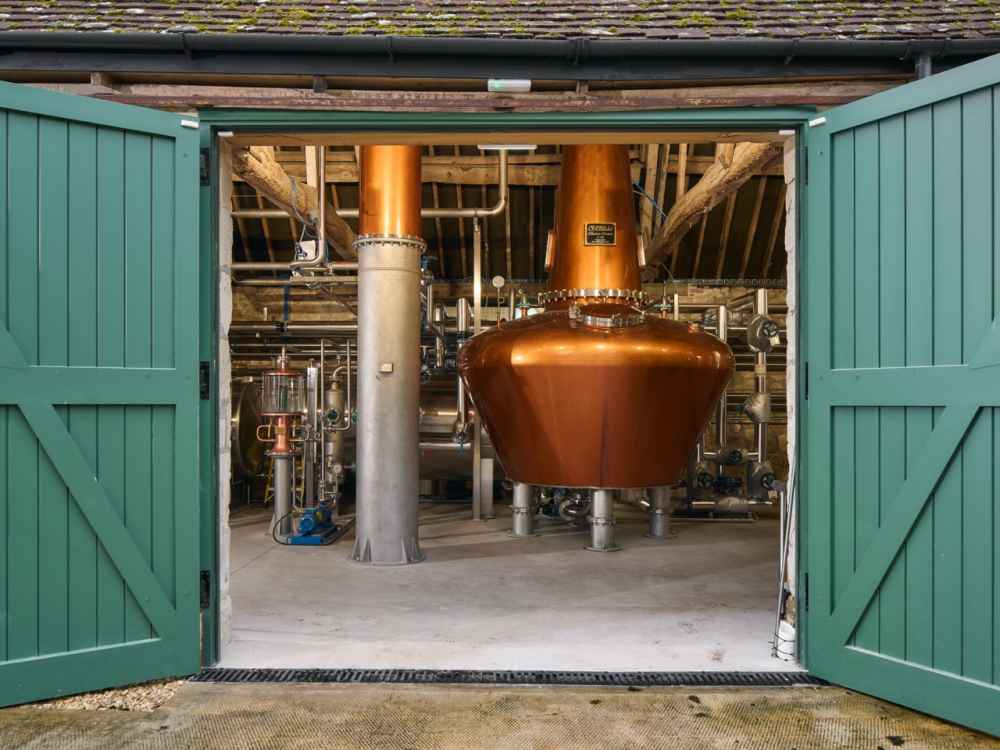
Discovering Witchmark Distillery in Wiltshire
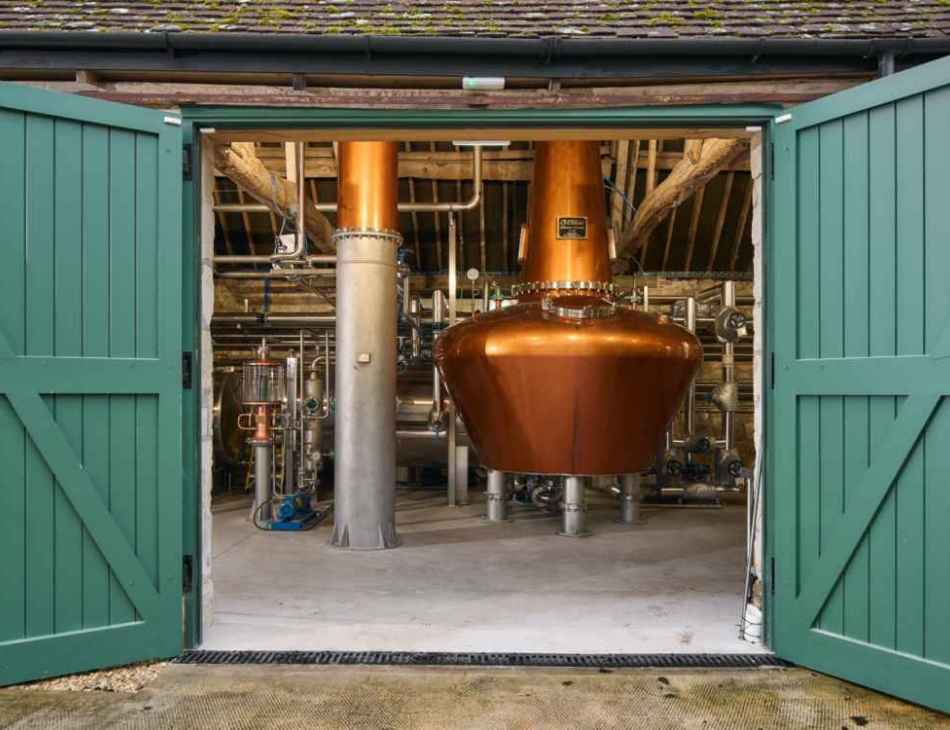
Looking into the Stillhouse
During a recent visit to Witchmark Distillery in Wiltshire, the team made no secret of their ambition: when their inaugural spirit emerges from cask, it is intended to compete squarely as a super premium single malt.
Yet in spirits marketing, "super premium" is a term thrown around with easy confidence. What does it actually mean in practice?
At a fundamental level, the core mechanics of making whisky differ little whether you are in Speyside or southwest Wiltshire. The recently announced Geographical Indication for English whisky introduces its own distinct legal framework, but regulatory recognition alone does not conjure greatness. Given the staggering capital expenditure, patience, and regulatory hurdles required simply to fire up a still, no producer sets out intending to make ordinary whisky. Everyone aims high.
Ultimately, a super premium reputation is won when design and distillation pull in the exact same direction. The packaging earns the curiosity; the spirit in the glass justifies the ambition.
How a young distillery bridges that divide comes down to the choices made long before the spirit ever reaches the bottle.
Witchmark’s inaugural single malt remains years away from general release, but the decisions that will shape it have already been made. Barley comes from the surrounding Fonthill Estate, malting takes place at Warminster, and brewing and distillation are carried out at their sister business, also in Wiltshire.
The distillery occupies a seventeenth century Grade II listed barn in Fonthill Bishop, on the 9,000 acre Fonthill Estate. Its name comes from the witch marks carved into the stonework and oak beams of the estate’s buildings. These protective symbols, including six petalled daisy wheels known as hexafoils, were believed to ward off evil and safeguard those living and working inside. They also provided the name for Stone Daisy, Witchmark’s sister brewery, whose beers are particularly good.
The distillery began with an idea formulated during the pandemic. Alistair Munro and Jon Carson came from advertising, marketing and sales, with Munro having spent more than twenty years running businesses in those sectors. Their fellow founder, Eddie Large, brought the production experience, having run his own award-winning brewery.
Arguably the most significant person though is James Espey, who brings unparalleled expertise. With a career spanning over half a century at the top tiers of international drinks companies, Espey is one of the most prolific brand builders the spirits trade has seen. Alongside his pivotal role in turning Baileys into an international powerhouse and launching Malibu, he helped redefine prestige Scotch whisky during the early 1990s by spearheading the creation of Johnnie Walker Blue Label, positioning rare, high age stocks into a luxury tier that fundamentally changed the market.
A cofounder of The Keepers of the Quaich and later The Last Drop Distillers, his presence on the board at Witchmark signals that the ambition here reaches well beyond a parochial farm venture. For a new operation attempting to carve out an identity without the backing of a multinational conglomerate, that level of commercial instinct and category discipline is invaluable.
The brewing background is particularly relevant. Before whisky reaches a still, much of its potential character has already been established through the choice of barley, malting and fermentation. Stone Daisy produces the wash for Witchmark alongside its own beers. This gives the business direct oversight of a stage that can receive less attention than the stills or the eventual choice of cask.
The barley is grown on Fonthill Farm, close to the distillery, where the farming system follows regenerative practices intended to improve soil health and support biodiversity. Water is drawn from the chalk aquifer beneath the site. These are important because they make the provenance of the spirit easy to follow.
From Fonthill, the barley goes to Warminster Maltings, founded in 1855 and is possibly England’s oldest working floor maltings. Witchmark sends its own crop there rather than simply buying malt from a general supply. The soaked barley is spread across the malting floors and turned by hand during germination, maintaining a method that was once commonplace but is now used by relatively few maltsters.
The copper stills were supplied by Italian manufacturer Frilli who installed a 5,000 litre wash still and a 3,000 litre spirit still. A separate system, comprising a 1,000 litre pot still and a rectification column, is used for gin and vodka production. Frilli also supplied fermentation equipment, heat recovery systems and the associated production infrastructure.
For a young whisky producer, the cask programme is where ambition begins to meet the realities of time and stock management. Witchmark offers private cask ownership, with options including casks that previously held bourbon or red wine, as well as virgin American oak.
While private cask buyers can follow their spirit as it matures in the estate’s warehouses, the wider public will have to wait a little longer to taste the whisky. During my visit, however, I had the opportunity to sample spirits at different stages of maturation, drawn directly from the cask. Detailed tasting notes would offer only a snapshot of liquids that are still developing, but the quality of what I tasted left a strong impression. Even at just 18 months old, the spirit was showing an encouraging degree of complexity and was already thoroughly enjoyable to drink. It will be interesting to see how that early promise develops with further time in oak.
Environmental considerations have also influenced the design of the operation. The stills use bio LPG, and heat is recovered and reused during production. Witchmark says its bottles are made from 100% recycled glass, while production residues are put to further use through local farming and anaerobic digestion.
The company is a certified B Corporation, achieving a score of 124.4. Witchmark describes this as the highest score achieved by an English distillery. The certification provides an external assessment of the business’s social and environmental performance, alongside the individual measures it reports.
While the whisky matures, gin and vodka give drinkers an opportunity to try spirits already being produced on the estate. The range includes Single Origin English Vodka, London Dry Gin, Wiltshire Gin and Black Lime Gin. The vodka is bottled at 40% ABV, with the three gins at 40%, 43% and 46% respectively.
What excites me about Witchmark is how much of its ambition is already evident in the glass. The estate barley, traditional floor malting and brewing expertise provide a strong foundation, but it was the quality of the maturing spirit that left the greatest impression. There is still time for it to develop before the first whisky is released, and having tasted what is taking shape in the warehouses, I am looking forward to returning for that first dram. Witchmark has given me good reason to expect something special.