

Duncan Taylor's Extraordinary "Octave" Whiskies
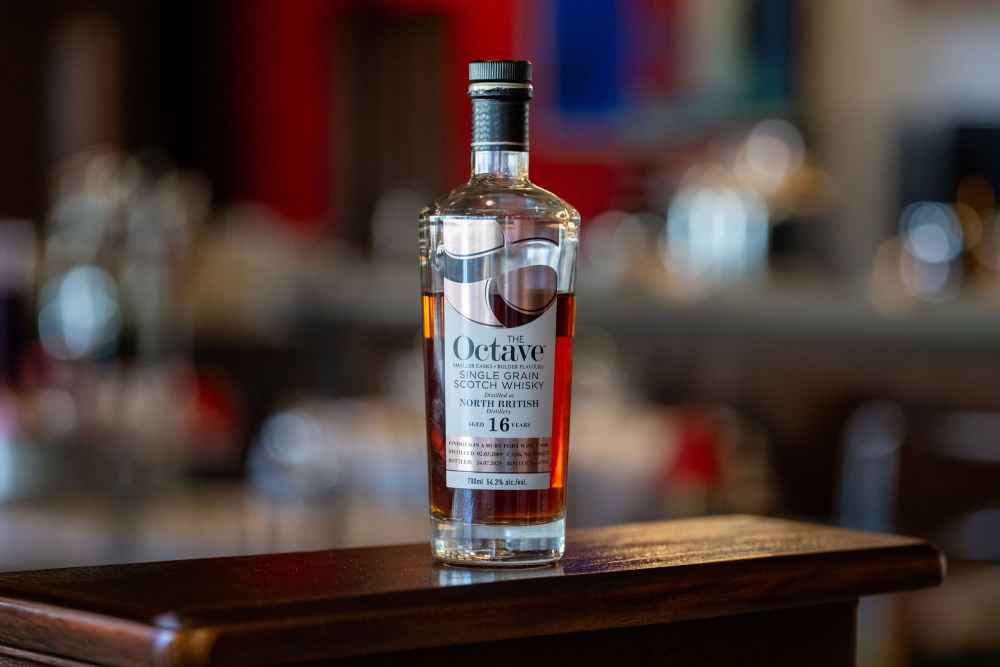
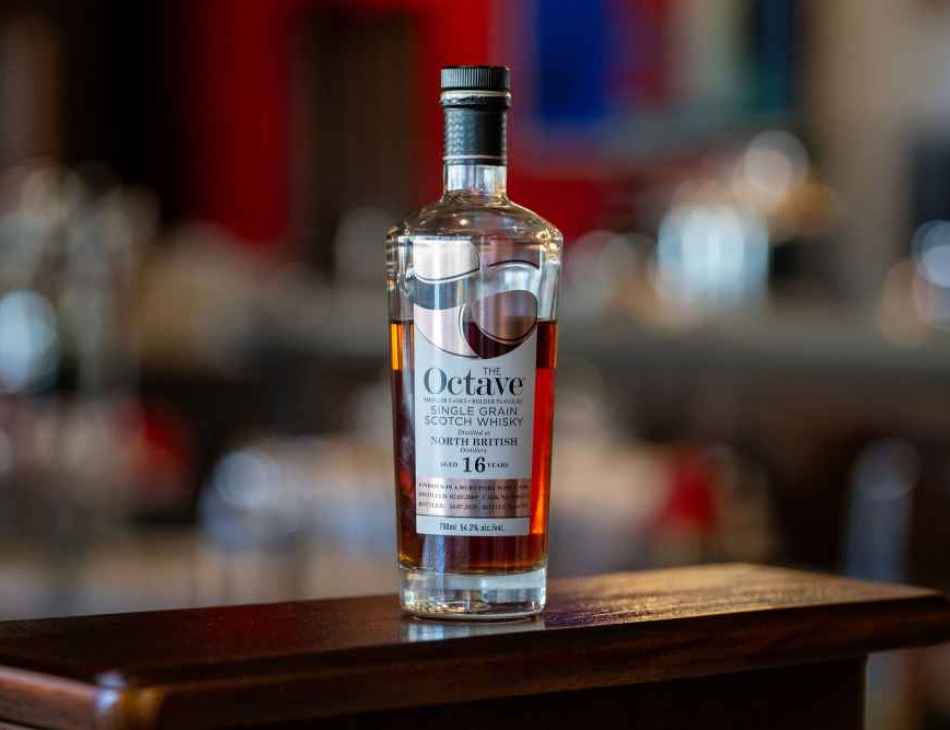
North British 16
How a Revolution in Miniature Casks is Changing the Shape of Whisky Maturation
Whisky is an industry often defined by its reverence for tradition. Yet true innovation frequently occurs when someone looks at an established practice from an entirely different angle. For independent bottler Duncan Taylor Scotch Whisky, that angle is approximately one eighth the size of a standard sherry butt.
Based on the periphery of Speyside in Huntly, Aberdeenshire, the company is orchestrating a major expansion of its celebrated Octave portfolio. Driven by surging global demand, the specialist whisky merchant is set to launch nearly 1,000 new Octave casks, effectively doubling its current inventory.
The expansion is something that inspires genuine anticipation, particularly for long standing admirers of the range. While standard Oloroso and Pedro Ximénez sherry casks have long formed the backbone of the collection, the team is introducing an array of new finishes. For the first time, expressions matured in Jamaican rum, port, and Madeira casks will make their debut, paired with updated, sustainably minded packaging.
To understand why this expansion has captured the attention of enthusiasts in over 50 countries, it helps to look closely at the architecture of the cask itself. The term Octave derives from the Latin octavus, meaning eighth. True to their name, these compact 64 litre casks represent one eighth the volume of a traditional 500-550 litre sherry butt.
Originally utilised by the company back in the 1970s, Octaves were initially created for an entirely different purpose: teaching apprentice coopers how to construct larger barrels. Nobody considered them viable for actual maturation. However, experimentation revealed that these diminutive casks possessed a unique capability. By significantly increasing the ratio of wood surface area to the liquid inside, they could subject malts to an accelerated secondary maturation, gently expanding the flavour profile and adding an astonishing depth of character.
It is a process the company refers to as "Octivating," and they have applied it to spirit from virtually every active and lost distillery in Scotland.
Having an in-house cooperage is a rarity, yet it is arguably the cornerstone of the Duncan Taylor operation. While many independent bottlers must rely on third party suppliers for their wood management, the Huntly team possesses the facilities and the skilled staff required to build, repair, and char their Octave casks entirely on site. By breaking down exceptional full size casks into these miniature vessels themselves, they transform wood management from a logistical necessity into a significant strategic advantage.
What makes the use of Octaves particularly compelling is that they are naturally only released in very small quantities. Sharing a dram that friends are highly unlikely to have encountered before creates a wonderful talking point. Gift giving should ideally carry a sense of narrative and thought; purchasing one of these bottles demonstrates that you have ventured far beyond the mass retailer shelves to source something genuinely distinctive.
Much like whisky aged in more tropical climates, the liquid interacts with the wood at an accelerated rate, developing rapid complexity. This allows us to enjoy certain expressions at a younger age, where the profile allows, whilst older, fully matured whiskies can be finished in the Octaves to introduce sophisticated top notes and additional layers of flavour.
This interplay was beautifully demonstrated at a recent tasting of four distinct expressions at the Boisdale Restaurant in Canary Wharf. All were superb examples and illustrative of what they are achieving, with pronounced flavours at cask strength. Quite simply - these are my types of whisky.
- Miltonduff 2008 – Oloroso Sherry Finish
- North British 2009 – Ruby Port Finish
- Caol Ila 2009 – Palo Cortado Sherry Finish
- Royal Brackla 2014 – Pedro Ximénez Sherry Finish
It is far from a predictable formula though. The team relies on a vast database tracking wood interaction, evaporation, and flavour development, yet the final decisions rest entirely with the blenders and their sensory judgment.
The length of the secondary maturation typically ranges between three, six, or nine months, dictated entirely by how the spirit responds to the wood. A robust single malt might require a longer time to fully integrate, whereas a delicate Lowland malt can absorb the cask’s distinct characteristics far more rapidly.
"The ongoing success of our Octave range is now enabling us to push the boundaries for experimenting with new finishes," says Ian Logan, Senior Spirits Manager. "From our vast collection of whiskies, we always want to ensure that we keep the original character from the distillery whilst adding a layer of complexity to it."
When asked for his personal highlight from the incoming waves of experimentation, Ian points to an expression that perfectly captures this delicate balance: a 15 year old Royal Brackla that spent its final three months in a first fill Ruby Port Octave. The result is an exquisite dram showcasing an abundance of red berries, honeyed fruit preserve, and sweet syrup.
The proof, as always, is in the glass. Since 2009, the Octave portfolio has secured 55 global awards. This run culminated in a milestone when the Octave Premium Strathclyde was named the World’s Best Single Cask Single Grain at the World Whisky Awards.
Recent releases have seen genuine excitement among collectors. A 22 year old Premium Octave Highland Park picked up a prestigious Gold award, causing it to vanish from retail shelves almost instantly. To satisfy those who missed out, they are already preparing a sister cask to the Highland Park for release.
As Duncan Taylor approaches its centenary, the company remains anchored to the principles established at its founding in 1938. With an extensive private collection of rare vintage whiskies, a dedicated bottling plant, and absolute control over their wood management, the independent specialist is perfectly positioned to bridge the past and the future.
In doubling down on the miniature cask format, Duncan Taylor is demonstrating that the grandest concepts can come in the most compact dimensions. Although the range is distributed globally, a visit to their superb shop in Huntly (a short drive from GlenDronach) offers an unparalleled selection. Duncan Taylor are operating with a distinctiveness that sets them apart from the wider industry, and that remains a genuinely exciting prospect. More than a few Octave releases will undoubtedly be finding a home on my own shelves.