

DAVID'S DRINK DIARIES - ISSUE 33
Coq d'Argent & Mirabeau
The Freshness of Thinking: Why Rosé is No Longer Just a Seasonal Footnote
There is something wonderfully liberating about drinking pink wine without pretending it has to justify itself. Rosé has spent decades being underestimated, lightly dismissed as a sugary summer seasonal or a simple patio sipper. Yet, away from the clichés, the category has quietly become one of the most dynamic corners of modern viticulture.
Producers are currently experimenting with grape varieties, vineyard sites and skin contact textures in ways that would have seemed entirely implausible a decade ago. What ties the best of these modern bottles together is not a shared shade of salmon pink, but rather a freshness of thinking. From the volcanic soils of Sicily to the limestone valleys of South Africa, contemporary rosé is proving it can capture climate, culture and personality every bit as articulately as a classic red or white.
Take the W/O Nero d’Avola Rosé 2025, which is from western Sicily. Here, the vineyards surrounding Marsala and Salemi bake on clay rich soils under a blazing Mediterranean sun, constantly buffeted by cooling maritime winds. Nero d’Avola is Sicily’s defining red grape, historically associated with ink dark, muscular reds. In rosato form, however, it reveals an entirely different alter ego: savoury, mineral and sharply refreshing.
Launched by Laithwaites, the W/O range represents one of the UK’s earliest large scale adoptions of 100% recycled wild glass, aiming for sustainability without stylistic compromise. The liquid inside is aromatic and sea spray fresh, exactly the sort of wine that demands grilled prawns or a simple bowl of green olives in the late afternoon sun.
Moving east, Melpo by Muses Estate Greek Rosé 2024 carries an equally potent sense of place. The estate lies in the Valley of the Muses on the foothills of Mount Helicon, northwest of Athens, a landscape steeped in mythology and cooled by alpine breezes. The Zaharias family have farmed these slopes for generations, and brothers Nikos, Stelios and Panayiotis continue to champion indigenous varieties.
In this bottle, the peppery lift of Syrah finds a natural partner in the citrus brightness of Roditis Alepou, a pink skinned native clone. Greece is quietly turning out some of Europe’s most characterful pink wines, balancing fruit with a distinct, herbal Mediterranean savouriness.
Southern Hemisphere Innovation
In South Africa’s Robertson region, The Raspberry Bush Rosé 2025 from Bon Courage shows regional adaptation. Robertson is defined by its limestone rich soils and dramatic diurnal temperature swings, which help preserve crucial acidity despite the intense daytime heat. Pinotage, South Africa’s native crossing of Pinot Noir and Cinsault, can be notoriously divisive as a heavyweight red.
As a rosé, however, it makes absolute sense. The grape yields juicy berry fruit, gentle spice and a bright, crisp finish. Bon Courage has remained family owned for generations, and this bottle perfectly captures the easygoing generosity that South African winemakers execute so well.
Taking a slightly more avant garde route is the Lobster Shack Rosé 2025, made by Bruce Jack’s Flagstone winery in the Western Cape. This quirky bottle flips the script by using Sauvignon Blanc as its base, tinted with a splash of Pinotage for colour and red fruit structure. Flagstone has long been a haven for experimentation; Bruce Jack himself helped pioneer the adventurous, internationally minded style of South African winemaking during the 1990s. While Sauvignon led rosés remain rare, the grape’s signature gooseberry snap pairs neatly here with the Pinotage fruit lift. It is fresh, unpretentious and remarkably drinkable.
Waitui Marlborough Rosé 2025 takes a slightly different route again, blending Sauvignon Blanc with Malbec in a way that sounds unusual on paper but makes complete sense in the glass. Marlborough has spent the past forty years building its global reputation on Sauvignon Blanc, yet producers there are increasingly experimenting with lighter, fresher rosé styles that capture the region’s piercing acidity and aromatic lift.
Family owned Marlborough Valley Wines has become particularly adept at producing naturally lower alcohol wines through careful canopy management and vineyard selection, allowing grapes to ripen slowly while retaining freshness. At 9.5% ABV, this feels perfectly suited to long summer afternoons. The name comes from Waitui Bay in the Marlborough Sounds, a labyrinth of drowned river valleys at the top of New Zealand’s South Island, where cool maritime air shapes the vineyards inland. Juicy citrus, soft orange fruit and bright acidity give the wine an almost saline refreshment that works beautifully with grilled fish.
Provençal Escapism in King’s Cross and Above the City
Of course, any serious discussion of rosé eventually leads back to Provence. Few people understand that sun drenched terroir better than Elizabeth Gabay MW and Ben Bernheim. I recently had the pleasure of attending the launch of their new definitive book, The Wines of Provence, inside the wonderful Porte Noire restaurant in King’s Cross.
Elizabeth has spent decades living in the region and is widely regarded as one of the world's leading authorities on the style. Her book beautifully illustrates that beneath the global marketing machine of pale pink lifestyle wine lies a serious, centuries old culture of production, including the age worthy reds of Bandol and complex whites grown on regional limestone and schist. It explores the economic and climatic challenges reshaping the area today, cementing itself as an essential text for any modern cellar.
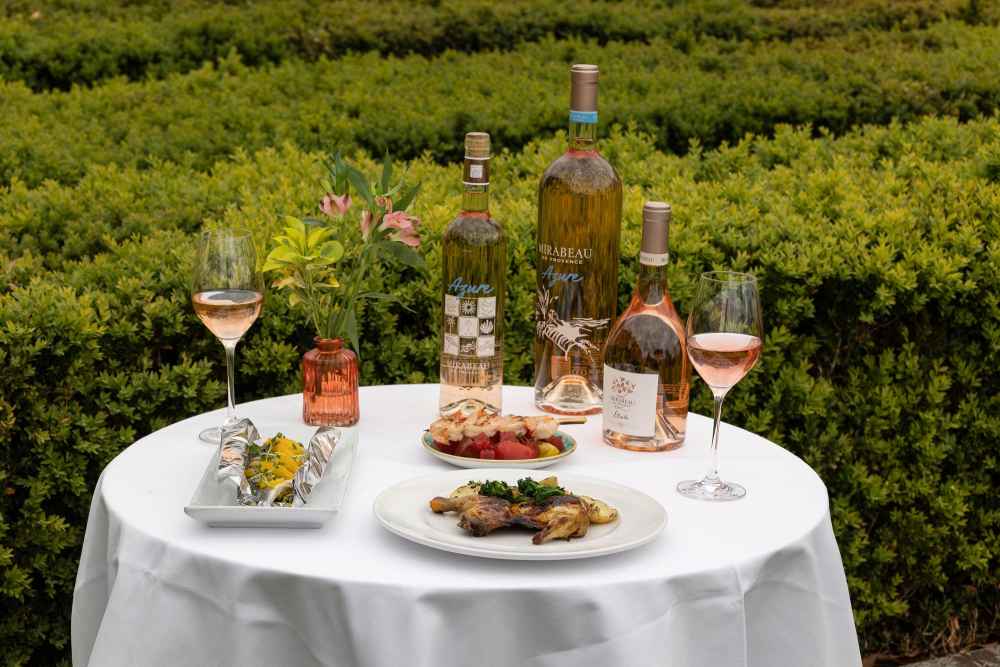
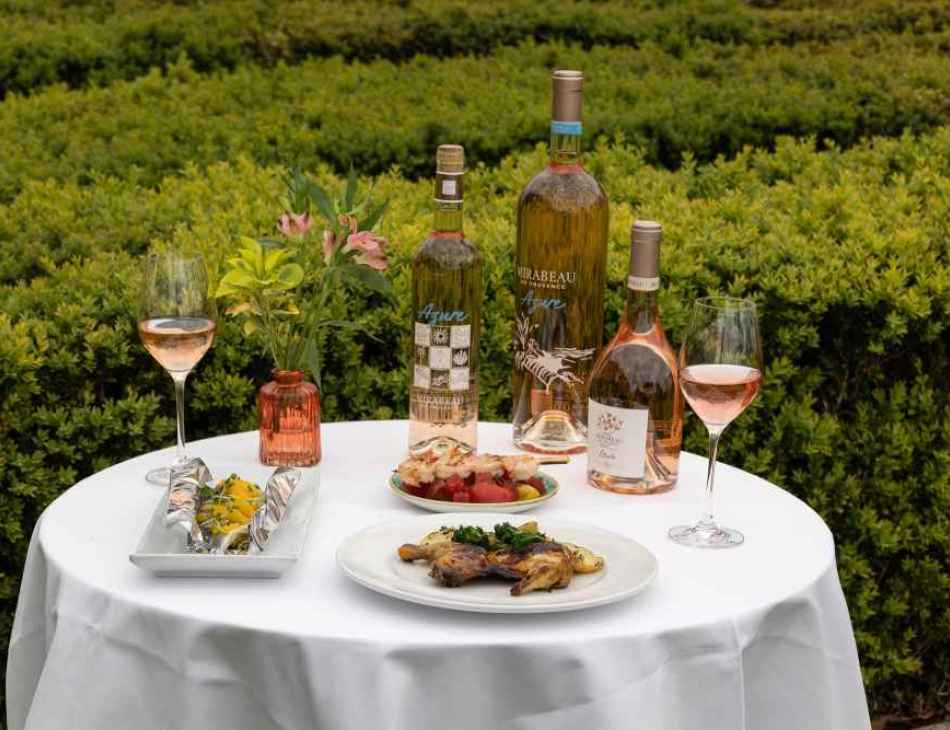
The spirit of that Provençal escapism was alive and well at Coq d’Argent for their Endless Lunch collaboration with Maison Mirabeau. Occupying a unique architectural perch above No.1 Poultry since 1998, the restaurant overlooks the Bank of England from a wonderful rooftop that feels completely detached from the financial intensity below. It is a spectacular summer space, particularly when the late afternoon light softens across the London skyline.
Grilled gambas (from the Big Green Egg) flambéed with Pastis arrived first alongside heritage tomatoes and watermelon; the subtle aniseed flash of the spirit locked into the clean freshness of Mirabeau Pure Rosé.
The standout dish, however, was the sea bass en papillote. Baking fish sealed in foil preserves its delicate texture while allowing the aromatics to concentrate. Here, fennel, leek, orange and salsa verde introduced a bright bitterness that flattered Mirabeau Étoile. Sitting at the premium end of the range, Étoile boasts far more structure and texture than most expect from the region, revealing a beautifully savoury side when set against the fennel.
The meal pivoted slightly with a smoked poussin paired with Mirabeau La Réserve. The garlic, tarragon and honey glaze provided rich flavour without weight, while roasted potatoes and chilli broccoli kept the plate grounded. Rosé is too often confined to the aperitif hour, but wines with this much textural weight thrive alongside smoky, herb flecked grilled dishes.
We finished with a simple roasted pineapple with rum and spiced ice cream, though by that stage, the flowing wine and the warmth of the Conran designed terrace had happily taken over the afternoon.
Mirabeau itself is a remarkable success story. Founded by English outsiders Stephen and Jeany Cronk after trading London for Cotignac, they have transformed a boutique project into a global lifestyle brand. To enjoy it on this rooftop was rather special.
Rebellious Spirits
Not everything refreshing, however, comes from a grape. Cù Bòcan Creation #8 might just be one of the most unexpectedly joyful whiskies released this year. Tasted recently with Tomatin ambassadors Jo and Danny, this is the distillery’s lightly peated Highland spirit, which is traditionally distilled only during the winter months.
The Creation series is an avenue for pure experimentation with cask finishes, and this eighth iteration combines 16 and 18 year old whiskies matured in Canadian ice wine casks from Pillitteri Estates and Verdejo wine casks from Belondrade in Rueda. The result is tropical, bursting with mango, candied peach and pineapple, balanced by a grassy top note and a hint of peat smoke. It has to be one of the best values whiskies on offer today.
Equally expressive is the new Glen Scotia Campbeltown Malts Festival Edition. Campbeltown was once the undisputed Victorian whisky capital of the world, boasting over thirty distilleries before economic shifts left only a resilient handful. This limited festival bottling spent seven years in first fill bourbon barrels before a finishing period in ruby Port casks. The fortified wood imparts a deep, blackberry richness that interlocks beautifully with Glen Scotia’s signature coastal, slightly oily distillery character. It is an unapologetic nod to the enthusiasts who travel long distances for the festival, and the distillery has clearly refused to treat it casually.
There is something reassuring about seeing whisky companies build brands around place rather than gimmickry. Scotch has never lacked heritage, but increasingly the most interesting new projects are the ones reconnecting whisky to landscape, wildlife and regional identity rather than simply chasing rarity or luxury positioning. Aceo Spirits new Osprey range does exactly that. Inspired by the great fish eating raptors that now once again circle the forests and lochs of Speyside, the whiskies were officially launched during World Osprey Week in partnership with the famous Loch Garten Osprey Centre in the Cairngorms, with sales helping support conservation efforts. It gives the range a sense of authenticity that feels refreshingly unforced.
The Osprey 15 Year Old Bourbon Cask is drawn from Glentauchers, one of Speyside’s quieter workhorses. Built in 1897 near Keith, Glentauchers has historically been better known to blenders than drinkers, despite producing a remarkably elegant spirit. The long fermentation and relatively narrow stills help create a whisky with a naturally fruity, estery character that works beautifully in bourbon wood. Here, fifteen years in cask has softened everything into exactly the kind of mature Speyside profile I love: honey, vanilla, butterscotch and gentle baking spice, followed by dates, ginger and warming oak on the palate. At under fifty pounds, it feels increasingly difficult to find age stated whisky showing this level of balance and maturity.
The Osprey 10 Year Old Sherry Cask heads in an entirely different direction. Bold, dark and immediately expressive, it initially gives the impression of peat smoke, though that sensation seems to come more from the intensity of the sherry influence itself. Heavy sherry maturation can sometimes overwhelm younger spirit, but here the richness works well. Walnut, dark spice, dates and dense dried fruit dominate, giving the whisky a weight and concentration that make the age statement feel almost irrelevant. It drinks much like something older and significantly more expensive (but does not have the extreme length older age statements can provide), particularly at this price point.
Back to the English Soil
Finally, we return home to the Garden of England, Kent. Nine Oaks Vineyard is consistently proving to be one of the most thoughtful small scale operations in England. Crucially, while much of the South East is celebrated for its chalk, Nine Oaks sits on the Greensand Ridge. This distinct soil profile imparts a broader, more generous texture to their fruit.
Their latest release, Rosaorange 2025, is an unconventional blend of Bacchus, Pinot Noir, Chardonnay and Pinot Meunier. The clever bit? The Bacchus fruit was partially destemmed and fermented on its skins for thirty days before being integrated into the final blend.
England is only just beginning to scratch the surface of skin contact styles and textural still wines, and this bottle feels like a definitive preview of the next chapter. It is unusual, vivid, completely compelling and the perfect punctuation mark to the changing face of rosé.