

DJI Osmo 360 II Review: Breathtaking 8K Omniscience in the Palm of Your Hand Tested in the Maldives
Yves de Contades takes DJI's second generation 360 camera to the Maldives, through sunshine, a tropical storm and a candlelit dinner on the sand, and returns slightly unnerved by how much it saw.
DJI Osmo 360 II Review
L'art De L'emballage
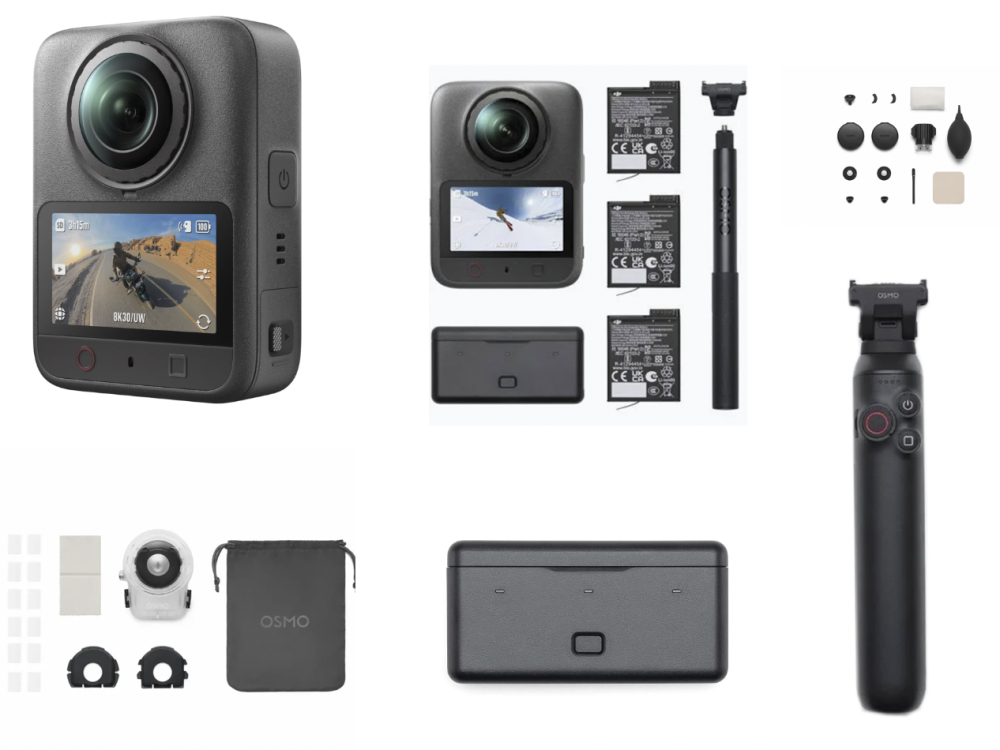
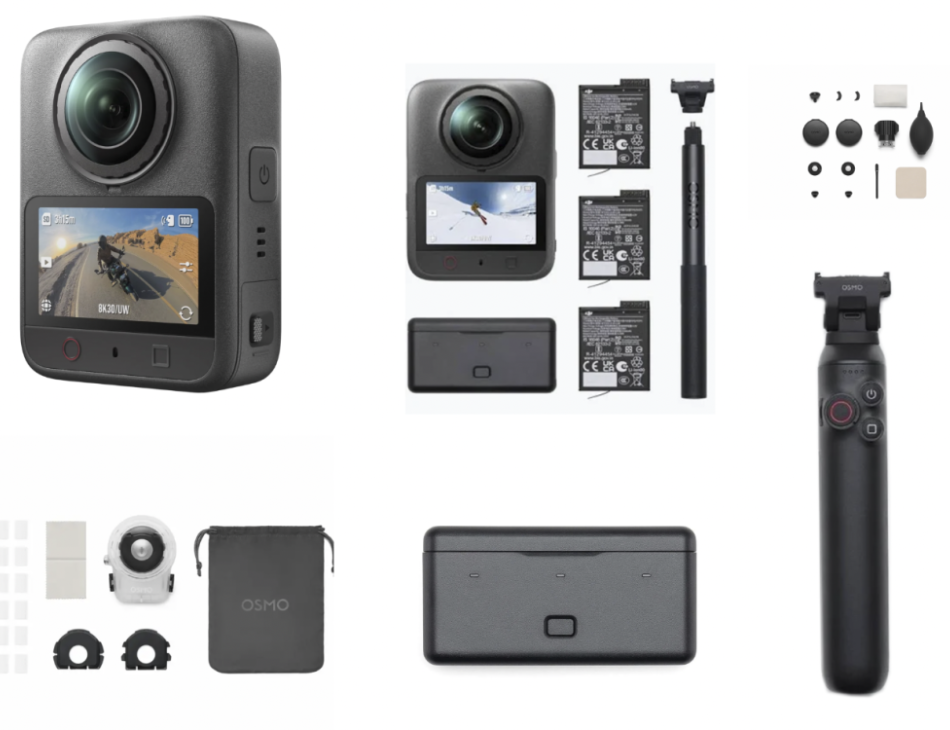
Unboxing the Osmo 360 II is a treat. Everything is so beautifully wrapped, with the care of a Parisian pâtissier boxing up a tarte au citron, and the products themselves are of obvious quality, each with a reassuring heft and finish. It is quite exciting revealing them one by one.
Out came the camera itself, with its new scratch resistant, user replaceable lenses and AI SuperNight 2.0. It also has 128GB of storage built in (105GB of which is yours to fill), so you are never caught short without a microSD card, which in my experience is always the moment something extraordinary happens. Should you want more, there is a slot for cards of up to 1TB. Then came the supporting cast: the Lens Replacement Kit, the Osmo 360 Invisible Waterproof Case, the Invisible Selfie Stick, Multifunctional Battery Case 3 and the Battery Extension Rod. By the time the table was covered I felt less like a reviewer and more like a man assembling a trousseau.
A Word on Credentials
I have spent 25 years as a fashion photographer, and in that time I have worked with, cursed at and occasionally fallen in love with almost every camera system going: 35mm, 6x7, 5x4 and 10x8 large format, and every generation of digital since the first cards held a dozen frames. I mention this not to show off (well, a little) but so you understand that I am not easily impressed by a small black box. The Maldives seemed a fair test: brilliant tropical light, a proper storm, and night scenes lit by candles and tungsten. Mother Nature, bless her, supplied all three.
The Stills: Un Coup de Foudre
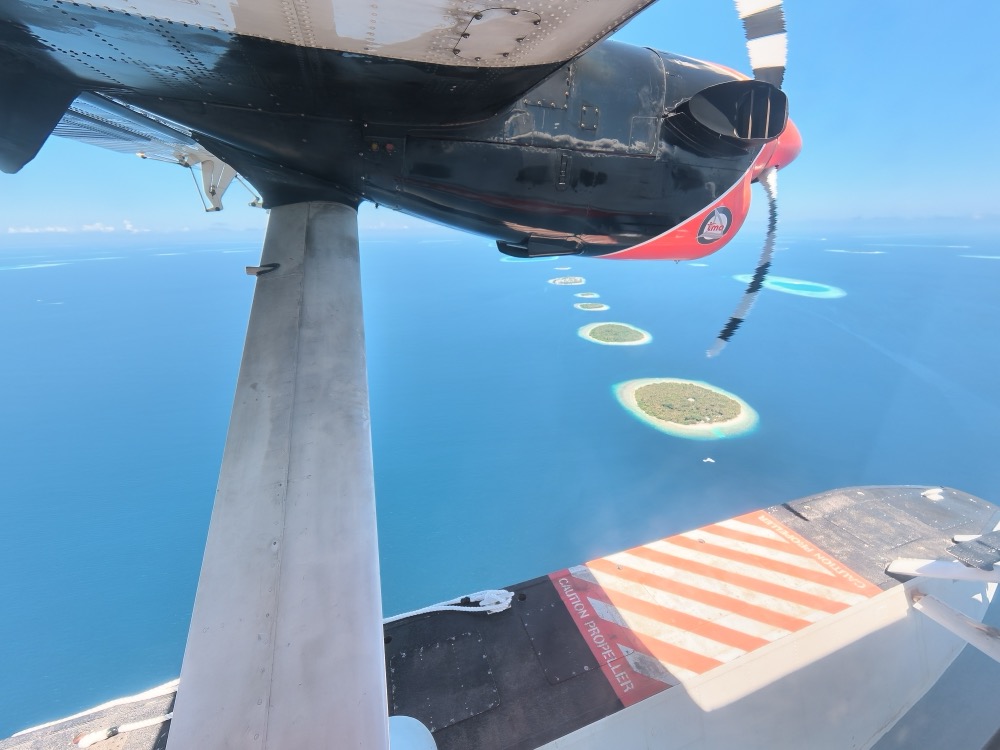
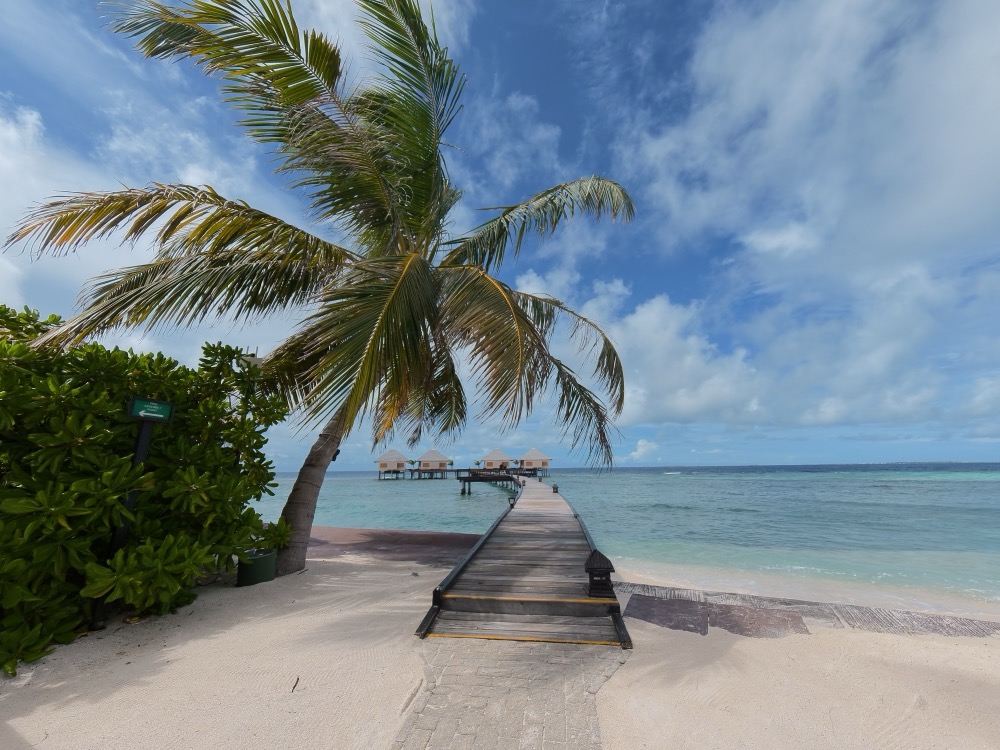
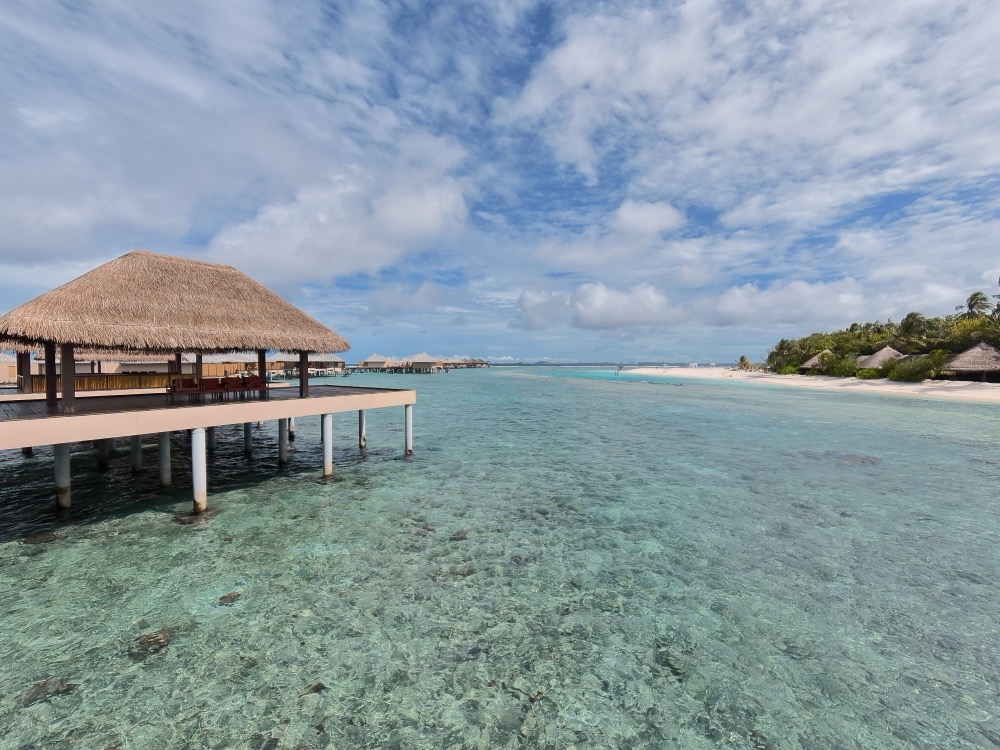
I will not beat about the bush. The image quality is exceptional, and I was genuinely taken aback the first time I saw the files. The sharpness is extraordinary, beyond what I get from my own 35mm system and in another league from any phone.
The colour is even more seductive. It is rich and deeply saturated, yet the dynamic range holds every nuance from the glare on the lagoon to the shade under the palms. DJI quotes 14.5 stops of dynamic range for its standard mode, which is a remarkable figure for any camera, let alone one weighing 183 grams. The 360 degree stills run to 120 megapixels with HDR, which for something smaller than an iPhone is frankly ludicrous, in the best possible sense.
At night it is better still. It soaks up tungsten light and makes it punchier while keeping the detail, which anyone who has photographed after dark will tell you is the hard part: the more vivid the colour, the more it tends to swallow the detail. Here, somehow, it does not.
The Video: A 70Mm Epic in Your Palm
If the stills impressed me, the video left me slightly giddy. Shooting with it feels like operating a 70mm movie camera, and I still cannot quite fathom how footage this sharp can also be this saturated.
The headline numbers are serious. The DJI Osmo 360 II records native 8K 360 degree video at up to 60 frames per second, at up to 220Mbps, with 10 bit colour across all formats and DJI's D-Log M profile for those who like to grade their own pictures. Slow motion lovers get 4K at 240 frames per second in 360 mode, and DJI's desktop software can stretch that further still with frame interpolation. Beneath all this sits a square 1/1.1 inch sensor behind each lens, which DJI describes as giving a 1 inch equivalent 360 degree image.
Two Ways of Seeing
There are two ways to shoot, and understanding the difference is the key to the camera.
In single lens mode, you use one lens like a conventional action camera and get ordinary flat video, ready to use straight away. There is also a Boost Video setting with a very wide 170 degree field of view at up to 4K 120fps. It captures so much of the scene that you rarely worry about missing the moment.
In 360 mode, both lenses film at once, front and back, and the camera stitches the two halves into a complete sphere. The selfie stick is erased automatically, so the camera appears to float beside you, a rather elegant trompe l'oeil. Hold it so that the least important part of the scene falls at the sides, where the two images meet, and the stitch is close to flawless.
And here is the part worth reading twice. In 360 mode you choose your shot afterwards. The camera records everything happening around you, in every direction, and you decide later in the edit where to point the "lens", how to frame it and what to follow. It is almost godlike: total omniscient vision, à la carte. For someone raised on 120 film (6x7), where you had 10 frames and one chance, it boggles the mind. Point the thing at the world and it simply keeps all of it.
Night Falls, the Storm Arrives
AI SuperNight 2.0, paired with an f/1.9 aperture and new noise reduction, very nearly turns night into day. My sternest test was a beach dinner on a cloudy night, in the rain, at a sunken table ringed with twinkling lights in the shape of a heart (the Maldives does not do understatement). The camera held the detail of the sea behind us and every point of light around the table. My fellow diners were less well preserved than the footage, but that is another story.
Under the Water
The Osmo 360 II is rated waterproof to 10 metres on its own, so a dunking from a jet ski or a capsized windsurfer holds no fears. For proper underwater filming, though, you will want the Invisible Waterproof Case. The lenses are so steeply curved that, naked in the water, refraction distorts the image and upsets the stitching, and DJI itself advises against shooting underwater without the case. With it, the camera is rated to 50 metres, deeper than most recreational divers will ever go, and the results were pin sharp.
Accessories: Objets D'art
The mount is magnetic, so the camera clicks on and off instantly and holds solidly. My one grumble is that I would like straps included in the box rather than bought separately afterwards. Noblesse oblige, DJI.
The multifunction battery case, a beautifully made snap case holding three batteries, makes charging delightfully simple and is, I confess, a thing of beauty in its own right. I find myself caressing it with admiration. Too much? Wait until you own one.
The Battery Extension Rod deserves its own paragraph. It contains a roughly 15.5Wh battery that, by DJI's laboratory figures, extends recording to up to 4.5 hours of 8K/30fps 360 video, and it extends to 90 cm, vanishing from 360 footage like the standard stick. It also carries controls on the handle for record start and stop and sleep and wake, which I found far quicker than prodding the touchscreen. I would buy it for that alone, even without the extra battery. One caution for the beach set: the rod is not waterproof, so keep it out of the lagoon. With this and a few spare batteries you could very nearly shoot a feature film without ever missing an angle. I am tempted.
On that subject, the camera's own buttons and touchscreen are a little daunting at first, and it is rather too easy to slip from single lens to 360 mode by accident. Give it a while and it becomes second nature.
Files and Editing
Each clip arrives in up to three forms. There is a low resolution proxy file (.LRF) for quick previewing. Single lens footage is saved as standard MP4, ready to use immediately. 360 footage is recorded in DJI's own .OSV format, which you open in the DJI Mimo app on your phone or DJI Studio on the desktop, reframe as you like, and export to whatever format you need. There is even a plugin for DaVinci Resolve for the more serious. YouTube and Facebook both support full 360 video, allowing viewers to look around the scene themselves; YouTube, to my eye, does it best.
The Replaceable Lens: True Style
My favourite new feature of all is the humblest. The lenses, protected by an ultra hard optical coating, can now be replaced by you if they do get scratched. They come off and clip back on with a small tool supplied in the kit. On the original Osmo 360, a scratched lens meant posting the whole camera back to DJI. Now a two lens replacement kit costs around £35. For a camera designed to be thrust towards rocks, reefs and jet ski wakes, that is not a footnote. It is the difference between a holiday ruined and a holiday saved.
Le Verdict: Total Recall in 8K
Both the stills and the video make you feel you are there. The scenes are so sharp and lifelike, with admittedly stronger colours than reality, that every playback is a small act of teleportation. In 360, you are there quite literally: you can look in any direction and wander the Maldives again as if you had never left.
The design of the Osmo 360 II and its accessories deserves special mention. Everything is solid, smooth to the touch and finished to a standard you would expect from a far more expensive object.
For creative work and for preserving memories, it sits at the very top. For sport it is a revelation: friends at home can ride along on your windsurf board, Flyboard, jet ski, Seabob or dive, looking through your eyes or over your shoulder as they please. The sound, from its four microphone array with wind noise reduction, is remarkably good without any external microphone, and it pairs directly with DJI's wireless mics if you want more. Last but not least, the filter effects in the apps are limitless and bring any footage to life. They are not needed in the Maldives, of course, but it is good to know!
For me, it beats my 35mm system costing thousands of pounds, my iPhone and my GoPro, hands down. Chapeau, DJI.
*None of the images or video in this article have been edited so you see them as they were taken.
Use your mouse on the second video to scroll around in 360.
Price and Availability
The DJI Osmo 360 II launched in the UK in September 2026. The Standard Combo costs £509 and the Adventure Combo £639. The Lens Replacement Kit, Battery Extension Rod and Invisible Waterproof Case are sold separately.
FAQ
What is the DJI Osmo 360 II?
A compact 360 degree camera with two lenses, front and back, that can film the entire scene around you at once or work as a single lens action camera. It is DJI's second generation model, launched in September 2026.
What resolution does it shoot?
Up to 8K at 60 frames per second in 360 video, 4K at up to 240fps in 360 slow motion, and 120 megapixel HDR 360 degree stills. In single lens mode, video tops out at 4K.
What is the difference between 360 mode and single lens mode?
Single lens mode records flat MP4 video from one lens, ready to use immediately. 360 mode records everything in every direction, and you choose your framing afterwards in the DJI Mimo app or DJI Studio.
Can I really choose the shot after filming?
Yes. Because 360 mode records the whole sphere, you can decide later where to look, what to follow and how to frame it, then export a conventional video.
Is it waterproof?
To 10 metres on its own and 50 metres in the Invisible Waterproof Case. For filming underwater, DJI recommends always using the case, as the curved lenses distort and stitch poorly in water without it.
How long does the battery last?
DJI quotes up to 100 minutes of 8K/30fps 360 recording per battery in laboratory conditions. The Battery Extension Rod raises that to up to 4.5 hours. Real world figures will be lower, particularly with the screen and Wi-Fi on.
What if I scratch a lens?
You replace it yourself. A Lens Replacement Kit with two lenses costs around £35 and includes the tool to swap them.
How much storage does it have?
128GB built in, of which 105GB is usable, plus a microSD slot for cards up to 1TB.
What files does it produce?
Low resolution .LRF previews, standard MP4 for single lens footage, and DJI's .OSV format for 360 footage, which you edit and export in DJI's apps.
How good is it at night?
Very good. AI SuperNight 2.0 with an f/1.9 aperture produces clean, bright low light footage that keeps detail even in candlelight and rain.
How much does it cost?
In the UK, £509 for the Standard Combo and £639 for the Adventure Combo.
See the full camera range at DJI here: https://www.dji.com/uk