
Moto Guzzi Stelvio - A Century Of Soul
Moto Guzzi Stelvio
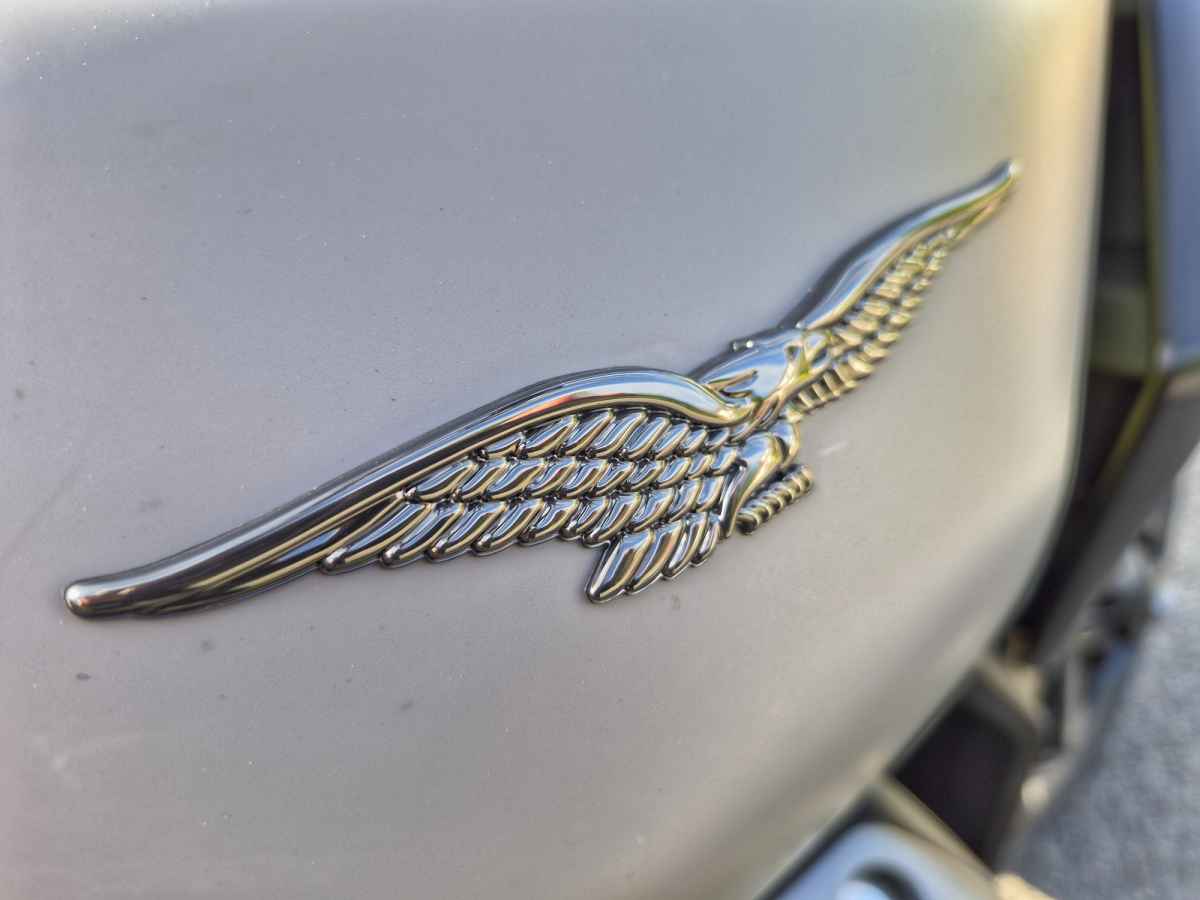
For over a century, every single motorcycle bearing the iconic spread-wing eagle logo, known as The Eagle Of Mandello, has been built in the same spot: Mandello del Lario, a postcard-perfect town nestled on the dramatic eastern shores of Lake Como in northern Italy. The factory has been looking out over the shores of Lake Como since 1921.
Established on 15 March 1921 by wartime comrades Carlo Guzzi and Giorgio Parodi, who adopted the eagle wing insignia as a poignant tribute to their fallen squadron pilot friend, Giovanni Ravelli, the brand has been in continuous production for 105 years, making it the oldest European motorcycle manufacturer in continuous production. Globally, only two other manufacturers have been in continuous production longer than Moto Guzzi: Harley-Davidson and Royal Enfield. All of the others have suffered some form of bankruptcy, closure, or long-term production halt before being revived by new owners decades later.
Moto Guzzi is a brand that has survived market crashes, world wars, and changing trends by refusing to dilute its engineering soul. That unshakeable identity is encapsulated by their famous transverse 90° V-twin engine configuration. Today, under the stewardship of the Piaggio Group, the historic Mandello factory is undergoing a stunning, state-of-the-art architectural renaissance, proving that this historic Italian icon is looking firmly toward the next century without ever forgetting where it began.
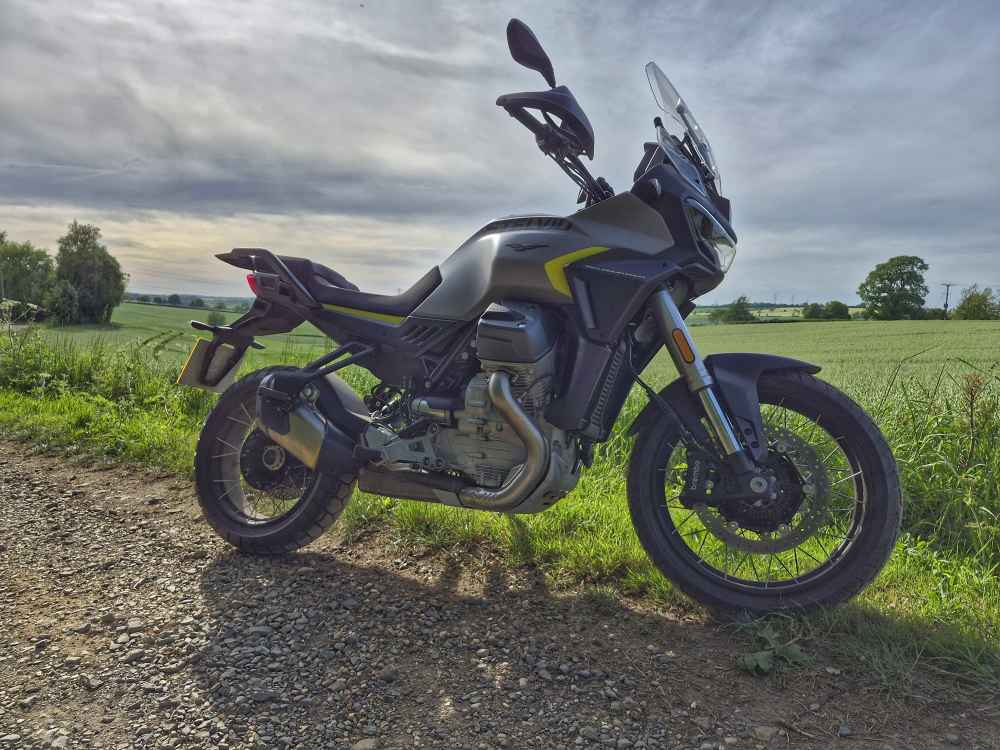
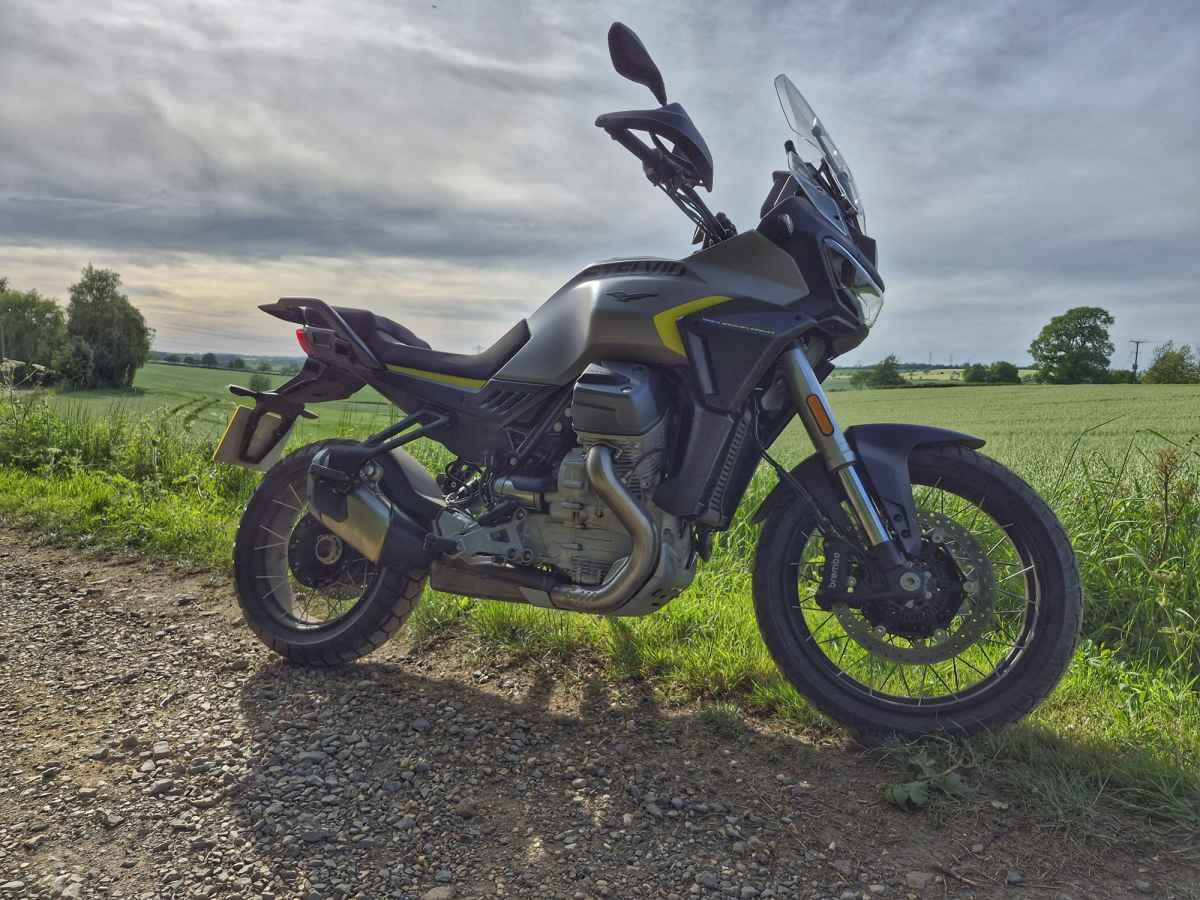
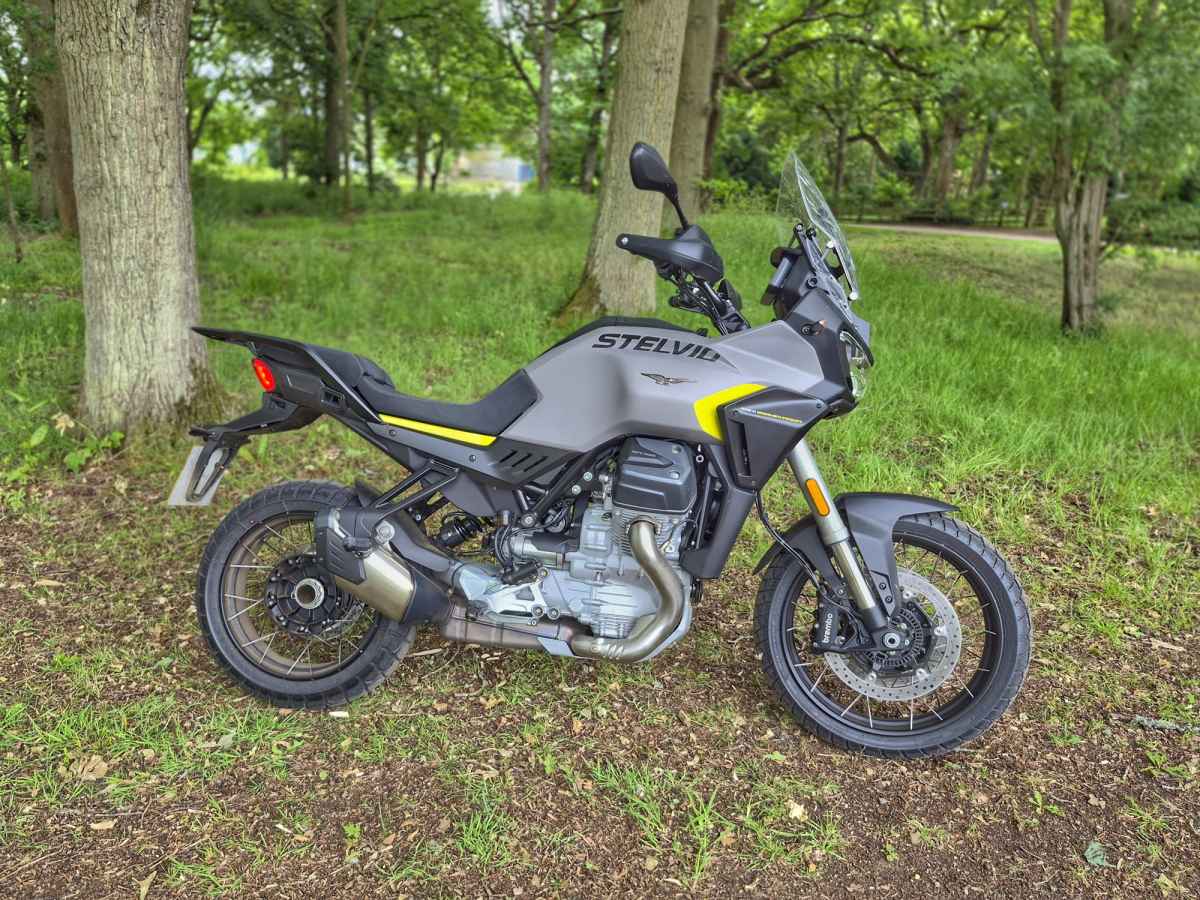
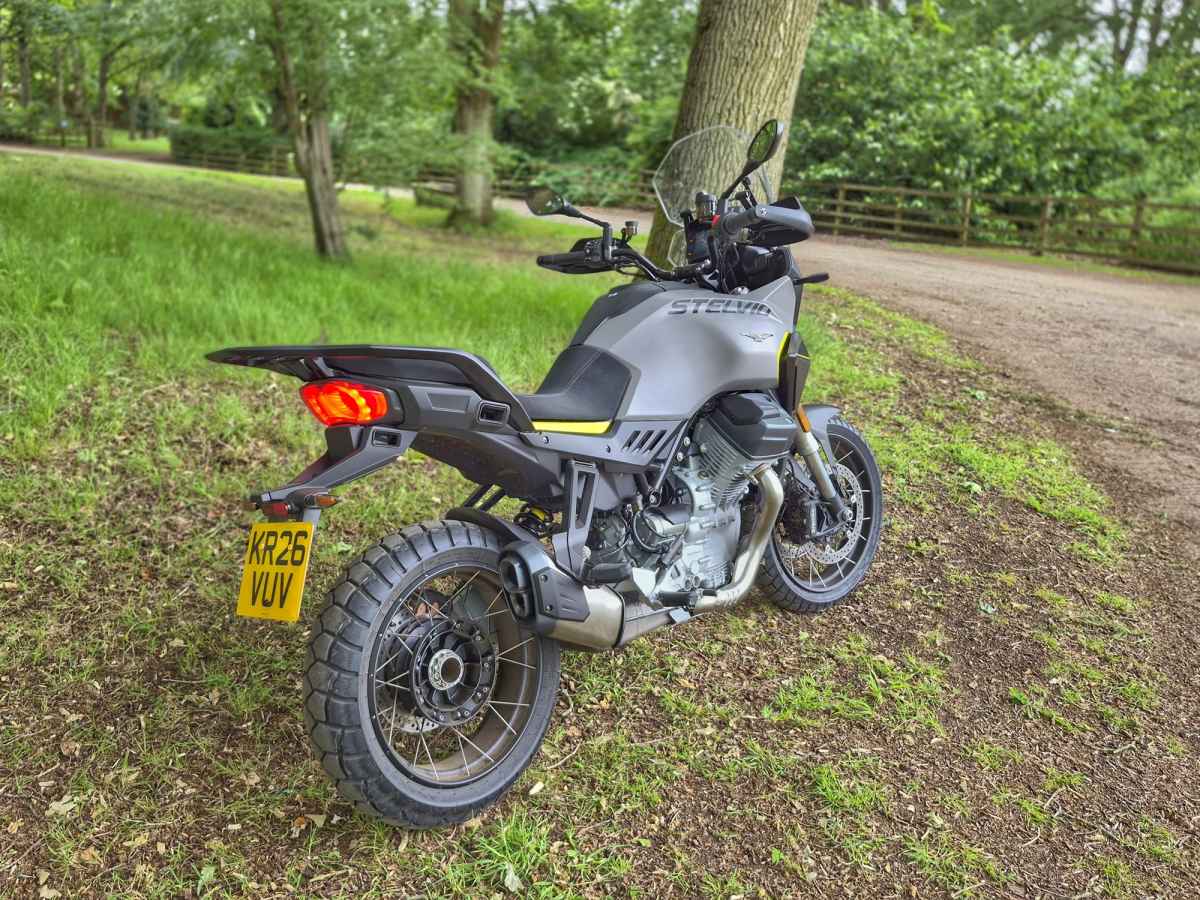
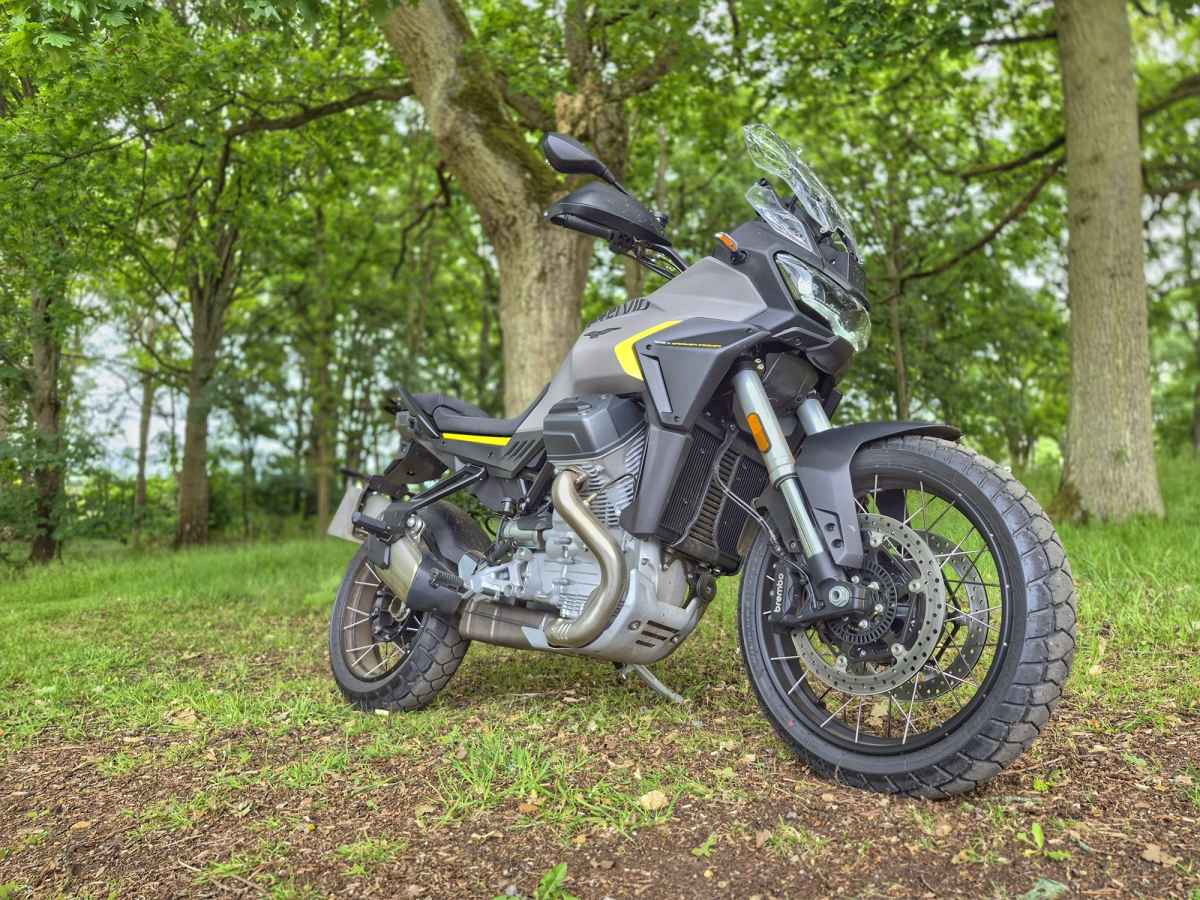
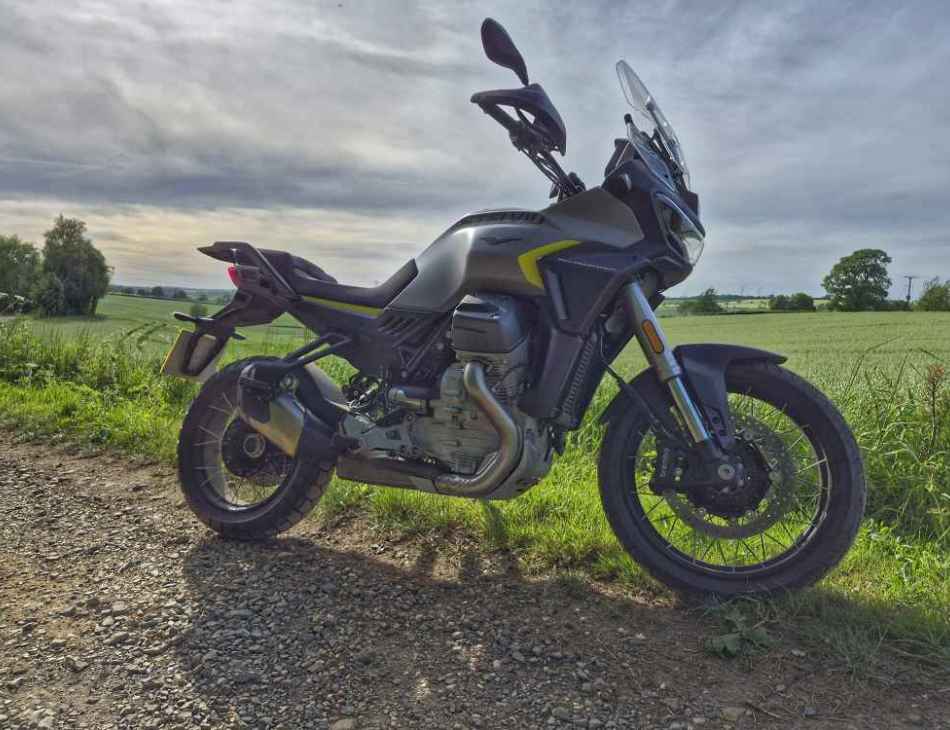
The Moto Guzzi Stelvio is an adventure tourer built on the modern liquid-cooled platform that has beautifully revitalised the historic Italian brand. Named after Italy’s legendary Alpine pass, it’s designed to compete directly in the highly contested adventure-touring segment, positioning itself as a deeply charismatic, road-biased alternative to more clinical rivals.
Rather than a hardcore, mud-plugging dirt machine, the Stelvio is fundamentally a premium adventure tourer, built for long-distance tarmac riding, eating up motorway miles, and light gravel exploration, rather than heavy off-road trail riding.
The heart of the Stelvio is Moto Guzzi's highly modern 1,042 cc, liquid-cooled, 90° transverse V-twin. First introduced on the V100 Mandello. This modern iteration is a beautiful thing. It is overflowing with character and charm, pulling cleanly with a very eager midrange surge.
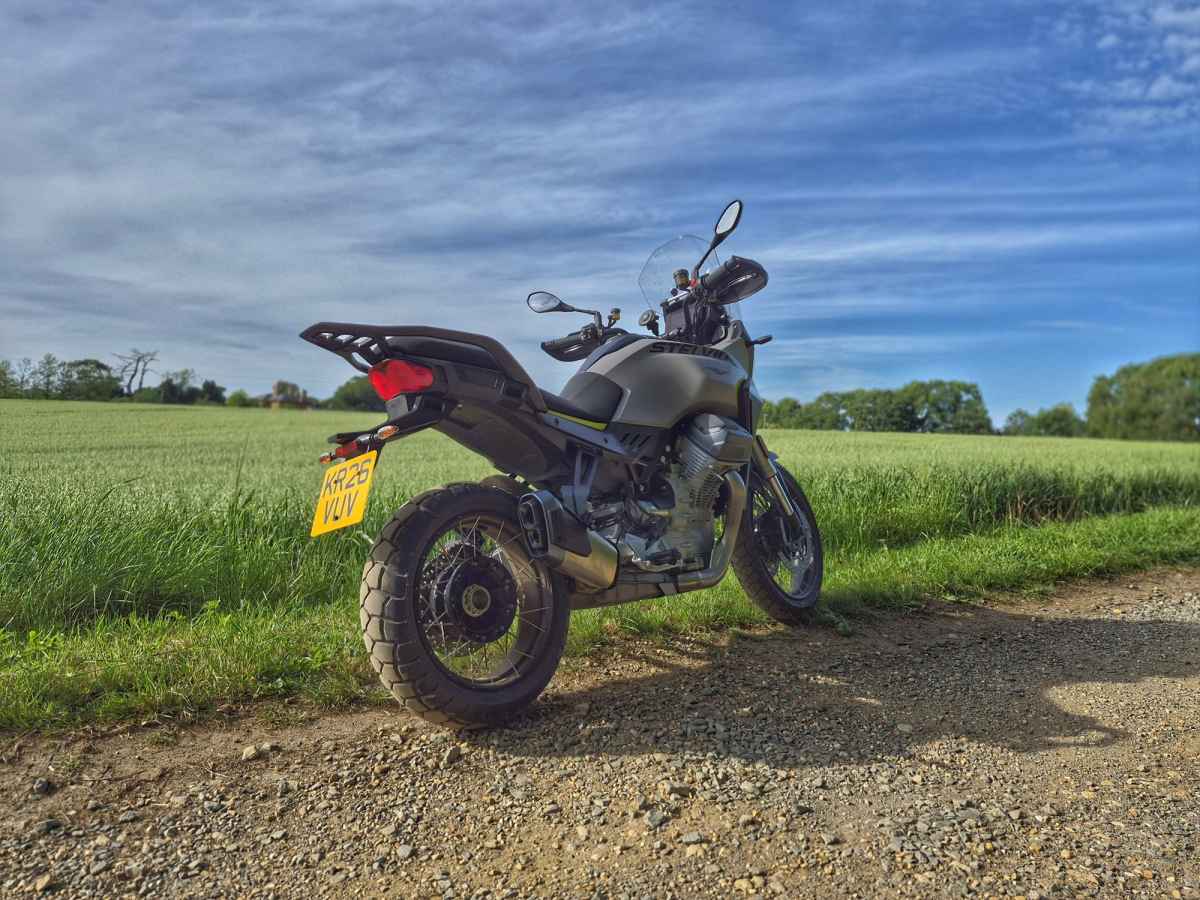
It delivers 115 hp at 8,800 rpm and 105 Nm (77.4 lb-ft) of torque at 6,750 rpm. On paper, it might not chase the hyper-naked horsepower figures of some large adventure bikes, but it is certainly no slouch and can hustle when you want it to. As with all Moto Guzzi’s, power is delivered to the rear wheel via a low-maintenance, single-sided shaft drive housed in a beefed-up aluminium swingarm.
While it shares its engine architecture with the Mandello, the Stelvio utilises a heavily revised, stiffer steel-tube frame with extra engine mounting points to handle the stresses of touring. Comfort isn't just a feature here; it’s a defining characteristic.
Up front are fully adjustable 46 mm Sachs USD forks, paired with a KYB rear monoshock that includes a remote mechanical preload adjustment knob. Both ends provide 170 mm of wheel travel, resulting in a plush cushioning ride on rough urban roads and ironed-out backroads without introducing excessive front-end dive under heavy braking.
The Stelvio rolls on tubeless cross-spoke wire wheels (19-inch front, 17-inch rear) wrapped in Michelin Anakee Adventure tyres. Stopping power comes from premium twin 320 mm discs clamped by 4-piston radial Brembo callipers, offering excellent feedback at the lever and strong stopping power. With a pillion on board, I found the brakes gave great initial feel and stopping power, but braking hard, with the additional weight, needed a big squeeze on the lever. They are very good brakes nonetheless.
Despite its upright adventure stance, the seat height is relatively accessible at 830 mm. The transverse engine orientation means the midsection of the bike is kept narrow, making it easy to get both feet flat on the ground. The rider triangle, with neutral handlebars and an incredibly plush seat, makes it an absolute pleasure to ride for hours at a time.
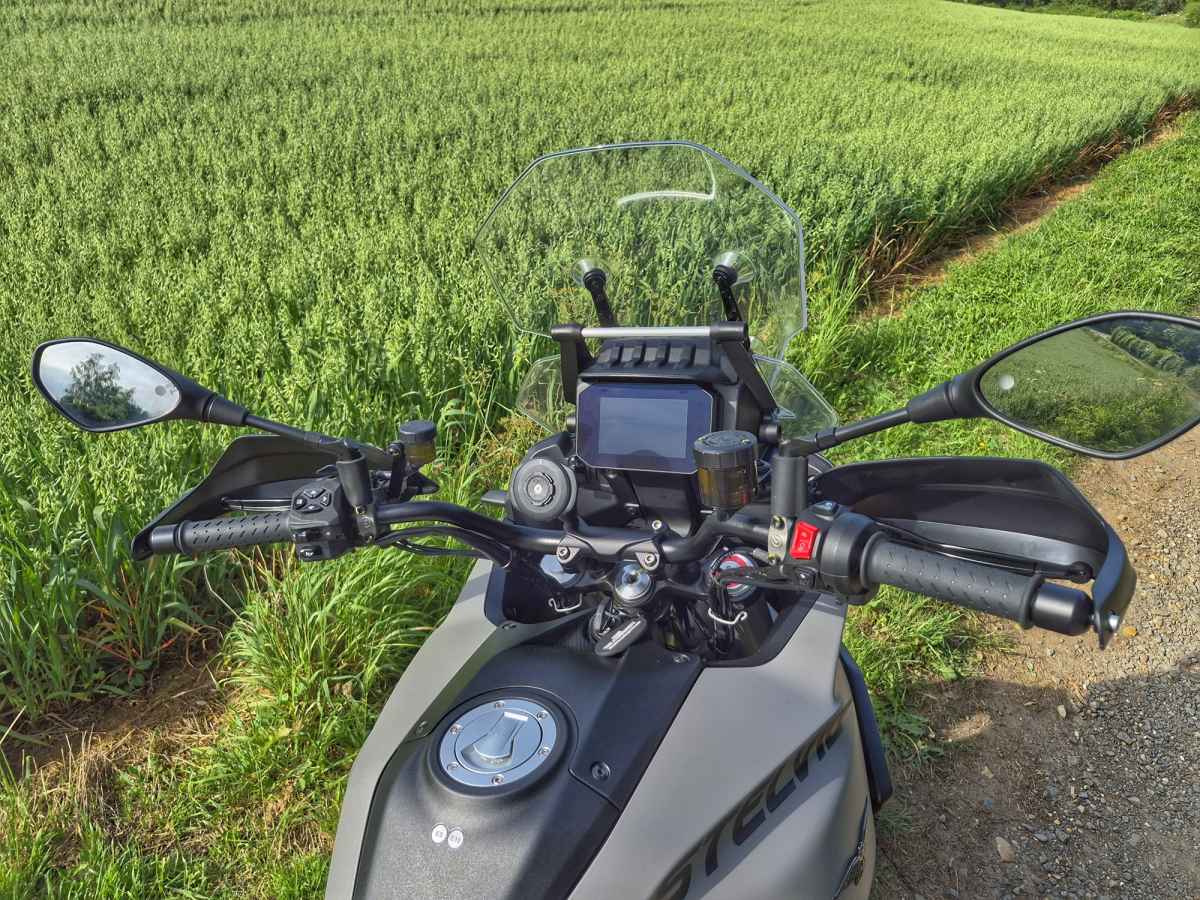
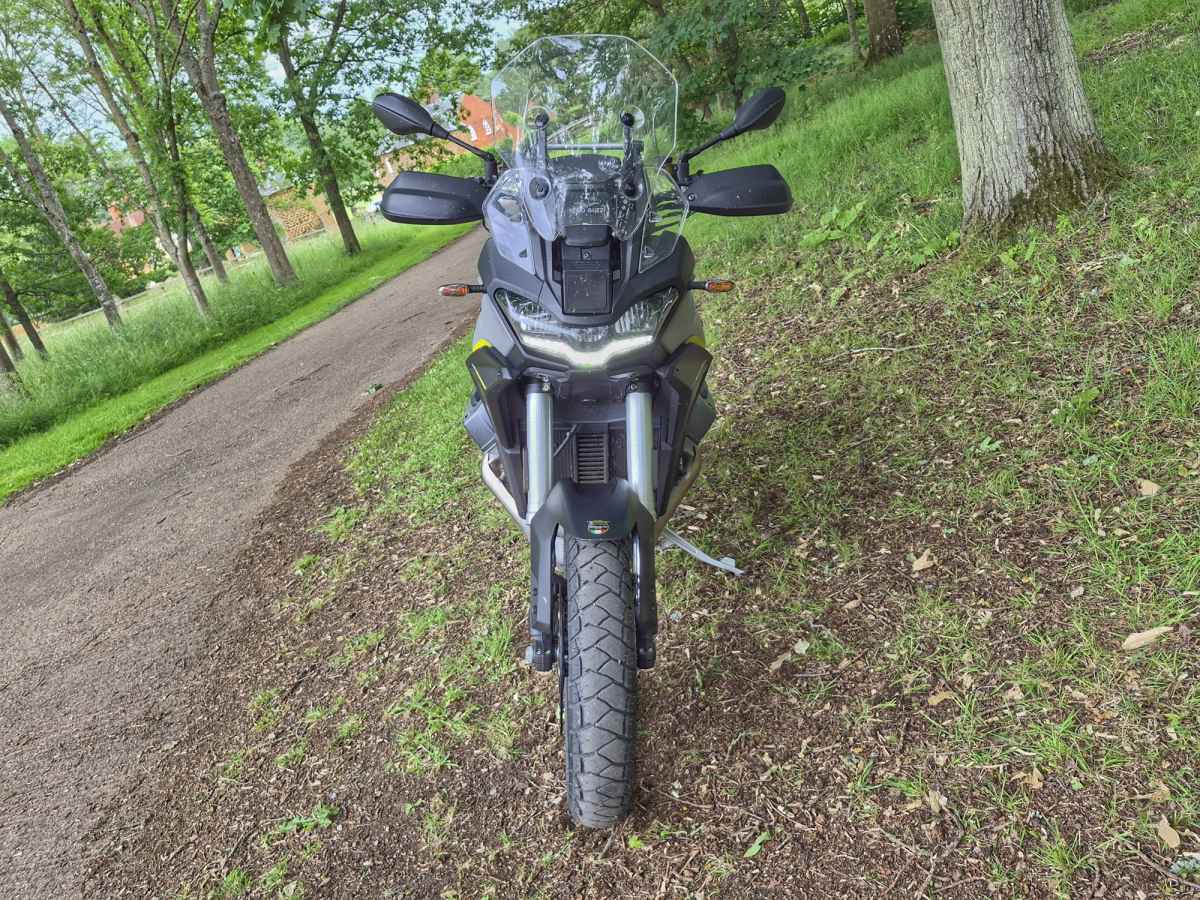
Wind protection is a standout feature, utilising an electrically adjustable windscreen that handles motorway buffeting exceptionally well. It’s a comfortable and stress-free place to be.
The pillion is rewarded with plenty of room and a lovely, soft, deeply padded seat. Kate doesn’t use the grab handles, but for those that do, there is one that wraps all the way around. Kate is small, only 5’ 2” and 50kg, so sometimes struggles with pillion pegs, but not here; the seating position was fine. I’ve read other reviews that say the suspension is too hard, particularly with a pillion, but I didn’t find that. However, the suspension is fully adjustable, so you can take a few clicks off the rebound or compression if you want to.
At 246 kg wet (kerb weight), it’s a substantial machine, but it is vastly easier to paddle around a tight petrol station or manage at slow speeds than massive full-dress tourers because the weight sits low. The 21-litre fuel tank yields a realistic touring range of over 220–250 miles.
The inclusion of modern electronics means it appeals to safety-conscious riders who want character but demand 21st-century safety when weather conditions turn sour. A 6-axis IMU manages a comprehensive suite of rider aids: You have five distinct modes (Touring, Rain, Street, Sport, and Off-Road) which adjust the throttle map, engine braking, traction control, and cornering ABS calibration.
There’s a crisp 5-inch full-colour TFT display that acts as the command hub. It's all very clean, with cruise control and full LED lighting with cornering capability coming standard.
Our bike was the PFF Variant, which means it had some additional technology, in the form of the Piaggio Fast Forward (PFF) Rider Assistance Solution (RAS).
The front and rear PFF Rider Assistance Solution devices comprise four different functions designed to improve safety and deliver a more rewarding riding experience:
- Forward Collision Warning (FCW): Alerts you if it predicts a crash with a vehicle in your trajectory.
- Blind Spot Information System (BLIS): Warns you if a car is in your blind spot.
- Lane Change Assist (LCA): Monitors traffic approaching quickly from the rear and alerts you when changing lanes.
- Following Cruise Control (FCC): Maintains a safe distance from the vehicle in front of you while cruising. (Available as an accessory).
The innovative driver assistance platform uses 4D radar imaging technology to provide an exceptionally wide field of vision. It also ensures reliable monitoring of factors, regardless of the level of illumination and ambient conditions.
It’s a clever system, but I admit to finding it frustrating. The following cruise was actually very good, and was great on boring motorway journeys, but the forward collision warning (FCW) was a bit annoying. When filtering through traffic, the thing is constantly beeping and flashing ‘collision warning’ on the dash.
The blind spot information system (BLIS) was good too, but if you’re riding properly, you should be aware of traffic around you. It never hurts to have a bit of help though.
The Moto Guzzi Stelvio occupies a very specific, sweet spot. It is a bike perfect for the rider who values classic motorcycle soul but demands practicality and modern refinement as a bonus. It trades outright off-road aggression for excellent road-holding manners, effortless midrange roll-on, and all-day, fatigue-crushing comfort on real-world British tarmac. It's a beautiful, comfortable machine that is nimble enough to ride into town, yet comfortable enough to ride across Europe with aplomb.
It really is a machine that proves you don't have to sacrifice character and soul to get modern, real-world capability.
- Engine: liquid-cooled, 1042 cc transverse 90-degree V-twin engine
- Power: 115 hp (84.5 kW) at 8,700 rpm
- Torque: 105 Nm at 6,750 rpm (with 80% available from 3,500 rpm)
- Weight: 246 kg kerb (wet with fuel)
- Suspension - Front: Sachs 46 mm inverted telescopic fork with preload and rebound damping adjustment (170 mm travel)
- Suspension - Rear: Aluminium single-sided swingarm with Kayaba (KYB) monoshock featuring remote preload and rebound adjustment (170 mm travel)
- Brakes - Front: Twin 320 mm floating discs with radially mounted Brembo 4-piston monobloc callipers and cornering ABS
- Brakes - Rear: Single 280 mm disc with a 2-piston Brembo calliper
- Tyres - Front: 120/70-R19 (tubeless on wire-spoke rims)
- Tyres - Rear: 170/60-R17 (tubeless on wire-spoke rims)
- Price - Stelvio PFF Rider Assistance Solution - £15,640