Lotus Emeya 900 Sport: The Most Curious Love Affair
I expected to dislike Lotus's heavyweight electric grand tourer and for a while, I did. Then I pressed the accelerator and my opinion shifted very quickly indeed.
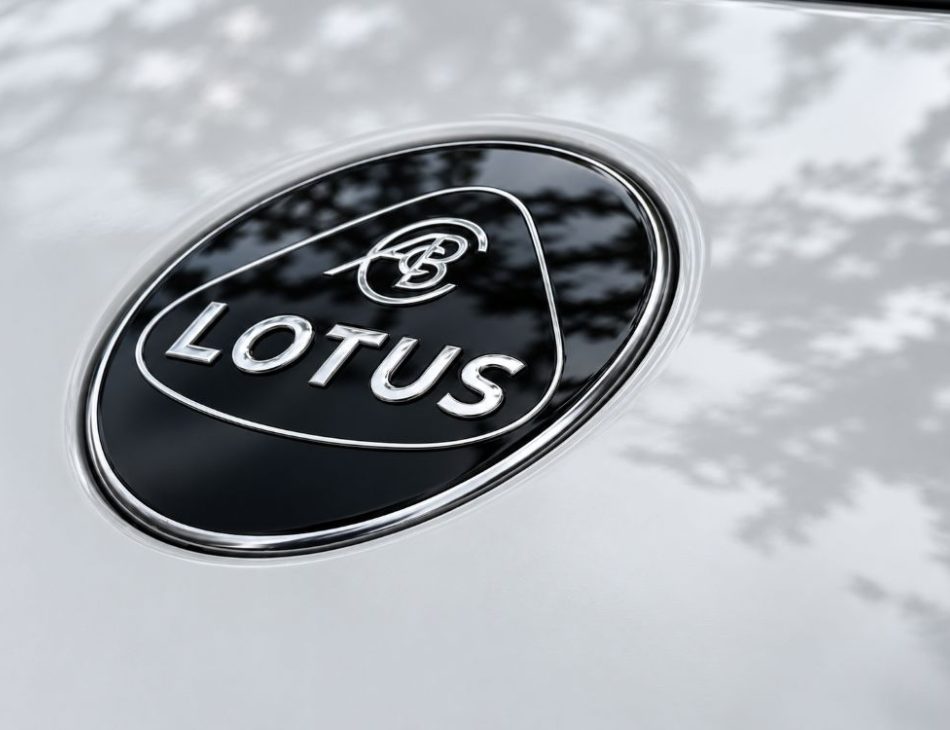
Lotus Emeya 900 Sport
Like all bona fide petrolheads, I have a fairly straightforward notion of what constitutes a Lotus. Lightweight, agile, uncomplicated and Norfolkian would be the initial synopsis. The Emeya 900 Sport must have missed that particular memo because it has four doors, weighs considerably more than two tonnes and contains enough electronic know how to hack your email.
And it’s built in China. Hardly Colin Chapman's finest hour.
But this is 2026 and the automotive landscape has changed considerably. The uncomfortable truth is that Lotus has spent much of its existence having been passed between owners who arrived promising (and lacking) salvation.
General Motors bought the company in 1986, an iteration of Bugatti took over in 1993 and Malaysia's Proton followed in 1996. Each had grand ambitions for the Hethel assembler, yet none of them quite managed to find the spark Lotus needed.
Then Geely acquired a controlling stake in 2017 and now we have the Emeya.
Assembled in Wuhan, it sits alongside the Eletre SUV in a new generation of electric Lotuses. Chapman's verdict is unknowable but so is whether Lotus could have survived in an electrified world indefinitely, just making sports cars for a small audience of die-hards.
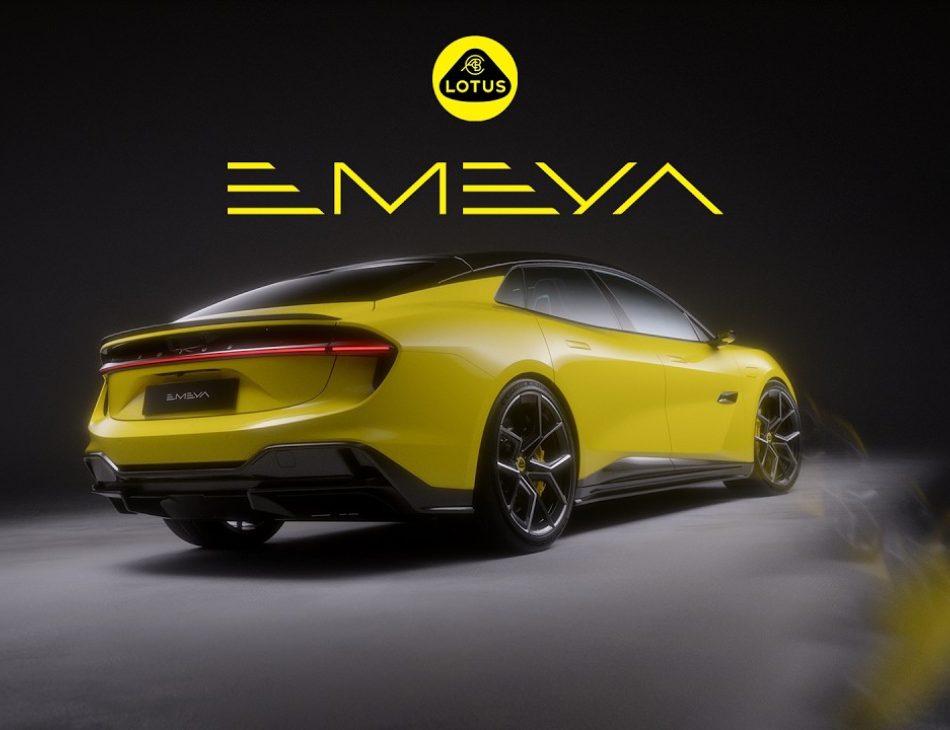
So let’s take time to consider the car in front of us. My Akoya White test car was priced at £140,705 and looked pretty exceptional. It is long, wide and beautifully proportioned, with enormous fist-sized air passages through various corners of the bodywork. The finished product genuinely attracted more than its fair share of traffic light side-eye.
Various aerodynamic trickery also gives it stance. The active rear spoiler and the triangular shutters at the front are pivotal for cooling and stability respectively but add to the overall occasion of seeing one in the flesh. Even the distinctive daytime running lights carry a certain level of intensity.
Inside, the Emeya continues to impress. The pale Kyanite upholstery, slim digital displays, floating dashboard and intelligent glass roof make the cabin feel expensive and considered. The materials are tactile, the colour coding is inviting and the finish really requires you to reconcile the wonderfully makeshift charm of what older Lotuses used to be like.
But it’s not all rosy unfortunately.
The electronics occasionally behaved like a Chartered Health and Safety Practitioner. Hardly a mile passed without an alert explaining something I could already see. Approaching traffic at a roundabout? Yes, thank you, I had noticed the car coming around the roundabout. Swerving to miss the remnants of a wild beast, yes, I know I’m getting close to the road marking, thanks for letting me know.
Worse was the system repeatedly insisting that I put my hands on the steering wheel when they were already there. Occasionally, the system would warn, I would grab, it would still warn, so I would grab tighter and move left to right in my lane to make sure my steering inputs felt meaningful. Then it would double-down by making the hazard lights join the protest.
To the surrounding traffic I must have looked like a complete wally, swerving around with my hazards on for absolutely no discernible reason.
Of course, some warnings can be disabled. But to that I say just get them right in the first place please. Driving a £140k grand tourer should be the ultimate experience in collaboration and fulfillment and I’m sorry but all modern cars, not just the Emeya, seem determined to ruin that.
But in truth, these matters are fairly trivial in the grand scheme of things. Especially when you consider the ‘grand scheme’ of this car, which is to deliver pelvis-shattering levels of acceleration.
The Emeya's two electric motors produce approximately 905bhp and 985Nm of torque that drive all four wheels through a system incorporating a two-speed transmission. Lotus claims 0–62mph in just 2.78 seconds. Those figures scarcely convey the absurdity. In Track Mode, I would liken the acceleration to falling over in your 50’s. Sudden, confusing and scary.
Joking aside, it is the most savage acceleration I have ever experienced in a road car.
Ever.
Give the Emeya permission to perform its party trick and the cars around you become little more than specks of insignificance in your rear-view mirror by the time you've gathered your thoughts. It is just insane how fast this car goes in a straight line.
Beneath the considerable mass, the batteries and the occasionally bewildering software, there is some serious engineering at work here.
The trouble was, that was my drug and I rather started to like it. I had initially seen the Emeya as a peculiarly expensive Chinese electric saloon wearing a famous British badge. Gradually though, I began to see the opposite. An ambitious modern Lotus equipped with the technology and financial backing to compete on a much larger stage.
Geely supplies the resources, Lotus finesse it, giving the Emeya purpose.
The Porsche Taycan is an obvious rival, as is the Polestar 5 (also Geely). But the Emeya (and the Eletre) looks and feels distinct enough for me to suggest that Lotus is really starting to carve out a class of its own now.
In truth, I think Geely has played a masterstroke here. Lotus, the biggest global sleeping giant of sports cars now has pockets deeper than most and if this is there first go at making the world take note, then I simply can’t wait to see what the next couple of decades gives us.
Initial irritation had become genuine affection. I would keep a close eye on Lotus if I was you.
Lotus Emeya 900 Sport
Price as tested: £140,705
Powertrain: Dual-motor electric
Drive: All-wheel drive
Power: Approximately 905bhp
Torque: 985Nm
Transmission: Two-speed automatic
0–62mph: 2.78 seconds
Battery: 102kWh (gross)
Wheels: 21-inch alloys, Pirelli P Zero tyres