

Jeff Hadeed: The Art of Doing Nothing Particularly Well
Forget the mega-resort conveyor belt — South Point Hotel Antigua is where sailing legends, superyacht crews and sun-hungry escapists come to disappear into one of the Caribbean's most seductive harbours, cocktail in hand and absolutely no agenda required.
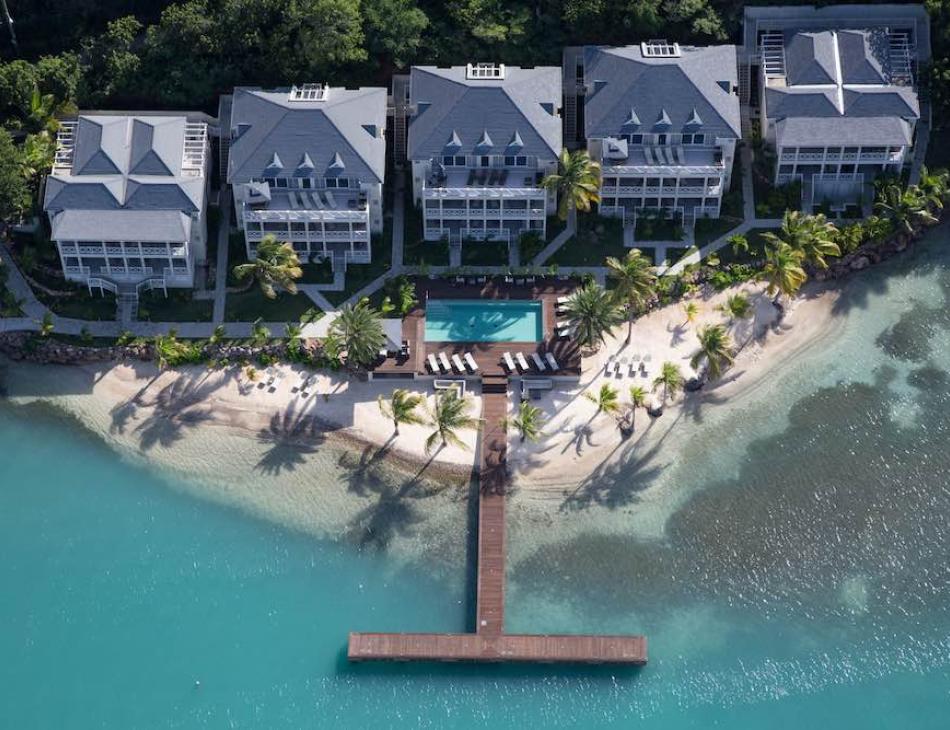
South Point Hotel Antigua
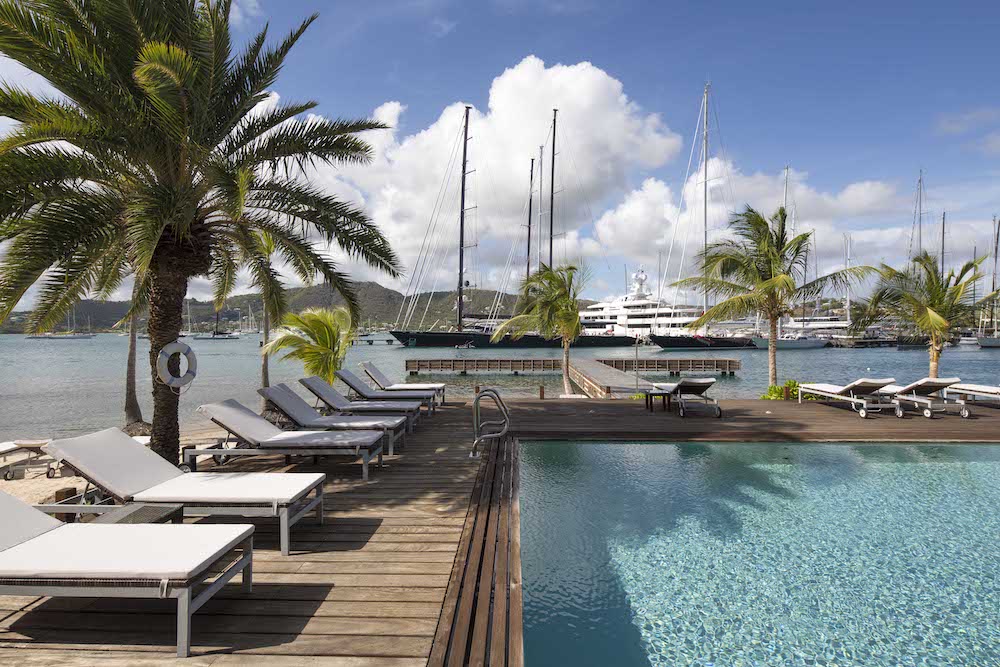
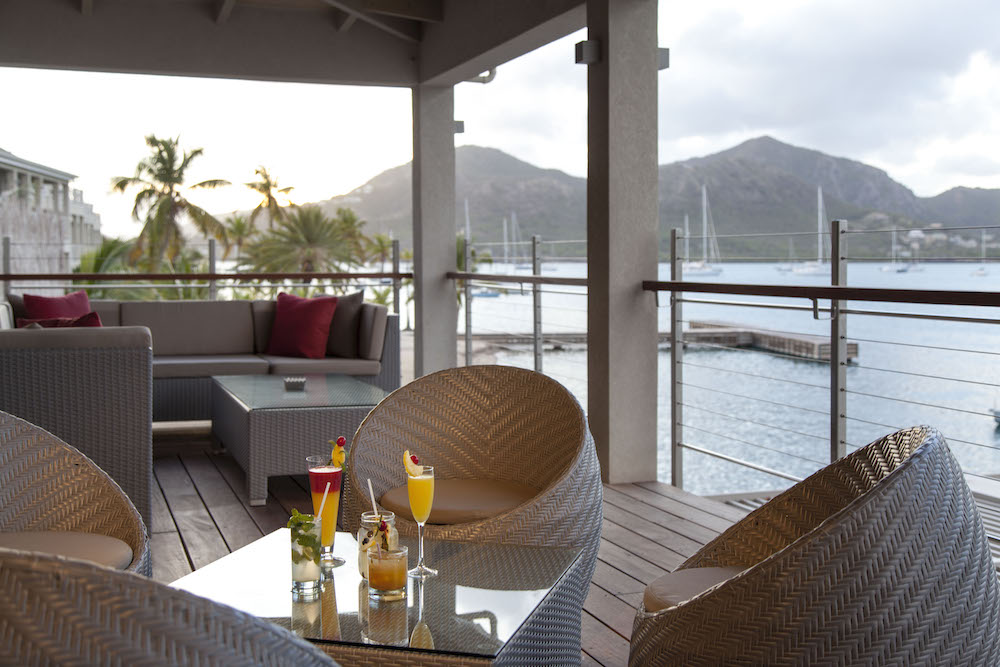
There is a moment, usually on the second morning, when guests at South Point stop making plans. The sea is right there. The light falls perfectly across Falmouth Harbour. A superyacht has materialised overnight and sits like a benevolent giant just off the jetty. The cocktails at Maia are, frankly, too good to rush. Jeff Hadeed, the hotel's managing partner, knows this moment well. He designed it.
South Point sits in one of the most storied anchorages in the Caribbean. What drew you to English Harbour specifically?
English Harbour is genuinely special — and I don't use that word lightly. It's a UNESCO World Heritage Site, which tells you something about its historical weight. Nelson's Dockyard, the intact Georgian naval complex just steps from our door, was the operational heart of the British fleet in the Caribbean for over a century. There's a palimpsest of history here: you're looking out at the same natural harbour that Nelson looked out at, the same ridgeline, the same water. That continuity is extraordinarily rare in the Caribbean.
But history alone doesn't make a hotel. What English Harbour also offers is an exceptional quality of life — a genuine community of interesting people, a social scene that is both sophisticated and completely unpretentious, world-class sailing, and an intimacy you don't find in larger resort destinations. We're walking distance from everything worth doing. The car, if you've brought one, can stay parked. That's a small luxury that turns out to be a rather large one.
You were born in Trinidad, grew up in Antigua, studied in the United States and then in Italy. That's quite a formation. How did those experiences shape what South Point became?
You couldn't design South Point without all of those chapters, I think. Trinidad gave me a certain sensibility around warmth and sociability — that culture of bringing people together, the instinct toward hospitality as something genuine rather than transactional. Antigua gave me the location and a love of the sea that has never left me.
America gave me business discipline. I studied marketing at the University of Florida, and I took a year off during my studies to manage a family business in St. Maarten — which was, I should say, an education of a rather different kind. You learn things managing a real business in the Caribbean that no classroom has ever taught.
And then Italy — I went to study fashion design at the Istituto Marangoni in Milan, and Italy rewired my eye. Milan in particular was undergoing a profound moment in residential design at the time: a rigorous minimalism that was simultaneously austere and deeply sensuous. Beautiful materials, considered spaces, nothing superfluous. I came back to Antigua with that in my head, and it never really left.
You've mentioned admiring Ian Schrager's hotels. What specifically spoke to you about that approach?
What Schrager understood — and this was genuinely radical when he first did it — was that a hotel could be a social proposition, not just a place to sleep. His properties had energy. They were destinations within destinations. People who weren't staying there wanted to be there. The lobby wasn't a corridor, it was a living room.
That idea of the hotel as a gathering place, as somewhere with its own cultural life, was enormously influential on how I thought about South Point. I wanted the bar and restaurant to be places the broader community of English Harbour wanted to be — not just our guests. When local sailors, residents, visiting yachtsmen and hotel guests are all at the same table, something more interesting happens than when you're hermetically sealed inside a resort bubble.
How would you describe South Point to someone who has never been?
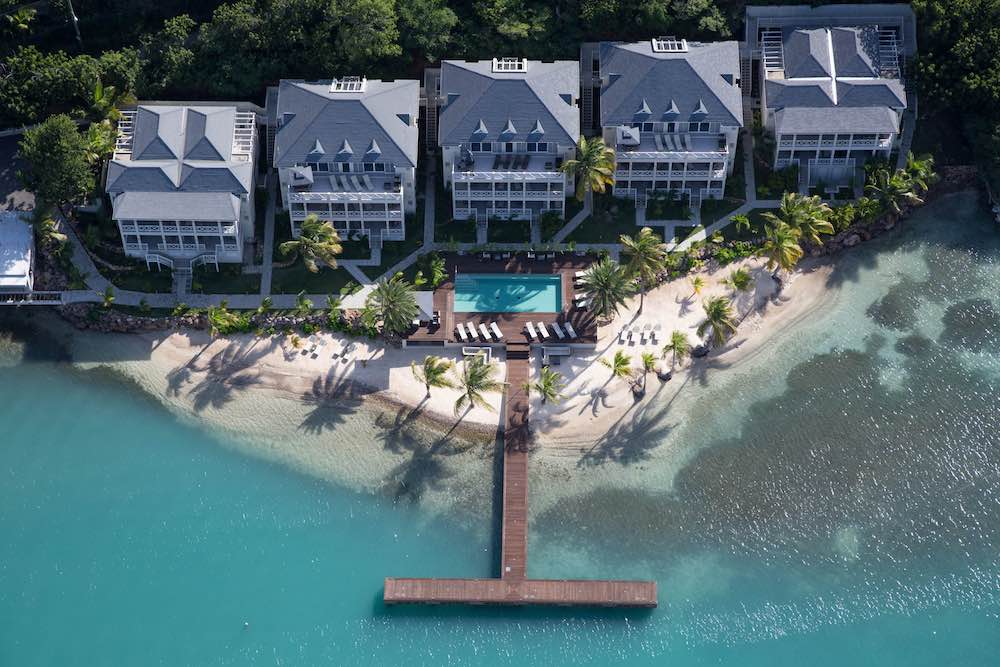
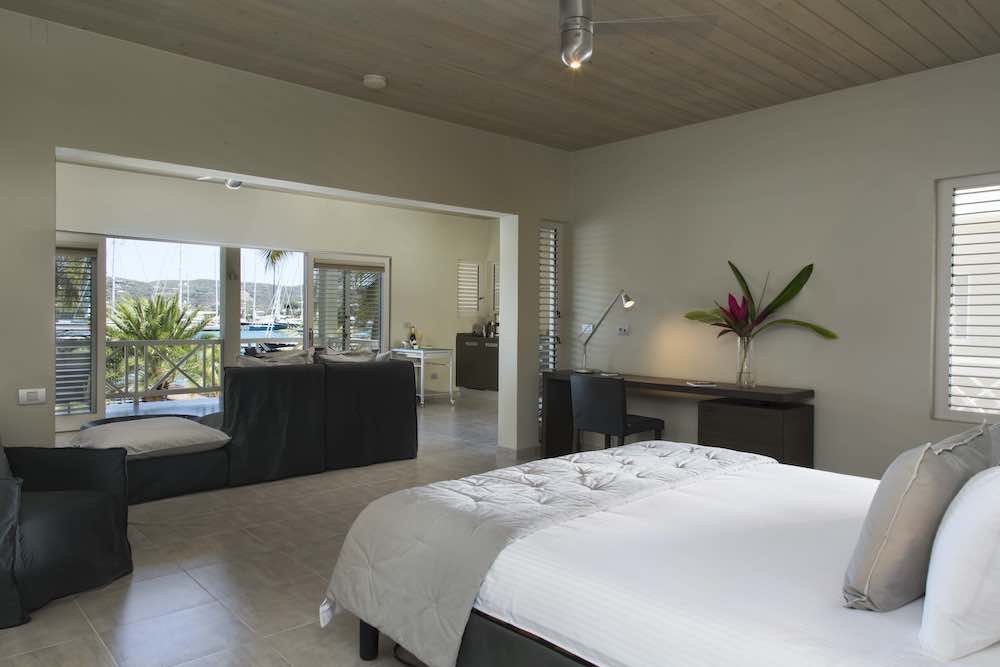
Twenty-three suites. All of them overlooking the water or the marina. Fully equipped kitchens, proper living areas, large balconies with sun loungers and dining tables — everything you'd want for a stay of real duration, not just a night or two. The one-bedroom suites are beautifully proportioned for couples, with an open-plan layout that makes the most of the light and the view. The two-bedroom penthouses are something else entirely — double balconies, two en suite bathrooms, two interior lounges. They're genuinely residential in scale, which is the point.
We have a private beach. Pigeon Beach, which has been called one of the sexiest beaches in the world — and whoever coined that description was not wrong — is five minutes on foot, or you can paddle out to it on a kayak or stand-up paddleboard, which I rather prefer. Galleon Beach, known for snorkelling, turtle sightings and the dramatic Pillars of Hercules rock formation, is five minutes by car.
And then there's Maia restaurant, which I'm enormously proud of. It sits on a deck suspended over the water, and the menu moves between Asian, Mediterranean and Middle Eastern influences with considerable skill. It's the kind of food that rewards curiosity.
The phrase you use — "casual but friendly, warm, unscripted, chill" — runs counter to a lot of luxury hotel positioning. Was that a deliberate provocation?
It was a deliberate statement of values. There's a version of luxury that I find exhausting — where the formality is the point, where the performance of grandeur substitutes for actual quality. I've stayed in hotels like that. You feel like a guest in a museum rather than a guest in someone's home.
What I wanted was luxury without the stiffness. Exceptional materials, real attention to detail, food and drink that would hold up anywhere in the world — but a guest who wants to come down to breakfast in their swimwear should feel entirely comfortable doing so. We're not a stuffy place. We never will be. The Caribbean's particular genius has always been the ability to make the extraordinary feel effortless, and I wanted South Point to embody that.
You've had an extraordinary career before South Point — restaurants, a marine company, property management for Giorgio Armani, a diplomatic appointment as Antigua's Consul General to Italy. Does any of it inform how you run a hotel?
All of it, continuously. The restaurants — Big Banana 17°61°, The Beach, The Larder and others — gave me an understanding of food and beverage operations and, more importantly, of hospitality as a craft. Running a good bar or restaurant is about rhythm and feel as much as logistics.
The marine business gave me a practical understanding of this harbour, of the sailing community, of the kind of guests who come to English Harbour because of the water rather than in spite of it. We cater extremely well to that crowd.
The Armani connection is interesting, because managing luxury residential properties at that level is a masterclass in discretion, attention and the understanding that high-end clients have very specific ideas about what they want — and your job is to deliver that without drama. Those lessons translate directly.
And the diplomatic role has given me a network and a perspective that I find genuinely useful. Italy and the Caribbean have more in common than people assume — a deep culture of pleasure, of the table, of beautiful things made well. I feel at home in both.
What does a perfect day at South Point look like?
Coffee on your balcony as the harbour comes to life. The yachts are already moving, the light is extraordinary. A morning swim — off our jetty, or paddle over to Pigeon Beach before the day heats up. Come back, shower, have a proper breakfast.
The afternoon is yours. Sail, snorkel, explore the Dockyard, browse the galleries and boutiques in English Harbour village, do absolutely nothing. Then as the sun starts to drop, come to Maia for cocktails and watch the harbour turn gold. Stay for dinner — the kitchen will reward you for it.
Then, if the evening takes you, wander into English Harbour proper. There will be music somewhere. There always is. Meet the locals, hear some stories, have a drink you didn't plan on. Come back when you're ready. Nobody is going to hurry you.
That, essentially, is the South Point philosophy. Luxury in service of living well, rather than luxury as an end in itself.
South Point Hotel is located in English Harbour, Antigua. Maia restaurant is open to hotel guests and the public. For reservations and enquiries: southpointantigua.com


