McLaren 788HS: The Final Flourish
More power, sharper aerodynamics and just 200 individually commissioned examples. The McLaren 788HS brings one of Woking’s most important supercar bloodlines to a suitably dramatic conclusion. The question now is what replaces it.
McLaren 788HS
There is a particular difficulty in ending a successful story. Do too little and the finale feels like a cynical exercise in badges and scarcity. Do too much and the qualities that made the original so compelling can disappear beneath the additions.
McLaren’s answer is the 788HS, described by the company as the definitive and final evolution of the supercar lineage that began with the 720S, intensified with the 765LT and was comprehensively refined into the 750S.
It is not simply another derivative, at least according to the numbers. Power rises, weight falls and the aerodynamics become more assertive. Production is limited to 200 cars worldwide, divided evenly between Coupé and Spider, while every example will pass through McLaren Special Operations to ensure that no two need be quite the same.
More significantly, the 788HS closes the book on a family of cars that has defined the modern McLaren road-car experience for almost a decade.
The HS designation stands for ‘High Sport’ and McLaren does not apply it casually. Before the 788HS, it had appeared on only two road cars: the MP4-12C HS and the later MSO HS.
That makes its return meaningful. This is not merely positioned above the 750S through an increase in power and a more elaborate aerodynamic package. It is intended to represent the ultimate expression of the architecture, drawing together the performance of the Longtail models, the usability of the 750S and the bespoke possibilities offered by MSO.
At its centre remains McLaren’s familiar M840T 4.0-litre twin-turbocharged V8, now producing 788PS and 800Nm of torque. Peak power arrives at 7,500rpm, although the engine will continue to 8,500rpm, while a revised engine-mount calibration is intended to increase the sense of connection between the powertrain and the driver.
The numbers remain suitably serious. McLaren claims 0-100km/h in 2.8 seconds, 0-200km/h in seven seconds and a maximum speed of 205mph.
Yet the more revealing figure may be the power-to-weight ratio. With a dry weight of 1,265kg, the 788HS delivers 623PS per tonne, making it the strongest performer by that measure across the entire 720S, 765LT and 750S family.
It is an impressive statistic, although the character of the 788HS is unlikely to be defined by additional power alone. The outgoing 750S was hardly short of performance. Instead, McLaren appears to have concentrated on making the car feel more immediate, more dramatic and more special at every speed.
Visually, the 788HS has little interest in subtlety.
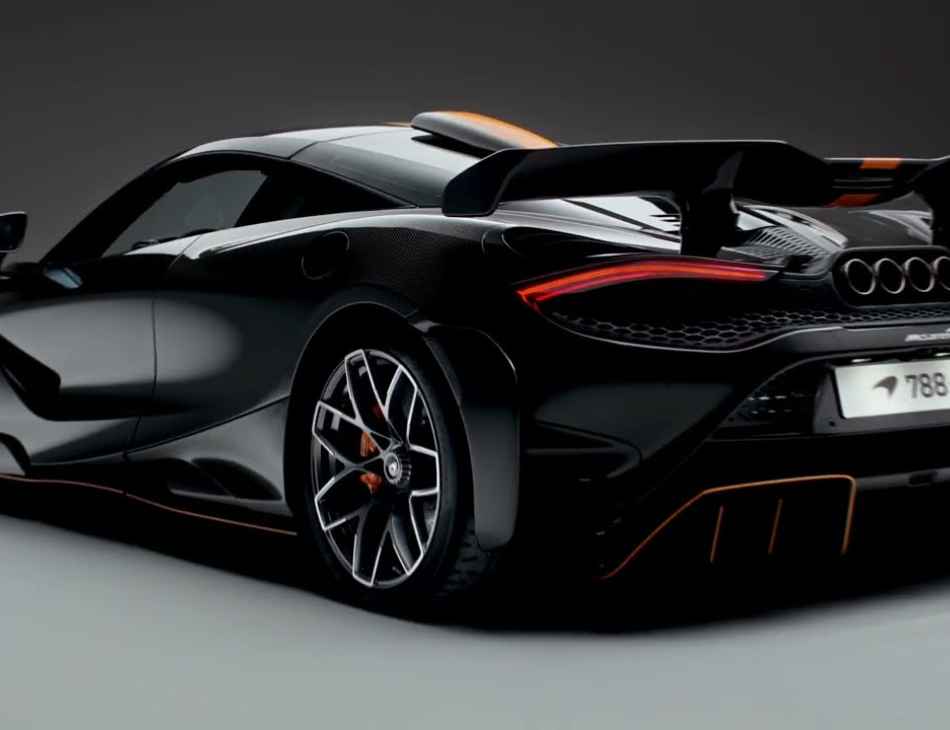
The basic proportions remain recognisably linked to the 720S that started the story, but the surface treatment is more aggressive and the aerodynamic additions more pronounced. A new carbon-fibre S-Duct bonnet works with a multi-zone front splitter, while the raised active rear spoiler and intricate racing-inspired diffuser dominate the car’s rear profile.
Together, these elements are claimed to produce 10 per cent more downforce than the already formidable 765LT.
The important point is that the additions are presented as an integrated package rather than decorative theatre. The S-Duct manages airflow over the car, the revised under-wing panel assists cooling and efficiency and the elevated rear aero is balanced by the more elaborate front treatment.
The result is a car that looks less like a subtly developed 750S and more like a machine built to mark an ending.
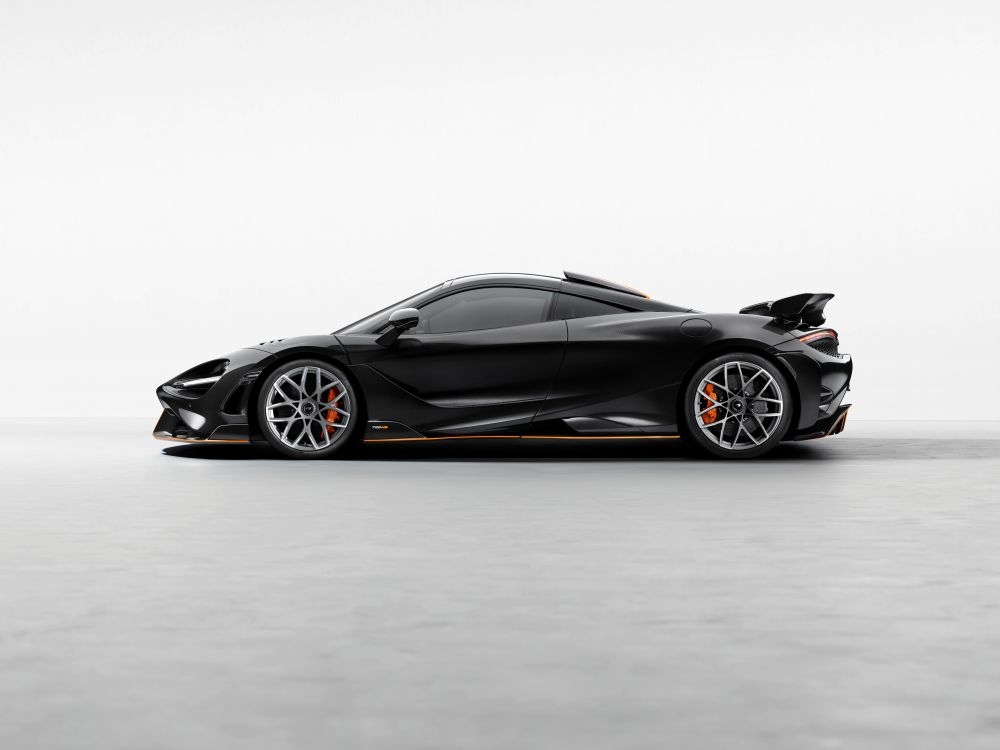
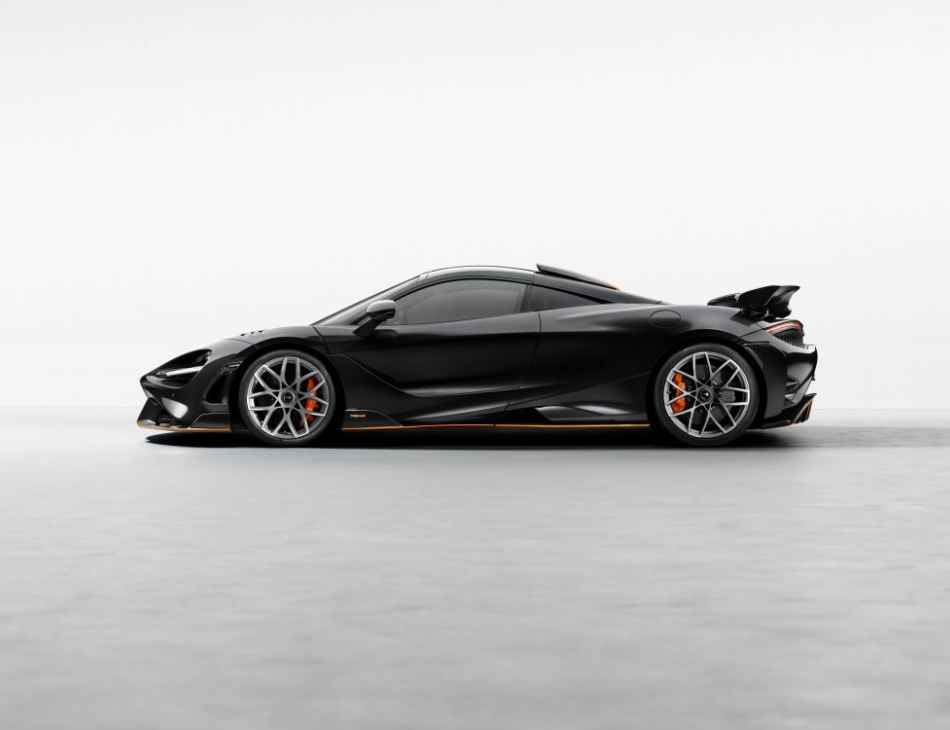
There are echoes of McLaren’s competition heritage throughout, although the execution remains recognisably that of a road-going supercar. Orange detailing traces the lower body, diffuser and roof, contrasting sharply with the exposed carbon fibre and dark bodywork shown in the launch specification.
Buyers can go further by specifying full Visual Carbon Fibre bodywork, encompassing every exterior panel.
That option feels particularly appropriate here. The 788HS is not intended to disappear into the wider McLaren range. It has been created to be recognised as the final and most extreme version of its kind.
Underneath the bodywork sits McLaren’s Proactive Chassis Control III linked-hydraulic suspension system, recalibrated specifically for the 788HS.
The front ride height is 5mm lower than that of the 750S, while the suspension receives bespoke tuning intended to improve precision without sacrificing the road usability that has traditionally separated McLaren’s supercars from more uncompromising track specials.
Braking comes courtesy of carbon-ceramic discs derived from the McLaren Senna, supported by six-piston forged aluminium monobloc front calipers and dedicated cooling. The 788HS also becomes the first member of this supercar family to adopt centre-lock wheels, paired with a new super-lightweight forged alloy design.
The titanium exhaust is equally theatrical. Four centrally positioned outlets emerge above the rear grille, providing one of the car’s clearest visual signatures. McLaren says the system produces greater intensity throughout the rev range, supported by carefully engineered induction and exhaust sound technology inside the cabin.
Again, the intention appears to be experience rather than numbers. A fractionally quicker acceleration time would make little meaningful difference in a car already capable of reaching motorway speeds in less than three seconds. A more distinctive sound, sharper response and greater sense of occasion may prove considerably more important.
The 788HS gains a lightweight carbon-fibre centre console, model-specific branding, a unique upholstery perforation pattern and a numbered dedication plaque. Carbon-backed seats, Alcantara surfaces and orange details continue the focused exterior theme without attempting to disguise the cabin as an entirely new design.
MSO will play a central role in ensuring that each of the 200 cars feels sufficiently individual. Paintwork, exposed carbon, liveries, interior finishes and personalised detailing will allow customers to turn the car into something closer to a commission than a conventional production model.
For collectors, that combination carries obvious appeal: extremely limited numbers, individual specifications and a clear place at the end of a recognised model lineage.
When the 720S arrived, it represented a significant step forward for McLaren. Its teardrop-shaped cabin, eye-socket air intakes, extraordinary visibility and relentless performance gave the company a clear identity within an increasingly competitive supercar market.
The 765LT then added aggression and theatre, while the 750S refined the package without discarding the qualities that made the earlier car successful. The 788HS now brings those threads together.
It is heavier on visual drama than the original 720S, more exclusive than the regular 750S and positioned as a broader culmination than the track-led 765LT. Rather than occupying a neat place within the range, it effectively stands at the exit.
McLaren has not formally identified a direct successor to this supercar family just yet and the 788HS announcement carefully concentrates on celebrating what is ending rather than revealing what will replace it.
The wider product range nevertheless provides clues. The Artura has already established McLaren’s series-production hybrid architecture, while the W1 demonstrates how extensively electrification and advanced aerodynamics can be integrated into the company’s most ambitious road cars. McLaren’s official material continues to position both hybrid performance and Formula 1-influenced aerodynamic development as central elements of its current engineering direction.
It would therefore be reasonable to expect the eventual successor to move beyond the 788HS rather than simply repeat it with more power. Greater electrification, new electronics, more sophisticated active aerodynamics and a fresh platform all appear plausible, but until McLaren confirms the car, they remain possibilities rather than promises.
It represents the final opportunity to buy this particular interpretation of a McLaren supercar: a lightweight carbon-fibre structure, a non-hybrid twin-turbocharged V8, hydraulic interconnected suspension and the familiar architecture that began with the 720S.
The 788HS is therefore more than the most powerful version of the series. It is the punctuation mark at the end of a defining McLaren chapter — and a reminder that whatever follows will have a formidable act to replace.
The next generation may be faster, more advanced and more capable. It may also be very different.