



New Honda Prelude at Fanhams Hall: A Very British Institution with a Japanese Twist
Historic architecture, extraordinary gardens and a surprisingly accomplished events venue. Fanhams Hall in Hertfordshire has plenty to offer and arriving in the new Honda Prelude makes for an unusually appropriate pairing.
New Honda Prelude at Fanhams Hall
The British country-house hotel is a curious institution. We take buildings originally designed to keep the general public at a respectable distance and spend considerable sums encouraging everyone back inside. Some become rather stuffy monuments to their own importance. Others manage to turn centuries of history into something genuinely useful.
Fanhams Hall, just outside Ware in Hertfordshire, falls firmly into the latter category. And rather unexpectedly, it has a distinctly Japanese side, which made arriving in Honda's new Prelude rather more appropriate than I had anticipated.
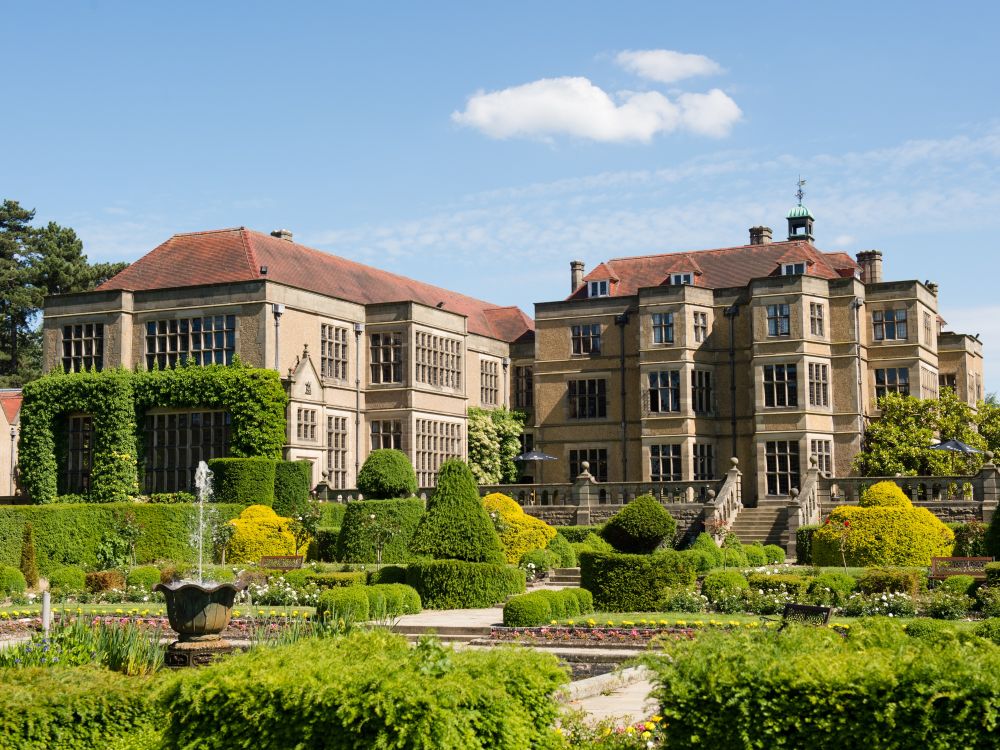
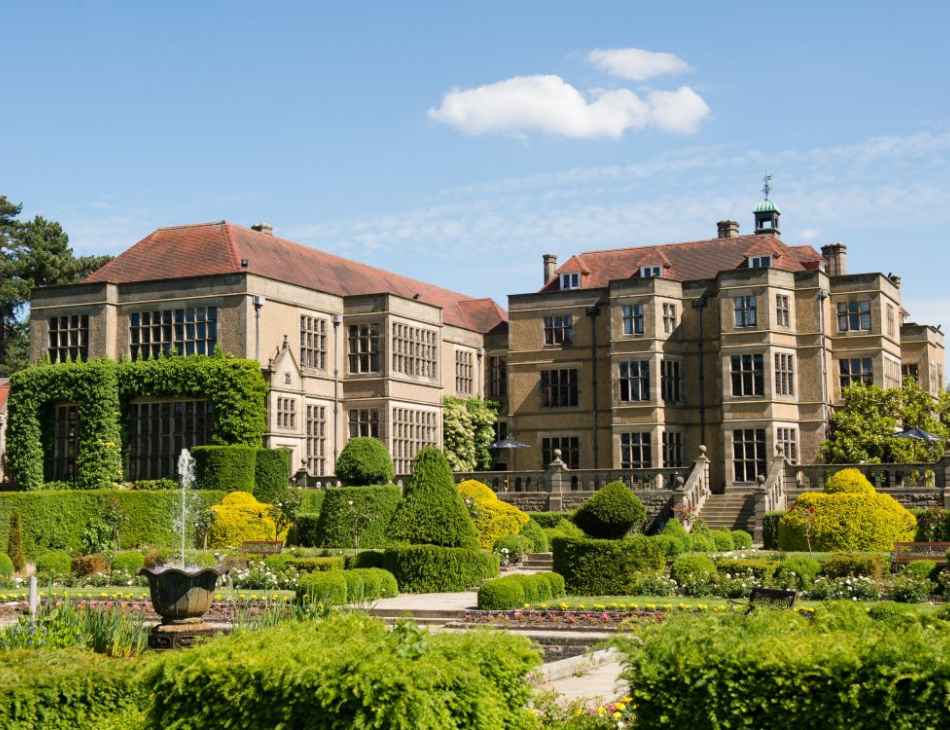
The first impression is reassuringly grand. An imposing Jacobean-style mansion, elaborate stonework, tall mullioned windows and beautifully maintained grounds suggest the sort of English estate where somebody once employed an entire household simply to ensure the toast arrived warm.
Yet the building's appearance is slightly deceptive. Although the estate's history stretches back centuries, the house we recognise today is largely the result of an extensive rebuilding programme undertaken between 1898 and 1901, transforming an earlier property dating from around 1715 into the magnificent country residence that stands today.
The work was commissioned for Richard Benyon Page Croft and his family, with architect William Wood Bethell responsible for much of the transformation. The result is an impressive piece of architectural theater, combining Jacobean grandeur with late-Victorian ambition. It is an approach the British have always been rather good at: constructing something new, making it look considerably older and then treating it as though it has always been there.
But impressive as the house is, Fanhams Hall's greatest asset lies beyond its walls.
Set within 27 acres of landscaped grounds, the estate possesses gardens that are quite exceptional. Formal lawns, carefully clipped hedges, ornamental planting and stone terraces create the sort of ordered landscape that demands considerable patience and an equally considerable gardening budget.
Yet wander further from the house and the character changes entirely. Here, an elaborate Japanese water garden introduces lakes, bridges, stone lanterns, winding pathways and traditional garden buildings into an otherwise quintessentially English landscape.
Created during the early years of the twentieth century, the Japanese garden is no modern marketing exercise. It is a historically important landscape, recognised by Historic England, with genuine Japanese influences incorporated into its design and construction. There is even a miniature Mount Fuji, known as Little Fujiyama, alongside an authentic Japanese tea house dating from 1900.
Known as Sei Shin Tei, or the House of the Pure Heart, the building was brought from Japan and erected under Japanese direction. Plenty of hotels can offer a manicured lawn and a respectable collection of mature trees. Rather fewer can offer a genuine Japanese teahouse within walking distance of a Jacobean mansion.
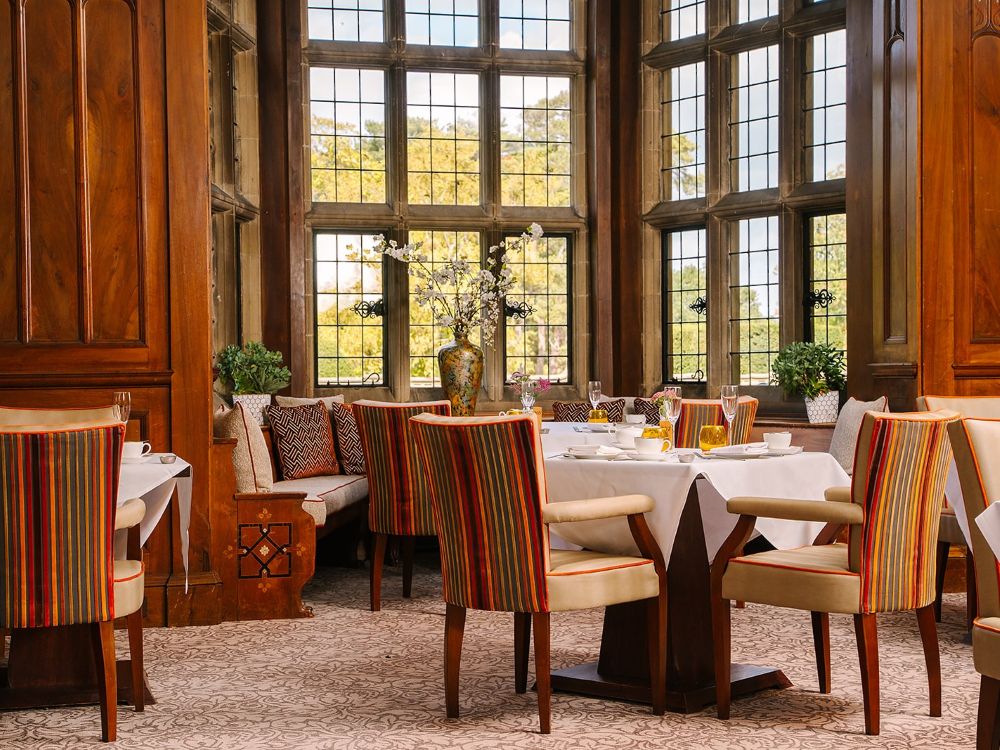
The same willingness to mix styles continues indoors. The historic rooms are rich in oak panelling, stone fireplaces, period detailing and wonderfully tall windows overlooking the gardens. The Great Hall, with its exposed beams and minstrel's gallery, is particularly impressive.
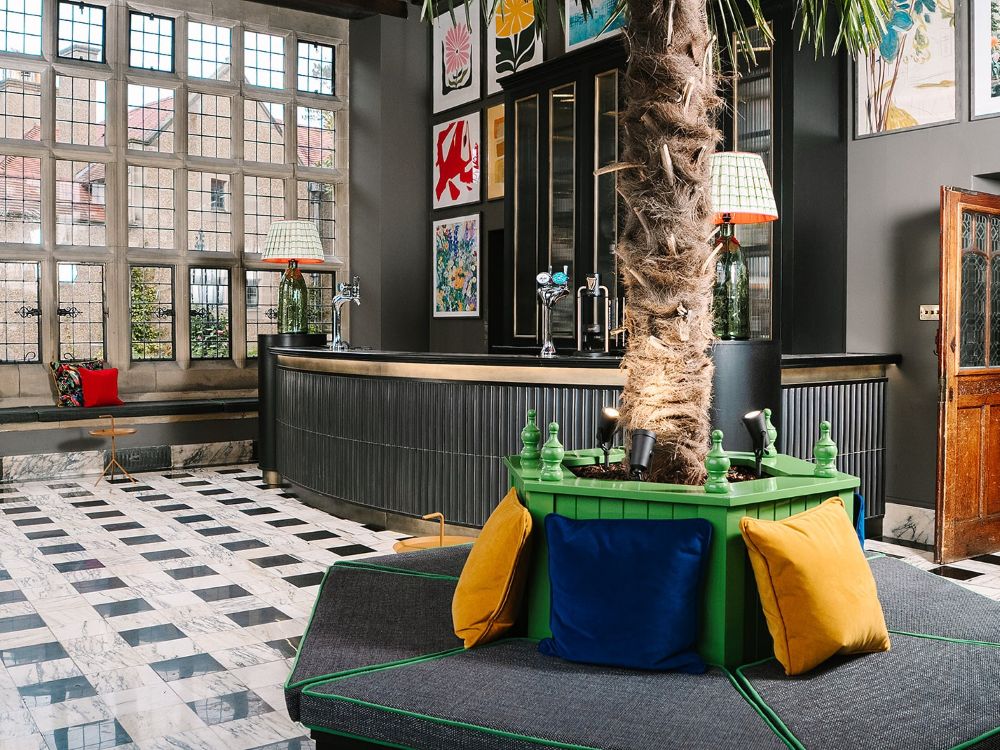
Elsewhere, the atmosphere becomes noticeably more contemporary, nowhere more obviously than in the conservatory bar, where a substantial palm tree, colourful furnishings and striking black-and-white flooring introduce a rather eccentric interpretation of country-house hospitality.
On paper, it sounds like an interior designer has been given several conflicting instructions and decided to follow all of them. In practice, it works. Fanhams Hall has enough architectural confidence to accommodate the occasional eccentricity without losing its character.
And that character is particularly valuable when considering the property's considerable credentials as a corporate events venue.
Interestingly, Fanhams Hall has been accommodating the business world for rather longer than many might imagine. In 1951, the estate became a staff college for Westminster Bank, subsequently passing through the hands of the Building Societies' Association and J Sainsbury. Its modern role as a conference and events destination is therefore less a dramatic reinvention than a continuation of an established tradition.
Today, the property is part of the Exclusive Collection and offers ten dedicated meeting rooms, eight additional breakout spaces and facilities capable of accommodating events ranging from relatively intimate board meetings to conferences involving around 130 delegates. The historic Long Gallery provides a particularly distinguished setting, while more contemporary spaces offer the technology and flexibility expected of a modern corporate venue.
Its extensive grounds also give organisers options that conventional conference hotels simply cannot match. Outdoor activities, team-building exercises, informal discussions and opportunities to escape the meeting room are all accommodated within the estate. With accommodation, dining facilities and dedicated meeting spaces available on site, residential conferences and multi-day business events become considerably easier to organise.
Of course, corporate entertaining represents only part of the operation. Fanhams Hall is also a formidable wedding venue and it is difficult to imagine many couples struggling to find a suitable backdrop here.
The Long Gallery can accommodate ceremonies of up to 130 guests, while the magnificent Great Hall offers dining for a similar number and evening receptions for up to 200. Smaller celebrations can make use of the Oak and White Hall, while the contemporary Sakura room offers another option overlooking the grounds.
Outdoor ceremonies can even take place beside the Japanese teahouse or on the formal Gazebo Lawn, with larger celebrations accommodating up to 300 guests on the Croquet Lawn.
And there is something undeniably appealing about the prospect of getting married in a Japanese garden before retiring to an English country house for dinner. It is a combination that really ought not to work quite so well.
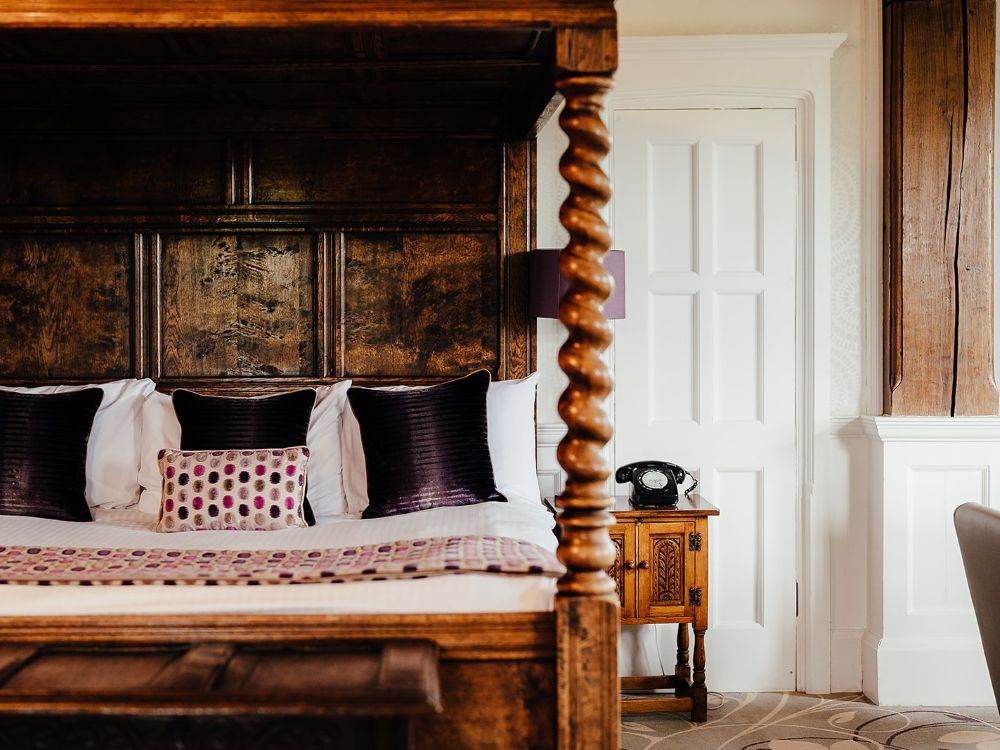
For overnight guests, the hotel provides more than 70 bedrooms across the main house and courtyard accommodation, with everything from conventional guestrooms to individual signature rooms and junior suites. The more distinctive accommodation includes original architectural features, period furnishings and substantial four-poster beds.
The individuality does, however, mean that room choice matters. Anyone expecting every bedroom to possess the same grand proportions and historic detailing should pay attention to the accommodation categories. The signature rooms and suites are where the property's architectural character is most evident, while the courtyard accommodation offers a different, more contemporary proposition.
Dining is equally versatile. The Drawing Room provides an elegant setting for dinner, overlooking the formal gardens and Chestnut Lawn, while the conservatory, atrium and terrace accommodate more informal food and drink. Afternoon tea, private dining and larger catered events are also part of the offering. It is a sensible arrangement for a property accommodating wedding parties, business delegates and leisure guests, often with quite different expectations.
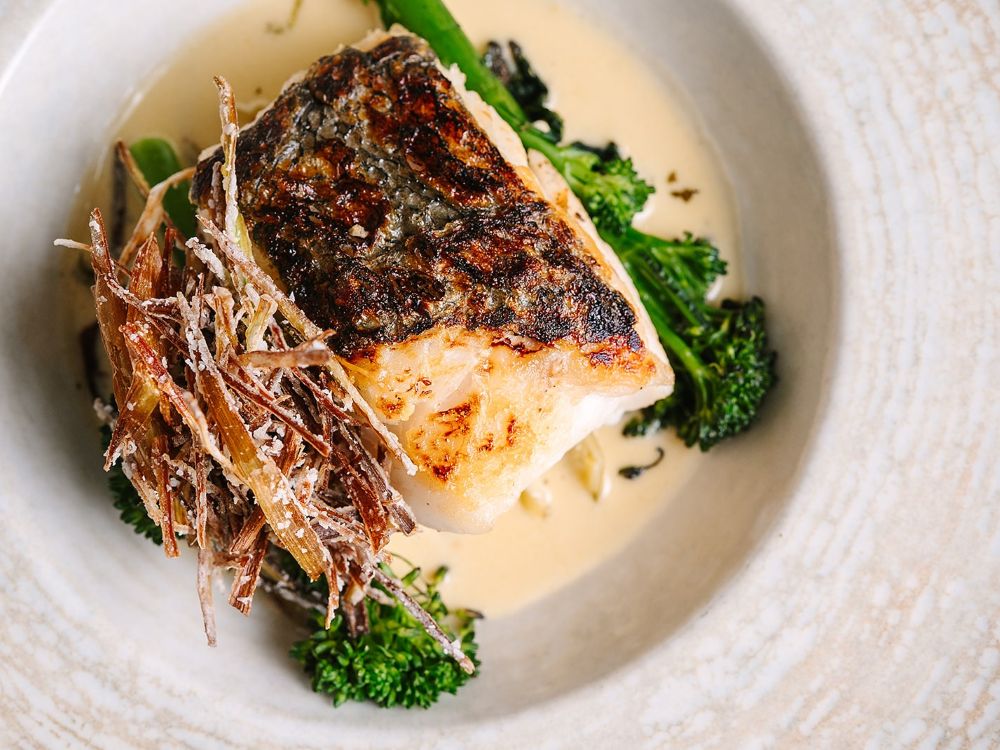
The food presentation certainly looks considered, with dishes such as beautifully cooked, crisp-skinned fish accompanied by carefully prepared vegetables demonstrating a more contemporary approach than the architecture might suggest.
Ultimately, a kitchen must be judged by what arrives on the plate rather than what appears in a photograph, but the setting and breadth of dining options give Fanhams Hall considerable appeal and serious consideration
Which brings me back to the Honda parked outside.
The new Prelude represents another Japanese interpretation of an established idea, albeit one that has been absent from showrooms for roughly a quarter of a century. Honda has resurrected the nameplate as a sleek, front-wheel-drive hybrid coupé, combining a 2.0-litre petrol engine with electric propulsion and some rather sophisticated chassis engineering.
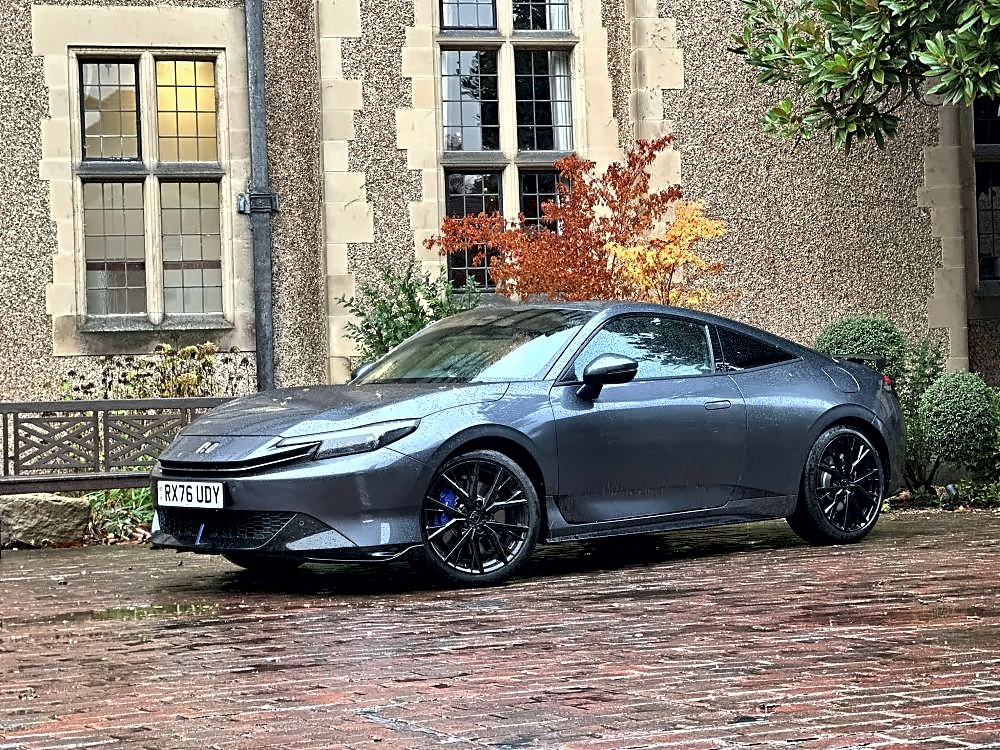
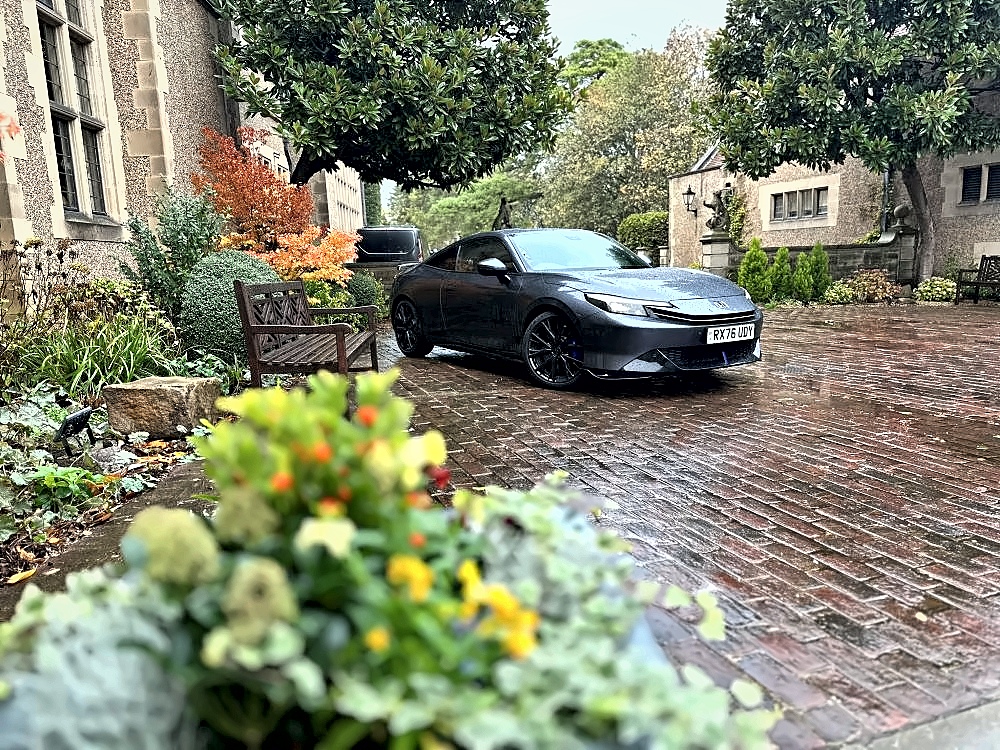
Visually, it is a handsome thing. Low, clean and relatively understated, the Prelude avoids the increasingly tiresome obsession with enormous grilles and unnecessary aggression. My Meteoroid Grey Metallic example, complete with black alloys, blue brake calipers and an optional rear spoiler, looked particularly good against the historic stonework of Fanhams Hall.
Getting inside reveals the first indication that Honda has taken the driving experience seriously. You drop into the low-mounted seats rather than simply sit down, immediately creating a sense of connection with the car. The interior is unfussy, orderly and intelligently arranged, with strategically placed Alcantara-style materials and controls that are refreshingly intuitive.
The rear seats, however, are almost entirely decorative. They might accommodate a pair of exceptionally small children, provided neither has developed legs of any meaningful length.
The hybrid powertrain is an interesting piece of engineering. Its 184PS output produces a distinctly ordinary 0–62mph time of 8.2 seconds, hardly the sort of figure to trouble a modern hot hatch. The system itself is rather clever, though. Much of the time the electric motor drives the wheels while the petrol engine generates electricity, occasionally running without directly propelling the car.
It feels slightly peculiar initially, particularly when you realise the engine is operating for reasons entirely unrelated to your immediate throttle inputs.
Honda's S+ Shift system adds another layer of theatre by simulating eight conventional gears, complete with paddle-operated changes and corresponding engine sounds. Strictly speaking, it is an elaborate electronic impersonation of a gearbox that does not actually exist. Yet, rather annoyingly for those of us inclined to dismiss such things as unnecessary gimmicks, it makes the driving experience considerably more engaging.
But the Prelude's real talent is neither its powertrain nor its clever electronics. It is the chassis.
Initially, I found the inclusion of a G-meter rather amusing. Why provide a display measuring cornering forces in a car that takes more than eight seconds to reach 62mph? Then I approached a decent bend and discovered precisely why Honda had bothered.
Good grief, this thing can handle.
Borrowing important suspension and chassis technology from the Civic Type R, the Prelude possesses a wonderfully composed, agile character. The steering is accurate, the front end responds eagerly and the car changes direction with a confidence that its modest performance figures simply do not convey. There is genuine enjoyment to be found in maintaining momentum through a series of bends rather than relying on excessive horsepower to sort everything out afterwards.
It evokes memories of the Toyota GT86, Subaru BRZ and even the old Audi TT, with something of the Mazda MX-5's determination to make the driver feel involved. It is not quite the same sort of machine as those cars, nor does it pretend to be. But the underlying philosophy is familiar: driving enjoyment should involve more than simply pressing the accelerator and waiting for the scenery to become blurred.
At £44,265 as tested, the Prelude is not inexpensive and the modest performance will undoubtedly deter some buyers. Yet with a claimed combined economy of 54.3mpg, impressive handling and a refreshing absence of unnecessary complexity, Honda has produced something rather more interesting than the figures suggest. It is a car that rewards the act of driving rather than the pursuit of outright speed.
In that respect, the Prelude and Fanhams Hall make an interesting pairing. Both are modern interpretations of familiar ideas; both draw heavily on their respective histories and neither relies entirely on conventional measures of success.
And while the Prelude was an enjoyable companion throughout my visit, it was Fanhams Hall that ultimately left the stronger impression. For business events, weddings or simply an excuse to escape to the Hertfordshire countryside, it is a genuinely distinctive destination.
The Japanese connection is a delightful coincidence. The quality of the place is not.
https://www.exclusive.co.uk/fanhams-hall/
https://www.honda.co.uk/cars.html
Model: Honda Prelude Advance 2.0 i-MMD Hybrid
OTR Price: £40,995 (£44,265 as tested)
Engine: 2.0-litre petrol-electric full hybrid
Transmission: Automatic e-CVT
Drive: Front-wheel drive
Power: 181bhp
Torque: 315Nm
0–62mph: 8.2 seconds
Top speed: 117mph
Fuel economy (WLTP): 54.3mpg
CO₂ emissions: 117g/km
Boot capacity: 264 litres
Kerb weight: 1,480kg