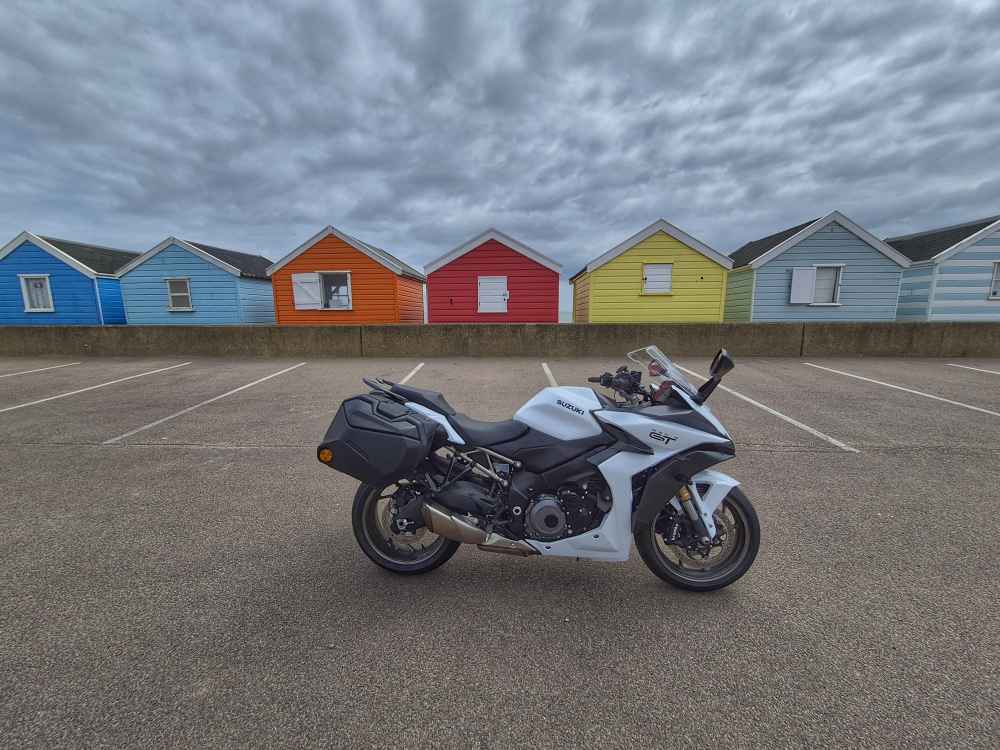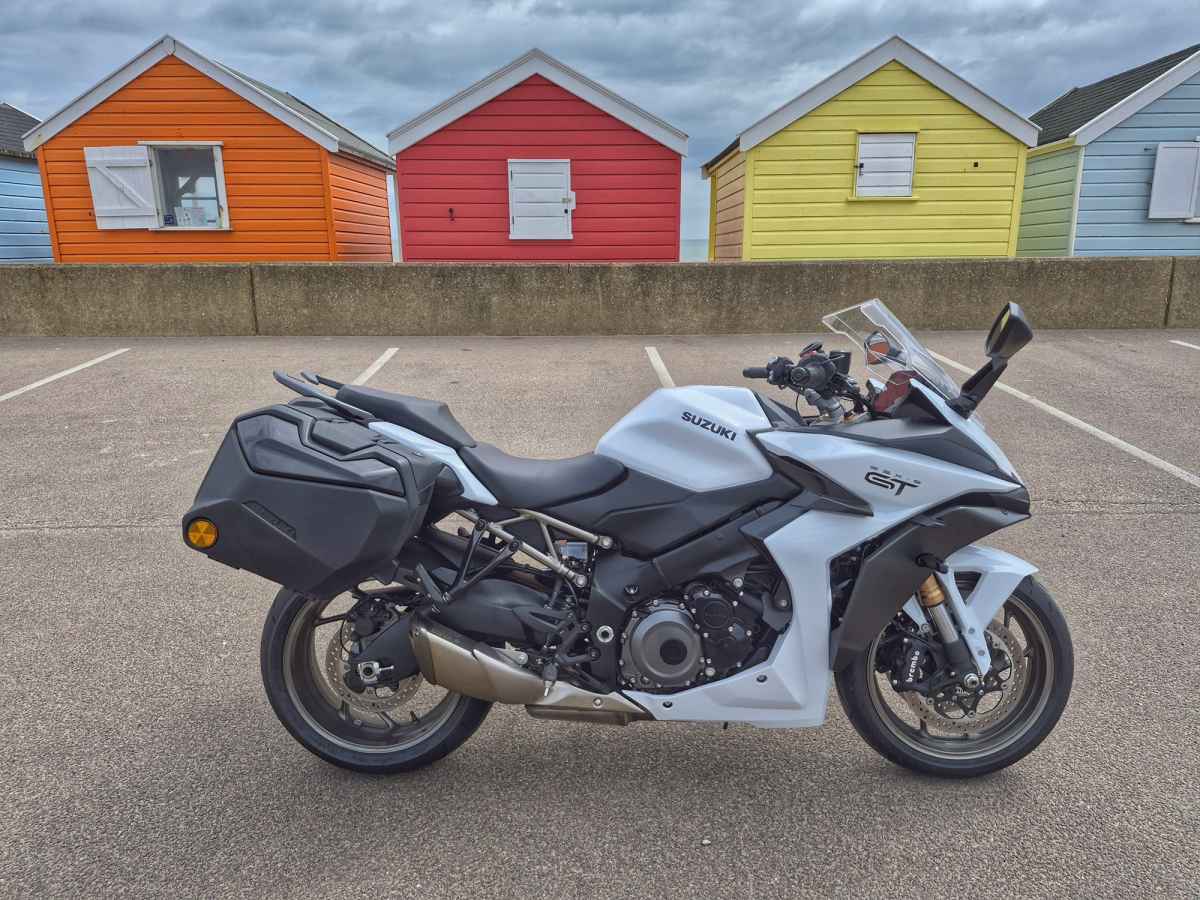
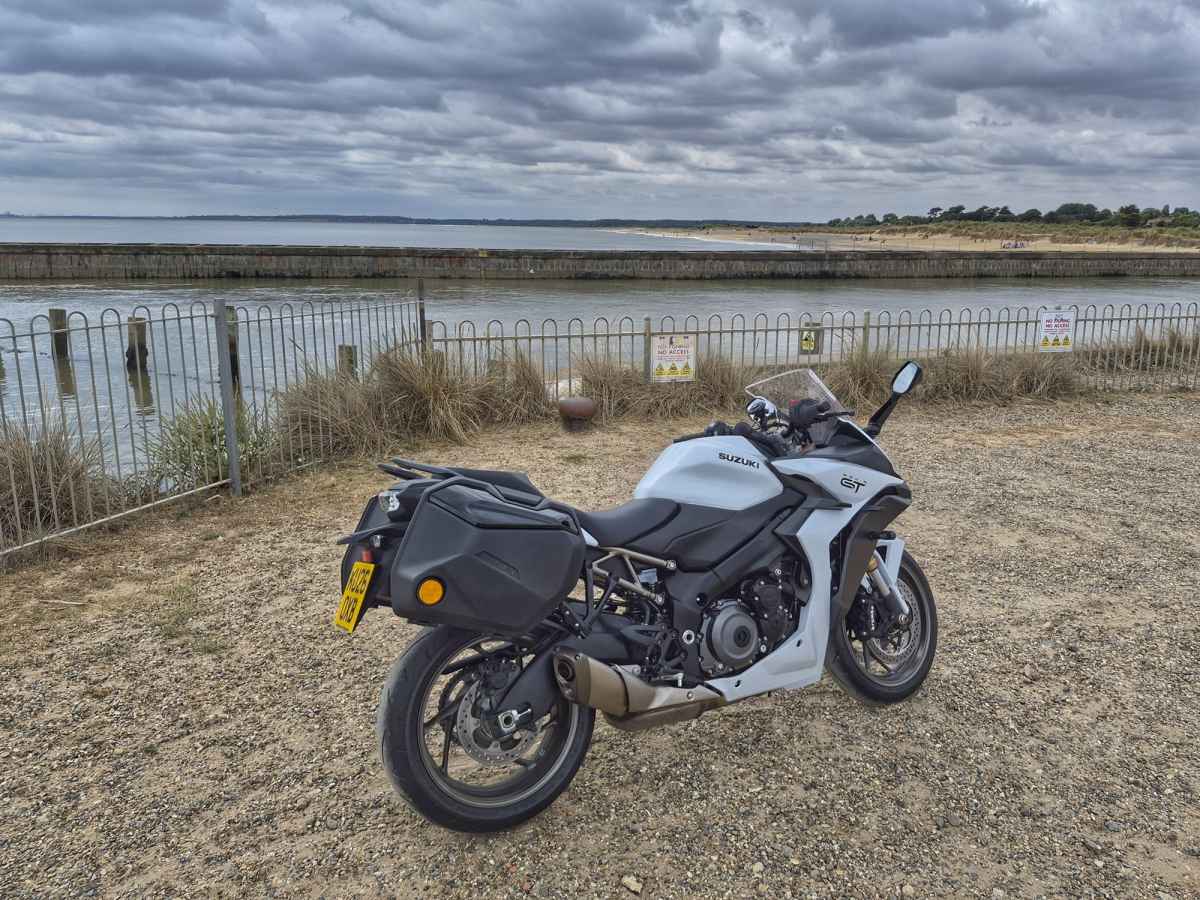
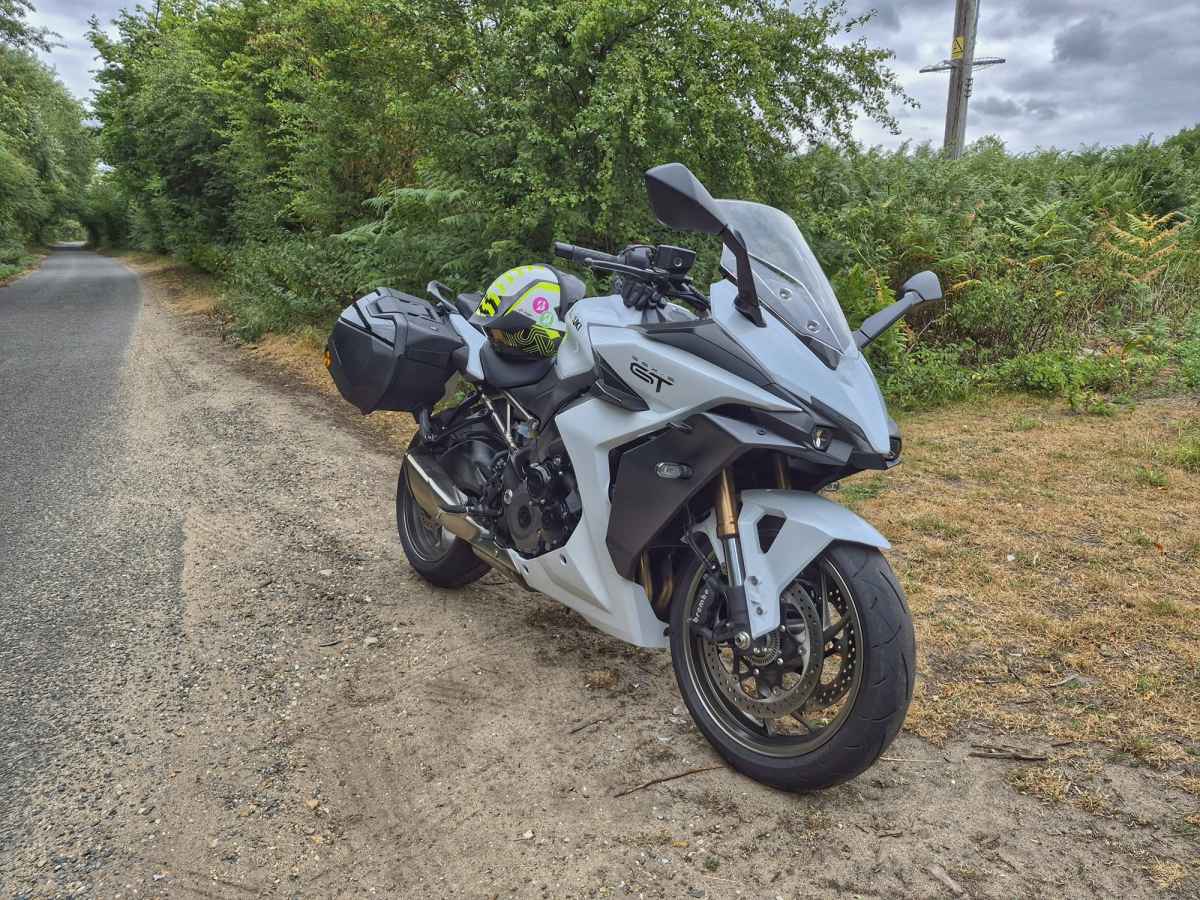

Suzuki GSX-S1000GT - Putting The Sporty in Sports Tourer
Suzuki GSX-S1000GT
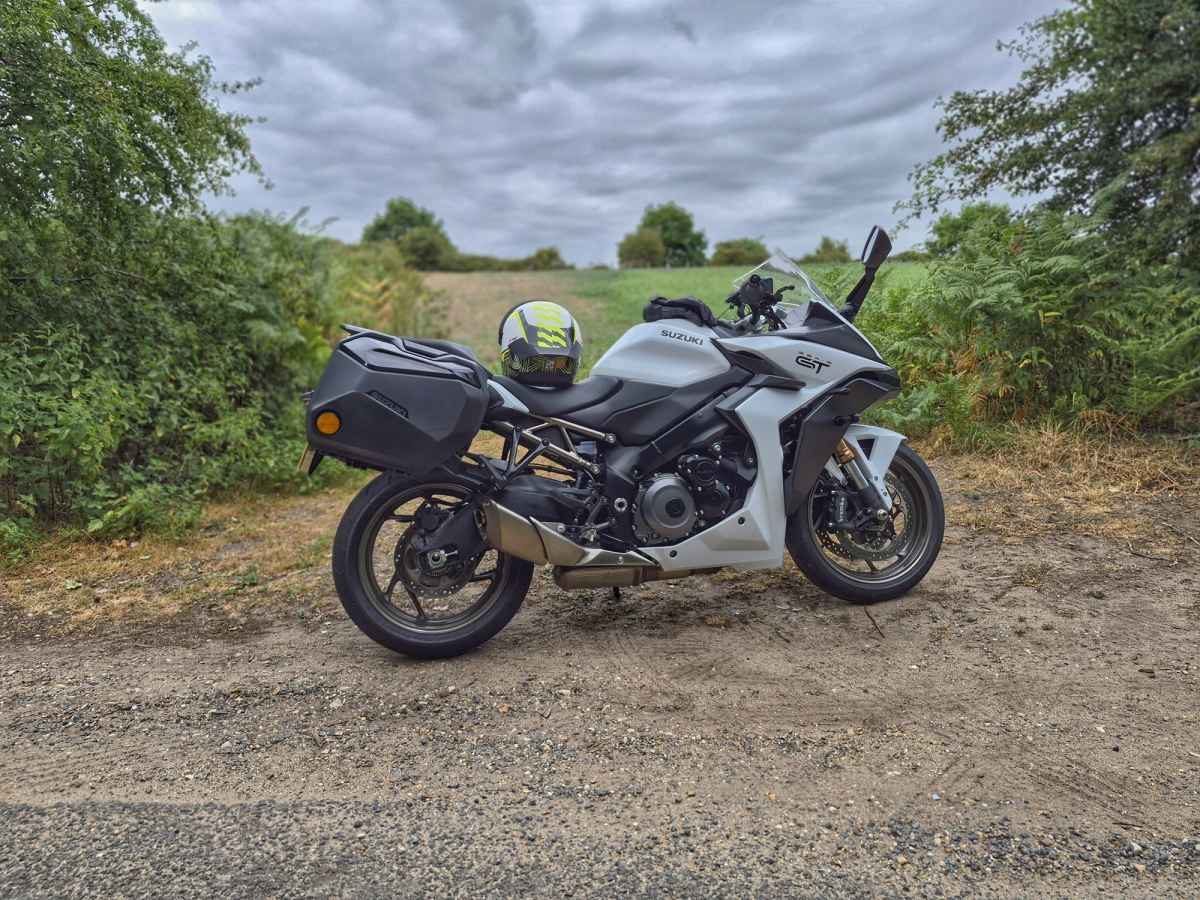
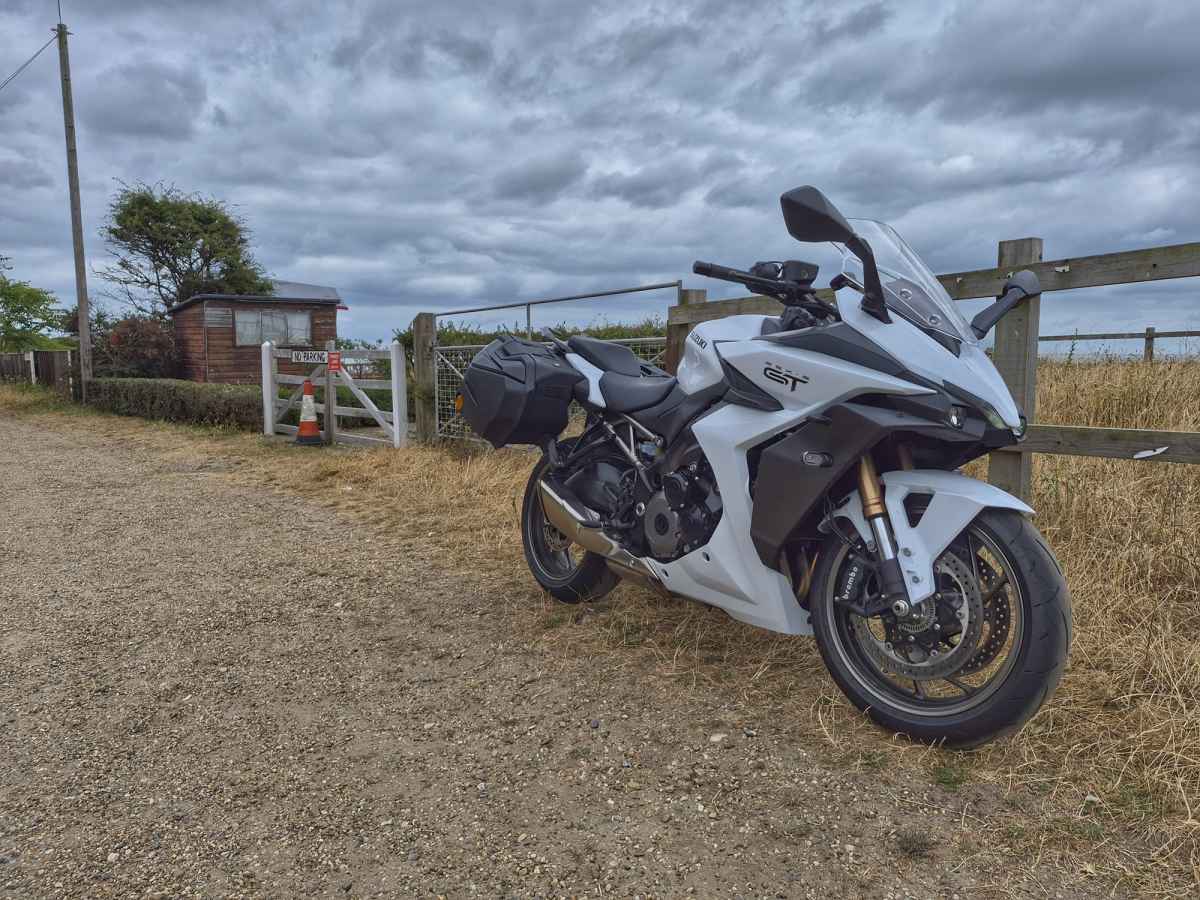
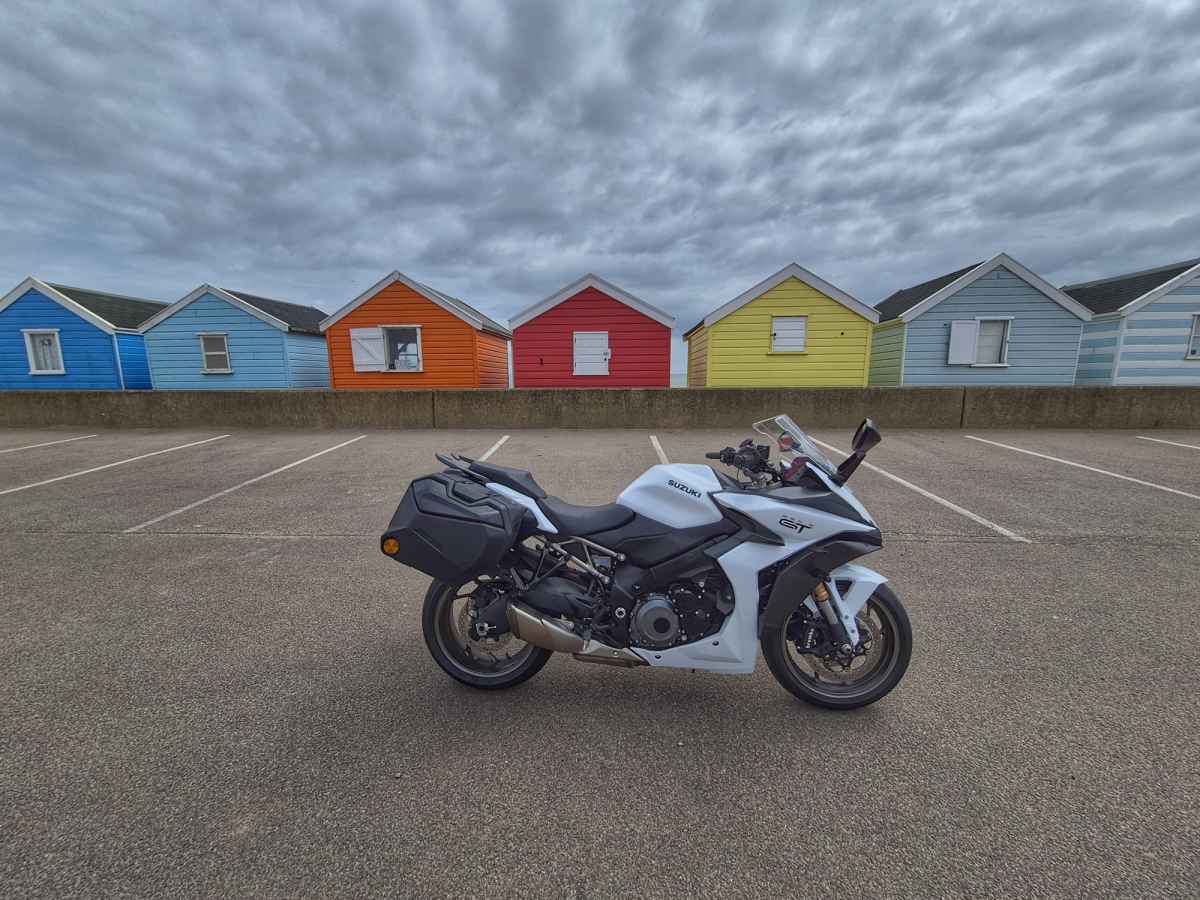
The Suzuki GSX-S1000GT is Suzuki's sport-tourer that replaced the older GSX-S1000F. It takes a legendary superbike powerplant and houses it in a sporty but comfortable, long-distance chassis built for high-speed touring and spirited backroad scratching, and boy, does it deliver.
My bike was the GT+, which includes factory colour-matched 36-litre hard panniers (capable of holding a full-face helmet in each side), and heated grips as standard.
The GSX-S1000GT houses a heavily revised version of the fantastic 2005 GSX-R1000 K5 engine. It was engineered as a high-revving superbike engine with aggressive camshaft profiles, lightweight pistons, and high-flow cylinder heads. In the GSXR100 K5, it put out 178 bhp (131 kW) at 11,000 rpm and 118 Nm (87 lb-ft) of torque @ 9,000 rpm.
In the GT, the engine has been retuned and makes 150 bhp and 106 Nm (78 lb-ft) of torque, providing massive low-to-midrange drive and an explosive top end. There is plenty of midrange, so most of the time you can waft around, short-shifting, surfing on the fat torque curve, but when you want to really hustle, there’s a big shove above 8,500 rpm. It’s a quick bike, make no mistake: that raw, rev-happy superbike foundation remains fully intact.
The 999cc engine doesn't have a heavy secondary balance shaft, so rotational inertia is kept low and throttle response instantaneous. This leaves a subtle, engaging mechanical buzz and gruffness under load that makes the bike feel alive.
Suzuki intentionally redesigned the airbox on the GT platform with revised intake snorkels to produce a deep, visceral induction roar when opening the throttle. Combined with Suzuki's SET (Suzuki Exhaust Tuning) valve, it creates an aggressive, raspy sound.
Some of you might prefer the linear, smooth power delivery of the Ninja 1000SX, but for me, the unrefined, race-derived pedigree of Suzuki's K5 engine offers an addictive adrenaline rush.
The gearbox is a peach. It’s fitted with an up-and-down quickshift, which is very good, as you would expect from Suzuki. It’s not BMW good, but it’s good. Ratios are close, further emphasising the sporty nature of the bike. 3rd to 4th is just a few hundred revs, 4th, 5th and 6th are only a couple of hundred revs apart. You really get through those gears fast. You would assume the trade-off is a lower top speed, but it was still pulling hard at 140 mph on a private road we used, at around 9000 rpm, so plenty to go.
Pegs are high and back, not quite sportsbike high, but enough to give you plenty of ground clearance. You can get to the edge of the tyre without touching anything down, but still ride for a couple of hours and not be cripled. The bars are in a great position: high, wide handlebars that pull the rider into a slightly forward-leaning, neutral position. They pull off that balance of sporty riding position but with all-day-ish comfort. A quick leg stretch every couple of hours or during a fuel stop is a fair trade-off for that level of handling.
Seat height sits at an accessible 810 mm, making it possible to flat-foot the bike at lights. For Kate as a pillion and me as a rider, the seats are ok, comfortable enough, but after an hour or so, they start to get a bit uncomfortable. Now, I'm not a small guy, and Kate is very small, so we sit at either end of the rider spectrum. Our preference would be to get an aftermarket or custom seat covering, which would make the bike almost perfect.
The non-adjustable factory screen is pretty good, but taller riders might struggle. Suzuki offers an optional 70mm taller touring screen, which would be my preference.
Suzuki’s GSX-S1000GT features traditional, fully mechanical suspension rather than the electronic or semi-active setup used on the GX. It uses high-spec KYB components front and rear, tuned specifically to strike a balance between high-speed stability, precise handling, and long-distance touring comfort. Throw in to the mix variables like luggage and a pillion, and it’s an almost impossible task, yet they did it.
At the front, you have 43mm KYB inverted forks, fully adjustable for spring preload, compression damping and rebound damping.
At the rear, there is a link-type KYB rear shock, partially adjustable for spring preload and rebound damping, connected to a heavy-duty aluminium alloy swingarm derived directly from the GSX-R1000 superbike.
The suspension does a great job. Yes, it is very much on the sporty side of sports touring, but this is the nature of the bike. From the factory, Suzuki set the damping firm enough to support fast, spirited road riding without excessive front-end dive under heavy braking from the Brembo brakes; more about those later. It holds its line with laser-guided accuracy, offering zero weave or wallow even when ridden hard at high speed.
The linkage design prevents the rear from sagging excessively when carrying a pillion or luggage, although a couple of clicks of preload on the rear is recommended when fully loaded. Annoyingly, there is no remote preload adjuster, so you’ll have to get the C-spanner out and get under there.
As standard, the rear was a bit harsh over broken tarmac and potholed surfaces, but it can be dialled out: take out some compression damping and turn down the preload and it's fine.
Brakes are an interesting one: On one hand, the twin 310mm floating discs paired with radial-mount Brembo four-piston monobloc callipers up front, and a 240mm single disc with a single-piston Nissin calliper at the rear do a fine job of stopping the bike. There is plenty of stopping power when squeezed hard.
However, Suzuki fitted the GSX-S1000GT with an axial master cylinder and standard rubber brake lines, and the result seems to be a lack of initial bite and a softer feel at the lever, rather than the sharp, firm lever I like. You also have conventional, non-lean-sensitive ABS.
The electronic package on the Suzuki GSX-S1000GT is built around the Suzuki Intelligent Ride System (S.I.R.S.). Interestingly, the GT doesn't have a 6-axis IMU, like some of its competitors. Suzuki’s rationale was that omitting the 6-axis IMU saved significant development, hardware, and licensing costs, plus the chassis is so stable that traditional wheel-speed-based Traction Control and ABS are more than enough for 95% of road riding.
The electronics package consists of:
- Bi-Directional Quickshifter.
- Cruise Control.
- Suzuki Drive Mode Selector (SDMS) - Mode A (Active), Mode B (Basic), Mode C (Comfort).
- Suzuki Traction Control System (STCS). Featuring 5 selectable levels (plus off)
- Low RPM Assist & Easy Start.
- ABS. Standard, non-lean-sensitive ABS.
There's a 6.5-Inch Full-Colour TFT Display which uses the same visual design language and clean Suzuki font as other bikes in the range. It's Crisp and easy to read in varying light conditions.
Suzuki mySPIN App: I've never really got on with this. mySPIN is like a hub, and you can upload various apps to it, like satnav, etc. Personally, I don't particularly like it. You can't use Google Maps, Waze, Calimoto, Scenic or many other apps. You have to use the apps available in the mySPIN ecosystem. I attached a Quadlock and used my phone; problem solved.
I was lucky enough to have been on the UK launch of this bike. We had two days on the amazing roads in Scotland and got to know the bike well.
Then, as now, the main criticism was simply the OE-fitment tyres. Suzuki has fitted Dunlop Sportmax Roadsport 2 tyres. You'll have heard it before, but they are pretty average and do the bike an injustice. They're fine, and on a warm day, when you've got some heat into them, they're good, with plenty of grip, but they lack feel.
If I bought a GSX-S1000GT, and I genuinely would, I would swap out the Dunlop Sportmax Road Sport 2 tyres for something like Dunlop RoadSmart IV. I would fit the taller screen, get the seat recovered and fit a radial master cylinder and braided steel lines. That would transform the GSX-S1000GT into just about the perfect bike for us.
It would be an absolute weapon that you could ride all day.
Specs at a Glance
Specification
Value - £11,999
Engine - 999cc Inline-4, 16-valve DOHC
Power - 150 bhp (152 PS) @ 11,000 rpm
Torque - 106 Nm (78 lb-ft) @ 9,250 rpm
Kerb Weight - ~226 kg
Fuel Capacity - 19 Litres (~46–49 mpg average)
Seat Height - 810 mm