
Aston Martin Valen: The Ultimate Front Engined Supercar.
With 838bhp, a 214mph top speed, a full carbon-fibre body and production limited to 150 cars, the new Aston Martin Valen pushes Aston’s front-engined V12 formula to its limit.
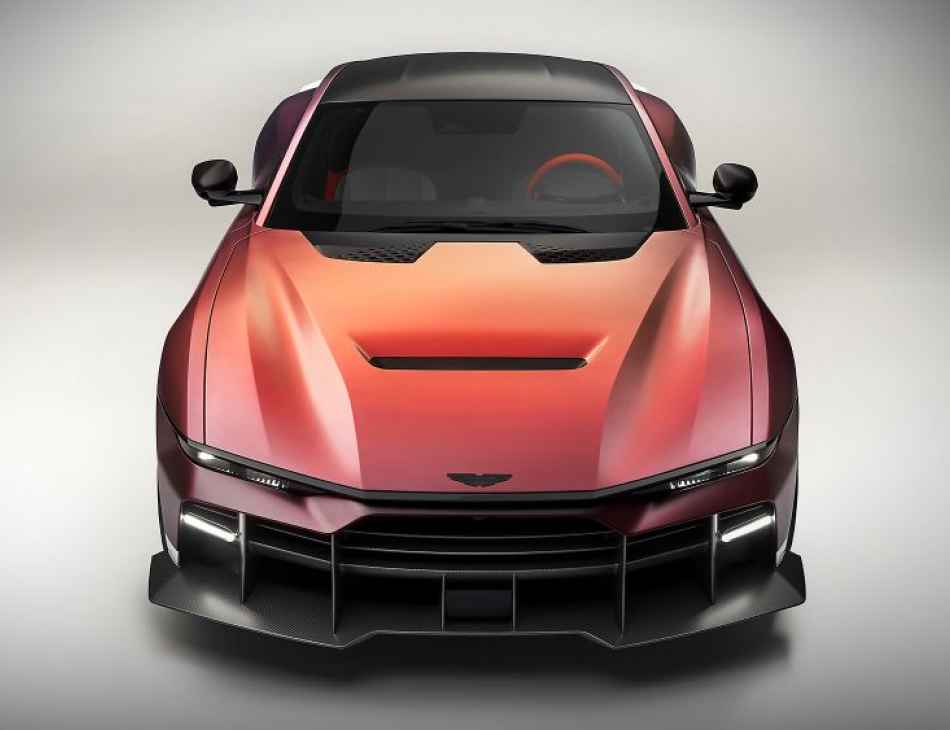
Aston Martin Valen
Aston Martin is not short of powerful front-engined cars, but the new Valen takes things considerably further. Revealed during Monterey Car Week, it is the most powerful front-engined Aston Martin in the company’s 113-year history and according to Aston Martin, the world’s most powerful front-engined production car.
Its 5.2-litre twin-turbocharged V12 produces a staggering 838bhp, together with 1,000Nm of torque. Aston Martin is targeting 0-60mph in 3.0 seconds, while the top speed is electronically limited to 214mph. Production will be restricted to 150 cars worldwide, with the first deliveries expected during the second quarter of 2027.
The Valen is the latest limited-production model from Q by Aston Martin, following cars including the DBR22, Valour and Valiant. Development was handled by Aston Martin’s newly formed Special Vehicle Operations department.
Its name comes from the Latin word ‘valens’, meaning strong or powerful and continues Aston Martin’s preference for performance cars beginning with the letter V. Finding suitable names must be getting increasingly difficult.
The V12 sends its power to the rear wheels through a rear-mounted eight-speed ZF automatic gearbox. There is no manual option this time, but the transmission has received bespoke calibration using shift strategies developed through Aston Martin’s Vantage GT4 racing programme.
The result is faster and more direct gear changes across the available driving modes. Wet, Sport, Sport+, Track and Individual settings alter the powertrain, steering and chassis characteristics.
Throttle response also changes according to the selected mode. Sport and Sport+ use a shorter pedal map, delivering more power earlier in the accelerator’s travel. Track mode uses a longer, more progressive map to provide better control when the car is operating close to its limits.
Considerable work has also gone into making the Valen lighter. Aston Martin claims a reduction of up to 110kg compared with its core V12 platform, although the finished weight has not yet been confirmed.
The body is made entirely from carbon fibre, while aluminium, titanium and magnesium are used throughout the car. Standard magnesium wheels reduce unsprung mass, while an optional lightweight package adds machined aluminium suspension arms and knuckles together with titanium chassis bolts. This package alone saves 16.9kg.
The 21-inch wheels are fitted with specially developed Pirelli P Zero R tyres measuring 275/35 at the front and 325/30 at the rear. Bespoke P Zero Winter 2 tyres will also be available for those planning to use their 838bhp limited-production Aston Martin throughout the British winter.
In selected markets, the tyres incorporate Pirelli Cyber Tyre technology. This sends real-time tyre information to the car’s electronic systems, allowing the stability control, anti-lock brakes and traction control to adjust according to the available grip.
The chassis has been comprehensively revised. The Valen uses model-specific springs, helper springs and Bilstein DTX semi-active dampers, together with a solid-mounted rear subframe.
Aston Martin has increased lateral stiffness, reduced body roll and recalibrated the steering to make the Valen feel shorter and lighter than its dimensions suggest. At 4,830mm long and 2,120mm wide including its mirrors, it remains a substantial car.
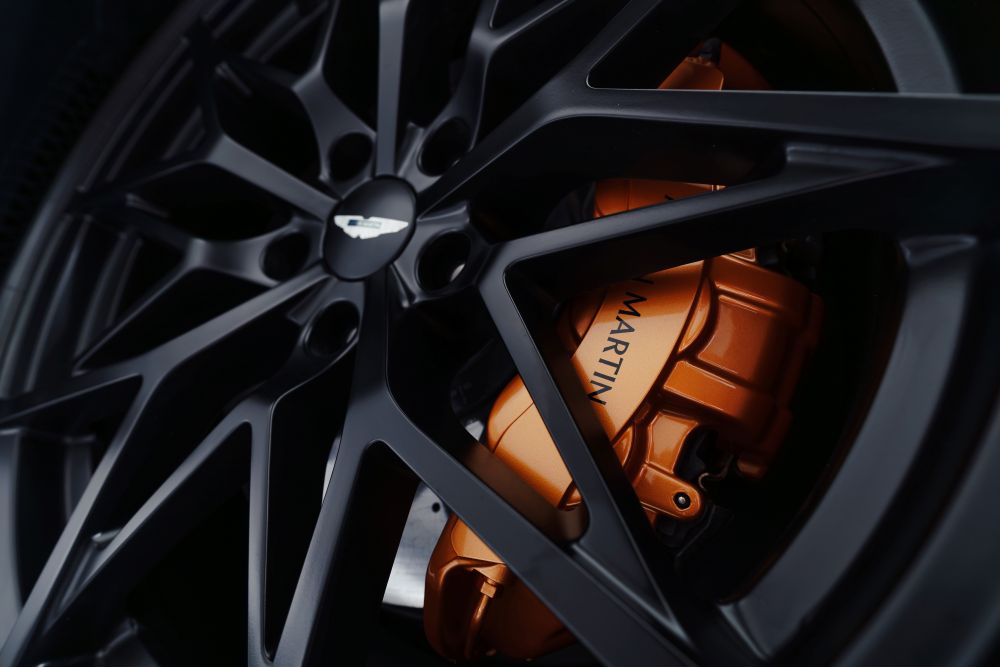
Weight distribution is 53:47 front to rear, helped by the front-mid-mounted engine and rear-mounted transmission. Carbon-ceramic brakes are fitted as standard, with 410mm discs at the front and 360mm discs at the rear.
The titanium exhaust system has also been developed specifically for the car. Four outlets are arranged across two levels, with the upper pipes permanently open and the lower pair controlled by valves.
The upper outlets have been tuned in a similar manner to organ pipes, increasing resonance as the engine speed rises. Lower frequencies have been reduced and higher tones amplified to give the Valen a sharper and more aggressive V12 sound.
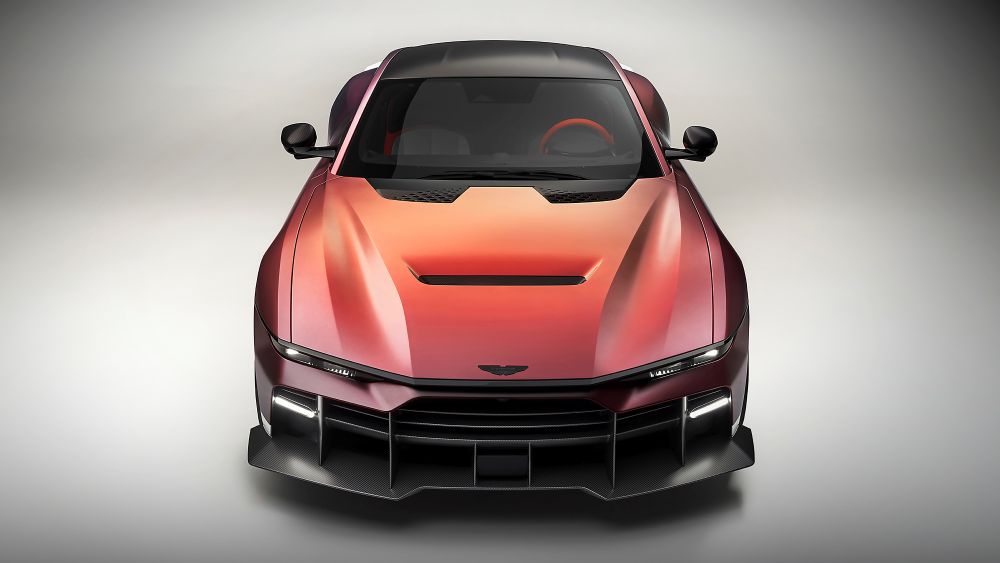
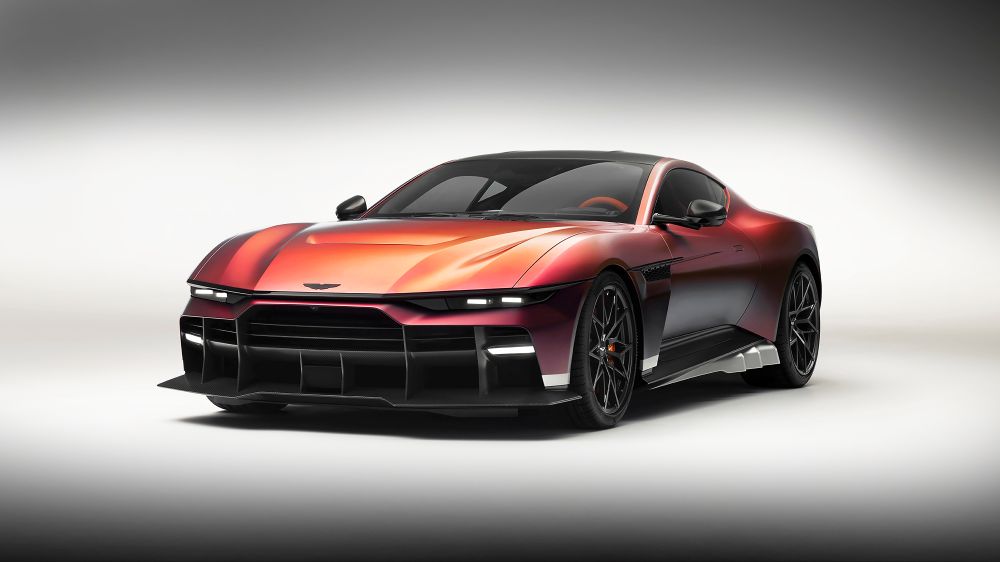
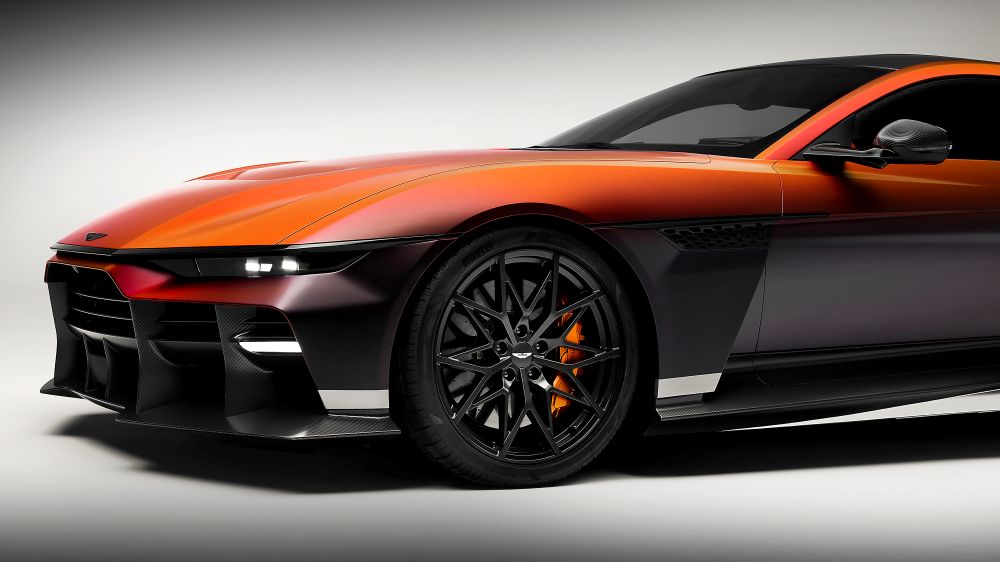
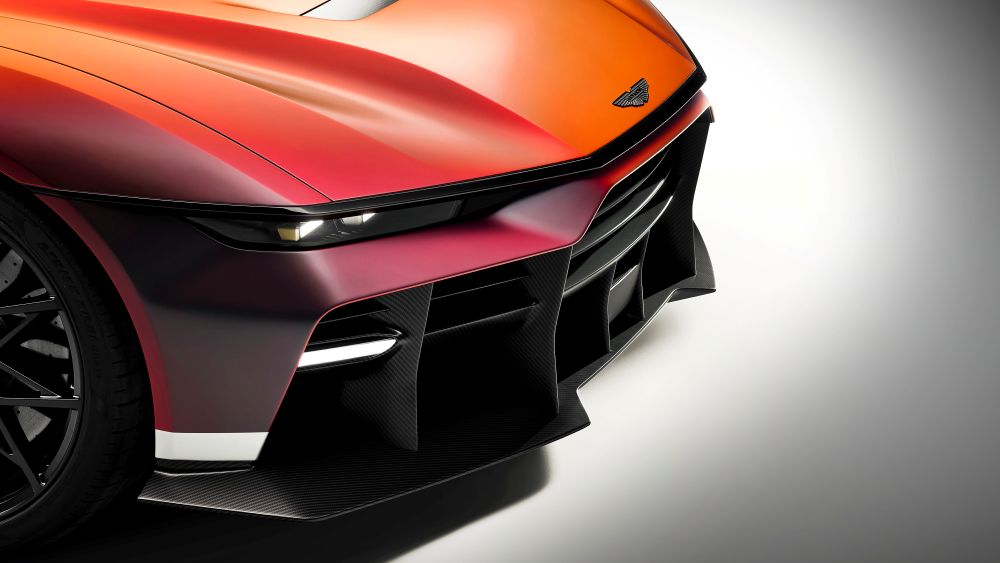
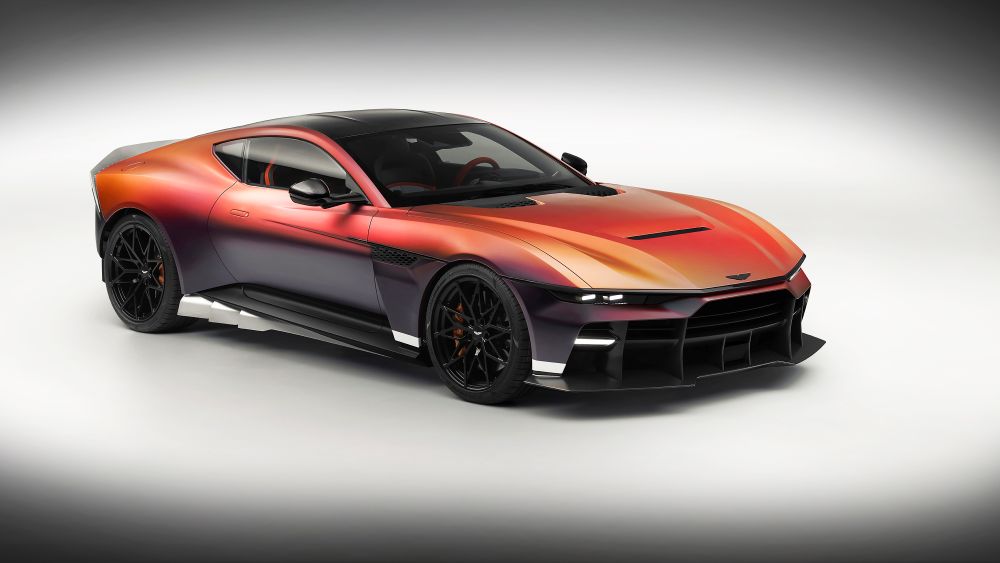
Visually, the Valen is a major departure from the cleaner design of Aston Martin’s core models. The front is dominated by narrow headlights, an angular radiator opening and an enormous carbon-fibre splitter.
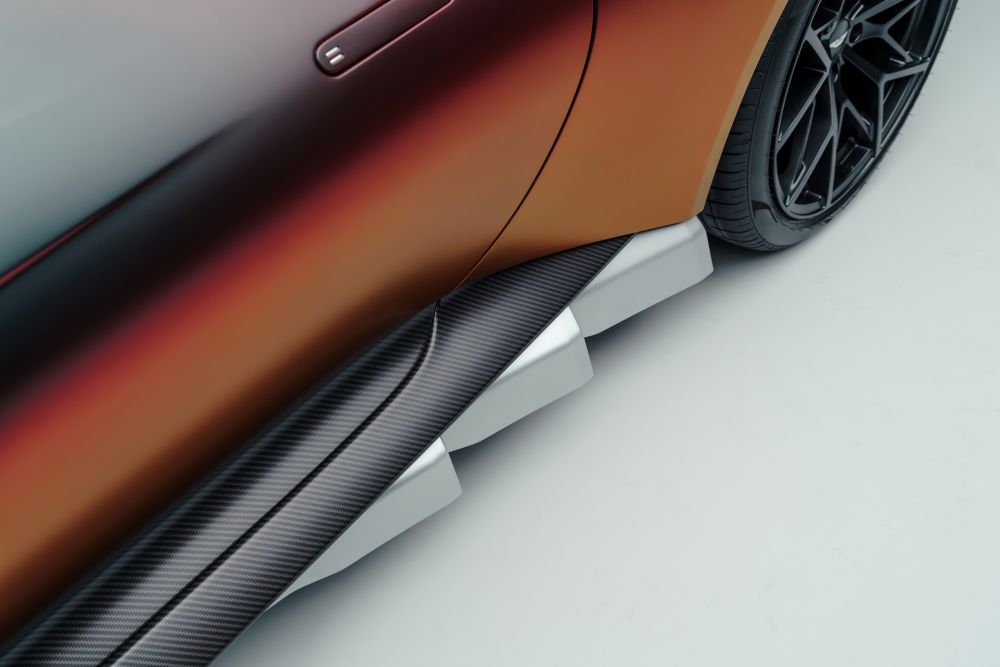
Large vertical elements manage airflow around the nose, while vents behind the front wheels extend into elongated side strakes. Stepped side sills and saw-tooth vortex generators help extract air from beneath the car, reducing lift and generating additional downforce. Subtle it is not.
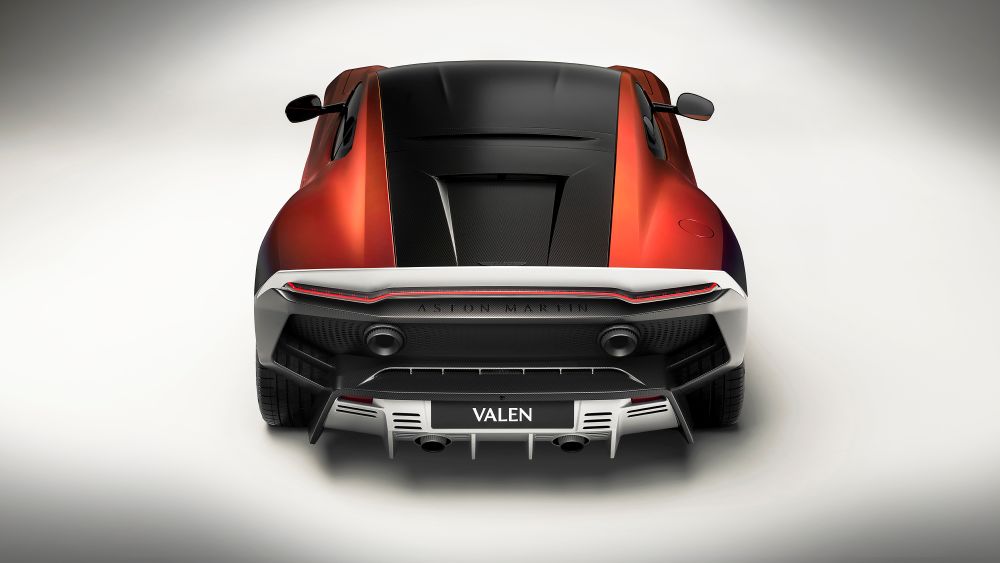
At the rear, the usual glass window and separate boot lid have been replaced by a solid tailgate. An integrated upswept section acts as a Gurney flap, producing downforce without requiring a conventional fixed rear wing.
A full-width light bar sits above a perforated panel which allows heat to escape from the exhaust system. The two upper exhaust outlets sit beneath this panel, while the remaining pair is incorporated lower down within the diffuser.
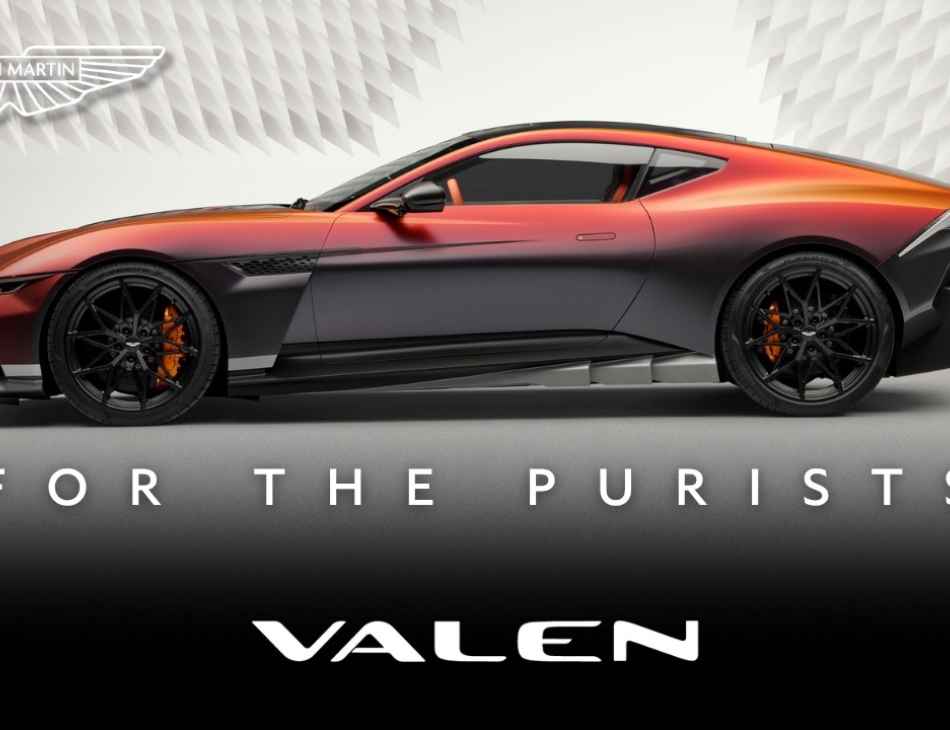
The launch car is finished in Satin Andromeda Red, a Q-developed paint which shifts between red, copper, gold and blue according to the lighting. Buyers can also specify a fully exposed carbon-fibre body with a choice of gloss, satin or tinted finishes.
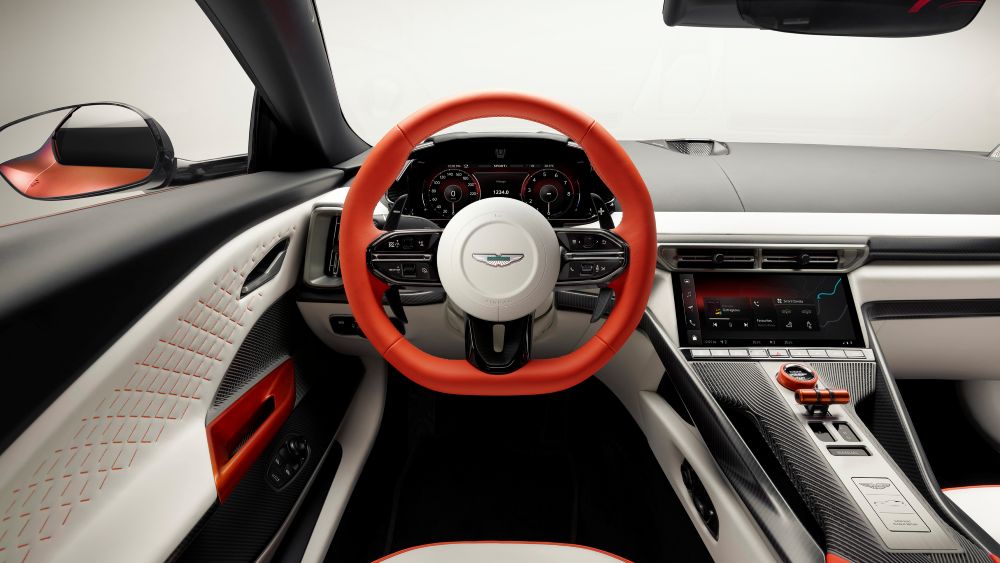
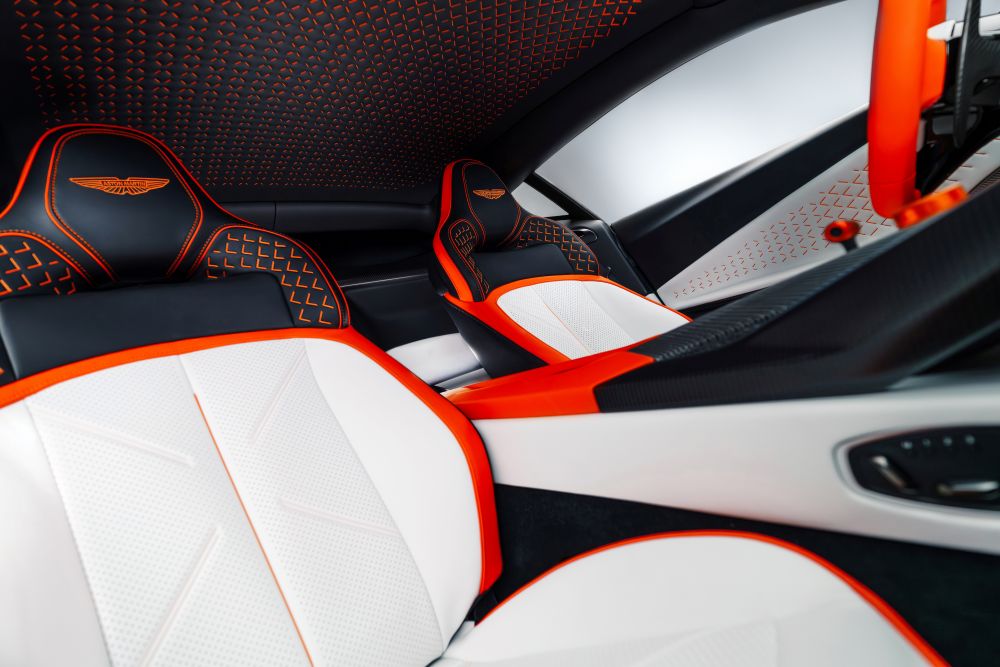
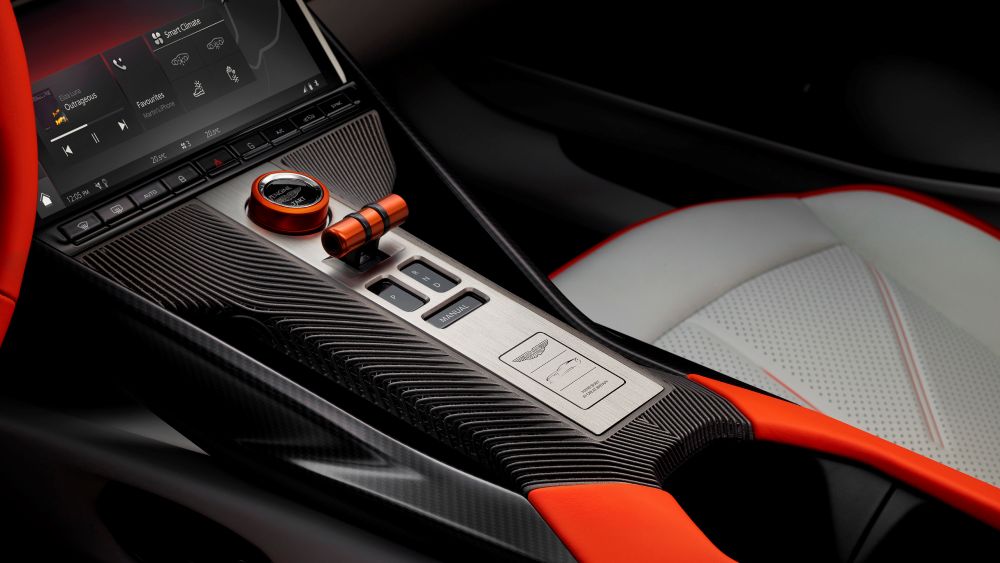
Inside, the Valen has a two-seat cabin with a new lightweight centre console angled towards the driver. The design incorporates 3D-printed components and a performance switch panel first introduced on the mid-engined Valhalla.
For me, the Valen sits somewhere between a traditional Aston Martin grand tourer and the company’s more extreme limited-production specials. It retains a front-mounted V12, rear-wheel drive, luggage space and a properly trimmed cabin but adds a full carbon body, substantial weight reduction and much more aggressive aerodynamics.
It is faster, lighter and considerably more dramatic than Aston Martin’s core V12 models. Whether the styling is elegant or excessive will depend on individual taste, but there is little doubt that the Valen has presence.