
No Rules, No Signature, No Limits: Seven Days in Washington State Wine Country
America's second-largest wine state grows over 80 grape varieties across 21 AVAs — and refuses to be pinned down by any of them. I spent seven days in Washington discovering why the world's wine lovers need to book their flights now.
Washington State Wine Tour
There is a moment, somewhere between your third glass of Grenache poured on the banks of the Columbia River and a Basque-inspired Garnacha raised above Walla Walla's rolling hills, when Washington State stops surprising you — and starts making complete sense. This is a wine region that actively refuses to be defined by a single grape, a single style, or a single landscape. Over seven extraordinary days, I discovered that this refusal is not a weakness. It is Washington's greatest strength.
The statistics alone should command attention. The second largest wine producer in the United States. More than 1,050 licensed wineries. Over 56,000 acres of wine grapes. Twenty-one distinct American Viticultural Areas. And — the number that stopped every European wine professional I mentioned it to — more than 80 grape varieties in commercial production. Cabernet Sauvignon and Chardonnay sit alongside Albariño and Garnacha; Touriga Nacional grows beside Lemberger and Mourvèdre. Washington's wine story is, emphatically, still being written.
"The best part of the Washington State wine story has not been written yet." — Matt Austin, Grosgrain Vineyards
Those words followed me for the rest of the week — and felt truer with every glass. Washington sits at the 46th parallel, the same latitude as Burgundy and the Rhône, its eastern wine country shielded from Pacific rain by the twin ranges of the Olympic and Cascade mountains. East of those peaks lies a sun-baked semi-desert of extraordinary intensity: up to 17 hours of summer daylight, temperature swings of 30 to 40°F between day and night, and an autumn cool-down so swift that harvest often begins in late August — weeks ahead of most of the wine world — preserving a natural acidity that warmer regions simply cannot replicate. The Columbia River, the fourth largest in North America, provides the irrigation that makes viticulture possible at all. The geology does the rest.
What sets Washington apart as much as its terroir, however, is the culture its people have built on top of it. Around 90% of the state’s wineries produce fewer than 5,000 cases a year. These are not corporations — they are families, partnerships, and passionate individuals who tend to know each other, share knowledge at harvest, and take a genuine interest in each other’s successes. Many winemakers don’t even grow their own fruit: the grower-winemaker relationship is one of Washington’s most distinctive structural features, with producers in Seattle or Woodinville sourcing from trusted growers hundreds of miles east, bound by long-term contracts and, just as often, by friendship. The conversations about canopy management, irrigation timing, and harvest dates are as central to the finished wine as the winemaking itself. Washington wine is, in this sense, a collaborative art form — and a young one. Commercial viticulture here dates only from the late 1960s; pioneers who planted Cabernet on slopes nobody believed in, and from that act of faith built an industry that now runs to over 1,050 wineries and 56,000 acres of vine. California had two centuries’ head start. Bordeaux had a thousand years. Washington did all of this from scratch — and is, emphatically, still only getting started.
Seattle & Woodinville: The Opening Act
We arrived into Seattle-Tacoma International Airport — one of America’s best-connected hubs for European travellers, with non-stop services from London, Dublin, Paris, Amsterdam, Frankfurt and beyond — and the city wasted no time setting the tone. The Space Needle at dusk. Pike Place Market in the sharp morning cold. And that first evening, dinner at FlintCreek with Andrew Will Winery and Two Vintners: structured Bordeaux reds from one of Washington’s genuinely founding estates — Bill Powers planted Andrew Will’s first vines in the early 1980s, when Washington wine was still a punchline — alongside a newer, more experimental voice from Two Vintners. The contrast was a perfect overture to the whole trip: old conviction and new ambition, side by side at the same table.
The following morning, Woodinville — a remarkable community just north of Seattle hosting over 130 wineries despite growing not a single grape of its own — made the grower-winemaker relationship suddenly concrete. Here it is: production facilities and tasting rooms clustered together, all of them supplied by vineyards hundreds of miles east. You can taste Red Mountain Cabernet or Yakima Valley Syrah, shaped by a Woodinville winemaker’s hand, without ever leaving a single postcode. It is an arrangement that should, logically, feel wrong. In practice, it produces some of Washington’s finest wine — and it works precisely because the partnerships behind it are built on trust, respect, and, usually, years of shared history.
★ LATTA WINES — SEATTLE
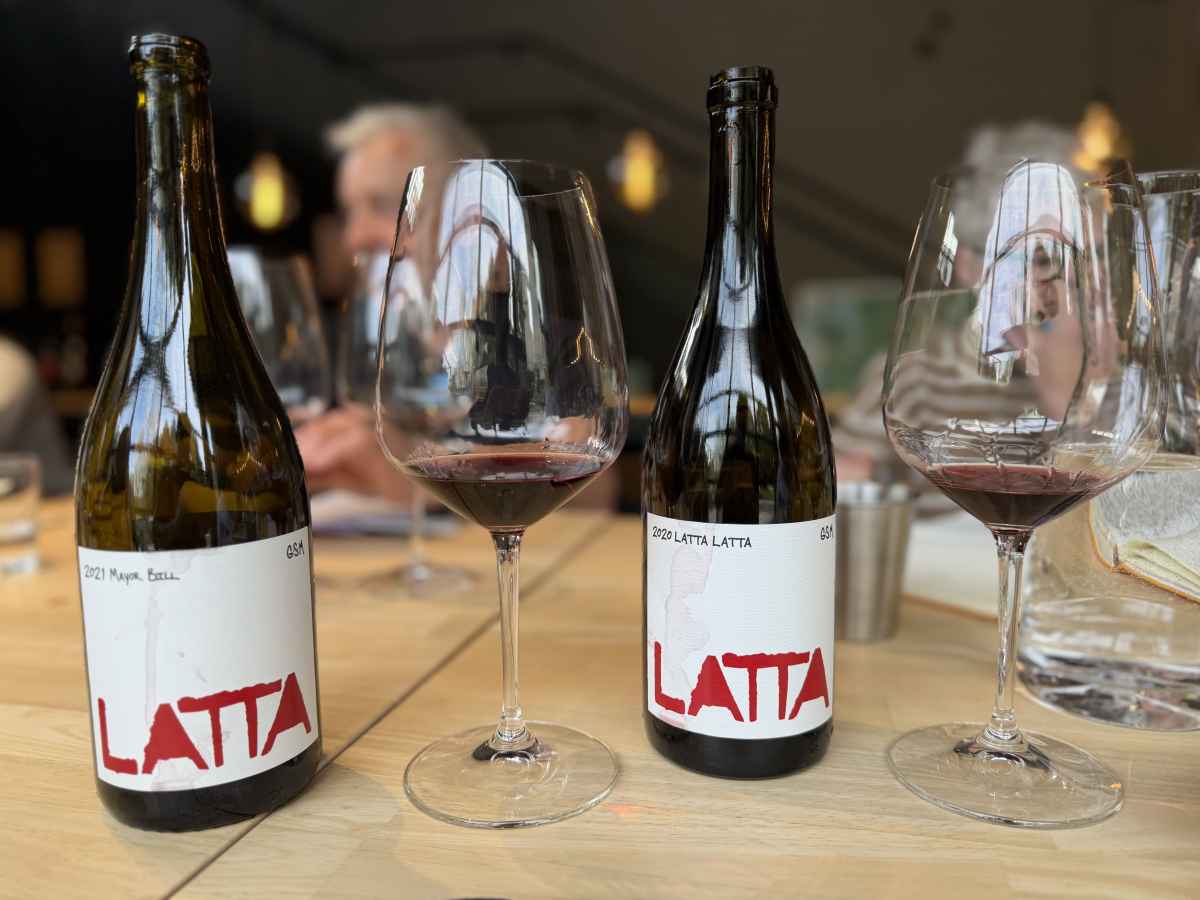
Andrew Latta is a man with a mission, and that mission has a name: Grenache. His Mayor Bill 2021 GSM — 71% Grenache, completing with Syrah and Mourvèdre — is perhaps the most personally expressive wine I tasted all week. Grenache, Latta will tell you without hesitation, is his favourite grape, and it shows: the wine has a translucent, almost Pinot-like delicacy on the surface, with a core of wild strawberry and garrigue that builds to something genuinely profound. If you taste one Washington GSM, make it this one.
LATTA Mayor Bill 2021 GSM 71% Grenache — Latta's signature and passion. Wild red fruit, garrigue, remarkable depth.
★ DELILLE CELLARS — WOODINVILLE
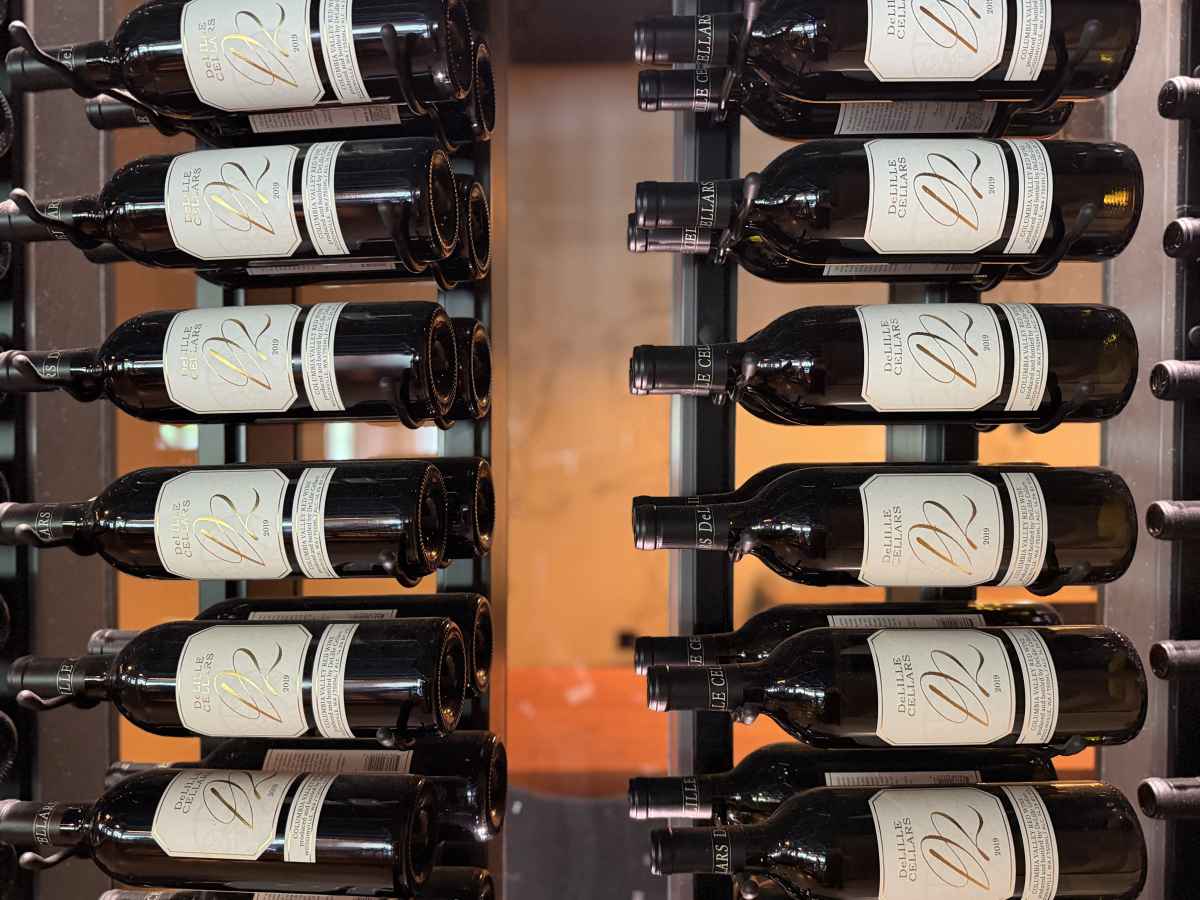
DeLille is one of Washington's landmark estates, and Head of Winemaking Jason Gorski poured what was, for Bordeaux lovers, one of the week's defining bottles. The Chaleur 2022 from Red Mountain fruit is a blend of old-world composure and new-world generosity — dark cassis, cedar, and a structure that will reward a decade of patience. DeLille has long been Washington's argument for why it can match the world's great Cabernet-based wines. The Chaleur 2022 makes that argument with quiet authority.
DeLille Chaleur 2022 Red Mountain fruit. Cassis, cedar, impeccable structure. A Washington benchmark.
Dinner that evening at Café Campagne brought Cadence Winery's Ben Smith to the table. His 2012 Cadence — tasted a full thirteen years after harvest — was still fresh, still balanced, still vibrant. It was one of the evening's most eloquent arguments for the ageing potential of Washington's finest reds, and a reminder that this is a wine country with serious cellar ambitions.
Cadence 2012 Tasted 13 years on — fresh, balanced, alive. A quiet masterclass in Washington's ageing potential.
Yakima Valley: Washington's Beating Heart
We crossed the Cascades at first light, pausing at Snoqualmie Falls — the thundering 270-foot waterfall immortalised by Twin Peaks — and then drove east as the landscape performed its extraordinary transformation. Within an hour, the lush Pacific green had gone: in its place, brown rolling hills, sagebrush flats, and the wide brown ribbon of the Columbia River. The sky turned enormous. I remember thinking: this doesn’t look like wine country. Then I remembered thinking the same about Châteauneuf-du-Pape the first time.
What shaped this landscape was violence on a geological scale. During the last Ice Age, a vast body of water — Glacial Lake Missoula, holding roughly the combined volume of Lakes Erie and Ontario — was repeatedly dammed and catastrophically released by shifting glacial ice. Walls of water up to 600 feet high tore westward across eastern Washington at speeds approaching 65 miles per hour, stripping the land to basalt bedrock and depositing the deep, mineral-rich loess and sediment layers that now underlie almost every great vineyard in the region. The scars are still readable in the landscape: the scoured rock formations, the dry coulees, the ancient ripple marks etched into ridges far above the valley floors. Drive through the Yakima Valley and you are driving, in a very real sense, through the birthplace of Washington wine. Crucially, these flood-deposited soils are largely free of phylloxera — the vine louse that devastated European vineyards in the 19th century — meaning that many Washington vines grow on their own ungrafted roots, a rarity that older wine regions can only envy.
Washington’s twenty-one American Viticultural Areas are nested, overlapping, and enormously varied — and understanding their geography is the key to understanding the wines. The Columbia Valley is the master AVA: a vast, arid basin covering roughly a third of the state, within which virtually all the others sit. It is the engine room, the common ground, the origin statement on more Washington wine labels than any other name. Within it, the Yakima Valley — the oldest, most established AVA — runs northwest to southeast along the river that shares its name, with sub-appellations including Rattlesnake Hills and Snipes Mountain offering further granularity. Red Mountain, tiny and fierce, occupies barely 4,000 acres on a wind-blasted south-facing slope above the Yakima River; the concentration of Cabernet Sauvignon planted there is matched only by the concentration of winemakers who covet its fruit. Walla Walla, in the southeast corner, straddles the Oregon border and combines volcanic basalt soils with a rainfall slightly higher than the rest of eastern Washington, giving wines with a natural structure that requires less intervention. The Columbia River Gorge — shared with Oregon — has its own AVA designation and its own character: cooler, windier, with the river’s moderating influence giving wines of a freshness and delicacy that contrasts sharply with the power of Red Mountain. Each of these places makes wine that is unmistakably itself.
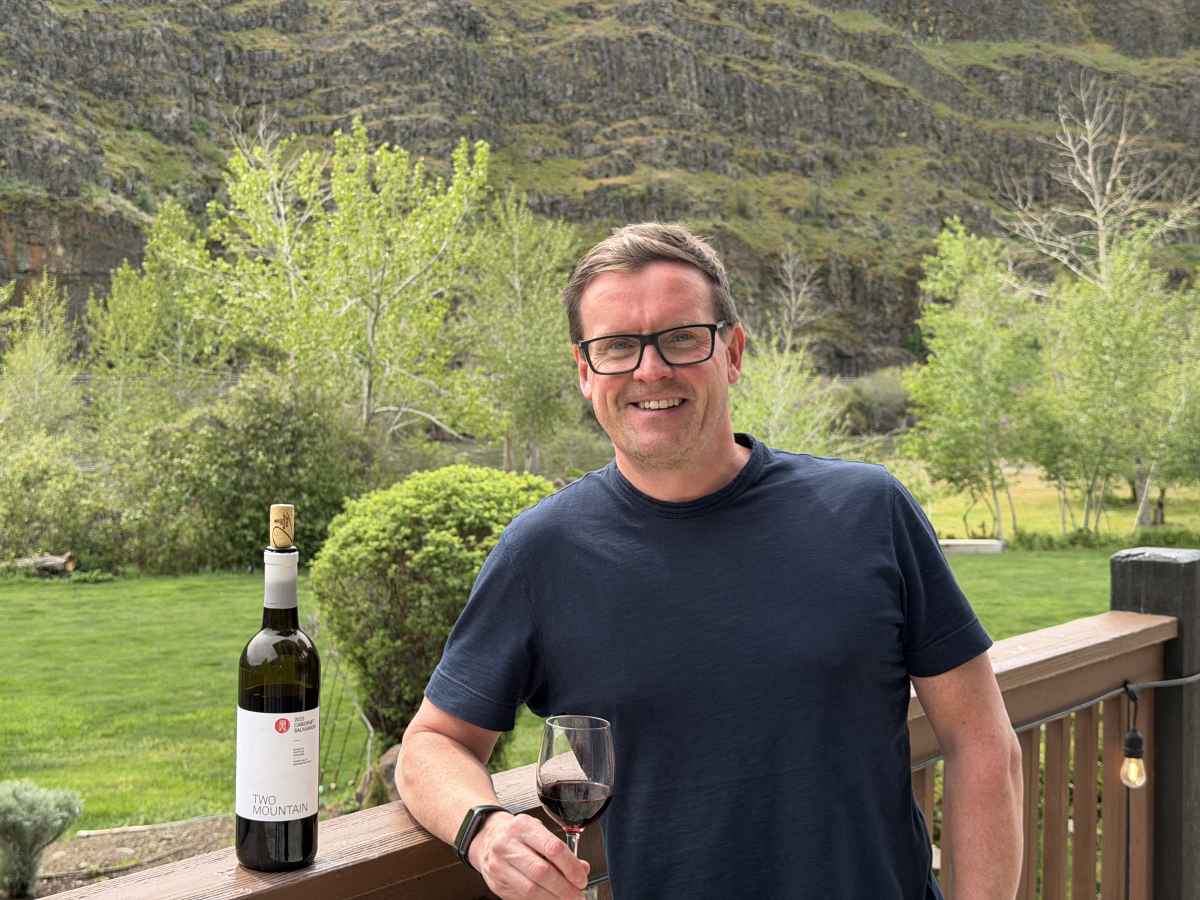
A boat tour of the Yakima Canyon with Two Mountain Winery and Dineen Vineyards was one of the week's great pleasures — wine glass in hand, canyon walls rising above, the river flat and brown below. Two Mountain's Hidden Horse Red Blend No.22 has a generosity and approachability that perfectly suits the setting: this is wine for sharing, for picnics, for life. Their Riesling, by contrast, showed the crisp, off-dry precision that Washington does so naturally with this variety. Marissa Dineen's Syrah 2022 was another high point — peppery, iron-tinged, and bracingly fresh for a variety that can easily tip into heaviness.
Two Mountain Hidden Horse Red Blend No.22 Generous, approachable, built for sharing.
Two Mountain Riesling Crisp, off-dry, precisely Washington.
Dineen Syrah 2022 Peppery, mineral, bracingly fresh.
Idilico's Yakima Valley Albariño 2024 — encountered during the valley's tastings — was one of the week's most unexpected pleasures: bright, saline, and genuinely Galician in character despite growing thousands of miles from the Atlantic. Washington's capacity to make compelling Spanish white varieties is one of the region's least-discussed achievements, and this wine made the case compellingly.
Idilico Yakima Valley Albariño 2024 Bright, saline, Galician in character. One of the week's great surprises.
★ GILBERT CELLARS — YAKIMA VALLEY
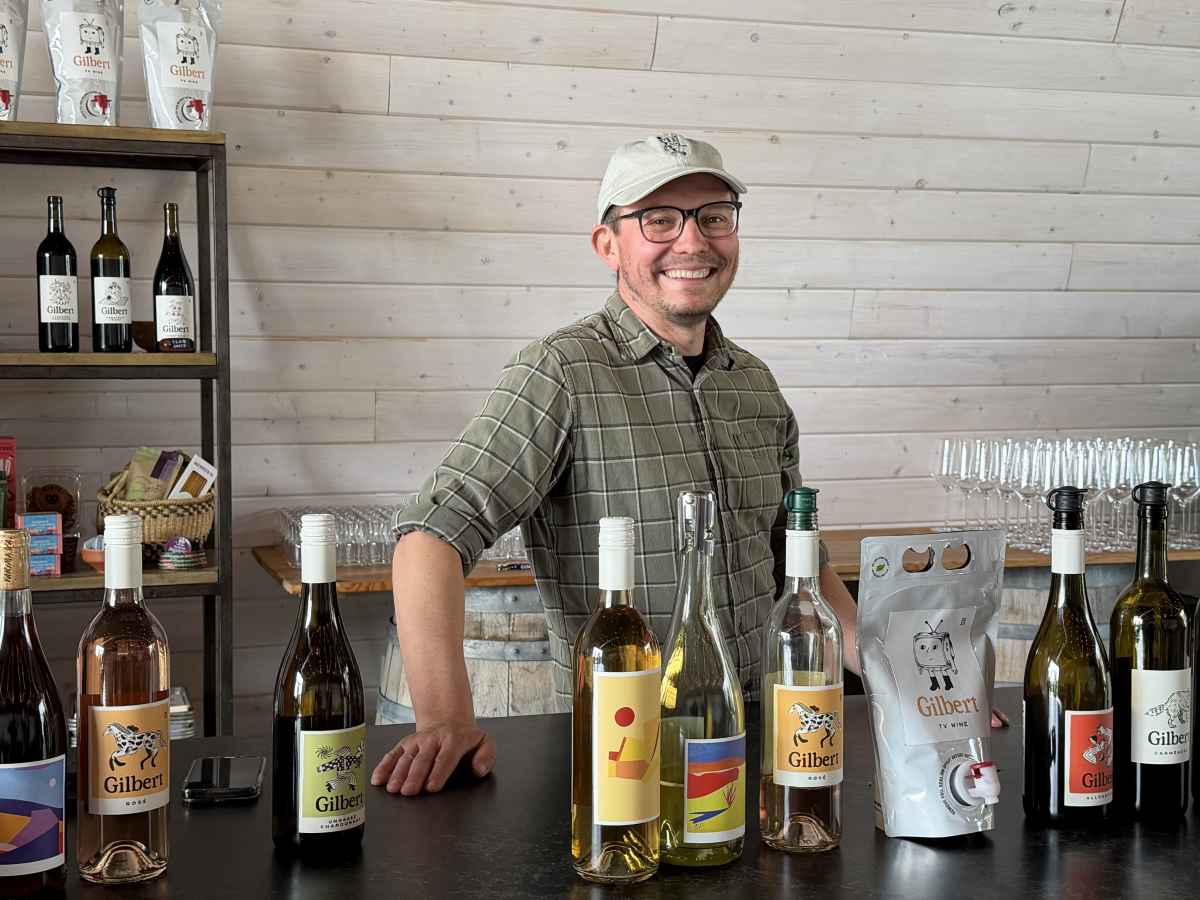
Gilbert Cellars deserves its own paragraph, possibly its own chapter. Gloria Gilbert, Laura Schlect, and Head Winemaker Dusty Jenkins are producing some of the most inventive and delicious wines in the Yakima Valley, and our tasting visit was a succession of discoveries. The tasting room itself — a beautifully converted space in downtown Yakima with a sun-drenched outdoor terrace — is as inviting as the wine list; this is a place to spend an unhurried afternoon, working through flights with a cheese board and letting the valley do its slow magic around you. Food-and-wine pairing sessions are available for small groups and come warmly recommended. The Rosé 2025 from Wahluke Slope is exactly what a warm-climate rosé should be — vivid, dry, strawberry-bright without sweetness. The 2025 TV Wine, packaged in a striking AstraPack, is a fun, functional crowd-pleaser that speaks to a new generation of wine drinker. But the wine that lingered longest in the memory was the Allobroges 2024 GSM: named for the ancient Gaulish tribe whose territory encompassed what is now the Northern Rhône, it is a wine of Rhône soul transplanted to Washington soil — dark fruit, black olive, white pepper, and a savoury mineral finish that felt genuinely European.
Gilbert Rosé 2025, Wahluke Slope Vivid, dry, strawberry-precise. Excellent.
Gilbert TV Wine 2025, AstraPack Innovative packaging, pure pleasure drinking.
Gilbert Allobroges 2024 GSM Rhône soul in Washington soil. Dark fruit, olive, white pepper, mineral finish.
Red Mountain: Fire, Tannin — and Something Unexpected
Red Mountain is Washington's most celebrated and most concentrated AVA: fewer than 4,000 acres, perched on a wind-scoured ridge above the Yakima River, with calcium-rich alkaline soils, extreme sun exposure, and some of the most intense Cabernet Sauvignon in America. The wines are legendarily big, tannic, and built for the long haul. What I did not expect was to find Red Mountain's most interesting producers actively subverting their own reputation.
★ KIONA VINEYARDS — RED MOUNTAIN
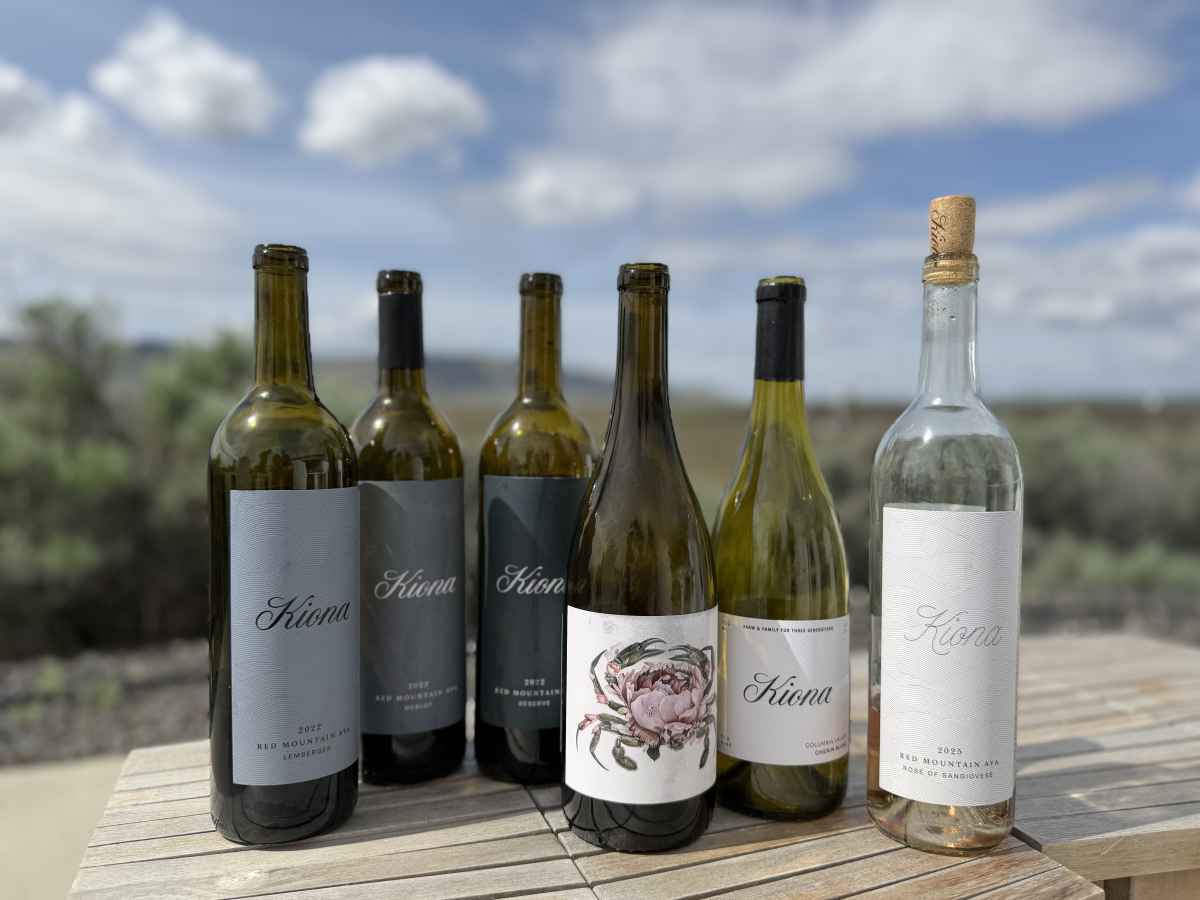
Kiona is one of Washington’s pioneering estates — among the first to plant on Red Mountain — and a visit here is as much about place as it is about wine. The estate offers guided vineyard walks through the historic old-vine blocks, and there is something genuinely moving about standing on that windswept ridge, looking out across the Yakima River canyon, understanding that this all began as an act of faith in terrain nobody believed in. The current range offers one of the week’s most surprising philosophical pivots. The Old Vine Chenin Blanc 2024 is extraordinary: pure, honeyed at the edges, crisp at the core, with a mineral tension that reminded me of a fine Savennières. The Lemberger 2022 — an Austrian variety rarely encountered in the New World — is what JJ Williams calls ‘the wine we take to parties’: deeply coloured, spicy, juicy, and immediately loveable in a way that big Cabernet rarely is. And then there is the Pinot Noir/Lemberger 2024 blend, 70% Pinot and 30% Lemberger — lighter in frame, silkier in texture, a wine that actively challenges everything you thought you knew about Red Mountain.
As JJ Williams put it with a smile: Red Mountain is known for big, tannic, opulent reds — but here, Kiona is leading with lighter, softer styles, offering a yin to the Red Mountain wine yang. It is one of the most deliberately counter-cultural moves I encountered on the trip, and it is working.
Kiona Old Vine Chenin Blanc 2024 Extraordinary. Honeyed, mineral, Savennières-like tension.
Kiona Lemberger 2022 Spicy, juicy, immediately loveable. 'The wine we take to parties.'
Kiona Pinot Noir/Lemberger 2024 70% PN / 30% Lemberger — silk, spice, and a deliberate challenge to Red Mountain orthodoxy.
"Red Mountain is known for big, tannic reds — but here we are leading with lighter, softer styles. A yin to the Red Mountain wine yang." — JJ Williams, Kiona
★ HEDGES FAMILY ESTATE — RED MOUNTAIN
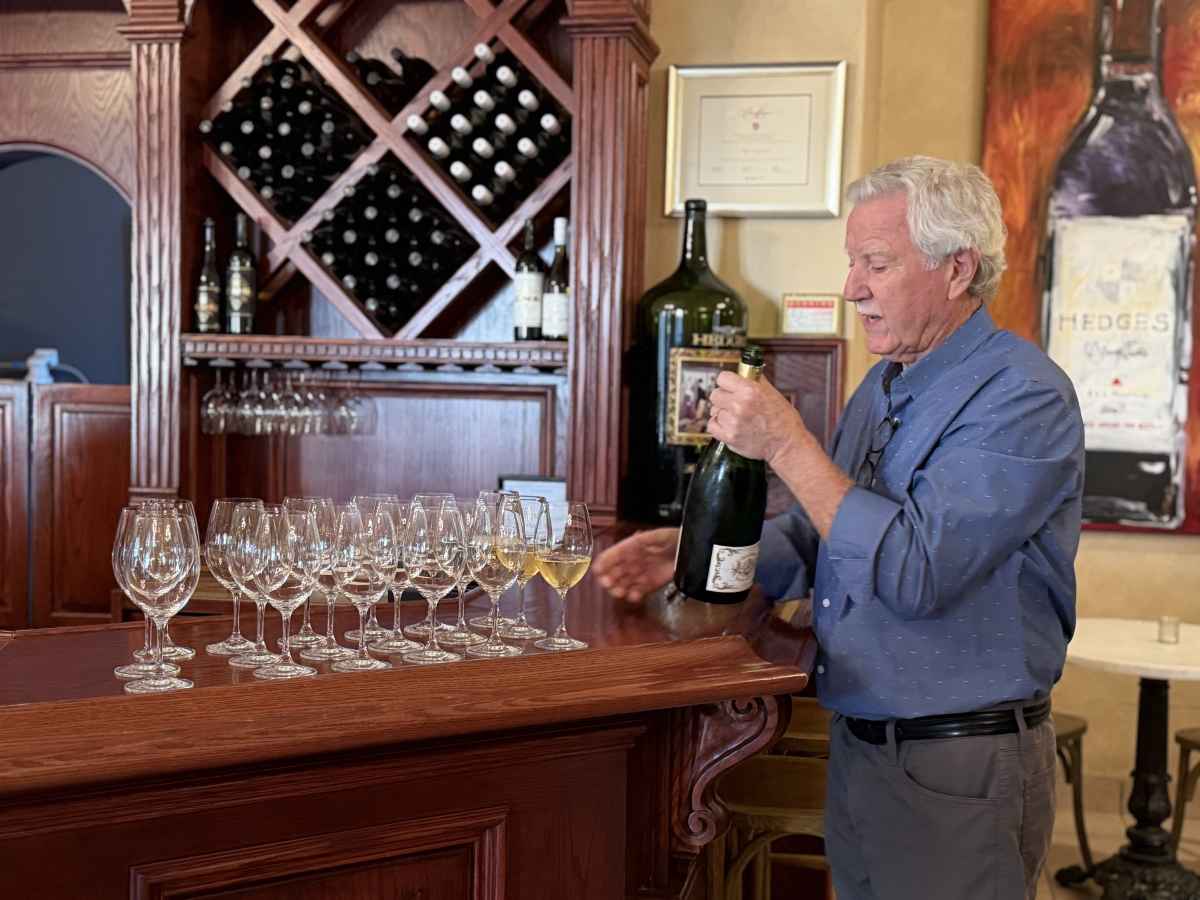
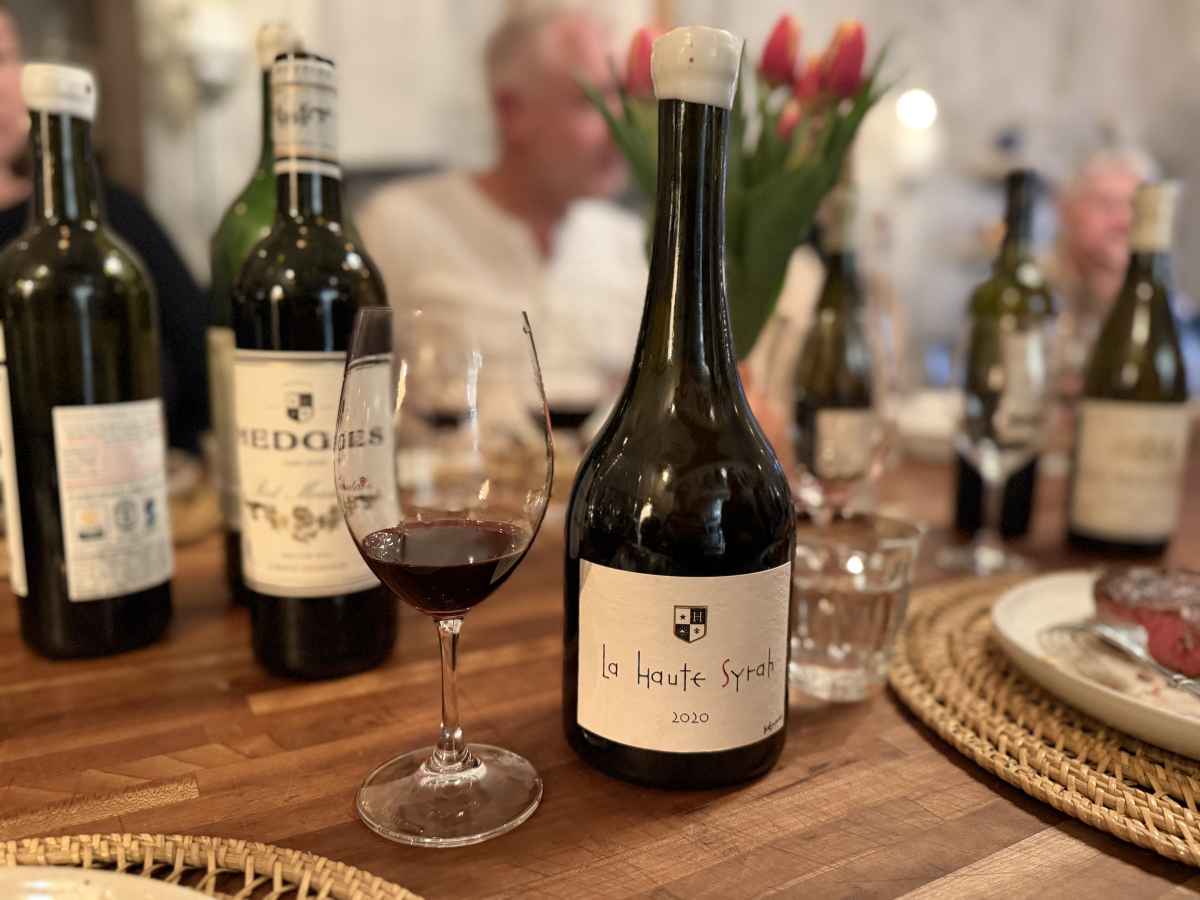
The dinner at Hedges Family Estate on Red Mountain was, without question, the most memorable evening of the week. Hedges offers vineyard tours in the late afternoon — a walk through the old blocks as the sun drops towards the Cascades — before moving to the estate’s spectacular terrace for dinner. The setting — vineyard rows on three sides, the basalt hills painted copper and rose in the fading light — was the kind of thing you take a mental photograph of and file under ‘never forget’. But it was the wines that made it unforgettable. The Red Mountain Cabernet Sauvignon had the structure and gravitas you’d expect from this terroir, but it was the Touriga Nacional 2021 that stopped the conversation: deep violet, intensely perfumed, floral and dark-fruited simultaneously, it felt like a glimpse of a Washington future that nobody had quite predicted. There was a moment — the glass raised, the table briefly silent — when you could feel everyone present recalibrating what they thought was possible here. My personal favourite of the evening, however, was the La Haute Syrah 2020 — a wine of enormous complexity, with layers of smoked meat, violets, black olive, and a finish that seemed to go on for minutes. There are Syrahs from the Northern Rhône that sell for five times the price and offer less than this.
Hedges Touriga Nacional 2021 Violet, perfumed, intensely dark. A glimpse of Washington's unexplored future.
Hedges La Haute Syrah 2020 The evening's standout. Smoked meat, violets, black olive. A Rhône rival at a fraction of the price.
★ AVENNIA — RED MOUNTAIN
Eli Traverse of Avennia brought a different kind of precision to the Hedges dinner table. His Liminal and Weathereye Vineyard bottlings — part of the compelling Aerialist vineyard series — speak to a winemaking philosophy grounded in place: each wine is an argument that the vineyard, not the winemaker, should do the talking. In a region where personality-driven winemaking is common, Avennia's restraint feels almost radical. The wines are the better for it.
Walla Walla: America's Finest Wine Town
If there is a single place in Washington that converts sceptics into believers, it is Walla Walla. Compact, tree-lined, sun-warmed, and home to over 45 tasting rooms within comfortable walking distance of each other, this is a wine town on a human scale. It combines the seriousness of a genuine viticultural centre with the warmth and informality of a small agricultural community. The wines match both qualities.
★ VALDEMAR ESTATES — WALLA WALLA
The most startling producers in Walla Walla are not American. Valdemar Estates is the Washington outpost of a distinguished Spanish wine family — the Martínez Bujanda dynasty — and their winemaking philosophy has crossed the Atlantic intact. The estate is also one of Walla Walla’s most architecturally striking destinations: the winery buildings draw on Spanish hacienda references, and the outdoor courtyard is an exceptional spot for an extended tasting or a private wine dinner. Cooking demonstrations pairing Spanish technique with Washington produce are offered for groups and are worth booking ahead. Lunch at Valdemar was a succession of revelations: the Reserve Cabernet Sauvignon 2022 is a wine of genuine elegance, its Rioja roots evident in the careful oak integration and the fine-grained tannin structure. But the Spanish variety wines were what truly stopped the room. Washington’s Columbia Valley sun-baked terroir, it turns out, is a natural home for Iberian grapes — and Valdemar is making the most compelling argument for why.
Valdemar Reserve Cabernet Sauvignon 2022 Rioja discipline in Washington terroir. Elegant oak, fine tannin. Impressive.
Vital Wines' Maddie Richards poured an equally compelling Syrah 2025 over the same lunch — generous, spiced, and built for immediate pleasure without sacrificing depth.
Vital Wines Syrah 2025 Generous, spiced, immediately pleasurable.
★ GROSGRAIN VINEYARDS — WALLA WALLA
Matt Austin may be Walla Walla's most compelling argument for the virtue of stubbornness. While others have consolidated around the region's established strengths, Austin has spent years planting varieties that nobody told him would work here — and making them work anyway. Dinner with Matt at TMACS was a master class in the vinous maverick's art. The Phillips Vineyard Albariño 2025 was excellent: coastal in feel, saline in finish, precisely the kind of white wine Washington shouldn't be able to make — but does. The French Creek Vineyard Grenache 2023 was a wine of Roussillon soul: sun-dried fruit, garrigue, and a savoury grip. The XL Vineyard Mourvèdre 2023 was the most serious of the three — dark, inky, brooding, built for the long game.
When Matt says that the best part of Washington's wine story has not yet been written, he is not speaking metaphorically. He is announcing his own intentions.
Grosgrain Phillips Vineyard Albariño 2025 Saline, coastal in feel, genuinely excellent.
Grosgrain French Creek Vineyard Grenache 2023 Roussillon soul — garrigue, sun-dried fruit, savoury grip.
Grosgrain XL Vineyard Mourvèdre 2023 Dark, inky, built for the long game.
★ THE WALLS — WALLA WALLA
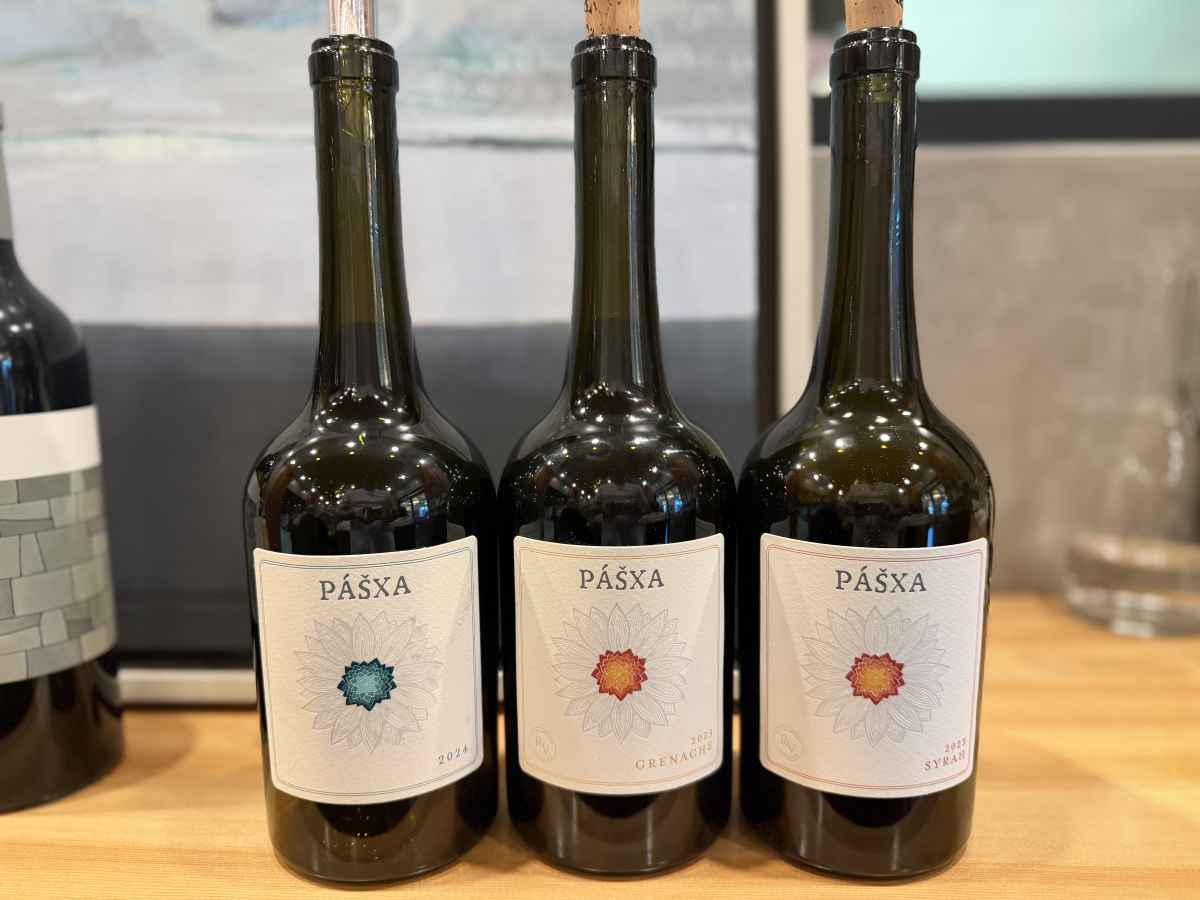
The Walls is one of Walla Walla’s most admired small producers — and one of its most joyful. The tasting room, set in a beautifully restored space in downtown Walla Walla, opens onto a shaded courtyard garden that is one of the town’s best spots for a long, lazy afternoon tasting: the kind of place where an hour becomes three without any sense of urgency. Private tastings with the winemaking team can be arranged and are exceptional value — the depth of knowledge on offer, delivered with warmth and good humour, makes every bottle taste better. The Rosé Double Magnum (essentially four bottles in a bag, an inspired format for summer entertaining) set a playful tone that belied the seriousness of what followed: the Gaspard Syrah 2022 was elegant and iron-boned, a wine that could pass for a good Saint-Joseph. And then there was the Pasxa range — the undisputed highlight of the Walla Walla visit, and possibly of the entire trip.
The Pasxa Grenache 2023, Syrah 2023, and Marsanne-Roussanne 2024 are three wines that could change your understanding of Washington's potential. The Grenache is pure and silky, red-fruited and long. The Syrah is muscular but precise, with the kind of smoked-meat and violet character that the Northern Rhône spends decades trying to teach its apprentices. The Marsanne-Roussanne is golden, textured, and hauntingly fragrant — a white wine of real weight and complexity. Together, they are a portfolio argument that Washington's Rhône chapter is the most exciting thing happening in American wine right now.
The Walls Gaspard Syrah 2022 Elegant, iron-boned — could pass for a fine Saint-Joseph.
The Walls Pasxa Grenache 2023 Pure, silky, red-fruited and long. A revelation.
The Walls Pasxa Syrah 2023 Smoked meat, violets, Northern Rhône in spirit.
The Walls Pasxa Marsanne-Roussanne 2024 Golden, textured, hauntingly fragrant. The week's finest white.
"The Pasxa range is a portfolio argument that Washington's Rhône chapter is the most exciting thing happening in American wine right now."
The Columbia River Gorge: The Unexpected Finale
★ SYNCLINE WINERY & COR CELLARS — THE GORGE
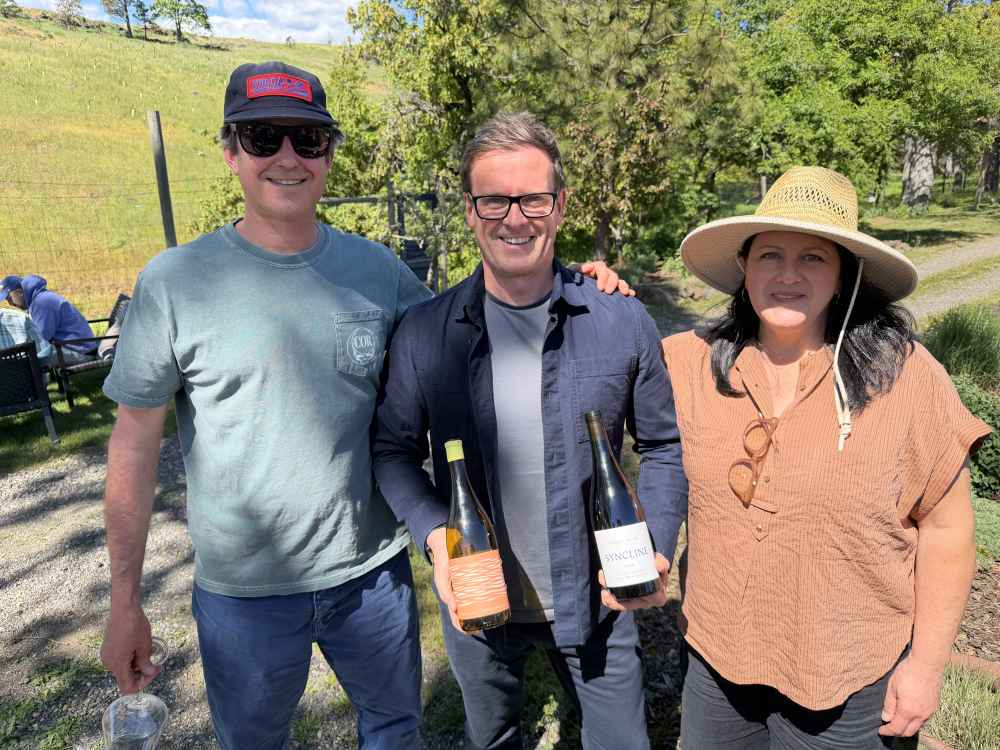
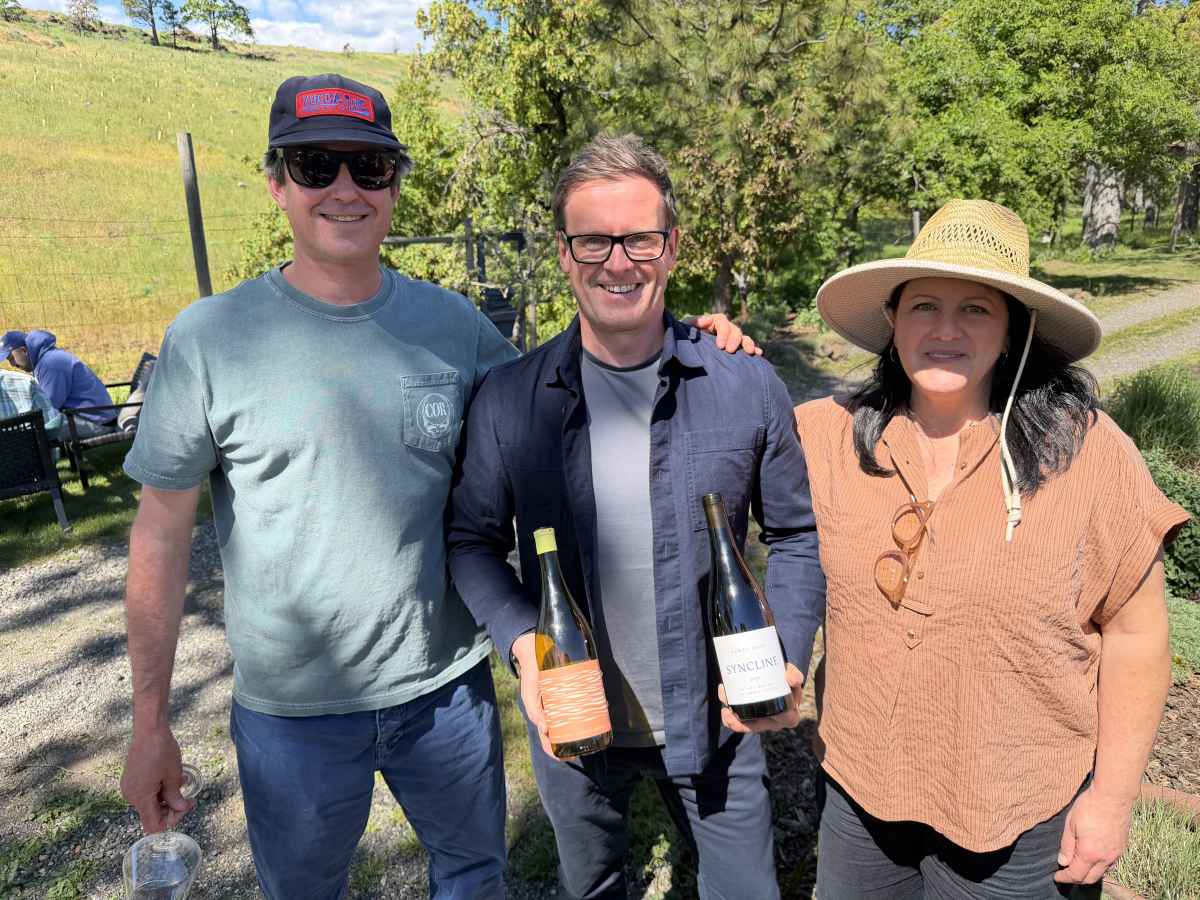
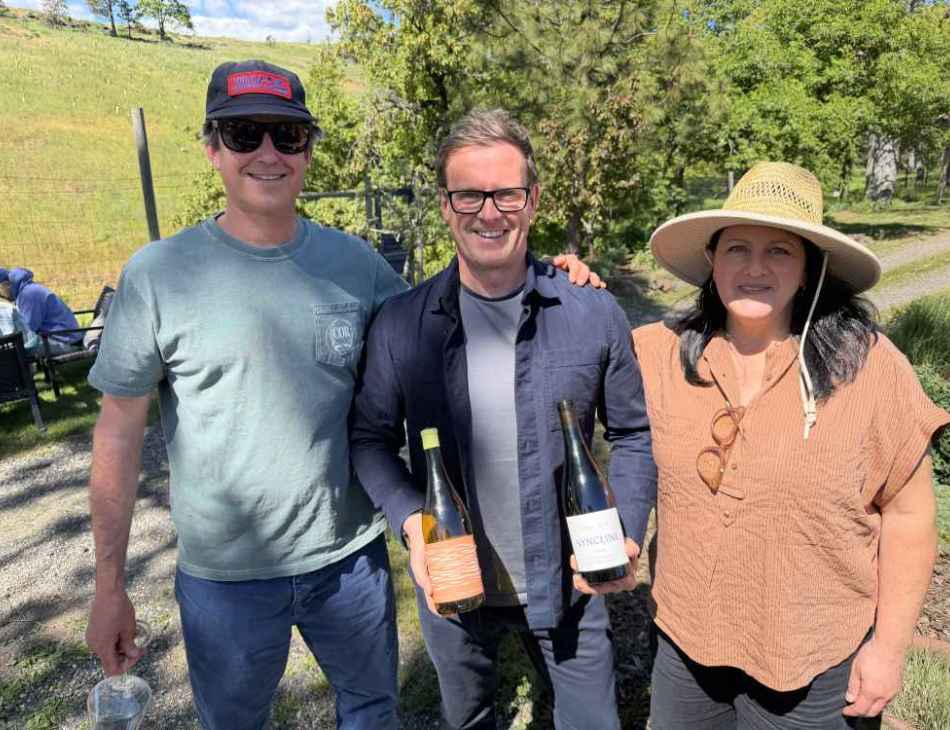
The Columbia River Gorge is Washington wine’s most scenically dramatic corner and arguably its most undersung. Syncline Winery — founded by James and Poppie Mantone — hosted us for lunch with COR Cellars’ Luke Bradford alongside, and the combined line-up of Rhône varietals was as compelling as anything we had tasted all week: Grenache, Syrah, Mourvèdre, Roussanne, poured against a backdrop of basalt cliffs and the great river below. The Gorge shares the Rhône’s latitude, and it increasingly shares its ambitions.
Syncline’s identity is built on restraint and rigour in equal measure. In a wine country that can tend towards opulence, James and Poppie Mantone have spent two decades making the case for wines of transparency and place — Rhône varieties coaxed into expressing the Gorge’s basalt soils, volcanic ash deposits, and the cool updrafts that funnel through the canyon from the Pacific. The winery itself, tucked into the hillside with the Columbia spread below, is an argument for slowing down: lunch here — long, unhurried, poured from magnum — is the kind of experience that makes the rest of the wine world feel slightly rushed. If you can arrange a winemaker lunch or a guided tasting on the estate terrace, do not hesitate.
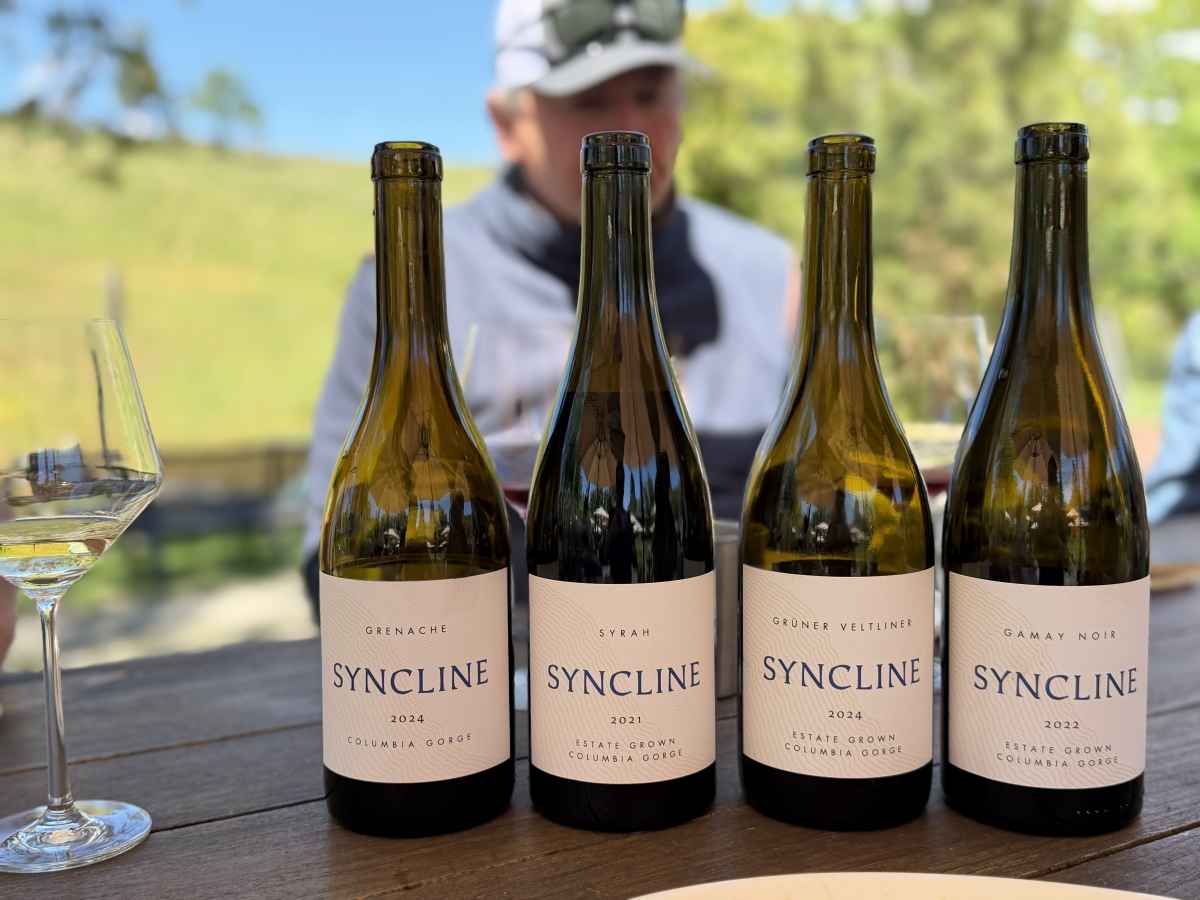
The BdN 2018 — tasted now at seven years of age — was a masterclass in what the Gorge can achieve with time. Structured, savoury, and tightly wound when young, it had opened into something of real complexity: dark cherry, dried herbs, iron-laced minerality, and a finish with the length and poise of a serious Crozes-Hermitage. It is the kind of wine that makes you reach for another glass and quietly move it to the top of your Washington list. The Gamay Noir 2024, by contrast, was the week’s most joyfully unexpected red: pale-coloured, silky, and practically weightless on the palate, with a burst of fresh raspberry, crushed violet, and wet stone that belonged more to Fleurie than to any American appellation. I set the glass down after the first sip and simply looked at it. Nobody had told me Washington made Gamay like this. Nobody had told me anywhere made Gamay like this. That Syncline is doing it from the Columbia River Gorge is one of the region’s best-kept secrets. Consider it out.
Syncline BdN 2018 Seven years on and still unwinding. Dark cherry, dried herbs, iron minerality. Serious ageing potential confirmed.
Syncline Gamay Noir 2024 Pale, silky, floral. Raspberry, violet, wet stone. Gorge Gamay that rivals Beaujolais’ finest villages.
COR Cellars’ Luke Bradford brought an equally compelling set of bottles to the same lunch. His AGO Carbonic Primitivo 2025 was one of those wines that make you genuinely laugh with pleasure on first sip: made using carbonic maceration — the same technique that gives Beaujolais Nouveau its exuberant, candy-bright character — applied here to Primitivo, the Italian cousin of Zinfandel. The result is a wine of extraordinary vivacity: brilliant ruby in the glass, exploding with fresh cherry, pomegranate, and a savoury spice note that the carbonic process draws up from the variety’s deeper nature. It drinks like a party and finishes with the kind of peppery grip that reminds you there is serious grape underneath the fun.
COR Cellars AGO Carbonic Primitivo 2025 Carbonic Primitivo that drinks like a party and finishes like a promise. Cherry, pomegranate, peppery grip.
★ STANLEY GROOVY — THE GORGE
If Syncline represents the Gorge’s philosophical side, Stanley Groovy represents its soul. The name alone signals the intent: this is not a winery that takes itself too seriously, but the wines demand that you do. The label aesthetic — bold, graphic, deliberately counter-cultural — belongs on the shelves of a record shop as much as a wine merchant, and that is precisely the point. Stanley Groovy is the Gorge at play: natural in spirit, serious in execution, and entirely its own thing.
The Vinho Tinto — “red wine” in Portuguese, which tells you something about the register — is the bottle that stops first-timers in their tracks. A blend drawing on Portuguese varieties, it has the kind of inky depth and wild-ferment energy that you associate with the Douro’s more adventurous producers: dark plum, iron, dried violet, and a tannin structure that is grippy without being aggressive. It is a wine that wants to be drunk with food, with noise, with people. The purity of fruit is remarkable given how much character the wine carries. In a region defined by Rhône varieties, Stanley Groovy’s Lusitanian detour is one of the most original things happening in Washington wine right now — and possibly the most fun.
Stanley Groovy Vinho Tinto Dark plum, iron, dried violet. Portuguese varieties with wild-ferment energy. Washington’s most fun bottle.
★ DOUBBLE TROUBBLE WINE CO — THE GORGE
Chris Stiffler's Doubble Troubble Wine Co was the perfect final note: irreverent labels, playful spirit, serious juice. A reminder that Washington wine, for all its ambition, has not lost the ability to laugh at itself — and that the Gorge, with its extraordinary natural drama, still has much to offer.
The Verdict: Eighty Varieties, Zero Signatures
What Washington State offers the serious wine traveller is something rare: the pleasure of discovery without the anxiety of hierarchy. There is no Meursault to aspire to, no Pomerol to genuflect before. There are only the vineyards, the winemakers, and the extraordinary variety of what emerges from both. The Rhône varieties — Grenache, Syrah, Mourvèdre in the reds; Marsanne and Roussanne in the whites — are producing some of the most exciting wines on the planet here. The Spanish varieties — Albarino, Garnacha, Tempranillo — are finding a second home in volcanic soils they seem to have been waiting for. The Portuguese thread — from Hedges’ extraordinary Touriga Nacional to Stanley Groovy’s Vinho Tinto — is emerging as one of the region’s most compelling new chapters. And through it all, the Bordeaux varieties remain the reliable backbone, capable of wines — Chaleur, Pasxa Syrah, Hedges La Haute — that hold their own in any international company. Even the Gamay, in Syncline’s extraordinary 2024 bottling, and the carbonically-made Primitivo from COR Cellars, speak to a region that refuses to stand still.
Ask a Washington winemaker what the region’s signature variety is, and watch their expression. Some will say Cabernet — and they have the benchmark bottles to prove it. Some will say Syrah — and point to wines that silence the argument. Some will say Riesling, or Grenache, or Lemberger, or a Portuguese variety you have never heard of. Every single one of them will be right, and that is precisely the point. Washington has made a conscious decision — or perhaps the land has made it for them — not to be defined by a single grape. The signature variety of Washington wine is the one you fell in love with. It is different for everyone who comes here, and that is the greatest invitation in American wine today.
The welcome is genuine, the hospitality is effortless, and the scenery — from the Cascades to the Columbia River canyon to the rolling hills of Walla Walla — is worth the journey alone. Seattle-Tacoma International Airport makes it easy to get here. The wine makes it impossible to want to leave.
Come for the Cabernet. Stay for the Grenache. Leave already planning your return.
NEED TO KNOW
Getting there: Direct non-stop flights to Seattle-Tacoma (SEA) from London, Dublin, Paris, Amsterdam, Frankfurt and more. Over 120 weekly European services.
Regions visited: Seattle · Woodinville · Yakima Valley · Red Mountain · Walla Walla Valley · Columbia River Gorge
Standout wineries: LATTA Wines · DeLille Cellars · Gilbert Cellars · Hedges Family Estate · Avennia · Kiona Vineyards · Valdemar Estates · Grosgrain Vineyards · The Walls · Syncline Winery · COR Cellars · Stanley Groovy · Doubble Troubble Wine Co
Where to stay: The Edgewater Hotel, Seattle · Lodge at Columbia Point, Tri-Cities · Marcus Whitman Hotel, Walla Walla · Hood River Best Western, Columbia Gorge
Information: washingtonwine.org | stateofwatourism.com | visitwallawalla.com | visityakima.com
https://www.ackleybrands.com/
https://www.portseattle.org
https://www.cadencewinery.com
https://www.twomountainwinery.com
https://www.dineenvineyards.com
https://hedgesfamilyestate.com
https://www.echolandswinery.com
https://bledsoewineestates.com
Trip hosted by Washington State Wine and State of Washington Tourism. I travelled as a guest of the Washington State UK Media Visit programme.